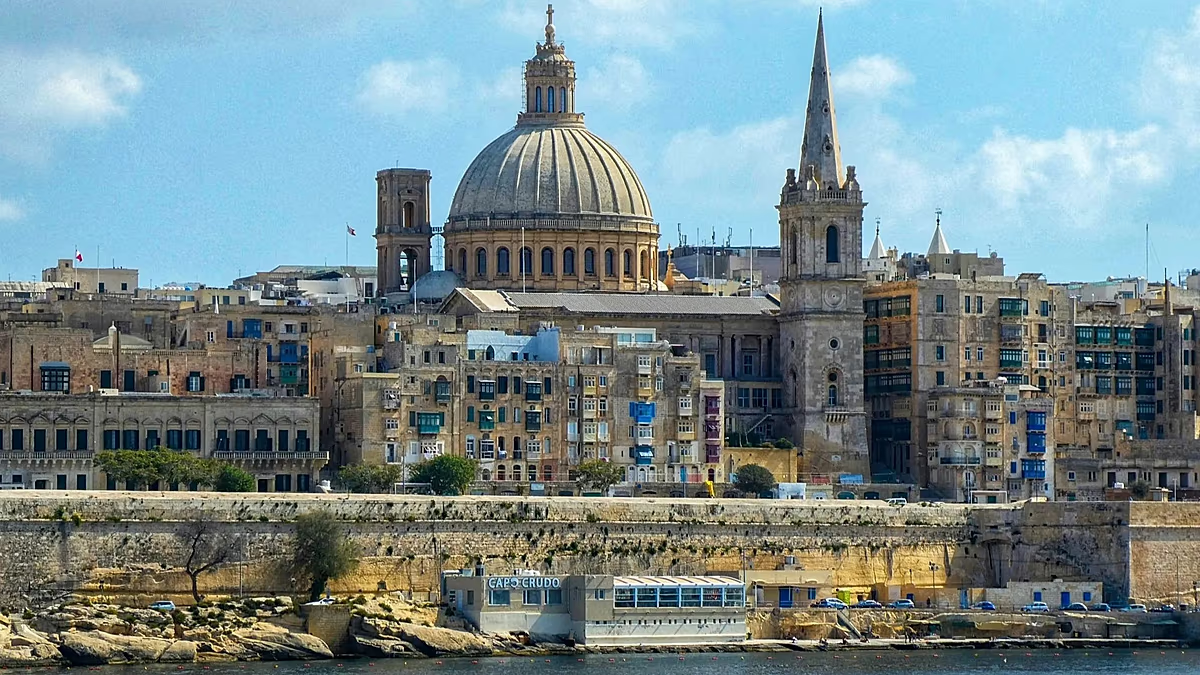


Picture this: hundreds of the most influential people in global travel, from airline CEOs and hotel executives to government ministers and tech innovators, all packed into one sun-drenched Mediterranean island for a few intense days of conversation. That was the scene in Malta for the 26th edition of the World Travel & Tourism Council Global Summit, a gathering that has become the industry’s annual pulse check. The conversations ranged from the glittering world of luxury travel and the new obsession with longevity to the nuts and bolts of airport security and the thorny question of how destinations can grow without destroying the very things that make them special. If there was an overarching mood, it was less about celebrating record visitor numbers and more about trying to figure out how to move forward in a world that is becoming more fragmented, more technologically advanced, and more demanding than ever. The panels offered a glimpse of what governments and businesses will be wrestling with in the coming years, and Euronews Travel was on the ground to capture the moments that mattered. What emerged was a portrait of an industry at a crossroads, trying to balance innovation with responsibility, and high-tech efficiency with good old-fashioned human connection. Some of the ideas felt futuristic, like a world without passports, while others were refreshingly grounded, like the simple suggestion that every hotel should just have better curtains and healthier snacks. It was a reminder that travel is never just about moving people from place to place; it is about how those journeys shape us, and how the industry can either reinforce the walls between us or help tear them down.
One of the most talked-about moments came when Canada’s former Prime Minister Justin Trudeau took the stage with WTTC President and CEO Gloria Guevara. Trudeau didn’t shy away from politics, addressing what many have dubbed the “Trump Slump” by observing that, in recent years, the United States hasn’t exactly rolled out the welcome mat for international visitors. But he quickly widened the lens, speaking to something far bigger than any single country’s tourism numbers. He warned that too many governments and societies are encouraging people to look inward, to become insular, mistrustful, and oppositional toward the rest of the world. That path, he argued, is not productive. And the best counter to it? Tourism. Not just the business of selling flights and hotel rooms, but the simple, powerful act of getting to know people who are different from you, of being curious, of travelling and allowing yourself to be changed by what you encounter. Trudeau framed these instincts as exactly what the industry is built on, and what the world needs more of right now. When asked for a single Canadian destination worth visiting, he didn’t hesitate to name Montréal, his home city. He painted a loving picture of Montrealers who adore great restaurants and great art, who fill their summers with festivals, and who can even make snow feel magical in the winter. It was a personal, warm moment that cut through the policy talk, reminding everyone in the room that at the heart of the industry are real places and real people with stories to tell.
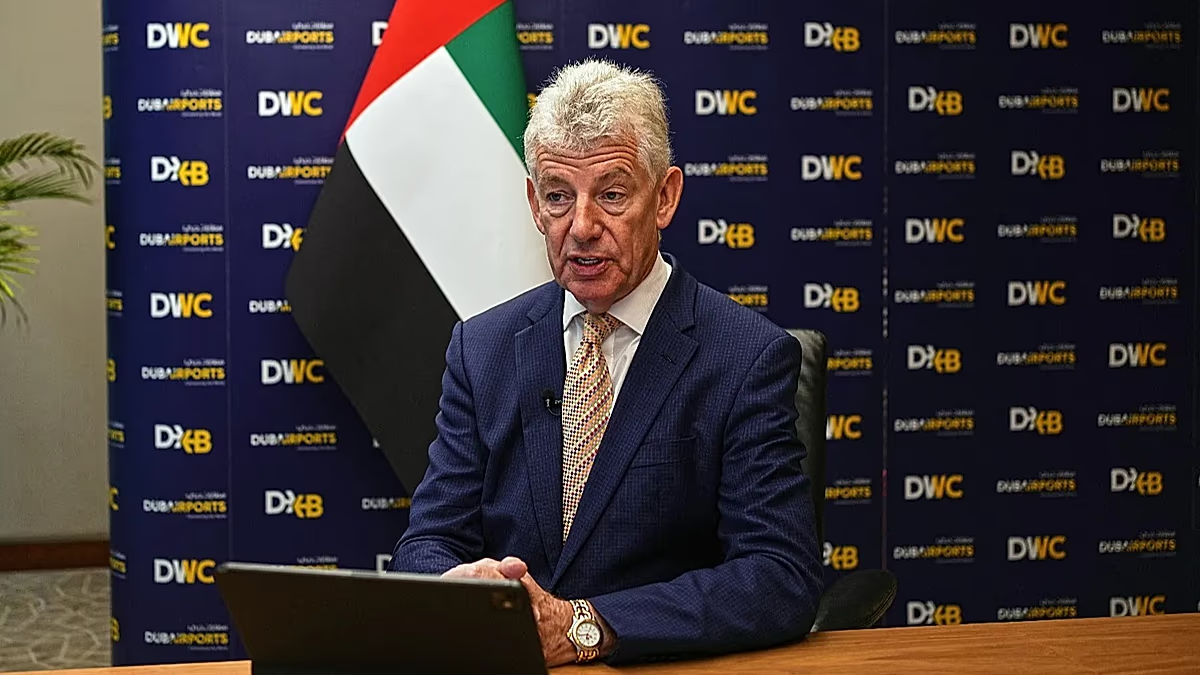
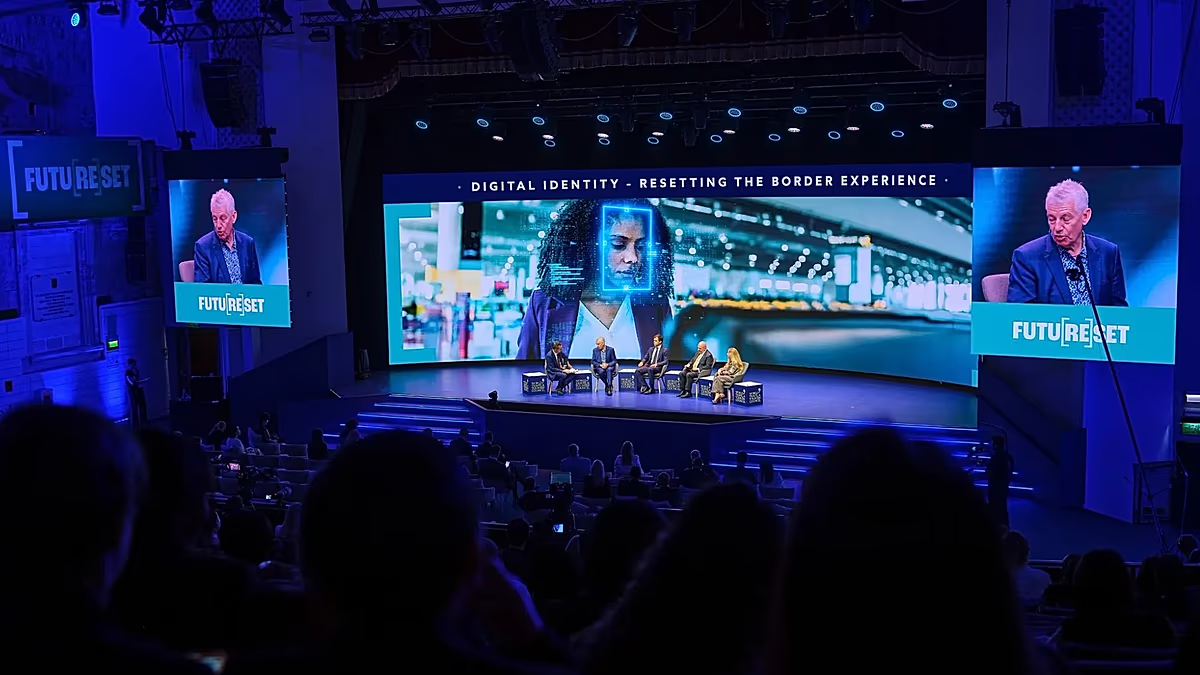
Technology was another dominant thread, and one panel in particular delivered a prediction that sounded like science fiction but, according to the experts, is closer than we think. Paul Griffiths, the CEO of Dubai Airports, said flatly that travellers won’t need to use a passport within the next five years. Not because the technology isn’t already here, but because the systems that need to talk to each other still haven’t figured out how to coordinate. He described a future where your face or your digital identity becomes the only key you need, not just at borders, but when picking up a rental car, checking into a hotel, or even boarding a plane. The vision is a seamless, frictionless journey where the traveller moves through the world without constantly digging for documents. Another panel explored how artificial intelligence is already transforming the way we plan holidays. According to Christie Travers-Smith, a director at Google, tourists are becoming “super-empowered travellers” by using AI to map out itineraries, discover hidden gems, and compare options in seconds. But the next big leap isn’t about planning at all; it’s about trust. The real breakthrough will come when customers feel comfortable enough to hand over their credit card details and let AI agents actually book the trips for them. That shift would fundamentally change the role of the traveller, who becomes less of a researcher and more of a director, telling the technology what they want and letting it handle the details. It is an exciting, slightly unsettling thought, and it was clear that the industry is only beginning to wrap its head around the possibilities.
There was also a fascinating conversation about wellness, longevity, and what we really want from a hotel room. In recent years, the anti-aging exploits of people like Bryan Johnson have pushed longevity out of the fringe and into the mainstream, and luxury hotel groups have been paying attention. High-end properties are now installing hyperbaric oxygen therapy chambers, infrared saunas, and other high-tech recovery tools, all promising to help guests feel and look younger. But Tim Gray, the founder of Health Optimisation, offered a refreshing counterpoint. He argued that “longevity as standard” is what every hotel should be aiming for, not just the ultra-luxury ones. That doesn’t mean every hotel needs a cryotherapy chamber. It means allowing travellers to stick to the basic principles of recovery even when they’re away from home: eating well, sleeping well, staying hydrated, and staying active. Something as simple as blackout blinds, removing blinking lights from the room, or stocking the minibar with healthier options can make a huge difference. The fancy tools are just a way to “turbo charge” those fundamentals. Euronews Travel even tried out HPO.TECH’s hyperbaric oxygen therapy at the summit, and it was easy to see how a jet-lagged traveller might benefit. But the broader message was more democratic: wellness shouldn’t be a luxury add-on reserved for the rich. It should be baked into the very baseline of hospitality, a standard that makes it easier for everyone to take care of themselves while exploring the world.
Beyond technology and wellness, a significant theme was how destinations measure success. For years, the travel industry has been obsessed with volume, with the sheer number of tourists arriving at a destination, almost as if quantity were a badge of honour. But that is changing. Governments and tourism boards are increasingly shifting from “volume to value,” as Michelle Fridman, the Secretary of Tourism for Jalisco, Mexico, put it. Instead of chasing the biggest crowds, they want the “better tourists”: people who stay longer, spend more, buy local products, and, crucially, respect and engage with the local culture and identity. Fridman described Jalisco as “the most Mexican destination” and made it clear that they want to keep it that way, which means being selective about who they attract and how tourism is managed. It was a sentiment echoed across the panels. Miguel Sanz, from Spain’s tourism agency Turespaña, said he now sees his role less as a promoter and more as a “tourism curator,” carefully choosing the kind of traveller Spain wants to court. But there was also a warning against going too far in the other direction. Mark Weingard, the founder of Iniala, reminded everyone that if the industry becomes too focused on high-value travellers, it risks becoming elitist, effectively saying that only the wealthy can travel. Instead, he argued, the goal should be to position travel in a way that benefits the cities and communities hosting it, without destroying culture or neighbourhoods. Hospitality, he said, should give back to the community, not simply extract from it. It was a balancing act: how to embrace quality over quantity without closing the door to the world’s curious, diverse travellers.
Taken together, the summit painted a picture of an industry that is deeply aware of its power and its responsibilities. The future of travel will be shaped by technology that makes the journey smoother, from passport-free borders to AI agents that plan and book our trips. It will be shaped by a renewed focus on health and wellbeing, where the basics of good sleep and good food become non-negotiable for every traveller, not just the privileged few. And it will be shaped by a more thoughtful approach to destination management, where success is measured not by how many people show up, but by how positively the exchange affects both visitor and host. But perhaps the most lasting impression from Malta was the emphasis on tourism as a force for human connection. In a world that seems to be fracturing along political and cultural lines, travel remains one of the few ways we can genuinely encounter otherness. Justin Trudeau’s words lingered in the air long after he left the stage: the world’s growing insularity is a problem, and tourism is one of the best counters to it. That is a big responsibility for an industry often dismissed as mere leisure. It is also an opportunity. The decisions made in the coming years, about who we welcome, how we move, what we build, and how we treat the places we visit, will determine whether travel becomes a force for division or for understanding. If the conversations in Malta are any indication, the people leading the industry are ready to take that challenge seriously, even as they grapple with the complexities of a fast-changing world. The road ahead is not simple, but it is full of possibility.