


Paragraph 1
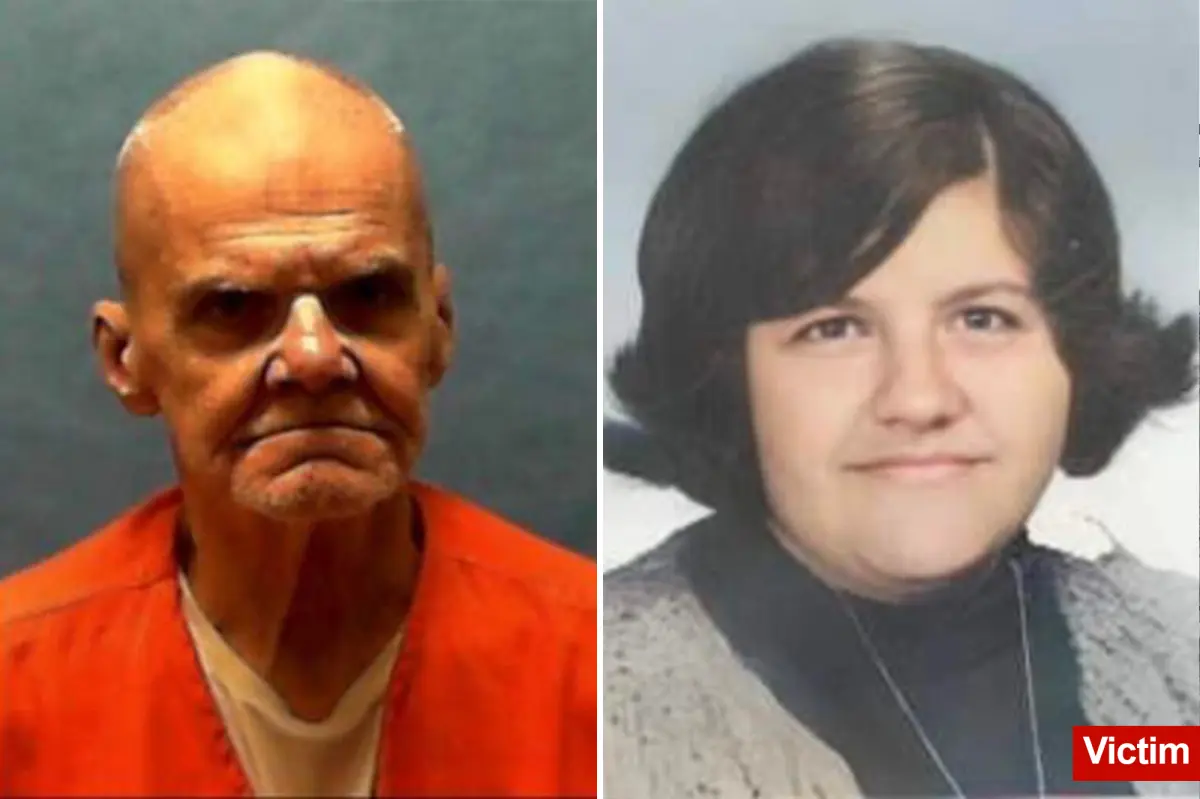
In the final hours of a cold September week, a man who had spent nearly half a century waiting for the state to kill him was granted an unexpected reprieve—not because of new evidence of innocence, nor because of a legal technicality, but because his mind had already slipped away into a fog of dementia. William Thompson, now 74 years old and one of Florida’s longest-serving death row inmates, had been scheduled to die within days for a crime so vicious that Miami-Dade detectives at the time called it the “meanest murder” they had ever seen. Governor Ron DeSantis quietly withdrew Thompson’s death warrant on Thursday, just five days before the execution was set to proceed, offering no explanation in the brief letter sent to the warden. The warrant had been signed only eleven days earlier, and the sudden reversal suggested something more than a change of heart—it pointed to a man whose body and brain had deteriorated to the point where the state could no longer pretend he understood what was about to happen. For those who have followed his case for decades, the news was both a relief and a melancholy milestone. Here was a figure who had once inspired fear and revulsion, a man convicted of torture and murder, now reduced to a frail, confused patient who could not remember what he had eaten for breakfast or recognize the name of the president. The cruel irony was not lost on anyone: the man who had shown no mercy to his victim, Sally Ivester, in that motel room all those years ago, had become a prisoner of his own decaying mind, unable to comprehend even the most basic facts of his existence, let alone the reason the state wanted him dead.
Paragraph 2
The crime that placed Thompson on death row was a study in gratuitous cruelty. In the mid-1970s, Thompson and his accomplice, Rocco Surace, encountered two women outside the Sunny Isles Motel in Miami Beach. One of them, Sally Ivester, was singled out for a night of terror that would end her life. The men demanded money—$200, a sum that seems almost absurdly modest given what followed—but Ivester could only scrape together $25. That disappointment ignited a violent frenzy that is difficult to read about even in the dispassionate language of court documents. The two men beat her with chains, burned her with cigarettes, and then, in a grotesque gesture of control, ordered her to call her mother and ask for more money while she was still bleeding and terrified. When the call produced nothing, they sexually assaulted her. By the time it was over, Ivester had died from shock and internal injuries. The savagery of the attack was so extreme that local law enforcement, hardened by years of seeing the worst of humanity, dubbed it “Dade’s meanest murder.” It was not just the physical violence that made the case stand out; it was the calculated humiliation, the twisted pleasure the men seemed to take in their victim’s helplessness. They didn’t kill her quickly. They made her suffer, and they made her beg, and they used her own mother’s love as another weapon. For the prosecutors, it was an open-and-shut case for the ultimate punishment, and the jury agreed. Thompson was sentenced to death in 1976, beginning a legal odyssey that would stretch on for nearly 50 years, through overturned convictions, reimposed sentences, and two previous eleventh-hour reprieves.
Paragraph 3
The decades that followed were a bureaucratic and judicial labyrinth, each twist delaying the inevitable conclusion. Thompson’s initial death sentence was overturned, then reinstated, and then he was spared execution twice in the 1980s—once in 1982 and again in 1987—as appeals courts vacated his death warrant on procedural grounds. By 1989, he was back on death row, and there he remained, year after year, while the prison system itself seemed to forget him. He became a fixture, a name on a list that kept shrinking as other inmates were executed or died of natural causes. He was Miami-Dade’s longest-serving death row inmate, a title that carried no honor, only the grim weight of an unsettled account. His accomplice, Rocco Surace, had also been sentenced to death initially, but after the Supreme Court reversed his sentence, he was retried and given 203 years in prison. Surace died in custody in 1993, escaping the executioner’s needle by the simple passage of years. Thompson, however, remained in the crosshairs. Every few years, the state would schedule an execution date, and every few years, a court would step in to stop it. The pattern was so predictable that it almost felt like a ritual—until the 2020s, when the pace of executions in Florida accelerated under Governor DeSantis, who made clear his willingness to carry out the ultimate penalty. Thompson’s name came up again, and on September 11 of that year, the governor signed a death warrant for the first time since 1989. It seemed as if the long-delayed reckoning had finally arrived. But the man who was to be executed was no longer the same person who had committed the crime half a century earlier.
Paragraph 4
By the time the warrant was signed, Thompson was a physical and mental wreck. His attorney, Brittney Lacy, filed an emergency petition on September 16, urging prison officials to rush him to a hospital because his health required “emergent medical care.” The petition painted a bleak portrait: Thompson had been hospitalized multiple times in Tallahassee, Jacksonville, and Gainesville, and doctors recorded a “knowledge deficit” that was impossible to ignore. He could not tell his lawyers any details about his hospital stays; he did not understand questions about his own surgeries; he claimed the president was “Bush,” decades after George H.W. Bush had left office. He could not recall what he had eaten, whether medical staff had visited him, whether anyone had spoken to him. When a Florida neuropsychologist, Robert Ouaou, examined him, the diagnosis was stark: Thompson met “the criteria for insanity due to his dementia and significant cognitive decline.” He “lacks the mental capacity to understand the fact of his impending execution and the reason for it.” He was also in severe pain, too weak to move his arms or extremities freely. This was not a man who could appreciate the gravity of his fate; he barely understood where he was. The legal argument was rooted in the Eighth Amendment, which forbids executing prisoners who are so mentally ill that they cannot grasp why they are being put to death. It is a principle that has been reaffirmed by the Supreme Court, and it was now the only thing standing between Thompson and the gurney. The irony was almost unbearable: the state was prepared to kill a man who had already lost his mind, who would not experience the execution as a punishment, but merely as a bewildering final act of violence.
Paragraph 5
Governor DeSantis’s decision to withdraw the death warrant on Thursday was met with a mixture of relief and moral clarity from those who had argued against the execution. Grace Hanna, executive director of Floridians for Alternatives to the Death Penalty, praised the move, stating, “Withdrawing the death warrant for William Thompson was the correct decision. Mr. Thompson is gravely ill, not competent, and intellectually disabled. His execution would have been an abject violation of the Eighth Amendment and an affront to human dignity.” The statement captured the essence of the matter: that even a man guilty of the most horrific crimes retains a certain legal protection once his mind has crumbled. The governor’s letter offered no rationale, but the timing—just days before the scheduled execution and after the filing of the emergency petition—strongly suggested that the medical evidence had finally tipped the scales. It was a rare moment of restraint in a state known for its zeal to carry out capital punishment. For the victim’s family, the decision may have reopened old wounds; for Thompson’s lawyers, it was a vindication of their tireless advocacy. But beyond the legal maneuvering, there was a human tragedy unfolding in real time. The man who had once terrorized a woman in a motel room was now a trembling, confused figure in a prison hospital bed, his eyes vacant, his memories gone. He was no longer William Thompson the killer; he was a shell, a body kept alive by tubes and medications, waiting for a death that would come on its own terms, not by the state’s timeline. The withdrawal of the warrant did not mean mercy; it meant justice had lost its object.
Paragraph 6
In the end, Thompson’s case forces us to confront uncomfortable questions about punishment, memory, and the passage of time. What does it mean to execute a man who no longer remembers his crime? What is the purpose of a death sentence when the prisoner has become, in every meaningful sense, a different person—a person without a clear sense of self? The Eighth Amendment’s prohibition on cruel and unusual punishment is not a technicality; it is a recognition that the state’s power to kill must be tempered by principles of human dignity, even for the worst among us. Thompson may have deserved to die for what he did to Sally Ivester, but the fractured, disoriented man who could not name the president was not the same man who swung that chain. His dementia had, in a strange way, already executed the person who committed the crime, leaving only a ghost to take the punishment. As he lives out his remaining days in a state hospital or a hospice bed, we are left to weigh the scales of justice: Does the horror of a brutal murder fifty years ago still demand a forfeiture of life, even when the forfeited life is so diminished that the living person experiences it only as confusion and pain? The courts, for now, have answered no. But the question lingers, not just about Thompson, but about every death row inmate who has outlived their mind. In a system that moves slowly, sometimes taking decades to exhaust appeals, there is a cruel corollary: the condemned often age into a state where the punishment no longer fits the person who exists in the present. For Thompson, the reprieve is not an exoneration; it is a sad, quiet end to a saga that has no winners. All that remains is a memory of a brutal crime, a victim who never had the chance to grow old, and a perpetrator who now shuffles through his final days unaware of the debate his fate has ignited.