


Inside a federal courthouse in Washington, D.C., a grand jury has begun hearing evidence about whether Cassidy Hutchinson, a former aide in the Trump White House, made false statements to the congressional committee that investigated the Jan. 6, 2021, attack on the U.S. Capitol, Fox News Digital has learned. Multiple sources familiar with the matter say the proceedings are in their investigative phase and that additional evidence could be presented to the grand jury as soon as next week, a sign that prosecutors are carefully building a record rather than racing to a conclusion. It remains unclear exactly what portions of Hutchinson’s testimony are being scrutinized, and and the source familiar with the matter stressed that no final decisions have been made about whether the inquiry will result in criminal charges. Under federal law, grand jury proceedings are secret and do not necessarily end with indictments; the presentation of evidence alone does not establish that a crime occurred, and many investigations quietly dissolve after witnesses testify and documents are reviewed. But for Hutchinson, who went from being a relatively unknown staffer to one of the most consequential witnesses of the Jan. 6 investigation, the development is a striking twist in an already extraordinary political saga. It is also a reminder that in Washington, testimonies given under oath can live on for years, returning to their authors in unexpected ways. The news lands at a moment when the country remains deeply polarized over everything connected to that day, and when legal accountability has become an unavoidable theme in discussions about the Trump era. For Hutchinson, a young woman who once sat at the center of presidential power and then chose to speak publicly against her former boss, that grand jury’s attention represents a deeply personal kind of reckoning—one that could shape the rest of her life no matter how it ends.
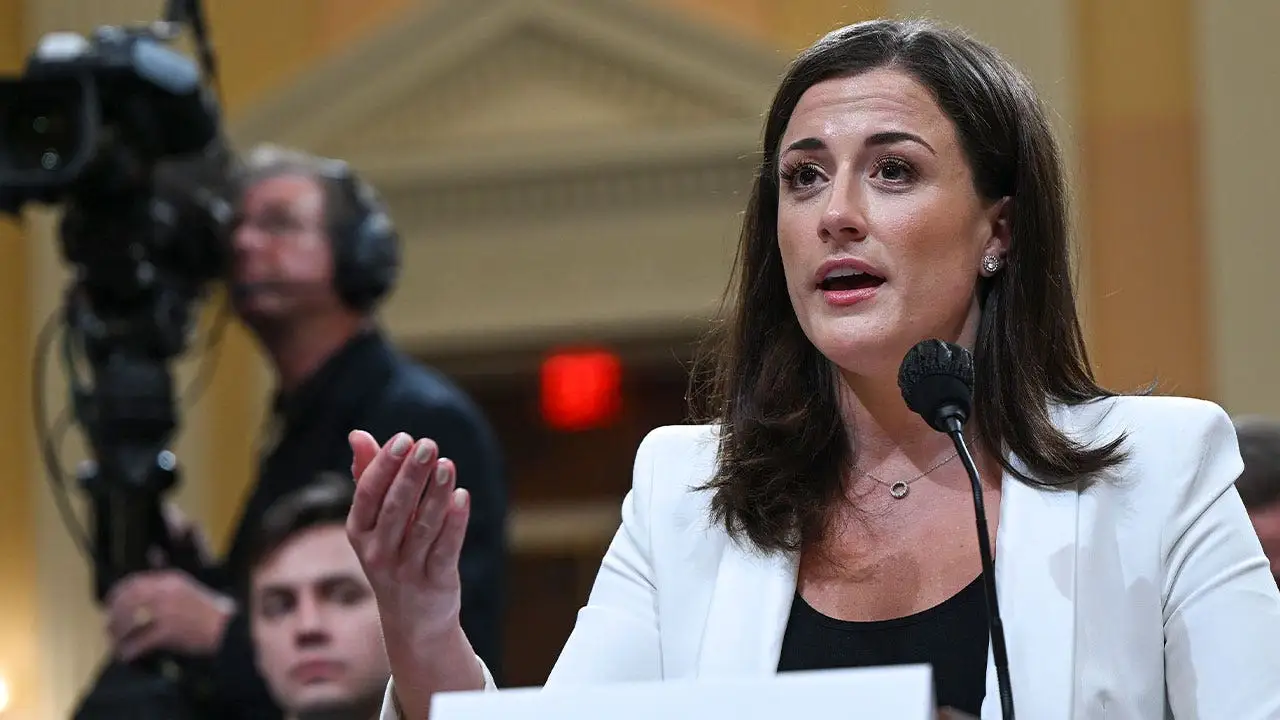
Hutchinson emerged from the relative obscurity of White House staffing to become a defining voice of the House select committee’s investigation into the Jan. 6 siege and former President Donald Trump’s efforts to overturn his 2020 election loss. She served as a top aide to Mark Meadows, Trump’s final White House chief of staff, which placed her in rooms where history was being improvised in real time. In June 2022, she appeared before the committee in a nationally televised hearing that captivated millions of Americans. Her testimony was filled with vivid portraits of White House chaos, anger, and denial in the days surrounding Jan. 6. Perhaps most explosively, she recounted a secondhand story—told to her by another White House official—that when Trump was informed he could not travel to the Capitol, he grew furious and allegedly lunged toward the steering wheel of the presidential SUV, demanding to be taken there. That account became one of the most debated episodes of the entire investigation, not only because of its dramatic imagery, but because Hutchinson explicitly acknowledged she had not witnessed the confrontation herself. Other people familiar with events soon publicly disputed her version, casting doubt on whether the story she repeated had ever happened as she described. Hutchinson, however, has remained steadfast. Her attorney has said she stands by all of the testimony she provided to the Jan. 6 committee, insisting she told the truth as she knew it. Now, more than two years later, that clash between her account and those who challenged it has apparently moved from the arena of public opinion into the far more unforgiving arena of federal criminal investigation. It remains unclear which aspects of her testimony have attracted prosecutors’ attention, but the very existence of a grand jury examining her words marks a significant escalatory step in a case that has already reshaped American politics. Few former White House aides have ever found themselves at the center of such a charged collision between memory, politics, and criminal law.
Federal grand juries are among the most powerful, and careful, instruments in the American legal system. They do not decide guilt or innocence; instead, they determine whether enough evidence exists to bring formal charges. They hear testimony, examine documents, and can issue subpoenas to compel witnesses to appear and produce materials. Everything happens behind closed doors, with no judge present and no defense lawyer in the room to cross-examine witnesses. That secrecy is deliberate, intended to protect the innocent from publicity and to give investigators freedom to follow facts wherever they lead. In Hutchinson’s case, the reported evidence-gathering appears to be ongoing and active. According to a source familiar with the matter, additional evidence could be presented to the grand jury as soon as next week, suggesting the investigation has not stalled or concluded. But the same source took care to note that the proceedings remain in the grand jury phase, no final decisions have been made about whether the matter will result in criminal charges, and that grand jury proceedings do not necessarily end with accusations. In other words, federal prosecutors are doing what federal prosecutors do: methodically testing the strength of their evidence, examining discrepancies, etcalling witnesses, before deciding whether any legal threshold has been crossed. False statement investigations are notoriously fact-intensive. To convict someone of knowingly making a materially false statement to a congressional committee, prosecutors must prove the defendant said something that was actually false, knew it was false at the time, and that the statement was material to the committee’s work. That might sound straightforward, but in practice it is anything but. Memory is imperfect, especially surrounding chaotic, traumatic events; witnesses often describe the same moment differently; and people repeat rumors, hearsay, and secondhand accounts without always being sure of their origins. Hutchinson’s testimony was a mixture of direct recollection and information she said she had learned from others, making it especially vulnerable to factual challenge and, perhaps, criminal scrutiny. Her legal team has consistently defended her credibility, and it is possible that the grand jury will conclude no charges are warranted. But the very fact that this phase has been reached tells the public that federal authorities believe the matter is worth pursuing beyond news headlines and cable television arguments. What happens next remains hidden by grand jury secrecy, but one thing is certain: Hutchinson’s words under oath will continue to be measured, context, challenged, and defended for as long as this investigation endures.
The investigation into Hutchinson also takes place in a larger legal landscape that has been defined by federal scrutiny of Trump and his inner circle. Special counsel Jack Smith has spent years investigating efforts to overturn the 2020 election, ultimately bringing federal charges against Trump himself, though those proceedings have been complicated by appeals and a Supreme Court ruling on presidential immunity. In a related but separate reminder of how broad this web has become, former CIA Director John Brennan was subpoenaed to testify in the federal Trump conspiracy case, underscoring that investigators are willing to seek testimony from high-level government officials across administrations. Hutchinson, because of her position in Meadows’s office, was never simply a bystander. She was present for conversations, witnessed real-time reactions, and knew the emotional temperature of the White House in ways that few outside staffers could. That made her a uniquely valuable witness to the committee—and, potentially, a uniquely complicated one for prosecutors to reconcile with other sworn accounts. If the grand jury is examining her testimony, it is likely comparing her version of events to testimony and statements given by other White House officials, campaign aides, Secret Service agents, and others who were in the motorcade or the Oval Office on Jan. 6. Differences in recollection do not automatically equal lies; people genuinely remember events differently, especially when those events are chaotic and freighted with political consequence. But prosecutors will be looking for evidence that Hutchinson did not simply misremember, but knowingly misled Congress. That is a serious allegation, and one that carries potential prison time if proven. For Hutchinson personally, the stakes are enormous. She has lived through threats, harassment, public vilification, and the impossible task of being simultaneously celebrated by some and condemned by others. The idea that she might now facecriminal consequences for testimony that many viewed as an act of courage—while others viewed it as an act of betrayal—adds a deeply human layer of uncertainty to an already difficult story. She has tried, in her public statements through her attorney, to project confidence and integrity, standing by her account. But no amount of public confidence can alter how a grand jury chooses to weigh evidence. As the Justice Department and her lawyer remain silent publicly, speculation will naturally flourish, but silence in these situations is rarely a signal of anything except the legal process moving at its own deliberate pace. The grand jury could call Hutchinson herself to testify, could subpoena her communications, could seek records that shed light on how her testimony was prepared, or could decide the evidence falls short. None of those options would be surprising, and none would tell the full story until a final decision is made.
The first public word that federal investigators were taking a closer look at Hutchinson came in a New York Post report Thursday, which said the Justice Department was investigating her over possible false statements to Congress and that a federal grand jury had been convened to hear evidence. Fox News Digital subsequently confirmed through a source familiar with the matter that the grand jury had indeed heard evidence concerning those possible false statements, adding that additional evidence could be presented as soon as next week. The source was careful to include the standard caveats that apply toany grand jury matter: proceedings remain in the grand jury phase; no final decisions have been made about criminal charges; grand jury proceedings do not necessarily result in charges; and the presentation of evidence does not establish that a crime occurred. Those caveats matter. In the American justice system, a grand jury is not an enemy of the accused; it is a filter designed to prevent unsubstantiated accusations from going to trial. Many people appear before grand juries and never hear from prosecutors again. Still, the fact that a case involving Hutchinson has reached this stage is remarkable in its own right, because it means federal authorities have identified enough concerns about her testimony to exercise one of the most powerful investigative tools available to them. If charges were ultimately brought, Hutchinson would be presumed innocent and would have the opportunity to contest the evidence in open court, before a jury of her peers. But the threat of prosecution alone can be devastating, regardless of the outcome. Legal experts often note that false statement charges are frequently brought not just to punish lies, but to send a message about the importance of telling the truth to Congress. The statute under which such cases are typically pursued makes knowingly making a materially false statement to a congressional committee a felony, punishable by years in federal prison. And because such cases judicial rarely involve ambiguous philosophical debates; they turn on specific words, documents, and emails—prosecutors often choose to bring them when they believe they have obtained a clear, provable inconsistency. Whether prosecutors believe they have that kind of inconsistency in Hutchinson’s case remains unknown. But her defenders will undoubtedly note that she repeatedly tried to be careful in her testimony, distinguishing between things she knew firsthand and things she had heard secondhand. Her accusers, meanwhile, will point to the contested steering wheel story and other details as possible examples of exaggeration, fabrication, or pressure from partisans eager to damage Trump. The truth, as it often does in Washington, probably lies somewhere in a narrow, complicated space—but grand juries are not asked to find the whole truth; they are asked to decide whether probable cause exists. And that simpler question can be far easier to answer than skeptics assume.
Ultimately, this is a story about accountability, memory, and the strange, enduring power of testimony. The Jan. 6 committee itself was one of the most controversial institutions of the post-Trump era; its members saw their work as a necessary defense of democracy, while its critics dismissed it as a partisan exercise designed to destroy a political rival. Cassidy Hutchinson was the human face of that inquiry—young, composed, and willing to describe private moments that no camera had captured. She gave Americans a sense of what it was like inside a White House where the president refused to accept defeat, where aides braced for consequences, and where the line between loyalty and duty became agonizingly blurred. Whether every detail she recounted was accurate is now a question that federal prosecutors may ultimately answer, at least in a legal sense. But the human reality is more complicated than any indictment or declination can capture. Hutchinson, like all witnesses, was asked to remember events that were overwhelming, terrifying, and fragmentary; she did so months later, under intense public pressure, knowing that every word would be parsed by allies and enemies alike. That is an impossible position for anyone, and it is worth remembering as the grand jury continues its work. If the investigation ultimately finds no wrongdoing, it will not erase the suspicion that has followed her since her appearance; if it finds reason to charge her, it will upend everything she has said in her defense. Either way, the story is not really about a legal technicality; it is about what happens when a person who once lived at the center of American power decides to tell what she knows, and then must live with the consequences of that decision. The grand jury’s secrecy means the public may not learn the outcome for weeks, months, or perhaps longer. Some proceedings end with indictments; others end quietly, with no explanation at all, leaving witnesses and observers alike wondering what, if anything, was ever at stake. For Cassidy Hutchinson, whose life was already irrevocably changed by the testimony she gave, that wait is perhaps the cruelest part. She can stand by her testimony, and her lawyers can issue statements, but until the grand jury finishes its work—and prosecutors either choose to act or choose to walk away—she will remain suspended between the person she was and the person her critics claim she pretended to be. In that sense, her experience echoes something profoundly human: the fear that our words, once spoken, stop belonging to us. They are recalled, repeated, disputed, and judged in rooms we cannot see, by strangers we will never know. The final chapter of Cassidy Hutchinson’s Jan. 6 testimony may still be unwritten, but it is likely to be composed not in a hearing room before television cameras, but inthe quiet, deliberative space of a federal grand jury, where memory meets law, and where a young woman’s story—once told to the nation—now awaits its ultimate verdict.