


Paragraph 1: A Resilient Comeback Story
There is something quietly defiant about the way people keep choosing to travel, even when the world around them seems to be holding its breath. In 2026, despite persistent geopolitical tensions, a lingering cost-of-living squeeze, and the kind of uncertainty that makes businesses hesitate, the travel and tourism sector in Europe is not just holding its own—it is thriving. According to the latest research from the World Travel & Tourism Council (WTTC), travel and tourism in Europe is set to grow by 3.1% this year, a pace that outshines the wider European economy and signals that the desire to explore, connect, and experience remains deeply embedded in our collective spirit. This growth is not accidental; it is the result of years of adaptation, innovation, and an enduring human hunger for new places and shared moments. Even as headlines warn of instability in the Middle East and rising costs at home, travelers are finding ways to prioritize experiences over possessions, to book that weekend escape, to plan the family holiday that was postponed so many times before. The numbers tell a story of resilience, but also of a sector that has learned to bend without breaking. Europe, with its dense railway networks, rich cultural tapestry, and proximity of borders, is uniquely positioned to benefit from this renewed enthusiasm. And yet, the forecast is not just about counting arrivals or filling hotel rooms; it is about what those numbers represent—jobs restored, communities revitalized, and the simple, profound human need to step outside the familiar and feel the world in all its messy, beautiful variety. The WTTC’s latest figures, released against the backdrop of its 26th Global Summit in Malta, offer more than a statistical snapshot; they offer a narrative of hope and determination, one that challenges the gloom of global uncertainty with the undeniable momentum of an industry that refuses to be sidelined.
Paragraph 2: The Numbers Behind the Momentum
To understand what is truly happening beneath the surface, it helps to look at the details woven into the WTTC’s projections. While Europe is expected to grow by 3.1%, the global tourism sector is forecast to expand by 2.5% over the same period—a gap that highlights Europe’s continued magnetism as the world’s most visited region. But the more telling figures lie in spending patterns. International visitor spending in Europe is projected to jump by 5.8%, a robust increase that suggests overseas travelers are not only coming back in greater numbers but are also willing to open their wallets wider, investing in experiences, dining, cultural outings, and the kind of authentic local encounters that make a trip memorable. Meanwhile, leisure spending is set to rise by 3.1%, mirroring the overall sector growth and underscoring that holidays remain a non-negotiable part of life for many Europeans and visitors alike. Perhaps most intriguingly, business travel is expected to climb by 4.2%, a rebound that speaks to a broader truth: the virtual meeting may have normalized remote collaboration, but it has not replaced the irreplaceable value of face-to-face contact. Deals are still sealed over handshakes, trust is still built over shared meals, and innovation still sparks in conference rooms and corridors where serendipity lives. The rise in business travel suggests that companies are rediscovering the power of physical presence, not as a relic of the past but as a strategic advantage in a world that increasingly runs on relationships. These numbers, when read together, paint a picture of an industry in full recovery—not merely limping back to pre-pandemic levels, but leaping forward into a new era of growth. They also carry an implicit warning: such momentum cannot be taken for granted. It depends on infrastructure, on open borders, on affordable connectivity, and on the willingness of governments to treat tourism as the economic engine it truly is. The WTTC is keenly aware that forecasts are not destinies; they are opportunities waiting to be seized or squandered by the choices made in boardrooms and parliament buildings across the continent.
Paragraph 3: Malta as the Gathering Place for Travel’s Future
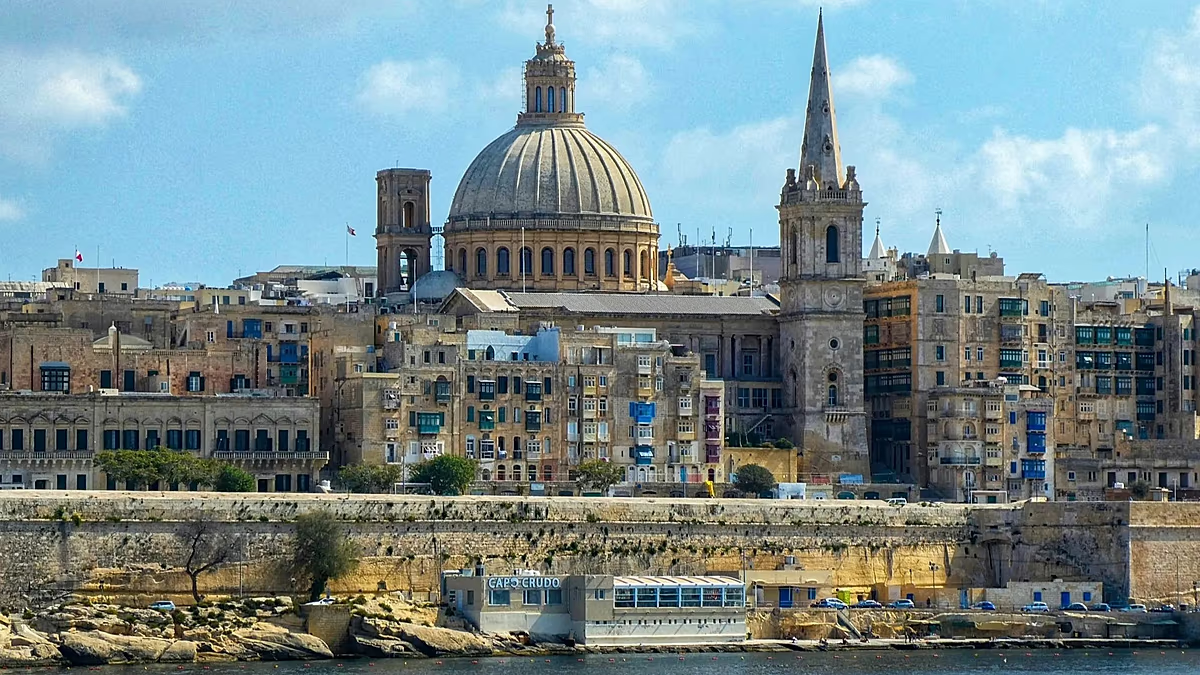
It is no small coincidence that these figures were unveiled in Malta, a sun-soaked archipelago in the heart of the Mediterranean that has long understood the transformative power of hospitality. The occasion was the opening press conference of the WTTC’s 26th Global Summit, an event often described as the “Davos of travel” because of its ability to gather the most influential voices in the industry under one roof. This year, more than 200 CEOs and government officials have descended upon the island, joined by over 1,000 delegates from every corner of the globe. The setting itself is symbolic: Malta is a place where centuries of history collide with modern ambition, where ancient temples stand alongside sleek hotels, and where tourism is not an abstract concept but a lived reality that shapes the daily rhythm of life. The summit’s nickname is apt, because the conversations happening here are not merely about quarterly earnings or marketing campaigns; they are about the very future of human mobility, about how we move across borders in a world that is simultaneously more connected and more fragmented than ever before. The atmosphere in the conference halls is a mix of urgency and optimism, with delegates swapping stories of recovery, sharing lessons learned from crises, and brainstorming ways to ensure that growth does not come at the cost of the destinations people cherish. There is a palpable sense that this is a pivotal moment—that the decisions made in Malta over the coming days will ripple outward, shaping the travel landscape for years to come. Whether it is the push for greener aviation fuels, the adoption of digital identity systems to speed up border crossings, or the delicate balancing act between welcoming tourists and protecting local neighborhoods, the summit is a crucible of ideas. And in the midst of all the policy discussions and panel debates, there is also something more human at play: the simple joy of gathering, of looking someone in the eye, of sharing a meal and a laugh. It is a reminder that the travel industry, for all its data and forecasts, is ultimately about people—about the connections we make and the memories we carry home.
Paragraph 4: Leadership Voices and the Call for Action
The message from the summit’s leadership was clear and resolute. Gloria Guevara, the WTTC’s President and CEO, framed the moment not just as a recovery but as a chance to reshape the sector for the better. “This is a sector that is ready to invest and innovate,” she said, “but governments must create the right conditions—enabling seamless travel, strengthening connectivity, developing talent and supporting sustainable growth.” Her words carry weight because they acknowledge a fundamental truth: the private sector can build the planes, the hotels, and the digital platforms, but it cannot single-handedly remove the barriers that stand in the way of smooth travel. Visa delays, outdated infrastructure, labor shortages, and fragmented regulations all threaten to slow the momentum that the industry has worked so hard to build. Guevara’s call is for partnership, for a shared sense of purpose between public and private actors who sometimes operate in silos but who ultimately depend on one another. “The choices made today will determine how much of this opportunity Europe captures,” she added, a gentle but pointed reminder that growth is not automatic. It must be cultivated through deliberate policy, through investment in education and training, and through a genuine commitment to sustainability that goes beyond marketing slogans. Her sentiments were echoed by WTTC chairman Manfredi Lefebvre, who praised Malta’s government for its strong leadership and commitment to the sector. “Over the coming days, we will strengthen partnerships, advance new initiatives and help ensure Travel & Tourism continues to drive growth, investment and opportunity around the world,” he promised. These are not empty platitudes; they are the guiding principles of an industry that has learned, through crisis, that resilience requires preparation, collaboration, and a willingness to imagine new ways of doing things. The presence of high-level officials, including former Canadian Prime Minister Justin Trudeau, European Commissioner for Sustainable Transport and Tourism Apostolos Tzitzikostas, and the first U.S. Presidential Envoy for Tourism Nick Adams, underscores the extent to which travel has moved from the periphery to the center of political and economic discourse. Tourism is no longer seen as a nice-to-have; it is recognized as a cornerstone of prosperity, a driver of peace, and a barometer of global confidence.
Paragraph 5: The Big Conversations on Sustainability and Community
Beyond the forecasts and the speeches, the real work of the summit unfolds in panel discussions and breakout sessions, where the industry’s thorniest questions are tackled head-on. One of the most pressing themes is the paradox of success: how to encourage tourism growth without harming the very places that travelers come to see. Overtourism, once a buzzword, has become a tangible crisis in cities like Barcelona, Amsterdam, and Venice, where residents have pushed back against the relentless tide of visitors, rising rents, and the transformation of historic neighborhoods into theme parks. The summit’s agenda, under the banner of FUTURE[RE]SET, is designed to confront these tensions honestly, bringing together voices from the industry, local governments, and community advocates to find a path forward. Sustainability, of course, remains at the heart of the conversation—not just the narrow definition of reducing carbon footprints, but a broader vision of tourism that respects ecosystems, preserves cultural heritage, and distributes economic benefits more equitably. Accessibility is another key theme, with a growing recognition that travel should not be a privilege reserved for the able-bodied and affluent, but a right available to everyone, regardless of physical limitations or financial means. The summit is also grappling with the workforce challenge: the pandemic pushed many skilled workers out of the industry, and attracting them back—and training a new generation—requires a reimagining of what a career in tourism looks like. These are not easy problems, and the panels reflect a healthy diversity of opinion, but the fact that they are being discussed openly, at the highest levels, is itself a sign of maturity. The travel industry has moved beyond the naive optimism of “just add more flights and hotels” into a more nuanced understanding of its responsibilities. The presence of figures like Trudeau, a global statesman known for his focus on inclusive growth, and Adams, representing the United States’ renewed commitment to tourism diplomacy, signals that these conversations are being taken seriously far beyond the confines of the conference center. What emerges from these discussions may not be a single grand solution, but a series of pragmatic commitments—pilots, partnerships, and policies—that can be tested, measured, and scaled. In the end, the summit is not an end in itself; it is a launching pad for action.
Paragraph 6: The Road Ahead and the Choices That Matter
As the summit in Malta unfolds, the larger story is one of cautious optimism tempered by realism. The WTTC’s forecasts for 2026 are undeniably encouraging, but they are also a call to arms. Europe has an opportunity to lead the world in demonstrating how tourism can be a force for good—economically, socially, and environmentally. But that leadership will not happen by default. It will require governments to streamline visa processes, invest in sustainable transport networks, and support small businesses that form the backbone of the tourism ecosystem. It will require the industry to embrace innovation, from artificial intelligence that personalizes travel to green technologies that reduce aviation’s carbon footprint. And it will require travelers themselves to think more deeply about the impact of their choices, to seek out authentic experiences that benefit local communities, and to travel with the humility of guests rather than the entitlement of consumers. The choices made today, as Guevara warned, will indeed determine how much of this opportunity is captured. The path is not without obstacles: geopolitical tensions could escalate, inflation could tighten budgets, and climate change could upend destinations that we take for granted. Yet the resilience of travel is not a new phenomenon. People have always moved, explored, and sought connection, even in the darkest of times. That impulse is not going to disappear. What is happening in Malta is a recognition of that enduring truth, and a determination to build a future for travel that is as sustainable as it is exciting. For the 1,000 delegates and 200 leaders gathered on that Mediterranean island, the work is only just beginning. But there is a sense that they are on the right track—that the industry, having weathered the worst of the pandemic and the shockwaves that followed, is finally ready to not just recover, but to redefine what it can be. The numbers are promising, the mood is buoyant, and the conversations are substantive. Now comes the harder part: translating all that energy and ambition into a reality that benefits everyone, everywhere, for years to come. If the summit’s opening is any indication, the travel and tourism sector is more than ready to rise to the challenge.