


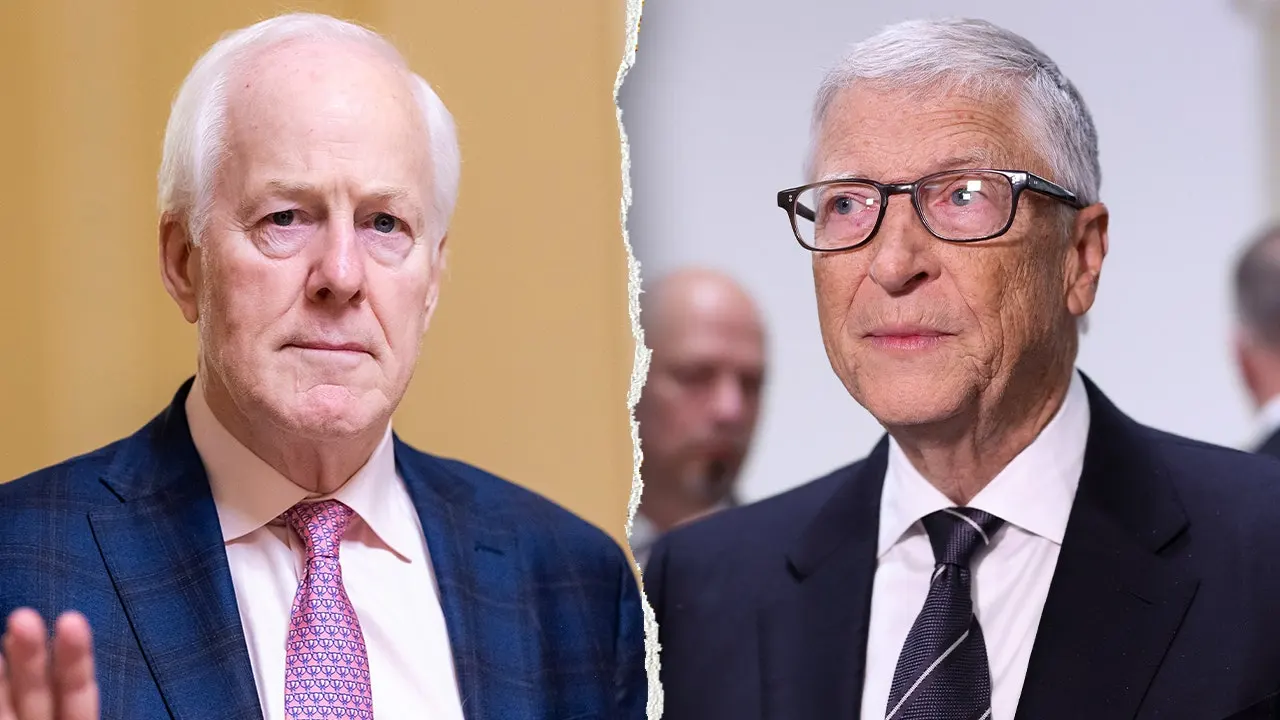
It is not every day that a technology billionaire looks into the future and sees mass mortality on a global scale, but that is precisely what Bill Gates did recently when he suggested that artificial intelligence could lead to “a billion deaths.” The Microsoft co-founder’s warning, delivered on NBC’s Meet the Press, landed like a thunderclap on Capitol Hill, where lawmakers are already wrestling with the breakneck speed of AI innovation and what it means for humanity. Gates is far from alone in his anxiety. Anthropic CEO Dario Amodei and OpenAI CEO Sam Altman, both central figures in the AI boom, have also raised alarms about the technology’s darker possibilities. Some in the industry have warned that AI could, within a decade, pose an existential threat so severe that it might wipe out all human life. But Gates’s more specific figure—a billion deaths—struck a chord, not because it was precise, but because it framed the debate in human terms rather than abstract ones. That human framing is precisely why the reaction among senators has been so visceral, and so divided. Some lawmakers hear Gates’s warning as a sober call to action. Others hear it as theatrical fearmongering, a convenient story designed to scare the public into demanding regulation that might actually entrench the largest tech companies even further. The result is a Capitol Hill landscape where the same sentence can be interpreted as a prophecy, a political ploy, or something in between, depending on which side of the aisle you occupy. There is no question that AI is evolving faster than the law can keep up, and that alone would make this a moment of legitimate public concern, but the Gates warning has transformed that concern into a firestorm of partisan tension.
Senator John Cornyn of Texas wasted no time dismissing Gates’s claim as “incredibly irresponsible.” For Cornyn, the warning is not just overheated rhetoric; it is a strategic move by the tech elite to shape the regulatory environment in their own favor. He invoked the concept of regulatory capture, the phenomenon by which powerful companies welcome government oversight because compliance costs and administrative burdens are so high that only the largest players can afford them, effectively locking out smaller competitors. In Cornyn’s telling, the demand for AI safety regulations is not a noble crusade to protect the public but a convenient shield for a handful of dominant firms to solidify their market power. The alarm about “a billion deaths,” he suggests, is precisely the kind of apocalyptic scenario that makes legislators feel compelled to act quickly, without the nuance required to separate genuine risks from speculative ones. When lawmakers act in a frenzy, they tend to write broad rules that favor those who already have armies of lawyers, lobbyists, and compliance officers. Startups and challengers, by contrast, often cannot bear that burden. And so, Cornyn argues, the very people who are warning about the end of the world may end up being the only ones left standing when the regulatory dust settles. His skepticism also extends to the broader political environment. He sees the calls for government intervention as an overreaction to a technology that, while powerful and in need of responsible stewardship, is fundamentally a driver of economic growth and national strength. In his view, to throttle AI now would be a mistake, not only for the economy but for American leadership in a field that is rapidly becoming the arena of great-power competition. Cornyn’s position captures a real tension in the Capitol Hill debate: the question of whether regulation is a safety net or a moat.
Senator Angus King, the independent from Maine, takes a very different view. He does not dismiss Gates’s warning as hyperbole, nor does he shy away from the magnitude of the potential threat. King points out that Gates’s “billion deaths” statement is not necessarily more extreme than other projections that have floated around the AI community, including talk of a ten percent chance of wiping out all of humanity. To him, that kind of risk, even if it is only a possibility, demands a serious government response. His argument is rooted in a simple but powerful observation about the structure of the tech industry. Companies are locked in fierce competition with one another, and that competition creates a collective action problem. If one company decides to slow down, implement extra safeguards, or voluntarily limit its own AI capabilities, it risks losing ground to a rival that is willing to move faster and take more chances. In such an environment, relying on industry self-regulation is, at best, naive. King’s logic appeals to the familiar dynamic of the tragedy of the commons, where shared resources are depleted because each individual actor has an incentive to exploit them rather than preserve them for the common good. In this case, the shared resource is human safety, and the actors are the most powerful corporations and government-funded research labs on the planet. King argues that only the federal government can break this destructive cycle by establishing baseline rules that apply to everyone. If every company is required to meet the same safety standards, then no single firm has to worry that its caution will hand the advantage to a reckless competitor. Without such oversight, King fears a race to the bottom, where cutting corners becomes the rational choice for every company trying to survive in the market. And behind the domestic competition looms an international one, especially with China making massive investments in AI, which only complicates the picture further.
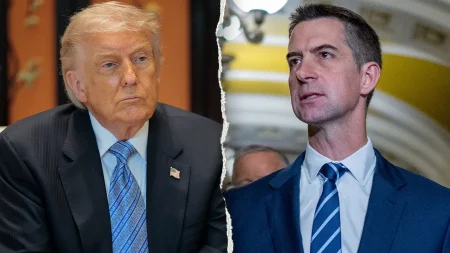
The China angle is one that many Republican senators bring up when discussing AI policy, and it is a significant part of the conversation around Gates’s warning. President Donald Trump has explicitly pushed back on calls to slow AI development, arguing that doing so would hand a competitive advantage to Beijing. Senator John Hoeven of North Dakota captures this sentiment with his call for “common sense.” Hoeven acknowledges the importance of safety but insists that the United States must continue to develop AI rapidly and stay ahead of adversaries. Cornyn agrees, saying the administration is generally on the right track by avoiding a “heavy hand” on a technology that will be fundamental to both the economy and national security. This perspective is not simply about dominance for its own sake. There are real national security implications to AI, from autonomous weapons to cyber warfare to intelligence analysis. If America falls behind China in AI development, the argument goes, the consequences could be catastrophic in ways that are much more concrete than the speculative doomsday scenarios. The fear of Chinese AI supremacy is already shaping policy discussions, and it has been the subject of expert warnings about Beijing’s use of AI for surveillance, disinformation, and military purposes. For many Republicans, the greatest risk is not that AI will kill a billion people, but that the United States will become dependent on or vulnerable to an authoritarian rival that has no qualms about using AI aggressively. In that context, Gates’s warning starts to look almost counterproductive. By focusing on hypothetical catastrophic risks, he may be feeding into a narrative that encourages the U.S. to hesitate at exactly the moment when boldness is required. That is why the debate is so tangled: the very same warning that one senator sees as a necessary wake-up call, another sees as a dangerous distraction from strategic reality.
The political timing of all this is impossible to ignore. The conversations about AI safety ramped up in Washington just before both chambers of Congress went on recess in the lead-up to the midterm elections. During the tense final days of the legislative session, a number of Democrats urged their colleagues to stay in Washington and address the AI issue before heading home to campaign. They argued that the warnings from industry leaders like Gates were urgent enough to warrant immediate action, and that passing legislation to establish safeguards should be a priority. Senator Elizabeth Warren of Massachusetts was among the most outspoken. She expressed deep concern that Gates’s prediction might simply fall on deaf ears among Republicans who are uninterested in any regulation. Warren’s critique was blunt: she accused the Republican leadership of wanting to send everyone home, effectively kicking the can down the road, because President Trump does not want to do anything about AI. For Warren, the issue is not just about technological risk but about political accountability. She believes that Congress has a responsibility to protect the public from dangers that the market cannot solve on its own, and that shirking that duty for the sake of electoral convenience is a dereliction of duty. The recess decision itself became a point of contention, highlighting the deep partisan divide over how to handle AI. Democrats framed the recess as an abandonment of a grave responsibility, while Republicans counters that staying in session would have accomplished little more than political theater. The broader election context also matters because the midterms will determine the balance of power in Congress, which in turn will shape the trajectory of AI legislation for years to come. Nothing about this debate is happening in a vacuum; every argument about AI policy is also an argument about who gets to control the future, and that is an inherently political question.
At its heart, the fight over Bill Gates’s warning is a fight about how we as a society should respond to uncertainty on a scale we have never faced before. Humanizing the conversation means remembering that behind the billion-dollar corporate stakes and the geopolitical chess matches, there are everyday people whose lives will be shaped by the decisions made in Washington, Beijing, and Silicon Valley. The technology itself is neither good nor evil; it is a tool, but it is a tool of unprecedented power. It can help doctors discover cures, teachers personalize learning, and engineers solve climate change. It can also be used to spread disinformation, automate discrimination, and, in the worst-case scenarios that Gates and others envision, cause catastrophic harm. The challenge for lawmakers is that they are being asked to regulate a moving target, a technology whose capabilities are expanding almost daily. What seems too futuristic to regulate today may become a present danger tomorrow, and what seems urgent today may turn out to be overblown. The senators quoted in the debate each bring a piece of the truth. Cornyn is right that regulations can be captured by incumbent power and used to stifle competition. King is right that competition creates dangerous incentives that only government can counteract. Hoeven is right that America must not cede technological leadership. Warren is right that elected officials have a responsibility to act even when the political cost is high. But none of these truths exists in isolation, and the ideal AI policy would somehow have to weave them together, promoting innovation while ensuring safety, staying globally competitive while avoiding a reckless arms race, and regulating without entrenching monopoly power. That is an enormously difficult needle to thread, and it is made harder by the fact that the very people most capable of advancing AI, the industry leaders issuing these warnings, also have vested interests in how the rules are written. Perhaps the most human response to Gates’s apocalyptic vision is not to accept it or dismiss it, but to hold it in tension, allowing it to sharpen our focus without paralyzing our judgment. The future is always uncertain, but the choices being made right now by a handful of senators, executives, and regulators will determine whether that uncertainty becomes an opportunity or a catastrophe. The only certainty is that ignoring the question will not make it go away.