




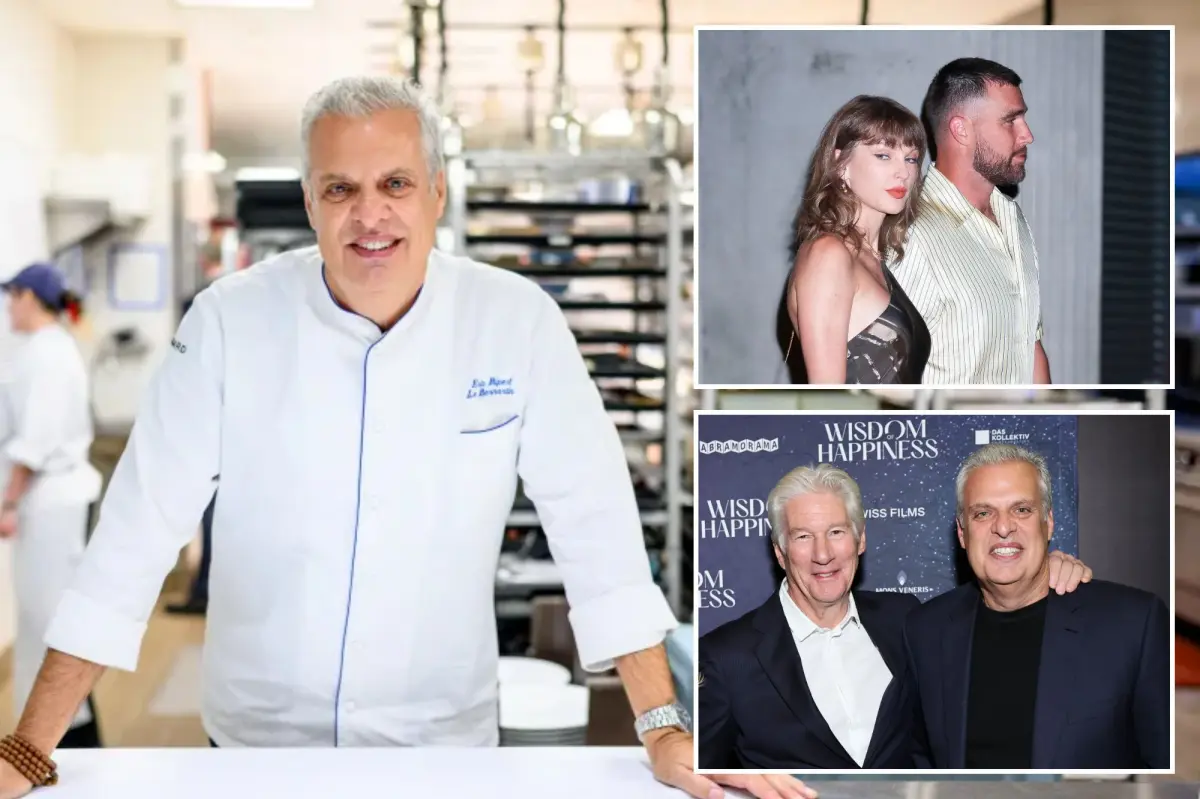
In the glittering world of Michelin-starred dining, Le Bernardin has long been a stage where culinary artistry meets celebrity culture. Tucked into Midtown Manhattan on West 51st Street, this temple of French seafood has hosted everyone from royalty to rock stars, Oscar winners to tech billionaires. But one famously blank space remains in the reservation book: Taylor Swift. Chef Eric Ripert, the soft-spoken Frenchman who has helmed the restaurant for decades, admits with a gentle laugh that the global pop superstar has never darkened his doors. “No, she never came,” he says, a hint of playful hope in his voice. “Maybe if she reads the article, she will be inspired to come here.” It is a charming invitation, the kind that makes Le Bernardin feel less like a fortress of fine dining and more like a neighborhood bistro with extraordinary pedigree. The restaurant’s fame rests not only on its flawless technique and pristine ingredients but also on the intimacy it offers; celebrities come not to be seen, but to be fed well and left alone. Ripert himself embodies a calm, monastic presence in the kitchen, a Buddhist-influenced philosopher who happens to cook some of the most exquisite seafood in the world. His new cookbook, “Mindful Cooking,” due out Oct. 6, is a meditation on food and spirit, but the restaurant remains a bustling stage where ordinary diners and famous faces share the same wood-paneled room, the same white tablecloths, the same discreet service. And yet, for all its glamour, the chef insists that the magic is not about who walks through the door — it is about what happens on the plate. Still, the question of celebrity captures the imagination, and Ripert is happy to share a few anecdotes, not out of name-dropping but out of genuine fondness for the people he has come to know over 46 years in the kitchen.
One of the first names that comes to Ripert’s mind is Richard Gere. The actor, forever etched in popular memory as the romantic hero of “An Officer and a Gentleman,” has a standing love affair with Le Bernardin. “Richard Gere likes to eat a lot at Le Bernardin,” Ripert says, “and when he’s in town, he’s always visiting us. It’s always a pleasure to feed him and speak to him a little bit.” There is something genuinely warm in the chef’s voice as he describes the star, not as a VIP to be managed but as a familiar friend who happens to know his way around a menu. The same goes for Jay-Z and Beyoncé, whose powerhouse presence could overwhelm any room, yet who apparently slip into the restaurant’s rhythm with ease. John Legend, too, has sat at those tables, and Mick Jagger has made repeat visits, often because he is friends with Ripert’s business partner. “Mick Jagger comes to Le Bernardin when he is in town,” Ripert notes, “and he’s friends with my business partner, so he’s always at ease and happy.” There is a lovely irony in the image: the Rolling Stones frontman, the embodiment of rock-and-roll excess, relaxed and content in a Michelin-starred seafood temple, perhaps feeling the same comfort that any loyal regular feels. The chef does not treat these encounters as extraordinary. He does not roll out a gold-rimmed tasting menu for royalty or custom-design a dish for a rapper’s dietary preferences. “They choose from the menu, or they ask me to choose for them whatever I want, which is generally from the menu,” he explains. In a town where fame often demands special treatment, Le Bernardin offers something rarer: consistency. “To me, every client is the same,” Ripert says firmly. “We cannot have different standards.” That democratic philosophy is at once humble and radical. It explains why the restaurant has survived and thrived for decades, and why celebrities keep returning. They are not paying for exclusivity; they are paying for perfection. And in that space, everyone from a first-time visitor from Ohio to a global superstar receives the same attentive, precise, generous hospitality. The real luxury, Ripert seems to suggest, is being treated like everyone else when you are used to being treated like no one else.
The chef’s equanimity extends beyond cooking. In nearly half a century in the business, Ripert has never felt a flutter of nerves when cooking for famous faces. That is not arrogance; it is the result of decades of discipline and a clear-eyed view of what he does. He cooks to nourish, and every diner deserves the same level of care. The paparazzi, however, can create a different kind of drama. Le Bernardin sits in Midtown, and on any given night there may be photographers lurking outside, hoping to capture a star leaving with a doggy bag or lingering over dessert. But sometimes, the celebrities themselves are the ones who summon the cameras. Ripert recounts a particularly amusing incident involving a very powerful politician whose name he refuses to reveal. Midway through dinner, the restaurant suddenly found itself surrounded by around twenty paparazzi, cameras aimed and ready. Ripert, thinking he was doing a good deed, went over to the politician and whispered, “If you want, we can get you out through other ways.” The politician waved off the offer with a smile. “No, don’t worry,” he said. “It’s me, we called them.” The story is a delightful peek behind the curtain: in a world where image is currency, even a discreet fine dining room can become a stage for a carefully orchestrated appearance. For Ripert, though, it was just another evening. He has seen it all. He has cooked for presidents and poets, actors and activists, musicians and monks. He knows that fame is fleeting but taste is permanent. The restaurant’s walls could tell a thousand stories, but the chef’s calm demeanor suggests that none of them have rattled him. He measures success not by the wattage of his clientele but by the quiet satisfaction of a diner finishing a plate of perfectly cooked wild salmon or sighing over a spoonful of chocolate mousse. That grounding, almost Zen-like perspective is part of what makes his cooking so distinctive. It comes from a place of inner stillness, not external validation.
If there is one guest who truly moved Ripert, it is not a movie star or a rock icon but a spiritual leader: the Dalai Lama. The Tibetan Buddhist spiritual leader has visited Le Bernardin twice, and Ripert has had the singular honor of cooking for him both times. On the first visit, Ripert prepared wild salmon; on the second, filet mignon. Both meals were no doubt executed with the chef’s signature precision. But it was not the main course that lingered in Ripert’s memory. It was dessert. “He never really showed much emotion,” Ripert recalls with quiet awe, “except when he had the chocolate mousse.” There is something both funny and profound in that image: the Dalai Lama, a master of equanimity, his face breaking into a moment of pure, unguarded pleasure over a simple chocolate mousse. It is a reminder that great food has the power to pierce even the most disciplined consciousness. Ripert himself is a student of Tibetan Buddhism, and his connection with the Dalai Lama runs deeper than a shared meal. The chef has traveled to Buddhist monasteries in Asia, where he has observed a way of life that regards food not merely as fuel but as medicine for body and mind. In these monasteries, monks follow a plant-based diet, often avoiding animal products out of compassion for all sentient beings. They also abstain from certain vegetables, including garlic and onions, for reasons that are both practical and spiritual. Ripert explains that onions are said to induce sleepiness during meditation and to cause disturbing dreams. Garlic, meanwhile, is believed to speed up the blood circulation, and warming the blood is considered unhelpful for a calm meditative state. He adds, with a wry smile, “And as you can imagine, a thousand monks with garlic breath is a bit of a problem sometimes.” The joke is perfectly in character — a chef who can find humor in the intersection of culinary tradition and monastic discipline. But the underlying wisdom is serious: “They consider food as medicine. They believe everything that we put in our body will have a positive or negative effect depending on what it is.” That philosophy has clearly seeped into Ripert’s own approach. His cookbook, “Mindful Cooking,” is an attempt to translate that ancient wisdom into a modern kitchen, encouraging home cooks to think not just about flavor but about intention, balance, and nourishment. It is a far cry from the intensity of a three-Michelin-star kitchen, yet for Ripert, the connection is natural. Whether he is preparing a hyper-refined dish for Le Bernardin’s dining room or a simple vegetable plate inspired by a monastery kitchen, the goal is the same: to feed the body and the spirit.
At Le Bernardin, the menu is dominated by the sea: delicately sliced raw fish, ethereal sauces, textbook-perfect cooking. But when asked about the restaurant’s best-selling dish, Ripert does not hesitate. It is the carpaccio of tuna on a toasted baguette with foie gras. The dish is a paradox — a light, oceanic starter enriched with the lush decadence of foie gras, set against the crunch of toasted bread. It has become a signature, a one-bite legend that diners request by name. It sold so well, in fact, that Ripert once made a daring decision: he took it off the menu. His reasoning was almost paternal. He wanted his customers to explore other dishes, to discover the depth and breadth of the kitchen’s creativity rather than anchoring themselves to a single familiar pleasure. The reaction was swift and brutal. “For the first time in my career, I saw really angry clients,” he says. They were vocal. They called him to their tables. They explained, with considerable heat, that removing the dish was a huge mistake and that they were very unhappy. The anecdote is a testament to how deeply attached we become to the foods we love, how a single dish can become a ritual, a point of comfort, a personal signature. It also reveals Ripert’s willingness to listen. He understood, perhaps through a flash of analogy, that some culinary experiences are not replaceable. He compares the outrage to what might happen if the Rolling Stones announced they were suddenly not going to play “Satisfaction.” “You can’t do that,” he says. The analogy is perfect: for fans, a Stones concert without “Satisfaction” would feel incomplete, even if they have heard it a thousand times. The same is true for Le Bernardin regulars and their beloved tuna carpaccio. It is not just a dish; it is an expected beat in a familiar symphony. After that episode, the dish returned, and it has remained a crown jewel of the menu ever since. The lesson Ripert took from the experience is not about giving in to demands but about understanding the emotional relationship between diners and food. In a world where trends change and chefs constantly rewrite menus to chase innovation, there is also profound value in stability. Sometimes, the most respectful thing a chef can do is keep the plate that makes people happy.
Le Bernardin is more than a restaurant; it is a living archive of memories, relationships, and flavors. Ripert’s nine cookbooks, including the upcoming “Mindful Cooking,” are extensions of his philosophy, but the restaurant itself remains the ultimate expression. For over three decades, he has presided over a kitchen that has earned the highest honors and the loyalty of a diverse clientele. From Taylor Swift’s notable absence to Richard Gere’s regular visits, from Jay-Z and Beyoncé’s power-dinner vibes to Mick Jagger’s old-friend ease, from a politician who called his own paparazzi to a Dalai Lama who melted over chocolate mousse, the stories are endless. Yet what makes Ripert so compelling is not the celebrity gossip but his unwavering humility. He treats every diner with the same respect, whether they are a world leader or a couple celebrating an anniversary with their savings. He is not starstruck; he is present. And his meditation on food — shaped by Buddhist monasteries, by the discipline of French technique, by the simple joy of feeding people — reminds us that food is never just about eating. It is about connection: to ourselves, to others, to the moment. That is why removing the tuna carpaccio caused such an uproar; why the Dalai Lama’s smile over chocolate mousse is a cherished memory; why a pop star who has never dined at Le Bernardin might still, one day, find herself seated at a table there, looking at a menu and wondering what to order. If she does, Ripert will likely greet her with the same warm, unhurried attention he gives everyone. He might suggest the wild salmon or the tuna carpaccio. He might simply say, “Let me take care of you.” And that, in the end, is the real magic of Le Bernardin. It is a place where every plate is an invitation to slow down, to taste, to be present. The celebrities come and go, the lights flash and fade, but the table remains — a blank space, perhaps, where anything beautiful could happen.