


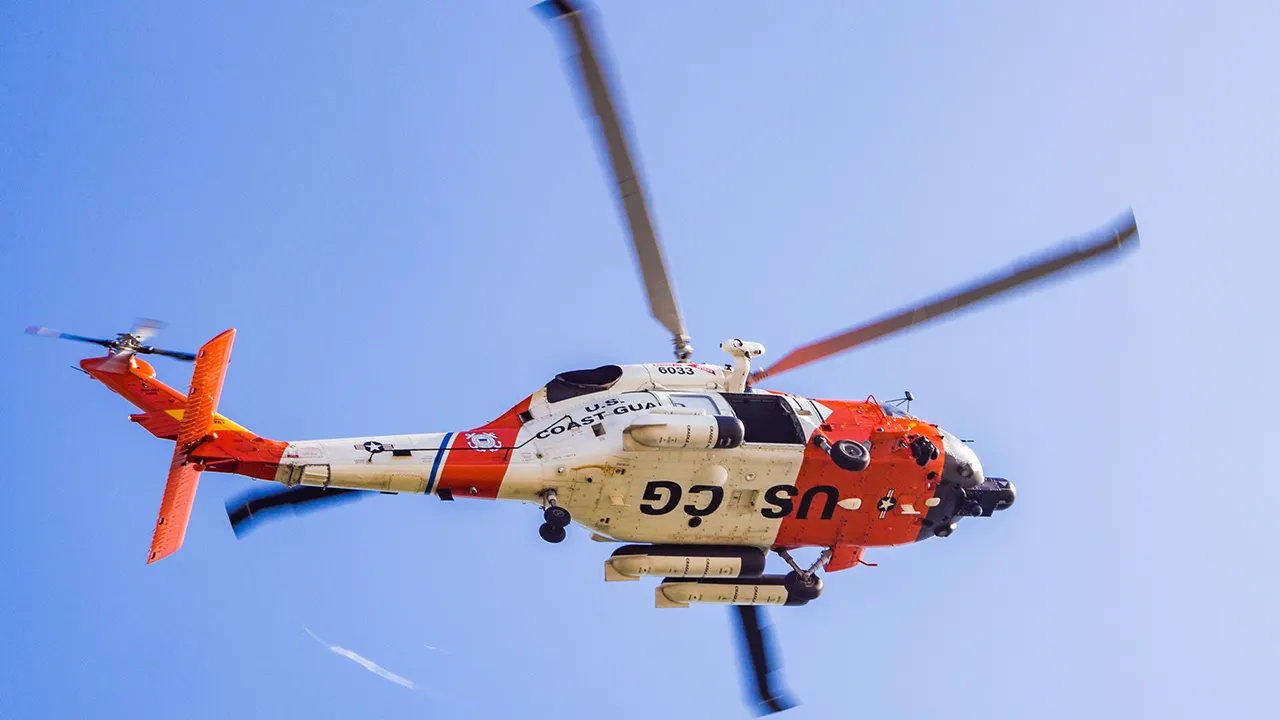
The evening calm surrounding Catalina Island was shattered on Wednesday when a medevac helicopter, returning from the island after a medical transport, plunged into the dark waters just off its coast. The crash, which occurred shortly before 8 p.m., left five people aboard the aircraft fighting for survival in the cold Pacific. As emergency alerts rippled across Los Angeles County, the scene shifted from a routine medical evacuation to a frantic search-and-rescue operation. By late night, four of the five occupants had been pulled from the water and rushed to hospitals, but one remained unaccounted for, leaving a hollow space in the hearts of responders and loved ones alike. The aircraft, operated by Reach Air Medical Services, had been heading back to the mainland after completing a mission, a moment that should have been the final leg of a life-saving journey. Instead, it became the beginning of a nightmare that would unfold under the moonlight, with rescue helicopters thundering overhead and divers descending into the blackened sea, all in a desperate race against time.
The response was swift and overwhelming, as multiple agencies converged on the remote crash site. The Los Angeles County Fire Department received the first reports of the downed helicopter and immediately launched a coordinated effort, dispatching its own helicopters and specialized dive teams to the waters surrounding the island. The U.S. Coast Guard, never far from maritime emergencies, also joined the operation, scanning the surface with searchlights and coordinating the search grid. Local authorities, including Avalon Fire and the Los Angeles County Sheriff’s Department, were on the scene within moments, their boats cutting through the waves to reach survivors. Los Angeles County Supervisor Janice Hahn, who has long been a voice for the island communities, shared the news on social media, her words carrying both urgency and prayer. “I have been informed that a medevac helicopter leaving Catalina Island has crashed shortly after takeoff,” she wrote. “L.A. County Fire, Sheriff, Coast Guard, and Avalon Fire are on the scene. Search and rescue operations are underway, and I am praying for everyone who was on board.” The message reflected the collective anxiety of a region that knows too well how quickly routine can turn to tragedy.
As the night wore on, the human toll began to emerge, piece by piece. Of the five souls aboard the helicopter, one was still missing, a fact that hung over every update like a fog. The other four had been recovered, but their conditions varied in ways that only deepened the worry. Two were transported to hospitals in stable condition, their injuries seemingly survivable, offering a fragile thread of hope. The remaining two were taken in unknown condition, a phrase that left everything to the imagination and nothing to certainty. The Los Angeles County Sheriff’s Department confirmed that two of the survivors were taken to a hospital on Catalina Island, while the other two were airlifted to the Ronald Reagan Medical Center at UCLA, a major trauma center on the mainland. For the families of those aboard, the wait for news must have been agonizing, each phone call and hospital corridor an exercise in endurance. In these moments, the names and roles of the five individuals become more than just details; they become reminders of the fragile lives behind the headlines, people with families who love them, colleagues who depend on them, and futures that are now uncertain.
The aircraft itself was a vital piece of the region’s medical infrastructure, a flying ambulance that rushes to the aid of those in remote or critical situations. Reach Air Medical Services, the company that operated the helicopter, confirmed it was aware of the incident but offered little else, citing the need for privacy and investigation. A spokesperson for Reach told CBS LA, “Our immediate concern is for the well-being of those involved.” Flight tracking data revealed the helicopter’s journey earlier that evening, departing from Oceanside in San Diego County at 6:40 p.m. and landing on Catalina Island at 7:04 p.m. It was a short hop, barely enough time to settle into the routine of the flight, and yet it was enough to end in disaster. The Los Angeles County Fire Department noted that the helicopter’s flight plan was unclear, a detail that will likely be central to the investigation. For now, the twisted wreckage lying beneath the waves serves as a silent testament to how quickly the world can turn upside down, and how the machines we trust to save lives can themselves become the focus of a rescue mission.
Medevac flights are a lifeline for Catalina Island, a picturesque but remote destination whose medical facilities are limited. When emergencies strike, these helicopters are the difference between life and death, ferrying patients across the sea to mainland hospitals. The crew members who staff these flights are trained to operate in the most demanding conditions, often at night, over open water, with lives hanging in the balance. But the very nature of their work carries an inherent risk, one that every pilot, nurse, and paramedic accepts when they buckle in for another mission. Wednesday’s crash is a stark reminder of that sacrifice, and of the bravery required to answer the call time and again. As search teams combed the waters, they were not just looking for a missing person; they were searching for a colleague, a friend, a member of a small and tightly knit community that has lost too many of its own in recent years. The news of the crash resonates far beyond Catalina, touching every air ambulance crew that has ever lifted off into the unknown, and every family that has waited at a hospital helipad for a loved one to arrive.
As dawn approaches, the search continues, and with it the fragile hope that the missing person will be found alive. The investigation into the cause of the crash will be long and meticulous, involving federal agencies, flight recorders, and countless interviews. But in the immediate aftermath, the focus remains on the five individuals and their families. Four are now in hospitals, fighting for their recovery, while one is still out there, somewhere in the cold, unforgiving sea. The prayers of Janice Hahn, the responders, and so many others are a testament to the human need to hold on to hope, even when the odds seem insurmountable. Catalina Island, a place known for its beauty and tranquility, is now a scene of sorrow and vigilance, its waters patrolled by lights and voices calling into the night. The coming days will bring answers, but they will also bring healing, as a community comes together to mourn what was lost and celebrate what was saved. For now, the world watches and waits, holding its breath for the one who has yet to be found, and sending strength to all those who are still fighting.