



1.
Let’s be honest: in-flight wifi is one of those things that somehow gets people more worked up than lost luggage or the guy who reclines his seat all the way into your knees. Half of us absolutely love it. We settle into our seat, plug in our headphones, and happily scroll through TikTok at 35,000 feet, watching videos of dogs skateboarding while we hurtle through the sky in a pressurised metal tube. It feels almost magical, like stealing a little bit of home into the clouds. The other half? They hate it. They mourn the lost golden age of flying, when being on a plane meant being unreachable, unreachable to your boss, your group chat, and the endless drip of news you don’t actually want. For them, the sky was one of the last sacred places where you could truly log off, and now even that’s being taken away. But here’s the thing: no matter which side you’re on, there’s one point we can all agree on. The only thing worse than having no wifi is having bad wifi. There is something uniquely frustrating about paying for a connection that promises to keep you connected, only to spend ninety minutes watching a little spinner icon turn while your messages refuse to send. That’s why this new ranking from Skytrax is so useful. The organisation has just revealed its list of the ten airlines with the best in-flight wifi in the world, and it’s a game-changer for anyone who cares about staying online at cruising altitude. If you’ve ever been stuck beside a window seat with a dead phone and a growing sense of panic, this list is your new best friend.
2.
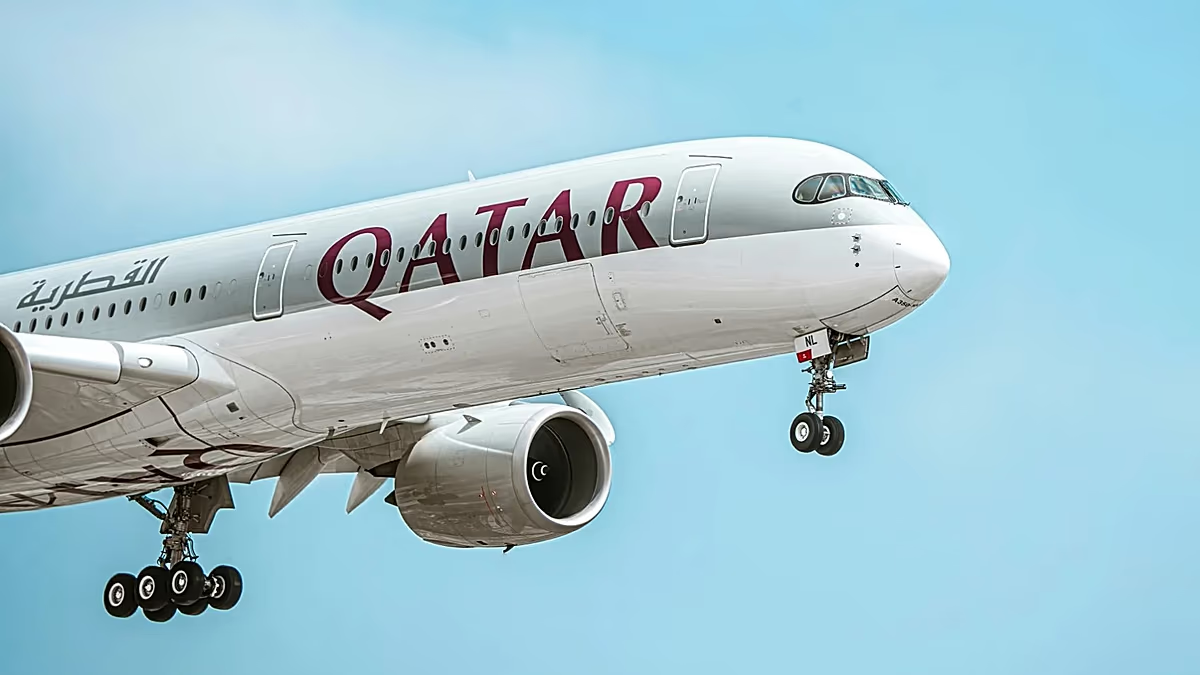
At the top of the pile, and really, nobody was surprised by this, sits Qatar Airways. The Qatari carrier has long been known for pushing the boundaries of passenger comfort, and its inflight connectivity is no different. The airline was among the first in the world to embrace Starlink, the satellite-based internet service that’s revolutionising how we connect in the sky. Unlike older systems that relied on ground towers and patchy coverage, Starlink beams internet from a constellation of satellites in low Earth orbit, which means that even when you’re flying over the middle of the ocean or across the Arctic, you can still get a signal. That’s a huge deal. It means no more “Sorry, we’ve lost connectivity” messages from a bored-sounding pilot. It means you can stream a movie, join a video call, or send a slightly panicked email to your cat-sitter without watching that little loading bar spin forever. For Qatar Airways, this move wasn’t just about keeping up with the times. It was about making sure that passengers don’t have to choose between flying with a great airline and staying connected. They want both, and now they’ve got both. The fact that Qatar Airways took the top spot also makes sense because they’ve been investing heavily in the passenger experience for years, from luxurious business class suites to some of the best food you’ll ever eat on a plane. Adding world-class wifi just felt like the natural next step. It’s almost like they looked at their already impressive CV and thought, “What else can we do to make other airlines look bad?” And apparently, the answer was “give everyone lightning-fast internet over the Atlantic.”
3.
If the top spot went to the Middle East, the real winners on this list are American carriers. Delta Air Lines, United Airlines, Alaska Airlines, jetBlue Airways, and Hawaiian Airlines took positions two through six, which is a staggering showing for a country not always known for having the best airports or train systems. But when it comes to in-flight wifi, the United States has clearly taken the lead. Delta Air Lines grabbed second place, which shouldn’t surprise anyone who has flown with them recently. They’ve been quietly rolling out faster and more reliable connectivity for years, and they’ve made it a core part of their brand. United Airlines wasn’t far behind in third, and they too have embraced Starlink, with plans to equip their entire fleet with the technology. Alaska Airlines, which is probably best known for being based in Seattle and having a slightly hippy vibe compared to other US carriers, took fourth place, while jetBlue Airways came in fifth. JetBlue has always been a little bit different, offering free wifi to passengers when many other airlines were charging extra for the privilege. It’s that kind of thinking that makes travellers love them, even when the snacks are running low. Then there’s Hawaiian Airlines in sixth, which is charming because it proves that you don’t have to be a massive global carrier to have excellent technology. You just have to care about your passengers. Together, these five airlines show that American aviation, often mocked for cramped seating and hidden fees, is actually leading the way when it comes to keeping people connected in the air. That’s a reputation worth having, especially for a country where people spend a lot of time flying between coasts.
4.
The list continues with Singapore Airlines in seventh place, which feels very on-brand for a carrier that is consistently ranked among the best in the world for almost everything else. Singapore Airlines doesn’t really do anything badly, and their wifi is no exception. They might not have the flashiest top-of-the-line Starlink installation yet, but what they offer is reliable, fast, and beautifully integrated into the passenger experience. Then comes the first and only European carrier on the list: Virgin Atlantic. That’s right, Europe, with all its fancy high-speed trains and aviation history, only managed to get one airline into the top ten, and it’s the one with the rock and roll attitude and the cheeky safety videos. Virgin Atlantic announced back in July 2025 that it would be rolling out free SpaceX Starlink wifi across its fleet, with the goal of having every single aircraft connected by 2027. The best part? Wifi is completely free for Flying Club members, and joining Flying Club is also free. So you get to earn points, get access to member benefits, and never have to pay for wifi again if you fly with them regularly. It’s a smart move, and it’s clearly already paying off, because they’ve beaten out some major players to grab the eighth spot. In ninth place is EVA Air, the Taiwanese carrier that has quietly built a reputation for excellence over the years. EVA Air might not be the first airline that comes to mind when you think of super-connectivity, but they’ve done the work and earned their place. Finally, rounding out the top ten is Emirates, the flagship carrier of the United Arab Emirates and another airline that will never let you forget that luxury is their whole personality. Emirates are known for their onboard bars, their first class suites, and their sheer love of excess, so of course their wifi is going to be good. They’re not the kind of airline that would let you sit there with a dead connection. They want you to be able to post a photo of your beautifully plated meal the moment it arrives, and honestly, we respect that.
5.
This ranking wasn’t just put together by a bunch of tech geeks in a basement. It’s part of the Skytrax World Airline Awards, which is one of the most respected honours in the aviation industry. The fact that it debuted in 2026 shows how important connectivity has become in our lives. Fifteen years ago, nobody would have thought that you’d choose an airline based on its wifi. Now, it’s one of the first things many people check before booking a flight. The awards themselves have been running since 1999, so they have decades of data to draw on, and they’re based entirely on passenger satisfaction surveys. That’s the key detail here. Skytrax doesn’t send secret inspectors to fly in disguise. They ask the people who actually bought the tickets, sat in the seats, and tried to load a video on the tarmac. This means the wifi rankings aren’t just about technical specifications. They’re about the real-world experience of trying to use wifi in a crowded pressurised cabin, dealing with login pages, spotty connections, and customer service that may or may not be helpful. In the same awards, Singapore Airlines was named the best airline overall, with Qatar Airways taking second place and Cathay Pacific Airways coming third. Turkish Airlines was the highest-ranked European carrier in fifth place, followed by Air France in seventh. So while those airlines might not have the very best wifi, they’re still doing a whole lot of other things right, and the two lists together give you a pretty good idea of which carriers are worth your money in 2026.
6.
So what does all this mean for you? Well, if you’re someone who absolutely needs to be online, whether it’s for work, family, or just to keep your Snapchat streak alive, you now know exactly which airlines to book. Qatar Airways, Delta, United, Alaska, JetBlue, Hawaiian, Singapore, Virgin Atlantic, EVA Air, and Emirates are the names to look out for. If you pick one of these carriers, you can pretty much say goodbye to the days of staring at a frozen screen while the person next to you snores loudly into their airline-branded pillow. But even if you’re one of those people who hates the idea of being constantly connected, you have to admit that the quality of this technology is impressive. We live in a world where you can be sitting in a metal tube, hurtling through the sky at over 500 miles per hour, and still manage to send a video of your lunch to your mum. That’s not just a convenience. It’s a minor miracle. The future of air travel is clearly moving in this direction. Soon, decent wifi will be as expected as a seatbelt and a tiny bag of pretzels, and the days of hoping the plane has one of those screens in every seat will be long gone. We might complain about it, we might miss the old days of being completely unreachable, but deep down, we all know that being able to scroll, stream, and send memes from 35,000 feet is pretty incredible. So here’s to the airlines that worked hard to make it happen. Here’s to fast, free, reliable wifi in the sky. And here’s to never having to fake interest in the in-flight magazine again.