


A Narrow Escape: The Attack on Sons of Jacob Synagogue and Canada’s Rising Antisemitism Crisis
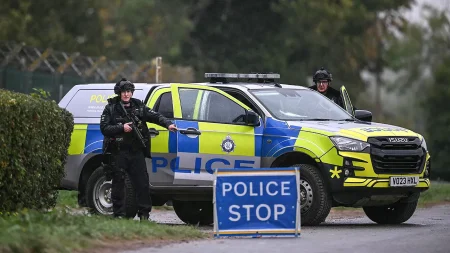
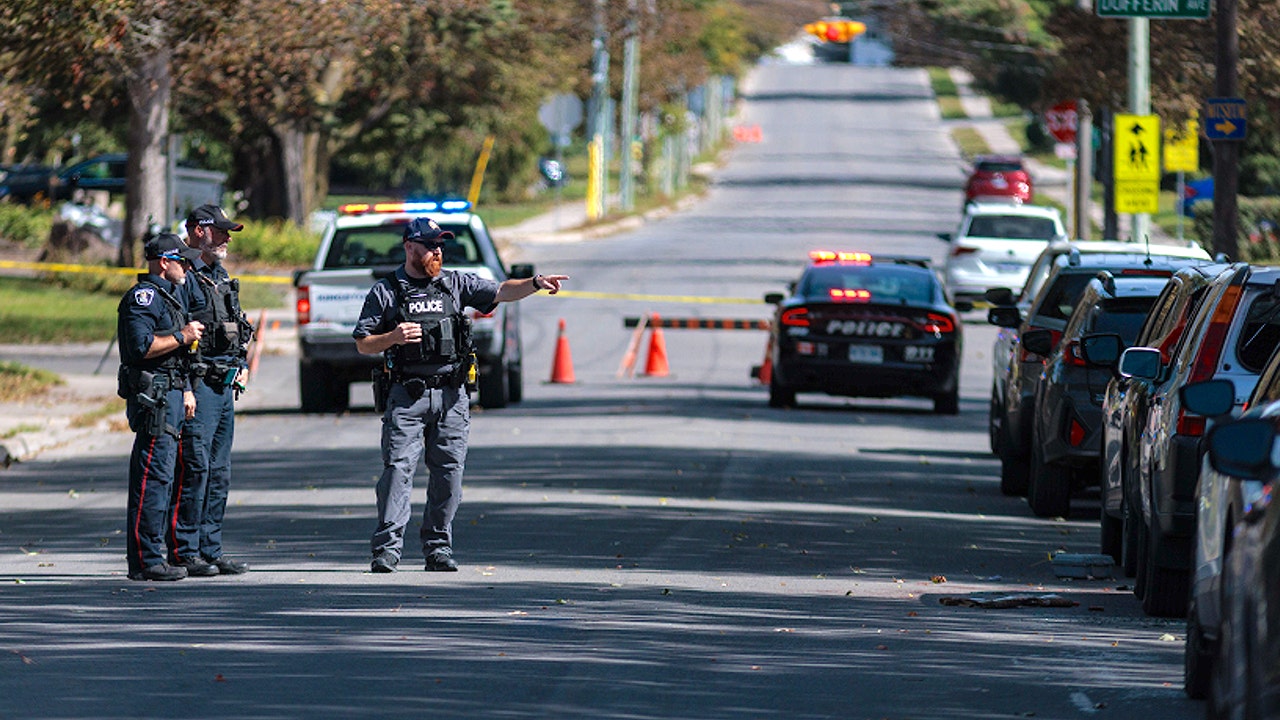
The holiest day of the Jewish calendar nearly became a scene of unimaginable tragedy. On Yom Kippur, as roughly two dozen worshippers gathered inside the Sons of Jacob Synagogue in Belleville, Ontario, a gunman approached a police cruiser parked outside. The officer sitting in that vehicle wasn’t part of a permanent security detail assigned to the synagogue. He had been dispatched after someone reported a suspicious vehicle in the area. That single decision, driven by vigilance and luck, may well have prevented a massacre that would have shaken the entire nation. Simon Wolle, CEO of B’nai Brith Canada, put it bluntly when he told Fox News Digital that the only thing standing between every congregant in that synagogue and death was the presence of that armed officer. The randomness of that protection, the sheer chance that saved those lives, has become a rallying cry for Jewish communities across Canada demanding systemic change.
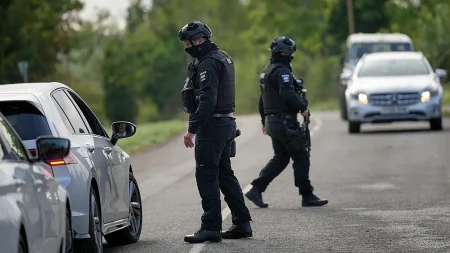
The attack unfolded with terrifying speed. According to police, 29-year-old Sean Ward approached Constable Jeff Smith and allegedly shouted, “You are going to die for the Jews,” before raising a shotgun and opening fire. Smith, still inside his vehicle, was struck multiple times. Despite catastrophic injuries, the officer somehow managed to exit his cruiser and return fire. A second officer arrived within minutes and joined the confrontation. Ward later died at a hospital, but the damage had been done. Smith now faces a long and uncertain road to recovery, suffering from multiple gunshot wounds to his head and body, along with serious head trauma. Belleville Police Chief Murray Rodd described the officer’s condition as requiring multiple surgeries and a “lengthy and challenging” recovery, though he noted that Smith is making progress every day. The officer’s wife, Ashley, has bravely spoken publicly about the ordeal, describing the shooting as “the scariest and darkest day of our lives.” Her words, still shaky with emotion, reflect a family shattered by violence but held together by love and faith.
Ashley Smith’s statement to the public and directly to the Jewish community reveals the human toll of this attack. She thanked those who have supported her husband and their family, writing, “Please know that your love, your prayers and your support have reached us. We are deeply grateful. We love you, we see you, we pray for you.” She acknowledged that her husband faces “a very long, difficult road ahead” but emphasized that he is surrounded by what she called “an army of love.” The worshipers inside the synagogue survived without physical injuries, but the psychological impact of knowing they were targeted while praying on their holiest night will linger. Investigators later revealed that the gunman had the “means, motive and mechanisms to cause a mass casualty and the destruction of the Jewish synagogue,” according to Chief Rodd. Combustible materials were discovered inside Ward’s vehicle, suggesting he had planned something far worse than what ultimately occurred. Wolle described the intended attack as a “murderous massacre” that was only prevented by the fortuitous presence of law enforcement.
For B’nai Brith Canada, this attack exposed a fundamental vulnerability in how Jewish institutions are protected across the country. Wolle argues that the current system leaves synagogues, Jewish schools, and other community organizations dangerously exposed to violence. At present, Jewish institutions can request increased police patrols, but departments cannot guarantee that officers will be stationed outside their buildings. They can attempt to hire paid-duty police officers, but availability remains severely limited. This leaves communities to rely on their own resources, spending their own money on reinforced walls, stronger fences, surveillance cameras, and whatever armed protection they can arrange. Wolle emphasized that the Jewish community is essentially pleading with local police services to provide protection when they can, with no guarantee that assistance will arrive when needed most. This precarious situation, he argues, is unacceptable for a community facing unprecedented levels of violent antisemitism.
The solution, according to B’nai Brith, requires legislative changes at both federal and provincial levels. The organization is calling for amendments that would allow Jewish institutions to hire qualified armed security guards, something currently not permitted under Canadian law. Canada’s firearms regulations are controlled federally, while private security is governed through separate provincial rules. These frameworks must be aligned to create a lawful path for trained, licensed armed guards to protect vulnerable institutions. B’nai Brith has made two specific requests: first, that laws be amended to permit qualified armed private security at Jewish institutions, and second, that the government fund an increased police presence at those locations. Wolle stressed that this proposal is not about placing firearms indiscriminately inside synagogues and schools, but rather about deploying trained, vetted, and qualified security professionals operating under a clearly defined legal framework. He emphasized that the government must meet its most basic obligation to protect its citizens, rather than leaving that burden solely on the people being threatened.
The statistics paint a disturbing picture of rising antisemitism in Canada. Statistics Canada recorded 788 police-reported hate crimes targeting Jewish people in 2025, representing more than 70% of all reported religiously motivated hate crimes that year. This is particularly striking given that Jewish Canadians constitute only approximately 1% to 2% of the country’s population. Preliminary data from B’nai Brith’s 2026 annual audit indicates that violent antisemitic incidents have already more than tripled compared with the total recorded throughout 2025. Wolle described this as “a national crisis of Jew hatred in Canada.” Prime Minister Mark Carney condemned the Belleville attack, stating, “On the holiest night of the Jewish calendar, a shooting took place outside the Sons of Jacob Synagogue in Belleville. Jewish people must be able to worship safely. To live free, open, proud Jewish lives.” While Wolle welcomes these expressions of support, he insists that Canadian Jews need their government to move beyond statements and take concrete action. “The government gives us words and no action,” he said, capturing the frustration of a community that has been warning about accelerating antisemitic violence for months and has submitted concrete action plans to all levels of government.
The Belleville attack serves as a chilling reminder of what is at stake. A single report of a suspicious vehicle led to one officer being placed outside the synagogue. That officer became the barrier between a gunman driven by hatred and the people praying inside. The congregants did not know that a man had allegedly arrived with weapons and the capacity to cause mass casualties. They were simply observing their holiest day when violence nearly erupted at their door. Wolle’s warning is stark: Canada cannot depend on chance, a suspicious-vehicle report, or the availability of a single officer the next time a Jewish institution is targeted. The people inside Sons of Jacob Synagogue survived, but their survival was not guaranteed by any system designed to protect them. It was guaranteed by luck and the bravery of an officer who, despite being severely wounded, fought back to save lives. Wolle’s final words capture the urgency of the moment: “This is not a Jewish community problem. This is a Canadian problem.” As the nation grapples with this reality, the question remains whether words of condemnation will translate into the legislative action needed to protect Jewish Canadians from the violence that threatens their communities. The answer will determine whether the next attempt at mass murder is prevented or becomes another tragedy.