



Across the Western world, a quiet but deepening unease is settling over countries that long regarded themselves as stable, cohesive, and in control of their own futures. Millions of people have arrived in recent years from poorer, often troubled parts of the world—places marked by poverty, violence, corruption, and weak governments—and while many of them are honest, hardworking people seeking safety and opportunity for their families, the sheer scale of human movement has begun to test the patience, resources, and identity of the nations taking them in. In the United States, Britain, France, Germany, and other corners of Western Europe, citizens are watching their governments strain to house, feed, and absorb newcomers, sometimes while long-suffering local communities continue to struggle themselves. Cultural traditions that once felt permanent are now openly questioned, neighborhoods are shifting, public services are stretched, and there is a growing sense that ordinary people no longer have any real say in who enters their country or how quickly the rules are changed. President Trump brought this raw tension to the world stage last week when he stood before the United Nations General Assembly and warned that unchecked migration, particularly into Western nations, is not just an administrative problem but a fundamental threat to national sovereignty. His words were pointed, and they cut hard against the grain of a global establishment that prefers to speak of human mobility as a natural, inevitable, and inherently good force. Behind his rhetoric, however, lies a debate that no amount of diplomatic politeness can hide: do nations still have the right to preserve their way of life, set their own borders, and decide who belongs? Or must they bend to a vision of global citizenship, promoted by institutions like the World Economic Forum and the U.N., that treats borders as disposable relics of a less enlightened age? For a growing number of people, the answer is no longer obvious—and for many, it is an unreserved defense of the nation-state. To understand why, one expert argues, it is necessary to look not only at the migrants themselves but at the powerful organizations and funders operating behind the scenes.
Lora Ries, director of the Border Security and Immigration Center at The Heritage Foundation, has spent years studying this issue, and she sees a pattern that is too deliberate to be coincidence. “It’s no coincidence that we’ve seen the same tactics in a handful of countries at the same time, whether that’s to the U.K., to France, to Germany, other parts of Western Europe, or to the U.S., particularly during Biden’s four years,” she said. According to Ries, much of the pressure for illegal migration comes from non-governmental groups and grantmaking networks that operate across borders, funding everything from legal aid to transportation to public advocacy. These organizations, often financed by major donors who support globalist ideals, work in parallel and sometimes in coordination, and their cumulative effect is the slow erosion of the sovereignty of the nation-state. “No longer do people in a nation get to decide who’s coming, how many, for what reason, and for how long, and whether people are complying with our laws,” she explained. The result is that citizens feel they have lost control of their own countries to forces they cannot see, cannot vote against, and cannot hold accountable. It is one thing for a nation to choose, through its elected representatives, to welcome refugees or immigrants in an orderly and deliberate manner; it is quite another to have those decisions effectively made by unelected bureaucrats, wealthy donors, and international bodies whose interests lie far beyond any one country’s borders. For the average person, the effect is a growing sense of helplessness—the feeling that no matter who is elected, the borders remain open, the values shift, and the culture changes without anyone ever asking permission. That frustration is not confined to the United States. It is reshaping politics in London, Paris, Berlin, and beyond, fueling populist movements and forcing mainstream parties to rethink assumptions they have held for decades. The more people feel their voices are being drowned out by outside forces, the louder the demand becomes for leaders who promise to restore order and control.
Standing behind this movement, in many ways, are the very international bodies that present themselves as neutral stewards of human welfare. The United Nations, the World Economic Forum, and the International Organization for Migration all speak approvingly of managed, regular, and lawful migration, framing mobility as a natural economic and demographic reality that nations should learn to accept rather than resist. The IOM, for example, says it is committed to the principle that humane and orderly migration benefits migrants and society alike. But critics see something far more troubling in these institutions’ embrace of mass movement. They point to the U.N. 2030 Agenda, the universal action plan adopted by member states in 2015 to combat poverty and fight climate change, which is built around 17 Sustainable Development Goals. Ries said that the globalists behind this agenda view mass migration as a way to achieve some, if not all, of those goals, moving people around the world as a kind of social engineering project designed to redistribute population, labor, and culture. Yet she warned that this approach is devastating to the countries doing the receiving. “It’s certainly not sustainable for the nation-states that are being overrun,” she said. There is a strange irony in all of this: institutions that claim to value humanity, cultural heritage, and sustainability are, in practice, prescribing policies that destabilize communities, strain public services, and destroy the very traditions they claim to protect. The people who push this agenda almost never bear its costs themselves. They do not live in overcrowded housing projects, spend years on waiting lists for public health care while newcomers are housed ahead of them, or watch their children’s schools struggle with language barriers and overwhelmed classrooms. They do not see their public squares transformed by customs they do not understand or hear their native language disappearing from entire neighborhoods. They speak in abstract terms about human dignity and social justice while ignoring the concrete anxieties of the populations who are expected to absorb one change after another without complaint. For ordinary voters, the phrase “global citizenship” sounds less like a noble ideal and more like an excuse to abandon the responsibilities that a government owes to its own people.
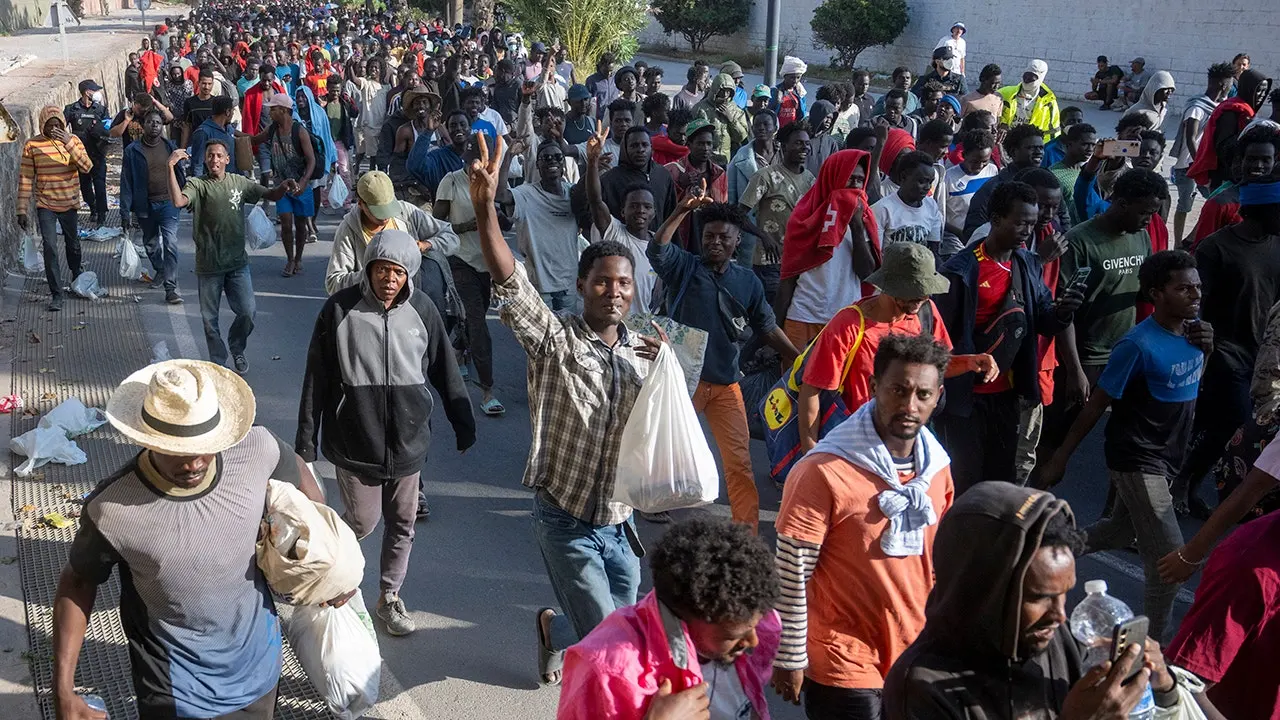
The consequences of this shift are no longer theoretical. Across Europe, communities that once felt homogenous and secure are now struggling with the strains of rapid demographic change, and the fabric of everyday life is being rewoven faster than many people can accept. Ries pointed to a widespread lack of assimilation among some migrant groups, the formation of ethnic enclaves where the local language is barely spoken, and a growing reluctance among law enforcement officials and elected leaders to address any of it because doing so might be labeled politically incorrect. In Britain and France, she said, residents are beginning to ask whether the countries they grew up in are still the same countries at all—not in some abstract constitutional sense, but in the way they look, sound, and feel. “And now we’ve got Western countries like the U.K. and France really teetering on, are they still the same countries?” she said. “The U.S. is on the same path—we’re just further behind. And so now… we have to ask ourselves, ‘Do we want to continue down the same path that the U.K. has been on? Or do we want to get off this path?’” This is not merely a matter of statistics or demographic projections; it is about the texture of daily life. It is the street signs, the languages heard in the supermarket, the unfamiliar dress, the holidays, the school curricula, and the shared assumptions that bind strangers together in civic life. When those things change quickly and without the consent of the people who live there, they feel it in their bones. They may not have the language of political science, but they know that their neighborhoods, schools, and public institutions are no longer familiar. Some cultural change can be enriching, and many immigrants bring vitality and talent to their new homes. But when it happens at breakneck speed, accompanied by illegal entry and overwhelmed public services, it breeds resentment. Political correctness, in Ries’s view, has only made matters worse by silencing legitimate questions and concerns, making people afraid to speak about what they see in their own communities. Instead of an honest, open conversation about how to integrate newcomers and protect social cohesion, many countries have opted for denial, moralizing, and the shaming of ordinary citizens. The result is a simmering anger that periodically erupts at the ballot box, in street protests, and in clashes between communities. As Spain saw just days ago, when tens of thousands of people flooded the streets to protest a border crisis, the patience of ordinary citizens has limits. The question is whether those limits will be respected before the social fabric is torn beyond repair.
Into this volatile moment stepped President Trump, delivering a speech at the United Nations General Assembly that was as direct as it was divisive. Standing before representatives of nearly every country on earth, he turned the globalist rhetoric back on itself and gave voice to arguments that many leaders refused to make. “It is deeply ironic that the United Nations has an entire institution, the UNESCO group of people and countries, devoted to protecting cultural heritage—yet, with their ceaseless promotion of mass migration, these globalists are actively destroying the greatest cultures and most extraordinary heritage in history,” he said. And then, in a line that distilled his entire philosophy into a single sentence, he declared: “There is no human right to illegal immigration, but there is a right to remain a sovereign nation.” For his supporters, these were long-overdue words of clarity and courage; for his critics, they were cynical appeals to fear and nationalism. But whatever one thinks of the man or his methods, the underlying question he raised refuses to go away. If every person on earth has an absolute right to move to any country they choose, regardless of that country’s laws, then borders are meaningless and citizenship is hollow. Most people, even among those who advocate more open borders, do not truly believe that. They hold passports, enforce immigration laws, and are remarkably selective about who is welcome in their own homes. Yet in international forums, the ideal of the borderless world is often treated as morally advanced and inevitable. Trump’s speech was a refusal to accept that premise, and its echoes reached far beyond the assembly hall. It struck a chord because so many ordinary people feel exactly the same way but have been told their views are bigoted, irrational, or simply unacceptable. Ries applauded him for saying what she believes many leaders privately think but are too afraid to voice. “Good for President Trump for calling this out on this world stage,” she said. “We need other leaders to do the same. It takes a lot of political courage, a lot of political will, and the ability to say no to this global funding and these major donors that are involved in this racket.” For Ries, the globalist project is not simply an idea; it is an industry, driven by money, ideology, and a network of institutions that profits from the constant movement of people. Naming that reality, she argues, is the first step toward resisting it.
The debate is not happening in the abstract. Events on the ground continue to give it urgency, and the next crisis is never far away. At the heart of the current situation is the asylum system, which critics say has become so broad and so easily abused that it no longer serves its original purpose. Ries argued that the meaning of persecution has been “watered down” so much that almost anyone who manages to reach a Western border can present some kind of claim, no matter how tenuous, to justify staying. To restore coherence, she said, asylum must return to its original legal definition: persecution carried out by a government actor against an individual on account of race, religion, nationality, or political opinion. Anything less, she argued, turns asylum into a backdoor for mass migration and renders real refugee protection meaningless. This matters because the number of people moving is not shrinking. Just this week, a migrant caravan that began in Honduras crossed into Mexico, with hundreds of people making their way north toward the U.S.-Mexico border, undeterred by the dangers of the journey or the shifting policies at their destination. The Department of Homeland Security responded with a blunt warning: “Migrants considering making the dangerous journey to our country should also be aware that the days of ‘catch and release’ are over, and Biden’s disastrous open border policy has been SEALED SHUT.” Whether that warning will actually change behavior remains to be seen. Previous administrations have made similar declarations, only to see the numbers climb anyway. What is clear is that the old assumptions no longer hold. Western nations are being forced to ask themselves who they are, what they value, and what they are willing to defend. The answer will not come easily, nor will it satisfy everyone. But the conversation itself is necessary and long overdue. If sovereignty means anything, it means that a people have the right to shape their own future, to decide what their society looks like, and to say no to forces that would transform it without their consent. That is the argument Trump made at the United Nations, and it is the argument that will shape the future of the West for years to come. The question is whether more leaders will find the courage to make it as well.