


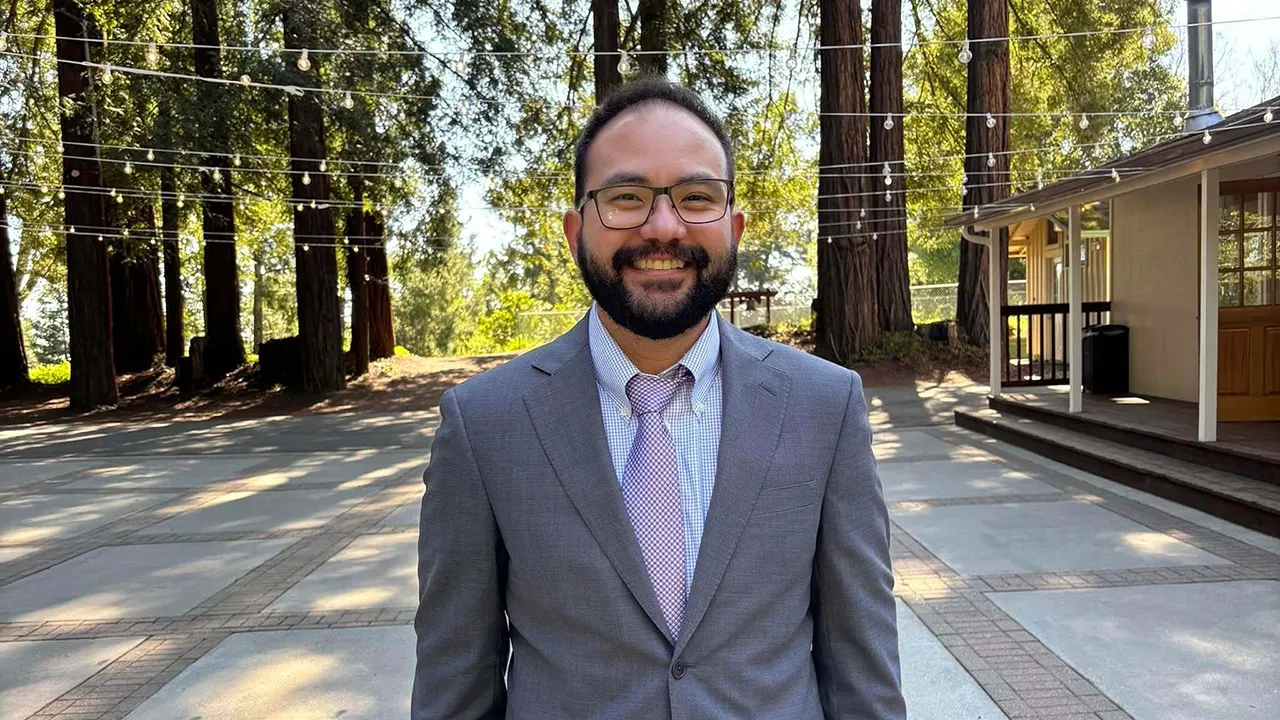
The suburban calm of Dublin, California, was shattered on a Saturday afternoon in the most violent way imaginable. The city, located in the eastern edge of the San Francisco Bay Area, is the kind of quiet, family-friendly community where neighbors wave to each other, children ride bikes along tree-lined streets, and weekends are reserved for soccer matches and slow afternoons at local parks. Yet by 3:08 p.m., that peace had been replaced by sirens, shock, and a spreading pool of blood. A Dublin Police Services sergeant who happened to be driving near the Dublin Sports Grounds spotted a man lying in the parking lot and immediately stopped to investigate. At nearly the same moment, a flood of 911 calls began coming in, each caller describing the same horrifying event: someone had been shot, and the victim was down. The man would soon be identified as Jonathan McKinsey, a 40-year-old engineering executive for New York Times Games, the team behind beloved digital puzzles that bring millions of people together every day. He was suffering from multiple gunshot wounds and was pronounced dead at the scene. But the most unsettling detail was still to come. Within minutes, witnesses pointed police to two suspects who had remained at the scene. They were Shouyong Zhang, 77, and Shili Chen, 77, both of Dublin, and both were McKinsey’s parents-in-law. The gravel-voiced, gray-haired couple, seemingly more suited to a quiet evening of tea than a violent confrontation, were arrested on suspicion of murder and taken to Santa Rita Jail. The news felt impossible: a successful man in his prime, gunned down in a public parking lot, with his wife’s parents as the alleged shooters.
The sequence of events leading to the fatal shooting remains a mystery, and investigators have released no motive. What is known is that the shooting took place at the Dublin Sports Grounds, a popular recreation area where families gather for youth sports and exercise. A police sergeant saw McKinsey lying on the asphalt and reacted with concern, not knowing at that moment whether the man was injured, unconscious, or dead. Then the 911 calls confirmed the worst. Officers swarmed the scene, tape went up, and witnesses who had just been enjoying an ordinary day suddenly found themselves recounting a nightmare. According to the Dublin Police Services, witnesses were crucial in identifying and detaining the two suspects, both of whom had stayed on the scene after the violence. Such cooperation, in the chaotic minutes after a shooting, is often the difference between an arrest and a manhunt. This time, it meant that a pair of elderly grandparents were handcuffed and led away before they could say much about what had happened. Police reassured the public that there were no outstanding suspects and no ongoing threat, but the reassurance did little to soften the grim reality. A family was broken, a community was shaken, and the silence that followed the gunfire was heavy with confusion and grief. The investigation will continue in the coming days, with detectives interviewing family members, gathering forensic evidence, and trying to understand how a relationship between a son-in-law and his in-laws could escalate into gun violence.
Jonathan McKinsey was more than a name in a police report. He was a skilled engineer who had dedicated his career to building digital experiences that made people think, smile, and connect. He joined The New York Times in January 2023 as director of engineering for New York Times Games, a role that placed him at the helm of an operation beloved by millions of users worldwide. From the daily crossword to Wordle streaks and Spelling Bee achievements, McKinsey’s work was woven into the routines of people he would never meet. He helped ensure that once a player opened the app, everything was smooth, responsive, and solid—so much so that the technology disappeared into the joy of solving. A spokesperson for The New York Times confirmed his death and expressed the organization’s deep sorrow, but no corporate statement could capture the weight of the loss. Colleagues must now reconcile their memories of a calm, collaborative leader with the brutal news of his killing. Friends and family are left to wonder what private troubles had been hidden beneath the surface of a seemingly ordinary life. There were no public warning signs, no reports of disputes, no cries for help—at least none visible to the outside world. The tragedy is that sometimes the people closest to us are the ones we understand the least, and the ones who can cause the deepest damage. In McKinsey’s case, the alleged killers were not burglars or rivals; they were his wife’s parents, the people who had raised the woman he loved.
The arrest of Shouyong Zhang and Shili Chen raises deeply uncomfortable questions about age, family, and violence. Both are 77 years old, an age at which most people are embraced by grandchildren and surrounded by the warmth of family gatherings. Yet here they were, accused of murdering their own son-in-law in broad daylight. How does a person reach that moment? Was it a long-simmering feud that exploded, a sudden argument that spun out of control, or something far more calculated? If the couple acted together, why would they both participate in such an act? If only one pulled the trigger, what was the other’s role? The legal system will have to untangle these questions as the case unfolds. Under California law, any adult charged with murder can face the severe consequences that follow, and the fact that the defendants are elderly will not automatically shield them from prosecution. Their age may, however, affect the proceedings in practical ways, from health concerns in custody to the question of whether they are competent to stand trial. The scene at Santa Rita Jail will be a stark contrast to their likely previous lives—two people in their late seventies, suddenly thrust into the cold machinery of criminal justice. Defense attorneys will likely argue that they are not a threat and should be released pending trial, while prosecutors will point to the violent manner of death and the fact that they were present at the scene. Meanwhile, the family caught in the middle is left to grieve, and to stagger through the painful reality that a wedding celebration once joined two families together, only for that bond to be severed by bullets.
What motivated the shooting remains a central mystery, and detectives will spend hours piecing together the story. They will examine cell phones, bank records, text messages, and social media posts. They will interview neighbors and relatives, perhaps drawing out stories of family dinners, holiday visits, tensions, or disagreements that never seemed important until now. They will map out the parking lot at Dublin Sports Grounds, recreate the paths of the victim and the suspects, and trace the exact trajectory of the bullets. In this kind of case, motive is not just a legal requirement; it is a way for the community to make sense of the senseless. People want to believe that there was a reason, a pattern, an explanation that would make the world orderly again. But sometimes the truth is messy and unsatisfying. It might be rooted in money, resentment, control, or a long-held grudge that finally boiled over. The two suspects were described by authorities as married, both of Dublin, both 77. They allegedly waited as the police arrived, not fleeing, not disappearing into the crowd. That detail alone suggests either shock, defiance, or a fatalistic acceptance of whatever came next. The Dublin Police Services publicly thanked the witnesses and community members who assisted responding officers, acknowledging that their cooperation was critical to a swift arrest. But even the swiftest arrest cannot undo the damage. The sight of a body beneath a sheet, the sound of sirens, the news of the arrest of elderly parents-in-law—these images will remain in the minds of those who witnessed them for years.
In the end, the death of Jonathan McKinsey is more than a crime; it is a reminder of how fragile life can be and how deeply human connections can both sustain and destroy us. It forces us to recognize that violence can erupt in the most unexpected places and from the most unexpected people. A sunny parking lot, a sports field, a quiet suburb—these are not supposed to be the settings for a killing. And the accused, two people in their seventies, do not match the profile of cold-blooded killers. But reality does not always follow our expectations. The legal process will now move forward, and Shouyong Zhang and Shili Chen will be presumed innocent until proven guilty. They will have their day in court, and a jury will eventually decide their fate. For Jonathan McKinsey, however, there will be no more mornings of coding and problem-solving, no more quiet evenings with family, no more satisfaction of seeing a new game release that delights millions. His legacy will live on in the digital puzzles he helped build and in the memories of those who knew him. His colleagues at The New York Times Games, and the vast community of players who start each day with a word puzzle or a crossword, may pause to remember him. And in Dublin, the parking lot where his life ended will forever be a place of sorrow and unanswered questions. The family is shattered, the community is mourning, and two elderly in-laws are in custody. Sometimes the greatest kindness we can offer is simply to remember: to speak his name, to hold space for the grief, and to hope that the truth, when it finally emerges, will bring a small measure of peace to those left behind.