


Hunter Biden Denies Cashing Out Millions as LAPTOP Memecoin Crashes 99.9%
The Hunter Biden-linked token has lost nearly all of its launch-time value, and the fight over who is to blame is only escalating.
The digital-asset world has seen its share of overnight fortunes and equally rapid reversals, but few projects have packed as much political baggage into a single token as LAPTOP. The memecoin, which derives its name from the long-running controversy surrounding Hunter Biden’s personal laptop — the infamous “laptop from hell” that dominated headlines during the 2020 presidential campaign — has become a flashpoint in the ongoing collision between internet culture, partisan politics, and speculative trading. Launched amid a flurry of attention in recent weeks, the token initially attracted wave after wave of retail investors drawn by its provocative branding and the sheer novelty of a coin named after one of the most scrutinized objects in modern American political history. For a brief and breathless moment, LAPTOP appeared capable of riding the same meme-driven enthusiasm that has catapulted countless joke tokens into astonishing valuations. The price surged. Social media lit up. Traders exchanged tips and predictions. But the euphoria did not survive contact with reality. Almost as quickly as it soared, the token’s value went into freefall, leaving many investors nursing significant losses while questions multiplied about what had actually happened behind the scenes. Now, weeks after that wildly volatile debut, the token is back in the headlines, this time amid allegations that the team behind the project quietly walked away with millions of dollars as the value of the token spiraled. Reports circulating across crypto media and social platforms suggest that the LAPTOP team may have realized an “eight-figure” profit, a claim that would place their haul at a minimum of $10 million and potentially far higher. Hunter Biden, the son of former United States President Joe Biden, has forcefully rejected the accusation, insisting that no tokens have been sold from the project wallet to date. The dispute highlights just how murky and unpredictable the memecoin market can be — and how quickly unverified claims can reshape the narrative around a project in a space defined by pseudonymous wallets and incomplete blockchain evidence.
At the center of this controversy is a breathtaking set of statistics. According to market tracking data, LAPTOP’s total market capitalization has now tumbled to below $25 million, a staggering loss of approximately 99.9 percent when measured against the token’s valuation at launch. For anyone who bought at the peak, the reversal represents a near-total wipeout, the kind of dramatic collapse that has become tragically familiar to veterans of the memecoin sector yet still manages to shock observers every time it unfolds. The token’s journey from launch-day enthusiasm to near-zero territory took only a matter of days, a timeline that invites suspicion even by the accelerated standards of the crypto industry. What has transformed this downturn from a cautionary tale into a full-blown controversy is the contention that the project’s insiders did not share in the pain. A report that began circulating in crypto circles presented the results of on-chain analysis, tracing wallet movements and examining transaction patterns, before arriving at a striking conclusion: the team behind LAPTOP may have channeled token sales into personal accounts, generating what the author described as an eight-figure yield. In plain terms, the report alleged, the team may have earned at least $10 million from token sales, and quite possibly considerably more. Notably, the report failed to attach a definitive wallet address to those sales, an omission that has since become one of the central fault lines in the dispute. To the uninitiated, the situation looks like what the industry calls a rug pull — the sudden, coordinated removal of liquidity that leaves token holders clutching worthless assets. Even when no such maneuver has actually occurred, that perception alone can be enough to trigger panic selling, and the resulting death spiral becomes self-fulfilling. The implication here, echoing the history of countless memecoin failures before it, is that the team took profits while ordinary holders were left to absorb the crash. It is a narrative that, justified or not, has attached itself to the project with remarkable speed, because in the wake of a 99.9 percent collapse, investors hunger for explanations, and the benefit of the doubt is a luxury few are willing to grant.
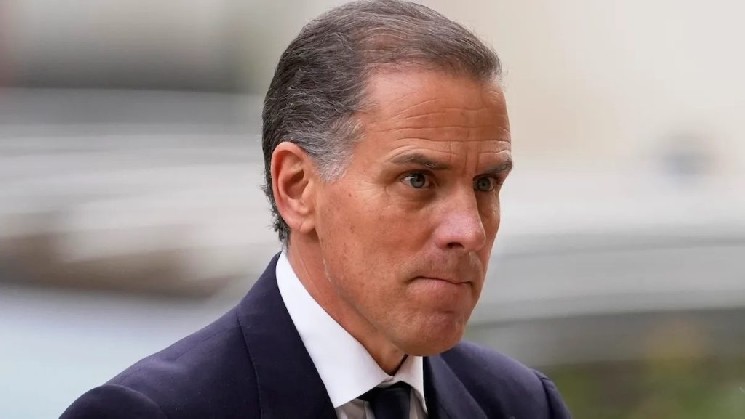
Hunter Biden has responded to those allegations with characteristic defiance, firing back with a blend of legal caution and sharp skepticism. In a statement designed to quell the growing chorus of suspicion, he reiterated remarks he made shortly after the token’s launch, describing the entire situation as “appalling” and revealing that the accounts associated with the project were actively being reviewed, a tacit acknowledgment that the controversy has forced the team into damage-control mode. But his response did not end with a simple denial. Going further, Biden directly challenged the methodology underpinning the report. He maintained that the wallet designated as belonging to the LAPTOP team has not sold a single token to date, and he argued that the numbers simply would not add up if the team had actually funneled tens of millions of dollars into personal accounts. That line of reasoning brought him to a pointed and unyielding demand: the person who performed the calculation should come forward and publicly reveal the wallet address that was supposedly used for those sales. It was, in many ways, a textbook crypto-world power play. Blockchain data is, in theory, open for anyone to verify; every transaction is recorded on a permanent public ledger, visible to researchers, journalists, and amateur digital detectives alike. But interpreting that data is far from straightforward. Wallets can be created in seconds, funds can be routed through mixing services and privacy protocols, and addresses are easily misattributed. An accusation that looks devastating on the surface can dissolve upon closer inspection, just as genuine wrongdoing can hide in plain sight. By demanding a specific address, Biden’s camp is essentially daring the accuser to put up or shut up, while broadcasting to the wider crypto community that the allegations are built on ambiguity rather than evidence.
This is not the first time the team behind the LAPTOP memecoin has faced the prospect of defending itself against claims of insider misconduct. In the immediate aftermath of the token’s dramatic price collapse, speculation swept through trading communities on Telegram, Discord, and crypto Twitter, with thousands of users accusing the project’s insiders of dumping their holdings at the top. The allegations moved with the velocity typical of the internet’s fastest rumor mill before the team issued a formal rebuttal. In that response, the team categorically denied any wrongdoing and offered a fundamentally different explanation for the price devastation: the combination of extremely low liquidity in the token’s early trading phase and the large-scale deployment of automated trading programs known as “sniper bots.” These bots, designed to execute purchases within milliseconds of a token’s launch, have become a well-documented feature of the memecoin ecosystem, functioning as a form of high-speed front-running that allows programmed traders to buy tokens before any human could reasonably react. In a low-liquidity environment, the activity of these bots can generate outsized price swings in both directions, as a small number of automated actors come to dominate the order book. The resulting machine-driven buying and selling creates the appearance of powerful momentum, or equally powerful selling pressure, without any direct involvement from the project’s founders. According to the LAPTOP team, that is precisely what happened: the collapse was not a coordinated insider dump but the mechanical outcome of automated trading bots colliding with a shallow pool of available liquidity. The explanation did little to appease skeptics, and it is not difficult to understand why. A 99.9 percent decline is so extreme that it strains credulity, and for many retail investors, the technical distinction between bots, insiders, and bad luck is purely academic. Yet the team’s defense highlights a structural dimension of the memecoin market that too many participants overlook: prices can be hijacked by software, and the anonymous architecture of decentralized exchanges leaves ample room for confusion, misinformation, and second-guessing long after the final trade settles.
Beyond the immediate blame game, deeper questions are being asked about the fundamental design of LAPTOP and whether the project’s own structure created the conditions for its collapse. Public records detailing the token’s allocation show that 30 percent of the total supply was reserved for the founding team, a significant share by any standard and one that naturally attracted scrutiny once the price began to fall. The team, however, maintains that this allocation was never intended to be liquidated in a hurry. They point to the lock-up schedule encoded in the token’s smart contract: the founders’ share was locked for six months following launch, after which it would be released gradually over a period extending more than two years. In theory, that arrangement should protect against immediate insider selling and align the team’s incentives with the token’s long-term survival. In practice, skeptics counter, a six-month lock-up offers little comfort to investors in a market where tokens can live and die within a matter of weeks, and even a staggered unlock schedule does not erase the selling pressure that hangs over a market whenever a large allocation is destined to enter circulation. The debate mirrors larger conversations taking place across the cryptocurrency industry about the ethics, economics, and regulation of memecoins. What started as an underground joke has evolved into a multi-billion-dollar subsector of the digital asset market, attracting celebrities, political figures, and millions of retail investors in the process. Every few months, a new token rockets to fame on the strength of a name, a meme, or a cultural moment; every few months, another token crashes to zero under similarly predictable circumstances. Regulators in the United States and elsewhere have begun to take a closer interest, examining questions of market manipulation, disclosure, and investor protection. But for now, the memecoin market remains essentially a free-for-all, an arena where the rules are minimal and caution is the only reliable defense.
For the moment, the LAPTOP saga remains unresolved, with two competing narratives — insider profiteering versus chaotic market mechanics — battling for control of the story among the token’s shrinking community of holders. What cannot be disputed is the outcome: a token that briefly captured the imagination of the crypto world has shed the overwhelming majority of its value, and the investors who placed their faith in it have absorbed the consequences. Whether the project’s team profited from the collapse is a question that may never be definitively answered, at least not without the wallet-level transparency that Hunter Biden has challenged his accusers to provide. In the broader arc of the memecoin phenomenon, LAPTOP is likely to be remembered less as a uniquely scandalous episode and more as the latest addition to a growing collection of cautionary tales. The pattern is by now maddeningly familiar: a token rocket-ships on hype and controversy, captures the retail imagination, and deflates with breathtaking speed, leaving behind a trail of losses and unanswered questions. For every memecoin that delivers life-changing returns, dozens more evaporate overnight, and while the promise of outsized gains will always attract willing participants, the brutal arithmetic of these markets rarely rewards the unprepared. As regulators work to understand how to police a sector that keeps evolving, and as public figures continue to have their names and reputations dragged into projects they never endorsed, the fundamental lesson remains stubbornly unchanged: in the world of memecoins, the only airtight certainty is uncertainty itself. The story is far from over, and in a market this volatile, the next chapter could arrive at any moment. For anyone watching from the sidelines, the LAPTOP affair serves as a reminder to approach speculative digital assets with extreme caution, to demand evidence rather than anecdotes, and to recognize that in a market built on jokes, the final laugh often belongs to those who get out first. This is not investment advice.