


Africa’s Demand for a Permanent Seat at the UN Table
Africa’s Demand for a Permanent Seat at the UN Table
A powerful coalition of African leaders has thrust the long-simmering issue of United Nations Security Council reform back into the global spotlight. During a series of high-level addresses at the UN General Assembly, the presidents of Ghana, Liberia, Kenya, and Namibia issued a coordinated and impassioned demand for an end to what they see as the continent’s unacceptable second-class status in the world’s premier peace and security body. Their collective plea, echoed by a chorus of other African heads of state, was not merely a diplomatic formality but a pointed moral and political challenge to the institution’s architecture – a challenge that quickly garnered powerful support from the top echelons of the UN Secretariat. The central demand is as simple as it is profound: a permanent African seat at the Security Council table, complete with the same privileges and responsibilities long held by a select few nations. The reaction from the Secretary-General, as reported, left no doubt about the gravity of the moment, as he declared the lack of such representation “indefensible.” This is not a new battle cry, but the current convergence of geopolitical recalibration, rising African confidence, and a global reckoning with colonial-era power structures has given this movement an extraordinary and perhaps decisive potency.
A Legacy of Exclusion: The Security Council’s Outdated Structure
To understand the depth of this frustration, one must first appreciate the historical and structural mismanagement that has defined the Security Council’s composition since the founding of the United Nations in 1945. The body’s current permanent membership – the United States, the United Kingdom, France, Russia, and China – reflects the geopolitical realities of a world at the end of the Second World War. Africa, then largely under colonial rule, was given no permanent voice whatsoever. Indeed, the inaugural session of the General Assembly was held before most of the continent had even begun its wave of independence movements. By the time the wave of decolonization swept across Africa in the late 1950s and 1960s, the number of UN member states had swelled dramatically, yet the Security Council’s core structure remained frozen in time. Today, Africa contributes significantly to UN peacekeeping operations, often providing the majority of troops in conflict zones across the continent and beyond. South Africa, Nigeria, and Rwanda have consistently been among the largest contributors of uniformed personnel to UN missions. In 2023, the overarching paradox became all the more glaring: African nations provide the manpower and sacrifice for the UN’s blue helmets, yet those same nations are denied a permanent right to vote on the very resolutions that decide where those peacekeepers are deployed. This imbalance is not merely a matter of sentiment; it is a fundamental question of institutional legitimacy. As the leaders argued, when the council addresses issues of war, state fragility, terrorism, and human rights in Africa, the continent itself has no sitting permanent member to provide the crucial national or regional perspective. This creates a credibility deficit, where decisions are made about Africans without Africans at the highest level of global decision-making.
Leaders Speak Out: The Call for Concrete Action
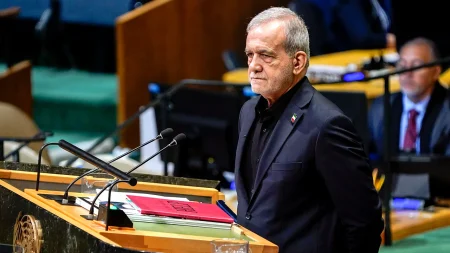
In their speeches from the UN’s iconic green-marbled rostrum, the presidents of Ghana, Liberia, Kenya, and Namibia offered more than just a grievance; they presented a compelling narrative for change, interwoven with their own national and regional experiences. The President of Ghana, for example, framed the demand for reform not as a zero-sum game of geopolitical maneuvering, but as a prerequisite for the UN’s own future relevance in a multipolar world. He argued that a Security Council that fails to reflect the demographic and political realities of the 21st century is doomed to be an anachronism, unable to effectively tackle cross-border challenges like the Sahel security crisis, maritime piracy in the Gulf of Guinea, or the devastating effects of terrorism in the Lake Chad Basin. The Liberian leader, speaking as the secretary of state (or perhaps as president herself, depending on the speaker de facto) spoke of the historical connection between her nation, the UN’s founding principles, and the imperative of human rights. Liberia, which was once a founding member of the League of Nations and an early signatory to the UN Charter, remains frustrated by the lack of progress on reform. Meanwhile, Kenya’s President used more direct, plain-spoken language, declaring that the African continent represents the perennial silent member of the council. Kenya, which has served as a non-permanent member multiple times, including in 2022-2023, knows the frustration of having a seat at the table yet being deprived of any real decision-making power. Namibia, a nation with a history of struggle against colonial rule and apartheid, framed the reform as a moral imperative, drawing a direct line from the UN’s historic failures in the region—such as the international community’s inaction during apartheid-era South Africa—to the contemporary need for a permanent African voice. These four distinct countries, representing West, East, and Southern Africa, sent a unified message: the push for reform is not a fringe delusion but a continental consensus, previously enshrined in the African Union’s own commitment to “the right to a permanent seat with full rights and obligations.” Their speeches were carefully choreographed to maintain momentum and to provide the international community with a clear blueprint for what such reform would look like—most notably through a proposal for at least two permanent African seats, with the potential for yet more representation among non-permanent members, including one reserved for the diaspora.
Secretary-General Joins the Fray: An ‘Indefensible’ Injustice
Perhaps the most significant political intervention came from the United Nations Secretary-General himself, whose verbal support elevated the diplomatic stakes considerably. In his formal address to the General Assembly, while listing the existential threats facing humanity, he devoted considerable time to the notion of institutional reform, specifically pointing out the injustice of Africa’s representation. When he used the word “indefensible” to describe the current arrangement, his audience understood the weight of the term. This was not a mere bureaucratic observation; it was a direct rebuke of the Security Council’s permanent members, who have historically been the principal obstacle to change. By publicly endorsing the African position, the Secretary-General placed the moral authority of his office firmly behind the reform movement. He argued, in the context of the escalating Caspian political landscape and the pressing need for equitable multilateralism, that the UN cannot function as “the world’s parliament” if one of its most important chambers represents only the mid-century power dynamics. He called for a council that is more representative, more inclusive, and more capable of exercising global scrutiny. The Secretary-General’s remarks also coincided with a wave of support from other corners of the UN, including in the General Assembly’s annual high-level debate. The President of the General Assembly echoed this sentiment, warning that to ignore the calls for reform would be to “perpetuate a historical lie” about the universality of the UN. These high-level endorsements are not purely symbolic; they shift the Overton window in New York, normalizing the idea that African permanent membership is not merely an option, but an inevitability. The momentum is now impossible to dismiss as the ramblings of disgruntled diplomats. In the chamber of the Security Council, where the only African speakers are usually the non-permanent members with no veto power, the imbalance is a jarring reminder of how deeply the structural foundation of the UN remains mired in an era that has long since passed.
The Politics of Reform: Vetoes, Power, and Resistance
Yet, despite this mounting pressure, the path to reform is strewn with political landmines and entrenched resistance. The primary obstacle lies in the lack of political will from the current P5 members (the United States, United Kingdom, France, Russia, and China) to relinquish the exclusive privileges they enjoy. While most have offered varying degrees of lip service to the idea of African representation, their actions on the details have been far more circumlocutory. For instance, the United States, through its current ambassador, has expressed public support for expanding the council to include permanent African representation, but has notably fallen short of endorsing a veto for new members. The United Kingdom and France have also spoken in favor of reform, with France having a particularly favorable disposition towards its African partners. In sharp contrast, Russia and China, wary of any vote pool that might dilute their own influence, have historically guarded against specific formulas that could isolate them. Russia’s foreign policy has, at times, contradicted its earlier commitments to expanding the council, and Beijing has shown caution, ever defensive of its own “developing country” status but privately concerned about giving a voice to rival regional powers like Nigeria or Egypt. The internal divisions among African states themselves—between the African Union’s gathered consensus and the practical rivalry between Nigeria, Egypt, and South Africa—further complicate any negotiation. Who will occupy those two permanent seats? Is it fair to have a proposal that includes no veto power, essentially recreating a two-tier system? The African Union’s “Ezulwini Consensus” and its subsequent critical updates call for a permanent seat with full veto powers as a core requirement. Any proposal without this, member states argue, would represent a continuation of the apartheid-era hierarchy, albeit in a different form. Thus, the reform debate has evolved into a quagmire, where every “solution” risks alienating a powerful faction. For every country that wants to see a permanent African seat, there are five others that worry their own regional rival might gain a seat next door. Meanwhile, the untouchable veto—vested in the very five countries that benefit from the status quo—remains the ultimate insurance policy against disruptive change. This institutional gridlock has meant that despite over 70 years of reform conversations, concrete progress has been incremental, often reduced to a simple change in the ceiling of elected members from ten to eleven, a change that has done little to address the core inequity.
A Crucial Moment for Global Governance and African Diplomacy
As this high-level drama unfolded at the UN headquarters in New York, a broader question began to emerge: what does this moment really mean for the African continent and the international system at large? For those outside the halls of power, the endless Intergovernmental Negotiations on Security Council Reform—known by the acronym IGN—can feel like a bureaucratic nightmare, replete with technicalities and deadlock. But the recent activation of such a vocal and united African front suggests that a turning point may be at hand. It demonstrates that African diplomacy is maturing beyond the transactional realm of foreign aid, into a self-interested strategy of global governance leverage. The continent’s leaders are no longer content to be passive recipients of decisions made in capitals like Washington, Beijing, or Moscow. They are asserting themselves as mandatory participants in the shaping of global norms. This is a consequence of Africa’s demographic expansion, its economic growth, and its strategic importance in the race for critical minerals, which assigns the continent a leverage it has never possessed before. For the UN to claim any semblance of depth, diversity, and democratic principle, the Security Council must evolve. If Africa is to be part of the solution—hosting the majority of the UN’s peacekeeping missions, grappling with terrorism, and serving as the major battleground against the climate crisis—then it must also be part of the highest political decision-making body. The presidents of Ghana, Liberia, Kenya, and Namibia are not asking for a favor; they are demanding a seat at the table where the rules of engagement for continental security are drafted. Their demand and the Secretary-General’s subsequent endorsement represent a watershed in the history of the UN. The ball is now firmly in the court of the permanent members. Whether they steer towards genuine institutional reform or choose to defend the unjust status quo will perhaps define the future legitimacy of the United Nations. The world is watching, and for the first time in a generation, the simplest of questions remains: if not now, when? If the Security Council fails to address this fundamental imbalance, it risks becoming a relic of history, a museum piece still attempting to govern the 21st century with the political machinery of the 1940s. The demand is just, the pressure is real, and the logic is sound. There is no longer any defensible reason for Africa to be the perennial exception to the rule of permanent membership. The moment for change, quite simply, has arrived.