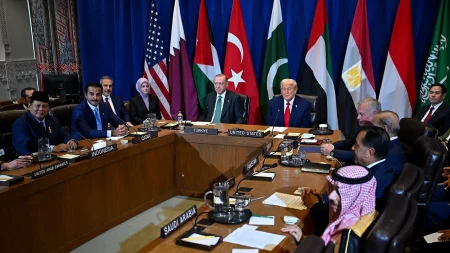



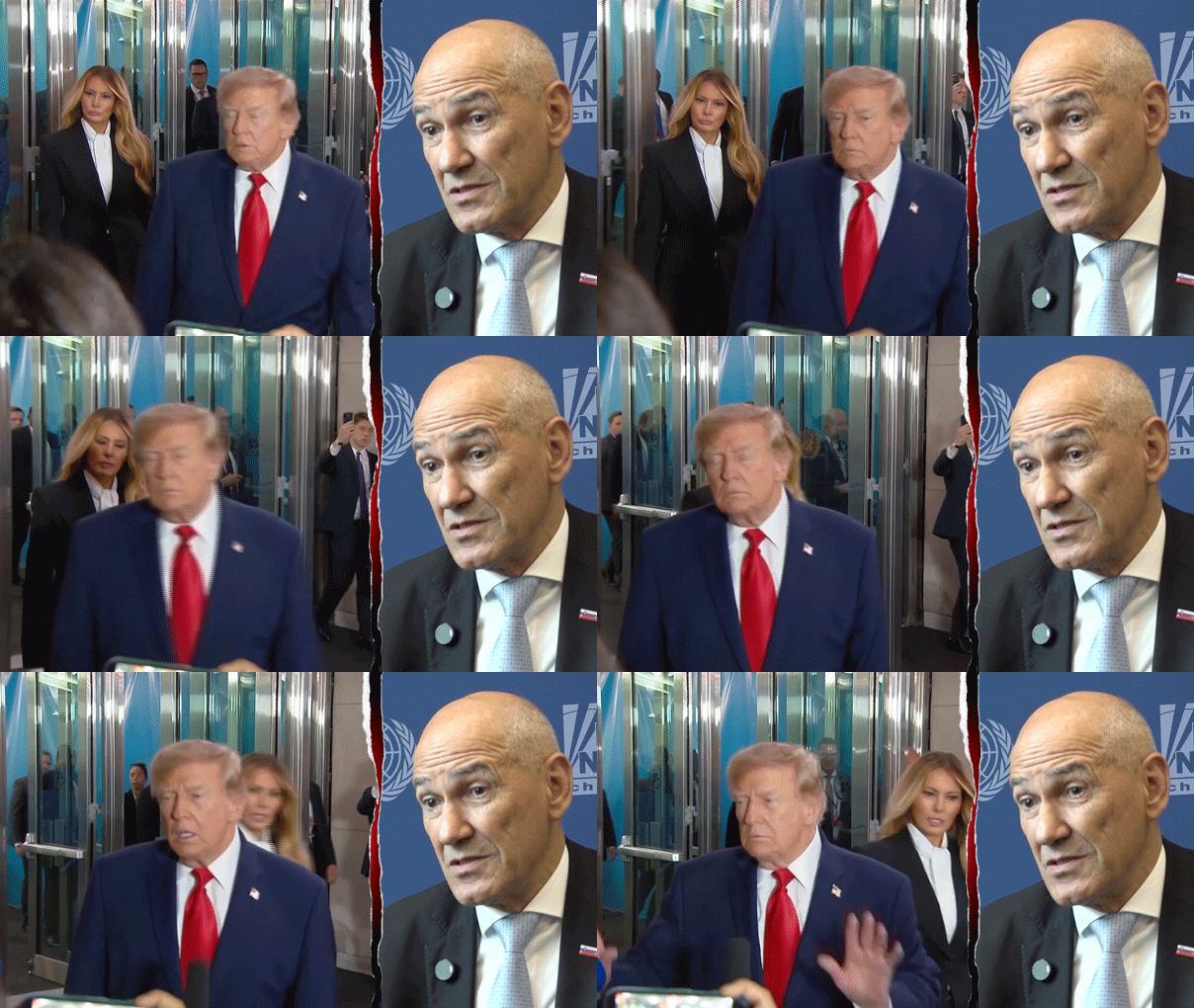
The United Nations is supposed to be a place where every nation, however small, can stand and demand justice. But as Slovenian Prime Minister Janez Janša walked the marble corridors of the General Assembly in New York on Wednesday, he saw something different: a global institution so consumed by one crisis that it seemed willing to let others burn. In an exclusive interview with Fox News Digital, Janša did not hold back. “We have to get rid of double standards,” he said, his voice carrying the weariness of a leader who has made this argument before and feels the world is not listening. The U.N., he argued, has allowed its diplomatic machinery—its attention, its money, its energy—to be funneled almost entirely into Gaza, while conflicts closer to his own backyard, above all Russia’s war in Ukraine, are pushed to the margins. The Slovenian leader said the imbalance was unmistakable in the speeches that opened this year’s General Assembly; Gaza dominated the debate, while Ukraine, an existential threat to Europe’s eastern flank, was treated almost as an afterthought. He reminded reporters that the U.N. was created precisely to prevent such wars, and that its founders would be stunned to see the organization turning a blind eye to a full-scale invasion on the European continent. Yet Janša’s frustration was not limited to Ukraine. He pointed to the persecution of Christians in Nigeria and a long list of other humanitarian crises, insisting that different countries face different security and human rights challenges. The world body, he said, cannot continue to act as if only one region matters. Later, as he prepared to address the General Assembly himself on Thursday, Janša said he would use his speaking slot to press that point, urging fellow leaders to abandon the politics of selective outrage and embrace a more honest, more universal understanding of peace and security. He knew the reception might be cold; the General Assembly has become a theater of competing grievances, and the leaders who control the loudest microphones often set the agenda. But Janša, who comes from a small Central European nation that has felt the weight of history pressing down on it, was not there to be popular. He was there to remind the world that justice, if it is to mean anything, cannot be rationed out according to the demands of cable news cycles or geopolitical convenience.
For Janša and the rest of Europe, Russia’s invasion of Ukraine is not a distant tragedy unfolding on someone else’s continent. It is the sound of artillery rolling ever closer to the borders of countries that once lived under Soviet domination, and the fear that Moscow has no intention of stopping at Ukraine’s frontiers. The Slovenian prime minister spoke with a grim sense of urgency about the war, noting that there is no clear indication that the Kremlin is prepared to negotiate an end to the fighting. He stressed that the U.N. was founded on the ashes of war precisely to prevent such conflicts from ever happening again, and that the organization dishonors its founding principle when it lets one region monopolize its attention while another slides deeper into catastrophe. Janša’s point was not that Gaza should be ignored; rather, he argued that the world’s diplomats have a responsibility to recognize that security threats do not exist in a vacuum. Every conflict is a tragedy, and every civilian killed—whether in Gaza, in Ukraine, in the villages of Africa, or in the mountains of the Middle East—deserves the same level of concern. The problem, he suggested, is that the U.N. has become a place where crises are ranked according to their political usefulness, and where some victims are treated as more worthy of sympathy than others. That is not justice; it is triage disguised as morality. Janša’s own country, Slovenia, is a member of the European Union and NATO, and it has watched the war in Ukraine with particular anxiety because it knows that the security architecture of Europe is fragile. When the United Nations chooses to look the other way, he warned, it sends a signal to aggressors everywhere that they can act with impunity as long as they are not the focus of the day’s headlines. He also made a point of mentioning the persecution of Christians in Nigeria, a crisis that rarely receives the attention it deserves, and he called on the international community to apply its tools evenly and without political calculation. For Janša, this was not a matter of choosing sides; it was a matter of insisting that the rules of the international order apply equally to everyone, friend or foe, powerful or weak.
The Slovenian prime minister’s criticism of the U.N.’s selective focus comes at a moment when his own country has undergone a significant shift in its foreign policy, particularly when it comes to Israel. Under the previous government of Prime Minister Robert Golob, Slovenia recognized Palestinian statehood in June 2024 and imposed an arms embargo on Israel in July 2025, with officials defending those decisions as necessary to protect Palestinian civilians and uphold international law. It was a controversial stance that strained Slovenia’s relations with Israel and created deep divisions at home. But since Janša returned to power, the tectonic plates of Slovenian diplomacy have shifted again. Janša has moved deliberately to strengthen Slovenia’s relationship with the Jewish state, describing his government’s approach as a return to the traditionally good relations between the two countries rather than a dramatic diplomatic realignment. Earlier this month, Israel opened its first resident embassy in Slovenia, a milestone that would have seemed unthinkable just a year earlier. Israeli Foreign Minister Gideon Sa’ar visited the country for talks aimed at expanding political and economic cooperation, and the two governments signed a cooperation program covering education, science, culture, youth and sports through 2030. For Janša, these are not just gestures; they are signals that Slovenia wants to be seen as a reliable and balanced actor on the world stage, unafraid to make its own choices. He rejected the idea that his government is simply trying to undo everything its predecessor did, insisting instead that Slovenia is correcting a course that had veered away from its historical friendships. In his view, a small country like Slovenia cannot afford the luxury of moral grandstanding; it must build bridges, maintain trust, and engage with the world as it actually is, not as one might wish it to be. That pragmatic outlook has won him praise from some quarters and criticism from others, but Janša seemed untroubled by the debate, confident that future generations will judge his decisions by their long-term consequences rather than by the heat of the moment.
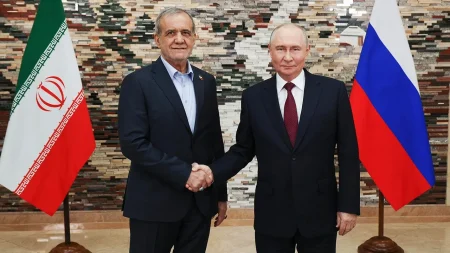
Beyond the immediate question of Gaza and Ukraine, Janša used his time in New York to make a broader geopolitical argument that connected the dots between Iran, Russia, and the conflicts that are currently tearing at the Middle East and Europe. He said he has supported the Iranian opposition for decades, and he argued that lasting peace in the Middle East would remain elusive without political change in Tehran. In his view, Iran is not simply a regional actor; it is a central player in the architecture of instability that links Moscow’s war aims in Ukraine to the violence between Israel and its enemies. The Iranian regime’s relationship with Russia, he argued, is a dangerous partnership that should be of concern to every nation that values the international order. Janša also accused some European governments of applying inconsistent standards by supporting Ukraine while adopting positions toward Iran that fail to account for Tehran’s relationship with Moscow. He cited Ireland and Spain as examples, and he also included Slovenia under its previous government before this year’s change in leadership. Those governments, he suggested, were willing to condemn Russia’s aggression in Ukraine while simultaneously taking a softer line on Iran, a country that has provided drones and other military support to the Kremlin and that continues to destabilize the Middle East. That inconsistency was not just a matter of poor diplomacy; it was, in Janša’s telling, a form of self-delusion that made the world more dangerous. He went further, suggesting that some European leaders have used the Palestinian issue to divert public attention from their own domestic economic and political problems, particularly ahead of elections. It is always easier, he said, to focus on a distant conflict than to confront the failures of one’s own government at home. By raising these uncomfortable questions, Janša was trying to puncture the self-congratulatory mood that often dominates the General Assembly, where leaders make grand speeches about human rights and then return to business as usual. He wanted his colleagues to be honest about their motivations, and to recognize that the choices they make—and the allies they choose—have consequences far beyond the rhetorical flourishes of a single afternoon.
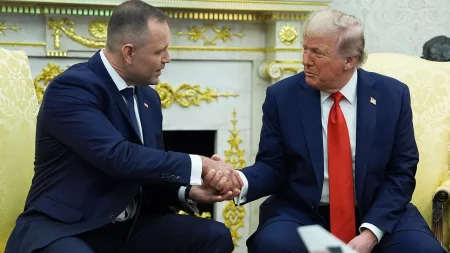
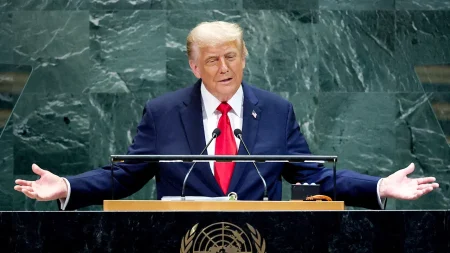
Amid all the geopolitical wrangling, there was also a moment of personal warmth and nostalgia in Janša’s visit, because Slovenia is the homeland of First Lady Melania Trump, and the prime minister was not shy about embracing that connection. Melania was born in Slovenia in 1970, growing up in the small town of Sevnica before moving to the United States and eventually becoming the second foreign-born first lady in American history. For many Slovenians, her rise is a source of immense pride, a reminder that a girl from a modest Central European town can find her way onto the world’s grandest stage. Janša praised Melania’s work on initiatives for children, and he described her role in the White House as a point of pride for his countrymen. He revealed that his wife met the first lady for the first time on Tuesday, a meeting that he described with genuine enthusiasm, and he also said that he had spoken briefly with President Donald Trump. The conversation, Janša indicated, went well. He extended an invitation to Trump to visit Slovenia, and according to the prime minister, the president responded positively. “He promised he’ll come,” Janša told Fox News Digital, with the evident satisfaction of a leader who knows he has delivered something meaningful to his people. A presidential visit to a small country like Slovenia would be a major diplomatic event, drawing global attention to a nation that is often overlooked in the corridors of power. It would also be a powerful symbol of the relationship between the United States and a country that has remained a steadfast ally in Europe. For Janša, the invitation was not just about hospitality; it was about putting Slovenia on the map and reminding the world that even the smallest countries have stories worth telling, friendships worth honoring, and contributions worth making to the Atlantic alliance.
As Janša prepared to leave New York, he carried with him a message that was at once critical and hopeful. He had come to the United Nations to challenge the double standards that he believes are poisoning the international system, to call attention to conflicts that the world has forgotten, and to defend the right of every nation to be judged by its own merits rather than by the preferences of the powerful. But he also came to build relationships, to strengthen Slovenia’s bonds with Israel and with the United States, and to open a new chapter in his country’s foreign policy. His criticism of the U.N. was sharp, but it was not cynical; he still believes in the organization’s potential to do good, even as he condemns its failures. His shift toward Israel was deliberate, but it was not a betrayal of principle; he sees it as a restoration of balance and common sense. And his warm words about Melania Trump, and his hopeful anticipation of a presidential visit, revealed a leader who understands that diplomacy is not just about power and interests, but also about people, memories, and shared history. In the end, Janša’s appearance at the General Assembly was a reminder that the United Nations is not simply a stage for superpowers to perform; it is also a place where small nations can raise their voices and make a difference. Whether his message will resonate in the months ahead remains to be seen, but he clearly left New York with the sense that he had done his duty—not just for Slovenia, but for the principles of fairness and honesty that he believes the U.N. was founded to protect. And if President Trump makes good on his promise to visit the homeland of the first lady, the world may yet turn its gaze to Slovenia, a country that, despite its small size, has always understood that standing up for what is right is more important than standing in the spotlight.