



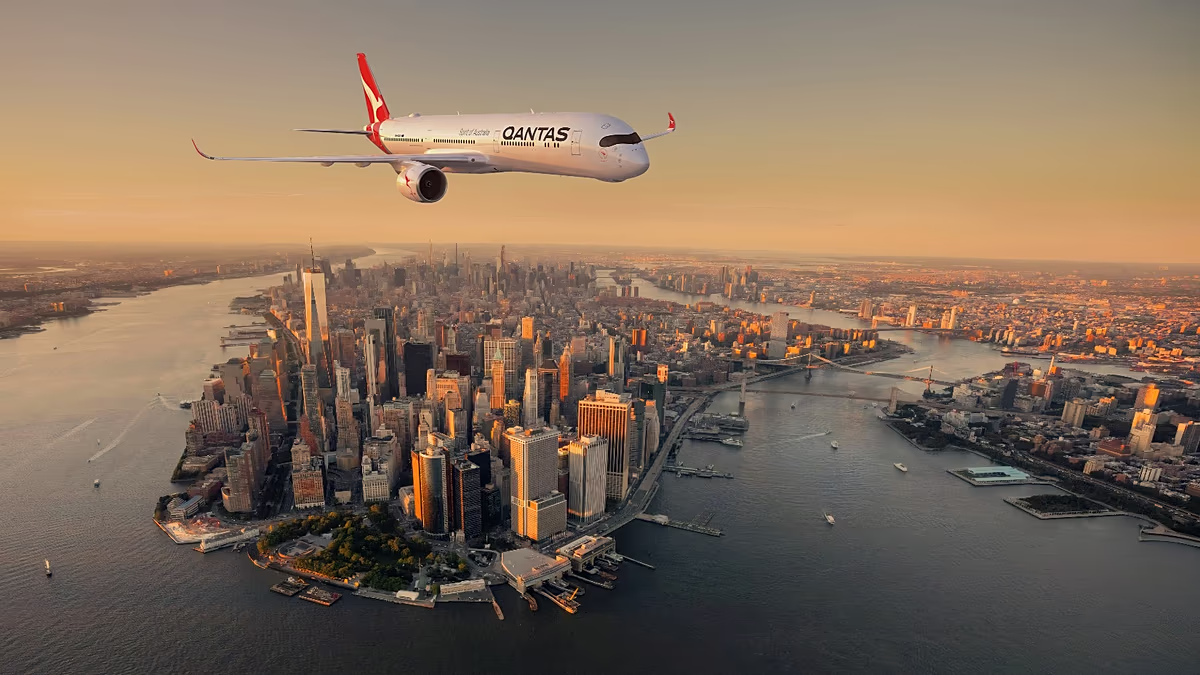
It is almost time for a journey that will redefine our understanding of distance. In October of next year, Qantas will launch what has long been the holy grail of aviation: a non-stop passenger flight connecting Sydney and London. For the first time, the gap between these two great cities will be bridged without a single touchdown, a feat that will shrink the world in a way that was once purely science fiction. The excitement surrounding this launch is palpable, but it is just the beginning. The Australian flag carrier has confirmed that it will follow this monumental achievement with another record-breaking service, a non-stop route between Sydney and New York, slated to take to the skies in mid-2028. This second route promises to shave more than three hours off the current total travel time, which typically involves a stopover in cities like Los Angeles or Vancouver. For the first time, travellers will be able to cross the Pacific and the entire North American continent without ever leaving the comfort of their seat. Tickets for this highly anticipated inaugural flight are expected to go on sale from August 2027, giving eager passengers ample time to plan what will undoubtedly be a historic trip.
This ambitious undertaking, known internally as “Project Sunrise,” is not just about flying further; it’s about flying smarter and better. The key to unlocking these incredible distances lies in the aircraft themselves. Qantas has commissioned specially configured Airbus A350-1000ULR (Ultra Long Range) aircraft for this purpose. These are not your average commercial jets; they are engineering marvels, meticulously modified to handle the immense challenges of a 20-plus-hour flight. To achieve this, the planes are fitted with an additional 20,000-litre fuel tank, allowing them to stay airborne for an astonishing 22 hours. The scale of this operation was demonstrated in July when the first test aircraft completed a successful marathon flight from Melbourne to Toulouse, spending a full 24 hours and 24 minutes in the air. This test flight was a critical proving ground for the technology and systems that will make these routes possible. The name “Project Sunrise” itself is a poignant tribute to history, referencing the famous “double sunrise” flights operated by Qantas during World War II. Those flights, between Crawley in Western Australia and RAF Base Koggala in what is now Sri Lanka, were so long that passengers would witness the sun rise twice. It’s a beautiful nod to the airline’s pioneering spirit and its long legacy of conquering distance.
While the idea of spending 18 hours on a plane might sound daunting, even for the most seasoned traveller, Qantas has gone to extraordinary lengths to ensure that passengers on these flights arrive feeling refreshed and revitalized, not exhausted and disoriented. The airline understands that the success of these routes depends entirely on the passenger experience. The cabins have been meticulously designed from the ground up, with input from sleep scientists, nutritionists, and wellness experts over the past decade. Qantas Group CEO Vanessa Hudson captured this philosophy perfectly, stating, “Flying these distances is only worth doing if our customers arrive feeling their best, and that belief has shaped everything we’ve built.” This isn’t just about providing a seat; it’s about crafting an environment that supports the body’s natural rhythms over an extended period. The entire experience, from the lighting to the meals, has been redesigned around the science of ultra-long-haul travel. The result is a fundamentally different way to fly, one that prioritises passenger wellbeing at every turn.
The heart of this new experience is a world-first “Wellbeing Zone,” accessible to passengers in all classes. This dedicated space is designed to be a sanctuary in the sky, a place to stretch, move, and reset away from your seat. It features integrated stretch handles and guided on-screen movement programmes that passengers can follow, along with a selection of refreshments to help stay hydrated and refreshed. This communal area is a clever solution to the problem of long-haul lethargy, encouraging gentle exercise and social interaction. Beyond this shared space, the cabin layout itself has been thoughtfully considered across all tiers of travel. The economy cabins will feature 140 seats in a standard 3-3-3 configuration, but with a larger seat pitch than any current Qantas aircraft, providing much-needed extra legroom for those long stretches of sitting. For those seeking even more comfort, the “economy plus” category offers a generous 34 inches of seat pitch. Meanwhile, business class passengers will be treated to an 80-inch flat bed, allowing for a truly restful sleep. First class takes luxury to another level, offering the same 80-inch bed as business, but adding a separate reclining armchair and a full-length wardrobe, ensuring passengers can arrive in style, with their clothes as fresh as they are.
Of course, for many, the idea of being confined to an aircraft for 18 or 20 hours is a formidable mental challenge, even with all the comforts. It’s a test of endurance, a marathon of the mind as much as the body. The physical design of the cabin addresses one aspect, but Qantas has also focused heavily on the psychological journey. The menu is curated to include ingredients known to promote sleep and hydration, with meals timed to align with the destination’s time zone, helping to reset passengers’ internal clocks. The lighting scheme is similarly sophisticated, mimicking natural daylight cycles to encourage alertness during the day and melatonin production for sleep at night. The entertainment system is vast, but perhaps the most important feature is the simple ability to disconnect from the world, to read, to meditate, or to simply watch the world go by from 40,000 feet. It’s about creating a personal bubble of calm within the larger shared journey, allowing each passenger to craft their own routine for the flight. This human-centric approach is what sets Project Sunrise apart, transforming what could be an ordeal into a unique and even restorative experience.
In essence, Project Sunrise is more than just a new flight route; it’s a paradigm shift in how we think about global travel. It symbolises a return to the romance and ambition of aviation, a push beyond the boundaries of what was previously thought possible. It brings the world’s key economic and cultural hubs closer than ever before, forging a direct link between the UK and Australia that promises to boost business, tourism, and personal connections. This is a triumph of human ingenuity, a testament to what can be achieved with vision, persistence, and cutting-edge technology. But it is also a deeply human story, one about conquering fatigue and bridging not just oceans, but the very concept of time and distance. When those first passengers board the flight from Sydney to London, they will not just be taking a trip; they will be making history. They will be part of a new era of travel, where the world is smaller, and the journey is as remarkable as the destination itself. The countdown has truly begun for this incredible leap forward in connecting our world.