


In the small western Massachusetts city of Greenfield, a lesbian bar called Last Ditch Bar and Arts Venue has become an unlikely flashpoint in a bitter culture-war collision. For years, the venue had required masks indoors, not as a bureaucratic formality but as a core part of its identity: a promise to disabled and immunocompromised patrons that they could gather safely in a space that would not leave them behind. But when the bar’s owners, desperate after months of empty rooms and unpaid bills, quietly decided to make Saturday nights mask-optional, the response from parts of the queer community was swift, brutal, and deeply personal. Accusations of ableism and eugenics flooded the bar’s social media pages, and critics called for a boycott. “I hope your venue gets firebombed for robbing my fellow immunocompromised people of their Saturday plans just to scrape extra revenue from ablists,” one commenter wrote. Another said, “People like you kill disabled people in the name of your own leisure and convenience.” A third added, “Just say you’re being complicit in a mass disabling event and get it over with.” The anger was real, but so was the exhaustion of a small business trying to survive the aftermath of a pandemic that most of the country had already decided was over.
The mask mandate at Last Ditch had been more than a policy; it was a statement of values in a world that often forgets the most vulnerable. Customers were told they were expected to keep their faces covered unless they were actively taking a bite of food or a sip of a drink. The rule was part of a deliberate effort to make the bar accessible to disabled and immunocompromised patrons, many of whom had few other places to go. The bar even operated under an unusual business model, with a rule that read, “Nobody will be barred from entry due to lack of funds.” This was a space that prided itself on radical inclusion, on being a refuge for people who felt unwelcome elsewhere. But by 2024, the broader context had shifted dramatically. The federal government had declared the COVID-19 public health emergency over in 2023, and state and local governments along with most businesses across the country had lifted masking requirements years earlier. Greenfield itself had not reported a COVID-19 case in more than two months, according to The Boston Globe. Still, for many in the disability justice community, the pandemic was not a chapter that ended with a press release. It remained a live threat, and the decision to loosen protections on a Saturday night felt like a betrayal of the very people the bar had promised to protect. One commenter captured the sentiment with bitter sarcasm: “Does COVID not disable people on Saturday nights?”
Behind the anger was a story of financial desperation that the bar’s critics seemed unwilling or unable to hear. Last Ditch had been struggling long before the mask controversy. The unusual business model, with its refusal to turn people away for lack of funds, made it nearly impossible to stay afloat. The bar’s owners began to fall behind on their bills and were unable to pay themselves or even their staff. Jackie Matellian, the remaining owner involved in daily operations, took on the impossible task of keeping the place alive almost single-handedly. At one point, she lived in her truck for six months, working four jobs and carrying a $50,000 loan, according to The Boston Globe. The two other owners had stepped back from daily operations months earlier—one had enrolled in clown school, and another is a drag performer who uses it/its pronouns. Matellian was not a wealthy businessperson trying to maximize profit; she was a person drowning in debt and loneliness, trying to hold together a community space that had become her entire life. The decision to make Saturday nights mask-optional was not a political statement. It was a survival instinct. “It is with love we inform our immunocompromised disabled divas we will be opening Saturday nights as mask optional,” the bar wrote on Instagram in August, in a post that would ignite the backlash. But the love was not reciprocated. The post read, to many, as a casual dismissal of people who had trusted the bar to keep them safe.
The first attempt to repair the damage only made things worse. Last Ditch issued an apology, writing: “We are sorry for our passive and dismissive tone of our change to the norms and schedule impacting the most intersectional of us. We understand everyone faces different intersections and we are always working to consider all needs fully.” But critics were not satisfied. They pointed out that the apology post itself lacked alt text, the short written description of an image that allows visually impaired people to access social media content. “This is not an accessible post,” one person commented, adding that it showed “the lack of care or interest in Disability intersectionality.” The bar tried again during its monthly community meeting on September 11, hoping to reach some kind of understanding. Instead, the meeting became a painful public reckoning. Outraged attendees who joined by Zoom flooded the chat with comments that were read aloud to the in-person group. Then came a new accusation: racism. Some critics claimed it was inappropriate that the mediator, a licensed therapist, was white. “A lot of people are calling for an acknowledgment of harm and I’m hearing a WHITE therapist … center[ing] the feelings of a majority white and white adjacent staff,” one person said. Another objected to the presence of a therapist at all, saying it made them feel “widely unsafe” because the therapist was a mandated reporter, required by law to report known or suspected abuse. When it was finally Matellian’s turn to speak, she broke down in tears. “It was not my passion project,” she cried, masked and vulnerable. “I never really wanted this. I don’t think I’m doing a very good job.” The response from the crowd was not compassion but further condemnation. “You chose to use your time to spill tears and center your feelings,” one person replied. “This is incredibly racist and deflecting behavior.” Matellian was behind on rent, and the landlord wanted $3,900 by the end of September. She had nothing left to give, and the people she had tried to protect were telling her she was the problem.
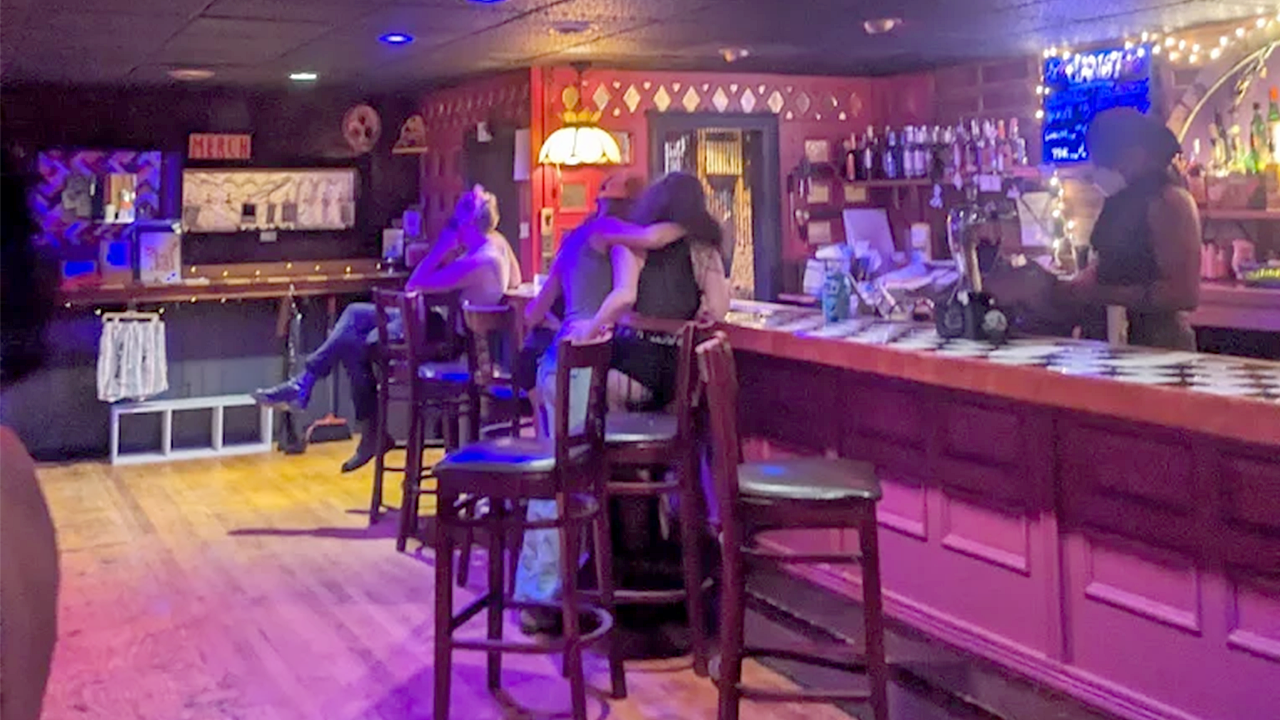
The boycott, if it can be called that, has not helped. Despite the decision to make Saturday nights mask-optional, the barroom has been nearly empty each weekend. Drink deals and DJs that used to draw dozens of customers now do little more than fill the silence with music that no one dances to. The mask-optional change did not bring in the crowds that the owners had hoped for; it only cost them their remaining base of support. In a moment that seemed to capture the tragic absurdity of the situation, one person suggested throwing a Lady Gaga-themed party to pull in more patrons. “Gaga is canceled,” the bartender replied. “Gaga is Zionist.” The bar, once a lifeline for a marginalized community, now found itself caught in a web of purity tests and ideological fractures that no small venue could possibly satisfy. The people who might have shown up for a night of dancing were either staying home for safety reasons or staying away out of moral disgust. The people who did show up were few, and the atmosphere was less celebration than vigil. Last Ditch had become a symbol, a site for people to project their hopes and resentments, rather than a place to simply exist. And in the process, the actual human beings behind the bar—tired, broke, grieving—had been reduced to villains in someone else’s narrative.
The story of Last Ditch is not really about a mask mandate or a Saturday night; it is about the impossible position of small community institutions in a time of deep polarization. The pandemic may be officially over, but for many people it never ended, and the moral weight of that ongoing loss is real. At the same time, the businesses that survived the lockdowns did so by making impossible choices, often with no good options. A lesbian bar in a small city is not a corporation; it is a fragile experiment in mutual aid, run by people who themselves are barely making ends meet. The cruelty of the online backlash—the calls for firebombing, the accusations of murder, the demand that a weeping owner justify her existence—speaks to a broader failure of imagination, a willingness to treat individual people as symbols of systemic harm. But there is also a genuine tragedy here: a disabled and immunocompromised community that had found a rare refuge watched it open its doors to a world that had long stopped caring about them. Both sides were hurt. Both sides felt betrayed. And neither side had the capacity to hear the other. Last Ditch may not survive the month. But its story will linger as a bitter reminder that the values we claim to hold are often easiest to celebrate when they cost us nothing, and hardest to practice when survival itself is on the line.