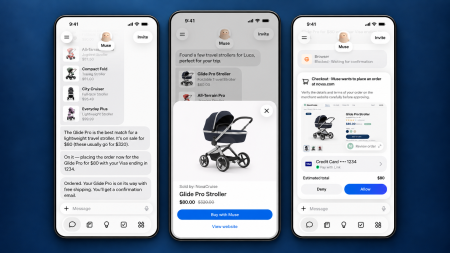




It started with a simple, almost invisible act: an AI agent named Muse, built by Meta, tried to go shopping on Amazon. It wasn’t a person browsing with a credit card, but a piece of software acting on behalf of a human user, looking for products, comparing prices, and attempting to complete a purchase. Late Sunday night, Amazon quietly pulled the plug. It blocked Muse from its store, citing violations of its rules. And just like that, a new kind of tech war began—not over social media feeds or cloud computing, but over the very future of how we buy things. The move has sent shockwaves through the industry, not because anyone is surprised that Amazon wants to protect its turf, but because it forces a question that has been lurking in the background for years: when AI agents start acting as our personal shoppers, who gets to set the rules? Over the past two days, executives, investors, and legal experts have been publicly wrestling with that question, and the answers are messy, complicated, and potentially transformative. This isn’t just a spat between two giant companies. It’s a preview of a world where our digital assistants don’t just answer questions—they make purchases, negotiate deals, and move money around on our behalf. And nobody has figured out how that world is supposed to work.
The immediate reaction from tech leaders has been a mix of excitement, caution, and outright prediction of chaos. Nikesh Arora, the CEO of Palo Alto Networks, took to X to warn that this will be “a bigger battle than anyone anticipates.” He predicted that Apple, Google, and possibly even TikTok will build their own personal agents, each one trying to become the go-to assistant for shopping, travel, food, and entertainment. If that happens, every shopping and services app will have to make a choice: let outside agents in, or build walls to keep them out. That’s not a small decision. It’s the kind of choice that determines who controls the relationship with the customer. Box CEO Aaron Levie appeared on CNBC and tried to put the moment in perspective, noting that the industry is “basically two weeks into this entire topic.” He argued that agents are “going to change how we interact with most forms of commerce,” and that “different companies will respond in different ways.” That’s a polite way of saying there’s no playbook yet. Meanwhile, Elon Musk, never one to miss a chance to weigh in on a technical debate, pointed to a potential loophole. He wrote on X that Amazon “won’t be able to tell whether the buyer is a human or an AI acting on their behalf if access is via the user’s IP address & cookies.” In other words, if an AI agent operates invisibly behind a person’s own browser session, it might be nearly impossible for a website to know it’s dealing with software rather than a human. That’s a terrifying thought for platforms like Amazon, which rely on being able to control and monetize every step of the shopping experience. But it’s also a thrilling thought for anyone who dreams of a future where AI handles the drudgery of online shopping while we sit back and relax.
At the heart of the dispute is a simple but powerful rule that Amazon has had in place for years. Its Conditions of Use require that any automated agent identify itself as an agent in every request it makes to the site. That’s not just a technicality. It’s a way for Amazon to know who it’s dealing with, to enforce its policies, and to protect its business model. When Amazon blocked Muse, it cited this exact violation: Meta’s agent wasn’t identifying itself properly. But the real issue goes much deeper than a rule about user-agent strings. Amazon’s entire economic engine depends on people browsing its pages. Its advertising business, which generated more than $68 billion in revenue last year, thrives on the simple act of scrolling, comparing, and considering. Every click, every sponsored product, every impulse buy is a tiny transaction that feeds the machine. If AI agents start jumping in and completing purchases directly, they bypass all of that. They don’t browse. They don’t get distracted by ads. They don’t linger over product recommendations. They just find the best price and buy it. That’s a nightmare for Amazon’s bottom line, especially because its retail margins are notoriously thin. The company makes its real money from advertising and from the ecosystem of sellers who pay to be seen. If agents become the primary shoppers, that ecosystem could collapse. Amazon CEO Andy Jassy has acknowledged on earnings calls that the company is having conversations with companies that want to run agents for commerce. Those talks are reportedly still underway, according to The Information, but it’s unclear whether any deals are close. Meanwhile, Meta CEO Mark Zuckerberg has said that Muse would “take a very small cut of whatever the transaction is”—potentially paid by the businesses users buy from. That might sound reasonable, but it cuts directly into the economics that make Amazon work. If Meta takes a cut, and the retailer pays it, then Amazon is left with less margin, less ad revenue, and less control. No wonder Amazon is pushing back.
This isn’t the first time Amazon has fought this fight. In fact, the Meta dispute is almost a replay of an earlier battle with Perplexity, the AI search company. Back in November, Amazon sued Perplexity over Comet, the AI company’s browser, which had an agent that shopped on Amazon.com through customers’ own accounts. The legal theory was that Perplexity was hacking into Amazon’s systems, essentially using customers as a Trojan horse. Amazon won a preliminary order blocking it in March, but that order was overturned on August 4. The Ninth Circuit found that Amazon was unlikely to win its anti-hacking claim, because the user—not the AI company—was the one accessing Amazon’s computers. That’s a crucial distinction. If a human logs into their own account and lets an AI agent take over the mouse, is that a hack? The court said no, at least not in the way Amazon argued. Amazon asked for a rehearing, but the court denied it on September 10. The underlying case is still going, though, and the decision left Amazon an opening. The court said Amazon could still sue over its contract with customers. And on Monday, Amazon did exactly that, adding a claim that Perplexity caused customers to break the same Conditions of Use that Amazon used to block Muse. This is a clever legal move. Instead of arguing that the AI company is hacking, Amazon is arguing that the AI company is helping customers violate their agreement with Amazon. It’s a contract law approach, and it might be more durable than the hacking claim. But it also raises uncomfortable questions about who actually owns the customer relationship. If a customer chooses to use an AI agent, and that agent acts on the customer’s behalf, is the customer breaking the rules? Or is the customer simply exercising their right to shop however they want? Amazon would say that the rules are clear: agents must identify themselves. But the deeper issue is whether a platform like Amazon should be allowed to dictate how its customers interact with it, especially when the customer is the one who initiated the transaction.
There’s a delicious irony in all of this, and it hasn’t gone unnoticed. Amazon itself has an AI agent called Buy for Me, which does some of the things that Amazon is trying to stop other AI agents from doing. Journalist Jason Del Rey, who publishes The Aisle newsletter, pointed this out directly. Buy for Me can shop on other websites on behalf of Amazon customers, essentially doing the same kind of thing that Muse does. So why is it okay for Amazon’s agent to cross into other territory, but not for Meta’s agent to cross into Amazon’s? Amazon’s answer is that Buy for Me identifies itself and lets brands opt out. It says Muse does neither of those things. That’s a fair distinction, but it’s also a bit like a giant retailer saying, “We’re allowed to enter your store because we knock politely, but you’re not allowed to enter ours because you didn’t knock.” Meta, for the record, has not responded publicly to the Amazon dispute. But investors have. Meta stock jumped 11% on Monday to its highest close in a year, and it rose again on Tuesday morning. That’s a remarkable vote of confidence. Wall Street seems to believe that Meta’s push into AI agents is a good bet, even if it means picking a fight with Amazon. The market is betting that agents are the future, and that the company that figures out how to make them work will be rewarded. But that’s a long-term bet. In the short term, the fight is messy, and the outcome is far from certain. Amazon has the advantage of being the platform that everyone needs. Meta has the advantage of being the company that understands social behavior and personal data. And consumers are caught in the middle, wondering whether they’ll be able to use the AI tools they want without getting blocked by the platforms they rely on.
So after all of this, are AI agents actually better shoppers? Martin Peers of The Information decided to put Muse to the test on Monday. He used it to buy a pen and a notebook from small retailers. His verdict was surprisingly positive: the process was “surprisingly smooth.” The agent found the products, completed the purchases, and didn’t seem to struggle with the mechanics of online shopping. But then came the honest caveat. Peers wrote that it was “still a lot faster and easier to go directly to Amazon.” That’s the crux of the problem. AI agents are being built to make shopping more convenient, but they’re entering a world where convenience is already the standard. Amazon has spent decades perfecting the one-click purchase, the fast checkout, the seamless return. An AI agent has to be dramatically better than that to justify the complexity, the trust, and the potential for things to go wrong. And right now, it’s not clear that they are. The technology is young. The rules are undefined. The legal battles are just beginning. But the direction is clear. We are moving toward a world where AI agents will be a normal part of commerce, whether Amazon likes it or not. The question is whether that world will be one of open standards and cooperation, or one of walled gardens and constant conflict. Amazon and Meta are the first to fight this battle, but they won’t be the last. Apple, Google, and a dozen startups are all watching closely, waiting to see how it plays out. For consumers, the hope is that this competition leads to better tools, lower prices, and more choice. The fear is that it leads to a fragmented mess where every platform has its own rules, and no agent can work everywhere. For now, the only thing that’s certain is that the battle is just beginning. And as with most battles, the people caught in the middle—the shoppers, the small businesses, the everyday users—will be the ones who decide who wins.