


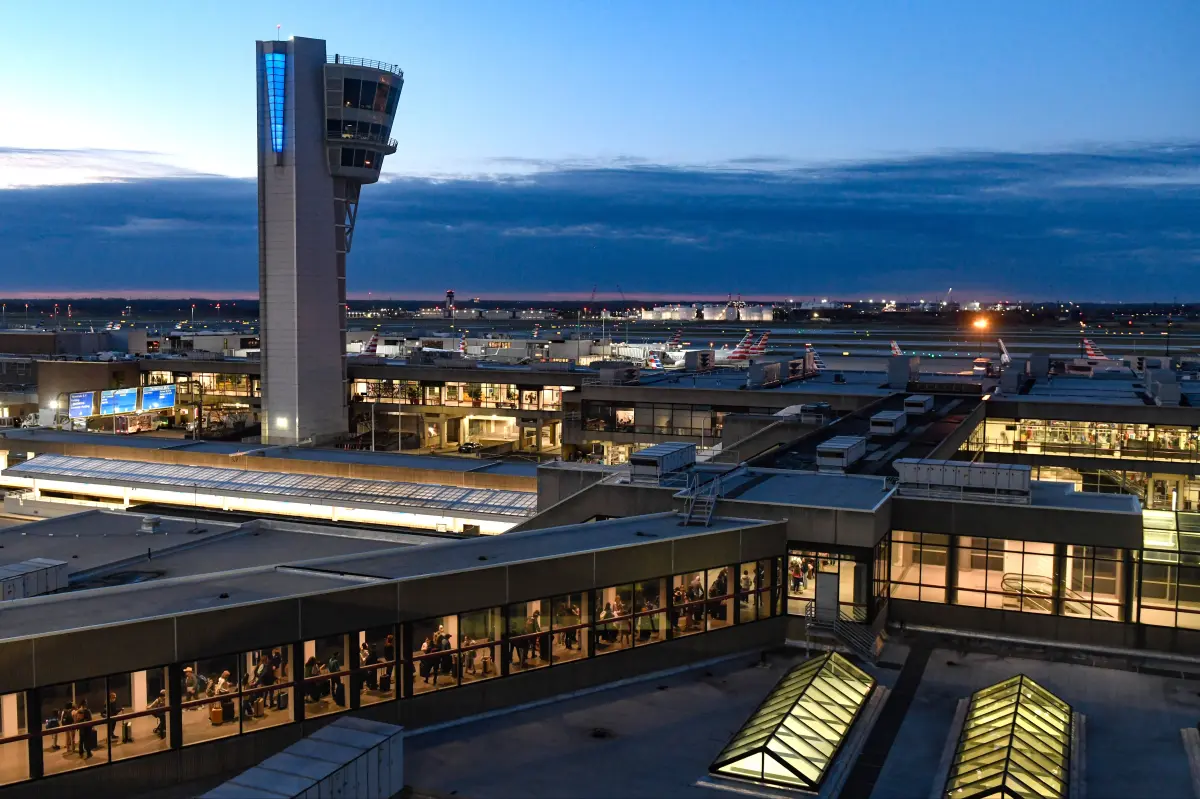
The sprawling, fluorescent-lit concourses of Philadelphia International Airport are a crossroads of countless stories, a place where thousands of journeys begin and end each day. But on the evening of Friday, September 13th, an unwelcome and invisible traveler moved through the crowds, leaving a chilling legacy in its wake. Health officials issued a stark warning, confirming that a person infected with the highly contagious measles virus had passed through the bustling airport terminals during a critical window of time. The exposure, which occurred from 7:25 p.m. until just after midnight on September 14th, placed countless unsuspecting travelers in the potential path of a disease that was long thought to be a relic of the past. The individual traversed Terminals B and F, and also spent time in the interconnected areas leading to Terminals C, D, and E, creating a wide net of possible exposure that has now triggered a public health advisory throughout the city and beyond.
This latest alert, however, was not an isolated event. It arrived as a worrying echo of a separate exposure that had been announced just days earlier at the Children’s Hospital of Philadelphia (CHOP). On September 11th, a different measles-infected individual had spent time in various parts of the renowned medical facility, including the most fragile of environments—the Neonatal Intensive Care Unit (NICU). The juxtaposition of these two events painted a stark picture: the measles virus, once eliminated from the United States in 2000, is not only resurging but is now finding its way into the very places we consider safest: our transit hubs and our hospitals. The Philadelphia Department of Public Health, working in tandem with state officials, has been forced into a reactive posture, meticulously tracing the steps of infected individuals, notifying potentially exposed persons, and issuing urgent pleas for the public to check their vaccination records. For the many travelers who were simply trying to catch a flight or retrieve a loved one, the news was a jolt of anxiety, transforming a mundane airport visit into a potential brush with a serious illness.
The health department’s directive for those who were in the airport during the specified times is clear and urgent. The instructions, however, are far from a simple “wait and see.” They are a nuanced and anxious triage, tailored to different levels of vulnerability. For the general public who are fully vaccinated, the risk is deemed low but not nonexistent. For others, the message is more urgent. Individuals who are infants, who are pregnant and not immune, who are immunocompromised, or who are simply unsure of their vaccination status are strongly urged to contact a healthcare provider “as soon as possible.” This isn’t just a suggestion; it’s a critical window of opportunity to potentially receive post-exposure prophylaxis, such as immunoglobulin, which can mitigate the severity of the illness if given quickly. The advisory forces people to confront a deeply personal question: Are you truly immune? It asks them to dig through old medical records, call their pediatricians, and reassess a health metric that many have taken for granted for decades. The overarching message is one of vigilance, compelling everyone who was in those airport corridors on that Friday night to not only check their vaccination history but to actively monitor themselves for the telltale signs of the disease over the coming days. The strain of uncertainty, the waiting to see if a simple cough or a fever is just a cold or the first sign of a measles infection, is a heavy burden for anyone to carry.
The numbers behind these local exposures reveal a profoundly troubling national trend. As of this past Sunday, Pennsylvania alone has reported a staggering 792 measles cases, a number that includes 155 hospitalizations and, most heartbreakingly, four deaths. It is a stark illustration of how a fully preventable disease can wreak havoc when vaccination rates falter. The situation is not contained to the Keystone State. Across the United States, a whopping 3,471 measles cases have been recorded this year, a figure that represents a massive and dangerous outbreak. Perhaps even more alarming than the case count is the data on vaccination rates. According to the CDC, only 92.4% of kindergartners received the MMR vaccine during the 2025-2026 school year. This is a significant drop from the 95.2% rate observed in the 2019-2020 school year. That six-percentage-point decline may seem small, but it is medically profound, pushing many communities below the crucial herd immunity threshold of 95%, which is required to protect those who cannot be vaccinated. The erosion of trust in vaccines, fueled by misinformation and hesitancy, is now manifesting in the emergency rooms and, as evidenced by the CHOP exposure, in the most sensitive wards of our children’s hospitals.
Understanding the sheer tenacity of the measles virus is essential to grasping why these exposures are so alarming. Measles is not a mild childhood ailment; it is a severe and highly contagious pathogen. It spreads through the air when an infected person coughs, sneezes, or even talks. The virus is so resilient that it can linger in the air and on surfaces for up to two hours after an infected person has left a room, turning a busy airport terminal into a viable transmission zone long after the source has moved on. The initial symptoms can mimic a common cold—fever, runny nose, cough, and red, watery eyes—which makes early diagnosis difficult and allows the virus to spread silently. But the hallmark symptom is a widespread rash that typically appears a few days later. The danger extends far beyond the rash. The terrifying progression of measles can lead to severe complications like pneumonia, a dangerous brain infection known as encephalitis, and, in the most severe cases, death. There is no specific antiviral treatment for measles; care is largely supportive, focusing on managing symptoms and complications, which underscores the critical importance of prevention through vaccination.
In the face of these interconnected exposures and the broader outbreak, Philadelphia’s Health Commissioner, Dr. Palak Raval-Nelson, has stepped forward with a message that seeks to balance reassurance with a call to action. In a public statement, she acknowledged the anxiety caused by the recent events but was quick to delineate the risk. “Every Philadelphian who is fully vaccinated has little to fear from the situation at CHOP and the airport,” she stated. This is a crucial point, aiming to calm the public’s nerves while reinforcing the efficacy of the vaccine. But her message quickly pivoted to a broader, more communal responsibility. “Even more importantly, every one of those people is doing their part to help protect our most vulnerable from measles,” she added. This reframing is vital: vaccination is not just a personal choice; it is a social contract. By getting vaccinated, you are not only protecting yourself but also shielding the immunocompromised, the infants who are too young for the vaccine, and the elderly whose immune systems may be waning. The commissioner’s statement is a powerful reminder that in a connected world, a single unvaccinated traveler can inadvertently become a vector for disease, turning a space as public as an airport into an epicenter of an outbreak. Her plea for everyone to visit phila.gov/measles is an invitation to educate oneself, not just out of fear, but out of a sense of shared responsibility for the health of the community.