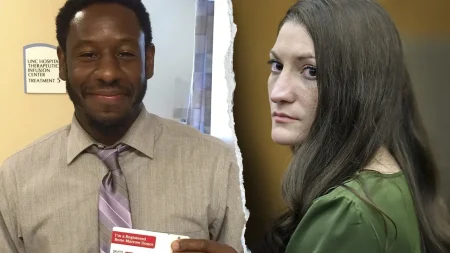




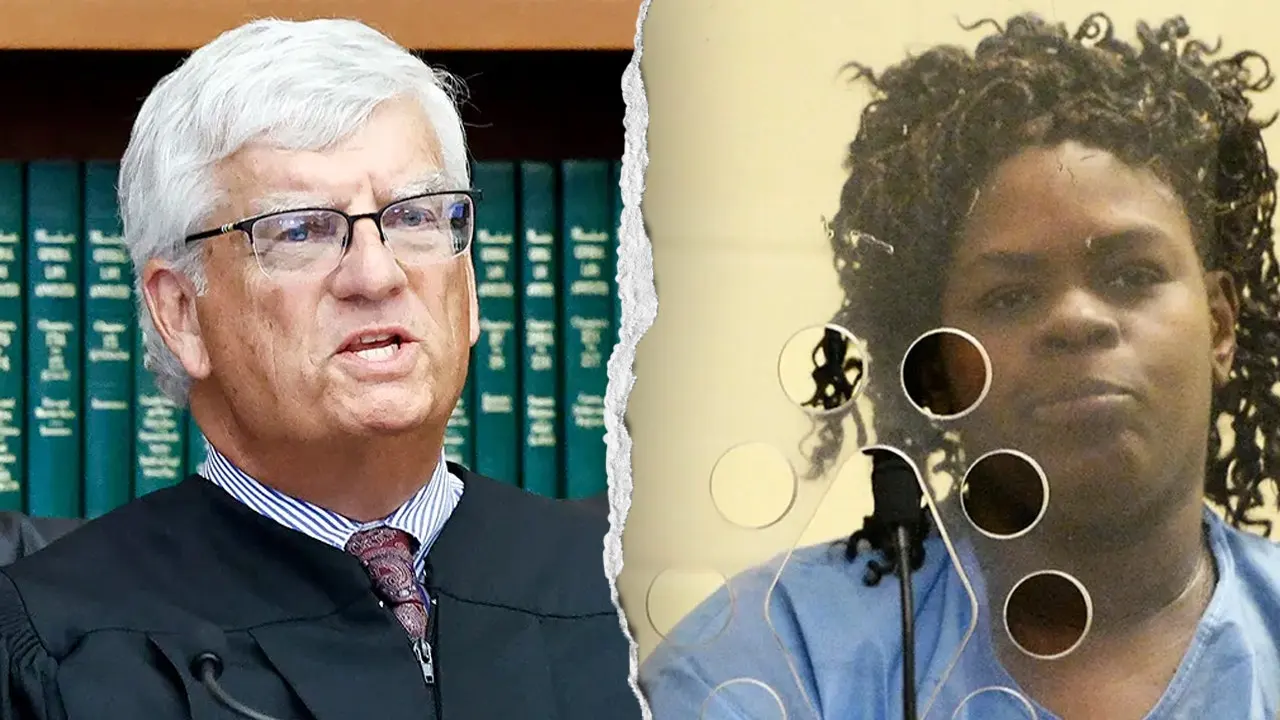
It is not often that a single trial judge becomes the center of two separate, deeply unsettling cases involving mothers accused of killing their own children, but that is exactly what has happened to Massachusetts Superior Court Judge William Sullivan. Earlier this month, Sullivan found himself in the national spotlight when he declared a mistrial in the case of Lindsay Clancy, the Duxbury mother charged with killing her three young children. The jury deadlocked, unable to agree on whether Clancy, who admitted to the killings, was criminally responsible for her actions or whether she was so afflicted by mental illness that she could not be held accountable. But this was not Sullivan’s first encounter with a tragedy of this kind. He also presided over the trial of Latarsha Sanders, a Brockton mother who was convicted of murdering her two young sons and sentenced to life in prison without the possibility of parole. That conviction, however, has since been overturned. The Massachusetts Supreme Judicial Court ruled last month that Sanders is entitled to a new trial because the judge improperly kept psychiatric records out of the courtroom—records that were central to her insanity defense. The ruling has thrown the case back into motion and, as retired Massachusetts Superior Court Judge Jack Lu put it, will “fundamentally change the way the case is going to be tried” if prosecutors decide to move forward once again.
The story behind the legal maneuvering is as heartbreaking as it is complicated. Sanders was convicted in 2022 of killing her two sons, eight-year-old Edson “Marlon” Brito and five-year-old La’Son Brito. There was no real dispute over what happened: Sanders admitted to the stabbings. The only real question at trial was why she did it, and more specifically, whether she was legally insane at the time. Her defense team argued that Sanders was in the grip of a severe mental illness, suffering from psychosis and a schizophrenia-spectrum disorder that left her unable to appreciate the wrongfulness of her actions. According to the evidence summarized by the state’s highest court, Sanders had become consumed by dark conspiracy theories involving the Illuminati and had expressed fears about voodoo in the days before the killings. After the deaths, she gave investigators a series of conflicting accounts, at one point telling detectives that the stabbings were part of a “ritual” connected to voodoo and the Illuminati. To support the insanity defense, her lawyers called a clinical neuropsychologist who testified that Sanders was “grossly psychotic” at the time of the attacks. That expert opinion rested in large part on thousands of pages of psychiatric treatment records from the prison where Sanders was held and from a state psychiatric hospital where she had been evaluated. But those records were never shown to the jury, and the Supreme Judicial Court decided that this was a fatal mistake—one that stripped Sanders of the very foundation of her only defense.
The court’s ruling was emphatic and unanimous. Justice David Gaziano wrote that there was no doubt Sanders committed the crimes, but that the sole issue for the jury was whether she lacked criminal responsibility. By excluding the medical records documenting her diagnoses and treatment for mental illness, the trial court had “impermissibly stripped the sole defense of the medical foundation that supported it.” In plain language, the court was saying that a jury cannot fairly decide whether someone was legally insane if they never hear the medical evidence that explains the path from mental deterioration to violent action. The records, the justices explained, contained repeated observations of paranoia, hallucinations, delusional thinking, and schizophrenia-spectrum diagnoses—information that formed the backbone of Sanders’ claim that she was not criminally responsible. Retired Judge Lu, who has no direct role in the case but has followed it closely, offered some perspective on just how significant this ruling is for any future proceeding. “Thousands of pages of mental health records will be admitted,” he said, “and the jury’s gonna get it all.” He also cautioned against being too quick to criticize Sullivan for the original ruling, noting that the evidentiary question was genuinely difficult before the Supreme Judicial Court clarified the law. “The trial judge did an excellent job,” Lu said, “but now I’m a great Monday morning quarterback just like everybody else.” It is a reminder that judges often make tough calls in real time, without the benefit of hindsight, and that appellate courts exist to correct those calls when they turn out to be wrong.
It would be a mistake, however, to read the Supreme Judicial Court’s decision as a declaration that Sanders was actually insane or that she was wrongly convicted. The court did not rule on the ultimate question of her criminal responsibility; it ruled on what evidence the jury should have been allowed to consider in making that decision. Lu made this point carefully, describing the opinion as the resolution of a difficult evidentiary question rather than a judgment about Sanders’ guilt or innocence. “It just means you have to do it all over again,” he said. The case is now headed back to Plymouth Superior Court, where Sanders will face a new trial if prosecutors choose to retry her. During oral arguments before the Supreme Judicial Court, Sanders’ attorney, Robert Shaw, argued that the exclusion of the medical evidence deprived his client of “a meaningful opportunity to present a complete defense.” Assistant Plymouth County District Attorney Melissa Johnson countered that Sanders had shown no documented psychotic behavior for months after the killings and that the records were properly kept out of the trial. The court ultimately sided with Shaw, but that does not mean the prosecution’s case is doomed. It simply means the battlefield has shifted. The next jury will hear far more about Sanders’ mental health history, and the prosecution will have to find a way to convince that jury that, despite the disturbing psychiatric records, Sanders knew what she was doing was wrong at the moment she killed her sons.
The Supreme Judicial Court also weighed in on two other issues that will shape any retrial, offering a kind of roadmap for both sides. First, the court said prosecutors are allowed to refer to statements Sanders made describing herself as “evil.” At first glance, that might seem like a brutal thing to introduce, but the court reasoned that those statements were relevant to whether she appreciated the moral wrongfulness of her actions—which is the very heart of an insanity defense. If a person says she is evil, a prosecutor can argue that she understands the difference between right and wrong, and that she knows her actions were wrong even if she did them anyway. The court was careful to say, however, that the argument must stay tied to that legal issue and cannot become a general personal attack on Sanders. The second issue is more peculiar. The court found that prosecutors had improperly suggested to the jury that Sanders may have borrowed elements of her story from episodes of the television show “Law & Order: Special Victims Unit.” The justices ruled there was no evidence to support that theory, and it should not have been presented. That detail stands out as a strange footnote in an otherwise grim case, but it illustrates just how messy and unpredictable criminal trials can be—and how careful appellate courts are to keep the proceedings within the bounds of evidence and fairness. For a case like this, where the facts of the crime are not disputed and the only real question is a person’s mental state, every bit of context matters. A reference to a television show might seem trivial, but it could have influenced the jury’s perception of Sanders’ credibility, and the court was not willing to let it stand.
For Judge Sullivan, this latest development in the Sanders case adds another layer to a legal career already marked by heartbreaking decisions. In the Clancy case, he watched a jury struggle with the same kind of question—whether a mother who killed her children was responsible for her actions—and when the jury could not reach a verdict, he declared a mistrial and then granted the defense a brief stay to file an appeal. In the Sanders case, he had already sentenced her to two concurrent life terms without parole, and now that sentence has been wiped away by a higher court. The two cases are not legally identical, but they share a common thread: both force juries to confront the uncomfortable boundary between madness and evil, and both place an enormous burden on the judge to ensure that the process is fair. The overturned conviction does not clear Sanders of the charges. She remains accused of a horrific crime, and she will continue to face the possibility of life in prison. But for now, the legal system has said that her last trial was not fair enough, and that the question of her sanity deserves to be heard with all the relevant evidence on the table. That is a cold comfort, perhaps, to those who mourn the two young boys whose lives were cut short, but it is how the system is supposed to work. As retired Judge Lu noted, the ruling means the case has to be done all over again—not because anyone doubts the tragedy, but because the law demands that the answer be reached the right way. In the end, the story of Latarsha Sanders is not just about a crime and a punishment; it is about whether the legal system can truly see a person’s mind, and whether justice can ever be fully served when the truth is locked inside a brain that has shattered.