


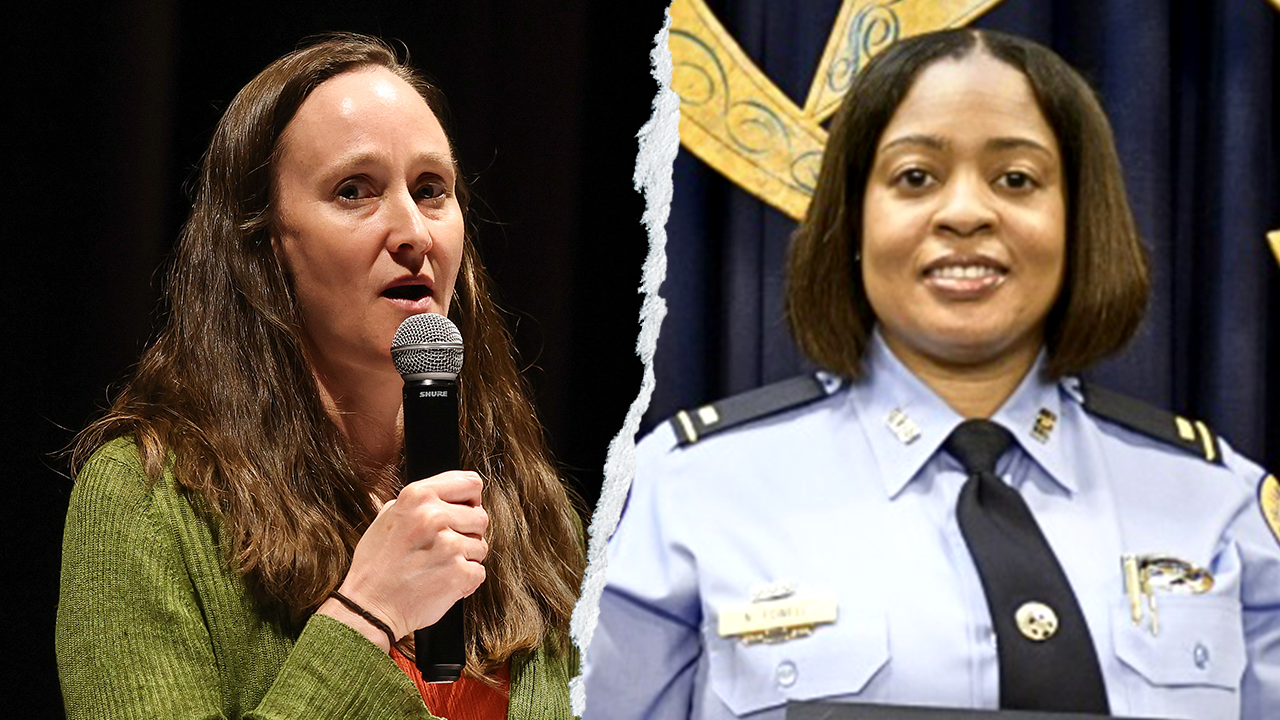
Nobody ever hopes to become the punchline of a political moment, but for Seattle Mayor Katie Wilson, the pattern has become almost painfully familiar. She is a Democrat and self-identified socialist who has already earned a reputation for awkward, gaffe-prone appearances, and her latest on-camera interview has given critics plenty of fresh material. The scene unfolded during a joint sit-down with Seattle Police Assistant Chief Nicole Powell and Amy Barden, who leads the city’s Community Assisted Response and Engagement Department. The subject was gun violence and the city’s plan to reduce it, but the conversation quickly became less about policy and more about the uncomfortable silence that hung in the air when a reporter asked a direct, simple question. What followed was a tense, clumsy, and deeply human moment in which the mayor, the assistant police chief, and the CARE director all seemed to be wrestling—in real time—with how to talk about a controversial issue without stepping on one another’s toes. It was the kind of exchange that makes you cringe a little, not because anything terrible was said, but because the body language and hesitation said more than the words ever could.
The pivotal moment came when KOMO News reporter Chris Daniels turned to Assistant Chief Powell and asked whether the newly installed Flock-type surveillance cameras could help solve the city’s backlog of unsolved cases. It is a fair question, especially in a city that has been grappling with rising gun violence and a public desperate for answers. But Powell did not answer right away. Instead, she looked down, started to speak twice, stopped, and let a pause stretch out long enough to become uncomfortable. That silence was a tell. It suggested someone treading carefully in front of the mayor, aware that the subject of cameras is politically loaded for Wilson. And then Wilson stepped in to rescue her. “Cameras are obviously a useful tool, right?” she said, pointing to the “Bite of Seattle” shooting as an example. She noted that businesses and Seattle Center cameras had provided footage that proved helpful in solving crime. It sounded like a reasonable answer, but the irony was impossible to miss. During her mayoral campaign, Wilson had argued against expanding the city’s surveillance camera network. Now she was championing them as “obviously useful.” The discomfort on Powell’s face became even more pronounced. She chuckled nervously, motioned toward the mayor, and repeatedly looked somewhere off-camera, as if she was silently hoping someone else would change the subject.
The reporter, to his credit, did not let it go. He pressed further with another straightforward question: “What’s going to be the metric of success?” Again, the assistant police chief looked to the mayor. Wilson’s voice cracked slightly as she said, “Ultimately, we want to see zero homicides, we want to see fewer homicides, and we want to see fewer guns shot.” Those are not bad goals, but the delivery felt shaky, and Powell’s reaction did nothing to reassure anyone. She nodded along mechanically, once again looking off to the side, her expression somewhere between agreement and unease. That was when the reporter did something that made the moment even more telling. He turned to Powell and Barden and asked, “Would either of you like to answer that question?” It was a blunt acknowledgment that the actual experts sitting beside the mayor had not been given the chance to speak. Barden jumped in quickly and steered the conversation toward a different measure of success: referrals into social services and whether someone is making meaningful improvement in their life. That answer made sense for someone who runs the city’s community-based response programs. After she finished, the floor finally went to Powell, who laughed briefly before saying, “Just to piggyback, taking a holistic approach this strategy works. It is proven in other cities like this, and it takes all of us.” She looked back at Wilson and Barden as she spoke, and the entire exchange left viewers with an uncomfortable question: Why was the mayor answering for the police?
To understand why this moment felt so loaded, it helps to know the political tightrope Wilson has been walking on surveillance. During her campaign last year, she told voters that expanding camera coverage was not a magic solution. In September, she was even more direct, saying, “Turning on more cameras won’t magically make our neighborhoods safer. But it will certainly make our neighbors more vulnerable.” That position earned her support from civil liberties advocates and progressive voters who worried about the impact of mass surveillance on marginalized communities. But once in office, facing the reality of gun violence and public pressure from voters who want safer streets, Wilson shifted her tone. She did not fully abandon her skepticism, but she also did not move forward with the camera expansion plan. Instead, she announced a pause. She ordered a privacy and data-governance audit of the existing camera system and said the findings would determine the city’s next steps. The existing cameras would stay on during the audit, but new ones would be on hold. It was a compromise that pleased almost no one completely. Camera proponents saw it as unnecessary delay. Privacy advocates saw it as a slow retreat from her promises. And now, in this interview, Wilson appeared to trying to have it both ways—acknowledging cameras are useful while still standing behind her cautious approach.
When the reporter pressed her again on exactly when she would make a decision, Wilson sighed in a way that felt almost human. “I’m going to sound like a broken record on this,” she admitted, before repeating that the audit of data security, storage, and privacy practices was nearly complete. She said the results would be made public around the end of the month, and then she would decide about expansion. It was a bureaucratic answer that felt honest but also deeply unsatisfying for anyone looking for clear leadership. The reporter had asked for a date, a commitment, something concrete. Instead, Wilson could only point to the calendar and promise more process. In fairness, municipal governance is full of audits and studies and careful deliberation. But in a city where residents are demanding answers about public safety, process can feel like an excuse. That tension is at the heart of the entire awkward interview. Wilson seemed trapped between her values and the demands of the moment—between the privacy-conscious campaign rhetoric that helped her win over progressives and the urgent, real-world need to address gun violence that voters are now yelling about. It is an impossible balance, and it showed in every nervous look and half-finished sentence.
Online, the reaction was swift and merciless, as it almost always is in these situations. The conservative account “End Wokeness” shared the clip and called it an “incredible moment,” pointing out that Powell looked nervously at Wilson, who had turned off the city’s CCTV cameras, and then gave the camera a telling glance. Political advocacy group Future 42 also piled on, writing that the assistant police chief’s silence said it all. They accused Wilson of interjecting to defend cameras she personally decided to turn off, and concluded that Wilson “still has no idea what she is doing as Mayor of Seattle.” There is something almost unfair about reducing an entire administration to a single awkward video clipavingly, that is how modern politics works. One uncomfortable pause can erase months of nuance and policy work. And yet, there is also a deeper lesson here, one that goes beyond Wilson’s performance. The clip shows what it looks like when people are not fully aligned on a message. It shows the fallout of a mayor who is trying to steer a city through a violent crisis while honoring campaign promises that now feel less certain. It shows a police chief navigating politics, looking for space to speak but not wanting to contradict her boss. It shows a social services director offering a different vision that is almost certainly correct but still does not answer the public’s demand for immediate action. Beneath the awkwardness, there is something deeply human about all of it—the fear of saying the wrong thing, the instinct to cover for a colleague, the exhaustion of repeating the same answer, and the humility of admitting that you do not have all the answers. Whether Wilson can recover from this moment depends less on the clip itself and more on what she actually does with that audit when it arrives. Until then, she remains just another public servant caught in the unflattering glare of a camera, trying to sound confident while the silence around her says everything.