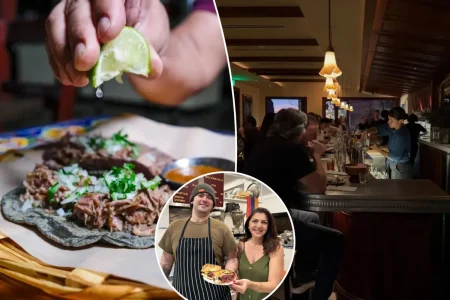



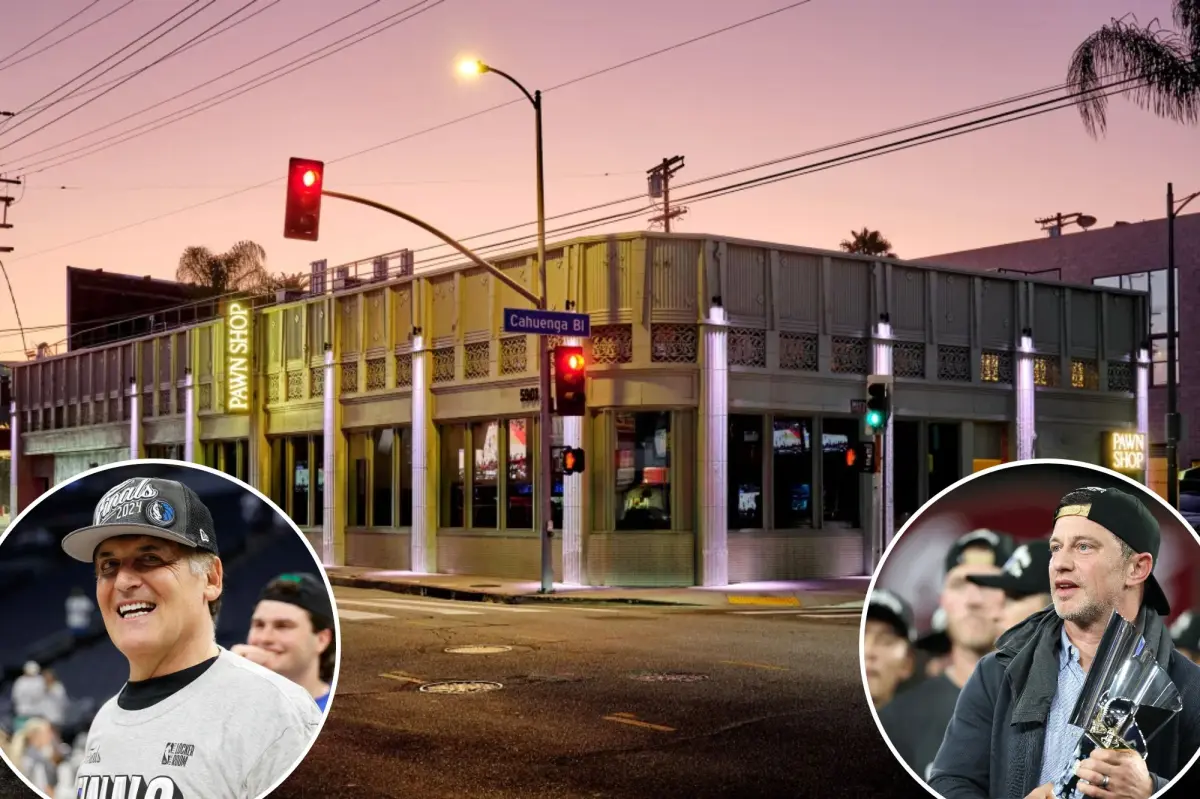
On a busy Los Angeles corner where Melrose meets Cahuenga, an old pawn shop that first opened its doors in the 1930s has been reborn as something the city didn’t know it was missing. It’s called Pawn Shop, and it’s not just another sports bar. It’s an 8,500-square-foot playground for people who love great food, great games, and the kind of electric energy that makes strangers high-five each other over a goal. There are more than sixty televisions scattered throughout the space, two massive media walls that can split the room into rival fan zones, private suites upstairs, and a lineup of cocktails that wouldn’t feel out of place in a stylish downtown lounge. But the most surprising part isn’t the screens or the decor—it’s the people behind it. Mark Cuban, the billionaire entrepreneur and former Dallas Mavericks owner, is an investor. So is Andrew Friedman, the Los Angeles Dodgers’ president of baseball operations. They’ve teamed up with founder and CEO Diego Torres-Palma and James Beard Award-winning chef Tony Messina, and together they’ve decided that the old sports bar formula of sad wings and frozen mozzarella sticks just isn’t good enough anymore. Instead, Pawn Shop serves housemade wagyu hot dogs, beef tallow fries, chicken liver mousse, caviar, and charbroiled Maine oysters. It’s a place where you can watch a playoff game on a massive screen while eating food that would impress at a fine-dining restaurant. The idea is simple: why can’t a sports bar feel like a true destination instead of a compromise? Why can’t it be somewhere you go for the atmosphere, stay for the meal, and leave with a story you’ll be telling for weeks? That’s the bet Pawn Shop is making, and so far, the city seems more than willing to take it.
The list of famous faces connected to Pawn Shop is longer than a CVS receipt, and it keeps growing. Aaron Donald, the Rams defensive tackle who stunned the football world by coming out of retirement, has talked about investing alongside his wife Erica, according to Torres-Palma. “We literally traded emails when Aaron announced he was coming back,” Torres-Palma said. Dodgers shortstop Mookie Betts met with the company and will feature his Tequila Providencia behind the bar, after its CEO Rodd Rafieha impressed the beverage team. Kendall Jenner’s 818 Tequila also wanted in, with President Lanay Jacobs saying, “We’re excited to have 818 Tequila featured at Pawn Shop LA. It’s a lively destination that brings together sports, cocktails, and community in a way our audience will love.” The celebrity presence isn’t just for show. Former NBA player Chandler Parsons, a co-host of the online show “Run It Back,” stops by at least once a week. “Pawn Shop is exactly what LA needed,” he said. “Great food, great energy, amazing people, and a genuine love for sports that you can feel when you walk in.” Sportscaster Rich Eisen held his fantasy football draft there. The entire LAFC team did the same. Actor Anthony Ramos has been in multiple times. Entertainment executives have booked the space for meetings, and nearby Paramount staffers use the private upstairs suites as off-site work rooms. Cuban himself recently visited with his son and was reportedly in awe. “Of all the investors, Mark is probably the one that I communicate with the most,” Torres-Palma said. “He’s so pumped. Honestly, he’s probably been our top supporter.” Having that kind of backing gives Pawn Shop instant credibility, but it also raises expectations. It’s one thing to open a cool bar with famous investors; it’s another to keep people coming back once the novelty wears off.
Pawn Shop’s timing turned out to be almost unbelievable. It opened during the 2026 FIFA World Cup, which meant that from day one, the place was packed with crowds who came for the matches and stayed for everything else. Torres-Palma compares those first few weeks to hosting a wedding every few days—hundreds of customers arriving all at once, watching the same event, and wanting food and drinks at virtually the same moment. The peak came during Mexico’s wild Round of 16 match against England. “I’ll never forget the roars in here,” Torres-Palma said. “That feeling is why you build these things. It’s such a crazy, loud, energetic feeling that everybody experiences at the same time.” He calls it “monetizing moments,” a phrase that sounds almost too businesslike until you’re standing in a room full of strangers who are screaming, hugging, and crying over a goal together. When fans of El Tri or the Three Lions look back on that historic match, they’ll remember being at Pawn Shop and sharing a memory they’ll never forget with people they’d never met. That’s what “monetizing moments” really means—capturing the raw emotion of live sport and making it the heart of the experience. It’s also a pretty good description of the entire sports business. The question, of course, is whether Pawn Shop can maintain that energy now that the World Cup is over. Los Angeles is littered with restaurants that were once the hottest reservation in town, and sports bars come and go all the time. Novelty disappears quickly here. But Torres-Palma doesn’t seem worried. “When people say the restaurant business is brutal or very tough, I always ask them, ‘What’s an easy business so I can go do that?’” he said. His answer to struggling competitors is considerably sharper: “Let them quit. They should have never played the game.”
That kind of swagger only works if the product backs it up, and so far Pawn Shop has a legitimate argument that it does. Its biggest advantage might actually be the food. Pawn Shop feels less like someone dressed up a sports bar as a restaurant than someone built a serious restaurant and happened to cover it in televisions. Chef Tony Messina’s menu is thoughtful, ambitious, and far beyond typical game-day fare. Customers can tell their server which game they want, and staff can route it in seconds to televisions near their table. If someone wants USC football on one screen, the Dodgers on another, Texas football on a third, and the U.S. Open nearby, all of it can happen at the snap of a finger. During NFL Sundays, the two massive central media walls can even show different games, effectively splitting the room into competing fan bases. That kind of flexibility is rare in Los Angeles, where many bars either don’t have the technology or don’t care enough to make it work. “A lot of bars in L.A., we’re learning, don’t put the sound on,” Torres-Palma said. “We will fully lean in to actually having the sound on.” It seems laughably obvious that a sports bar should play the sound of the game it’s featuring, but that’s exactly the point. Pawn Shop is betting there’s a hole in Los Angeles between the neighborhood dive with eight televisions and mediocre wings and the actual stadium experience, where dinner can cost a fortune and nobody is going just for the cuisine. “We are that clubhouse,” Torres-Palma said. “We just want to be a sports hub.”
And this is only phase one. Torres-Palma and his team have plans to keep Pawn Shop evolving, with original digital programming that pairs athletes with Chef Messina—including a concept where the chef recreates a favorite childhood meal for a player. “Sinatra Tuesdays” are coming, featuring old-school Italian dinners and Hollywood-inspired programming. October will bring outdoor movie nights. And in February, the Super Bowl returns to Los Angeles, a time when Torres-Palma says companies are already approaching Pawn Shop about buyouts, pregame parties, and postgame events. After that, expansion. “I think we’ll be opening up No. 2, or be close to opening,” Torres-Palma said of where he expects Pawn Shop to be by next summer. “Probably Vegas, almost certainly.” The ambition is real, and the celebrity backing gives it a runway that most new restaurants don’t have. But for all the investors, tequila deals, television walls, and franchise plans, Torres-Palma keeps coming back to something much simpler. He wants people leaving Pawn Shop with a story to tell. Maybe it’s a World Cup goal, a Dodgers walk-off win in October, a Rams fourth-quarter comeback, a chance encounter with an actor or athlete, or even a glimpse of a World Series trophy or Super Bowl ring. “I just really want people to talk about Pawn Shop as a place where, like, ‘Oh, this crazy thing happened to me here,’” Torres-Palma said.
Ultimately, that might be Pawn Shop’s smartest bet. Los Angeles has plenty of places to eat, grab a drink, or watch a game. But what Cuban, Friedman, and Torres-Palma are betting their business on is that L.A. still needs a place where something worth remembering happens while you’re doing all three. There’s something deeply human about wanting to be part of a shared moment—the sudden roar of a crowd, the disbelief of an upset, the joy of a last-second victory. A great sports bar doesn’t just show the game; it makes you feel like you’re in it. Pawn Shop has been designed to do exactly that, from the carefully curated menu to the cutting-edge audiovisual setup to the kind of atmosphere that makes you want to stay for one more round. The food is good enough to be the reason you show up. The technology is impressive enough to make every seat the best seat. But the real magic is the feeling that anything can happen at any moment. In a city where so much can feel polished, curated, and distant, Pawn Shop wants to be the opposite: loud, unpretentious, and alive. It wants to be the place where you walk in as a stranger and leave as part of a memory. And if the first few months are any indication, it’s well on its way. The World Cup gave it an unforgettable kickoff, the celebrity crowd gives it a buzz, and the food gives it staying power. But the reason Pawn Shop might actually succeed is that it understands something fundamental about why we watch sports in the first place. We don’t just want to see winners and losers. We want to feel like we’re part of something bigger than ourselves. We want to cheer with strangers, toast with friends, and remember where we were when it happened. Pawn Shop is betting that those moments are worth building a business around—and so far, that bet is paying off.