


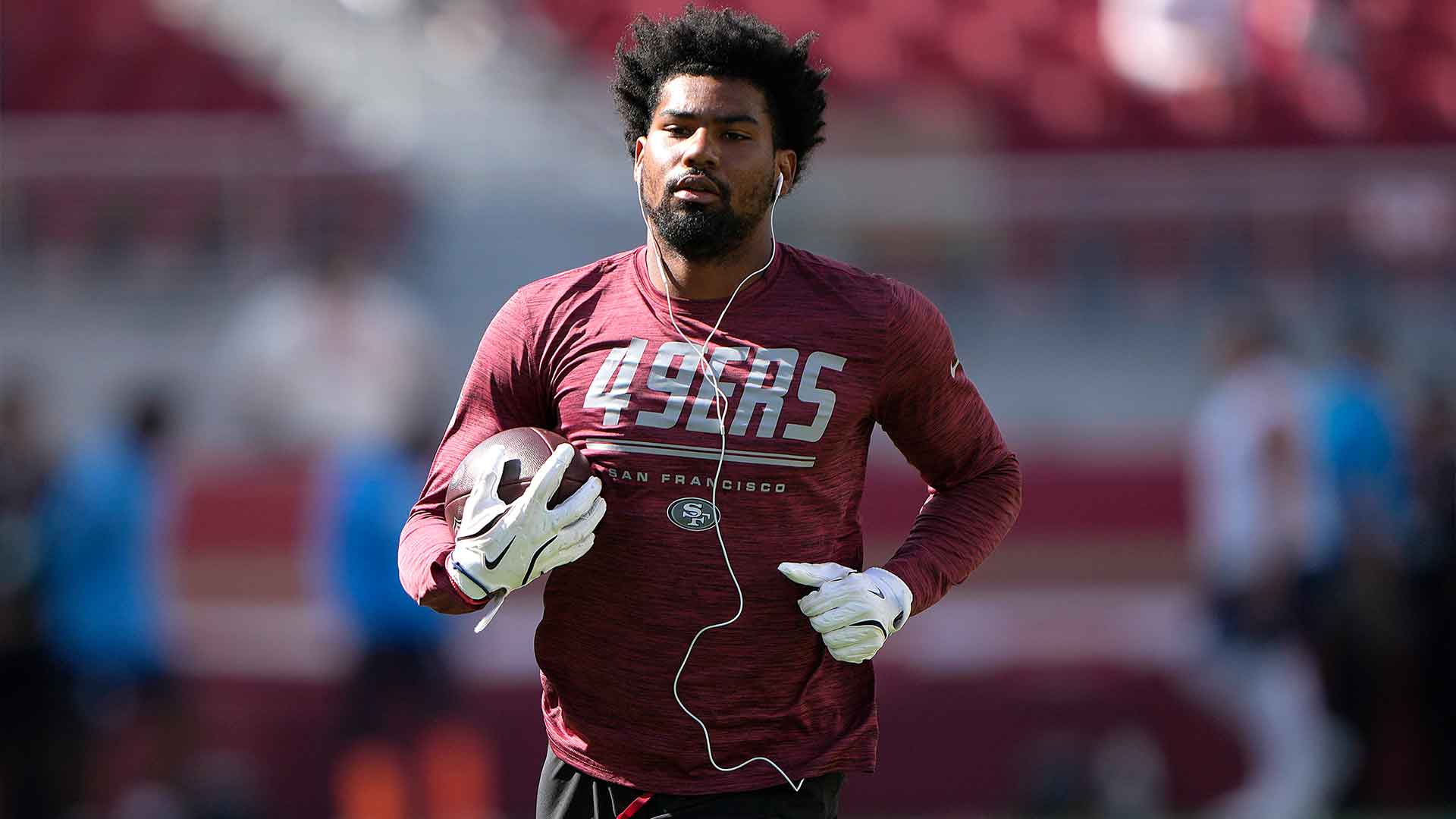
The San Francisco 49ers are no strangers to bad news. In fact, the franchise has spent so much time dealing with the injury bug in recent years that a clean injury report feels almost like a victory. The latest blow arrived in Week 1 against the Los Angeles Rams, when rookie wide receiver De’Zhaun Stribling made his NFL debut not with a touchdown celebration, but with a helpless tumble into the turf. Late in the first quarter, Stribling injured his left ankle in a way that made everyone around him hold their breath. He tried to shake it off. He returned to the huddle and ran another route, determined to show his coaches and teammates that he belonged. But on the 49ers’ very next drive, the same ankle gave out again, and Stribling went down in a heap, unable to get up. The cart was called, and the young man who had spent his whole life dreaming of this moment was rolled off the field, his face hidden behind a towel. For a moment, the fear was that it was something far worse—an Achilles tear that would cost him the season. Head coach Kyle Shanahan thankfully ruled that out after the game, but what remained was still serious enough to require surgery. Now, Stribling is expected to miss roughly ten weeks after undergoing a procedure on that left ankle, and the 49ers have officially placed him on injured reserve, meaning at least four games will pass before he can even think about returning. For a rookie who had waited his entire life for a chance in the NFL, the diagnosis was a gut punch.
Stribling’s story makes the loss feel personal. He was a second-round pick out of Ole Miss, a young receiver with the pedigree, hands, and route-running ability to become a dangerous weapon in Shanahan’s offense. Through the summer, he had impressed with his work ethic, crisp cuts, and reliable catches in training camp. Coaches praised him. Veterans took him under their wing. He had earned his spot. Then, in the same game that was supposed to announce his arrival to the league, his body betrayed him. The stat sheet from that opener shows no catches, but the reality of the moment is bigger than any number. Stribling had run his route, felt the ankle twist, popped up, and tried to play through the pain. That’s the kind of toughness coaches respect. But football, especially at this level, is merciless to the body, and sometimes toughness isn’t enough. Now his days are spent in a different kind of fight—not against a cornerback or a safety, but against swelling, discomfort, and the slow, maddening passage of time. Instead of continuing to learn from Brock Purdy and the veterans around him, he will be watching from the sideline, working in the training room, and wondering what might have been. He will have to reconnect with family and friends, explain that the dream is only postponed, and find the discipline to attack rehab the same way he attacked preseason practices. That is the quiet, human side of an injury that doesn’t show up in the box score.
What makes this situation even harder for the 49ers is that Stribling is not the only receiver missing. Ricky Pearsall, another promising young wideout, is already out for the season with a knee injury. Suddenly, the depth that Shanahan had counted on has become dangerously thin. The receiving room, which was supposed to be one of the team’s greatest strengths, is now taped together with veterans and hope. Stribling’s surgery was not an easy call, but Shanahan’s decision to go that route reveals a larger philosophy. Football is a cruel business, and the temptation is always to rush back, to tape the ankle, to gamble on one more game. But Shanahan understands that a player’s future matters more than any single matchup. By choosing surgery now, he is giving Stribling the best chance to come back healthy later. That doesn’t make the loss any easier to accept in the locker room, though. Veterans remember walking in Stribling’s shoes. They know the sting of being separated from the game you love. The 49ers have built a culture of brotherhood, and when one of their own goes down, the entire team carries the weight. There is no replacement for the energy of a young rookie, the burst of enthusiasm in practice, the desire to prove himself on every rep. Now that energy is gone, and the team must adjust.
With Stribling sidelined, the offensive burden falls on the veterans who have been through the fire before. The receiving corps will lean heavily on experienced players like Mike Evans, Deebo Samuel, and Demarcus Robinson. That trio was already dangerous in the season opener against the Rams, combining for 14 catches, 147 yards, and three touchdowns. Those numbers are not just stats; they represent a kind of reassurance for the team. Brock Purdy, who put together a strong performance in that game, can still drive the offense downfield because he trusts the older guys to be where they need to be. Deebo Samuel, in particular, is a perfect example of the fighter’s mentality that the 49ers value. He has spent his career turning injuries into comebacks, carrying the ball, fighting for extra yards, and playing with a reckless passion that inspires everyone around him. Stability is what this receiving room needs now, and the veterans provide it. They understand the playbook, they understand Shanahan’s timing, and they understand that the young guys are watching them even from the trainer’s table. Stribling’s absence means more first-team reps for unproven depth pieces, but it also means a chance for someone to step into the spotlight. In the NFL, the next man must always be ready, and this is the moment for those players to prove they belong.
The 49ers now turn their attention to Week 2, where they will host the explosive Miami Dolphins. Miami brings speed and playmaking on both sides of the ball, and the 49ers will need every bit of creativity they can muster. The passing attack, as evidenced by the Rams game, did not miss a beat even with Stribling banged up. Purdy has the poise to distribute the ball quickly, to find mismatches, and to get the ball into the hands of playmakers in space. But depth matters over the course of a long season, and losing a capable receiver makes everything a little tighter. Shanahan will have to scheme ways to take pressure off the remaining receivers, maybe by using more tight ends, more running backs in the passing game, more pre-snap motion and play-action passes. In many ways, adversity is where Shanahan’s brilliance shines. He is at his best when his resources are limited because it forces him to be more original, more unpredictable. The Dolphins will try to create chaos with their own speed, but the 49ers know that football is not about surviving one game—it’s about enduring an entire season. Losing Stribling for ten weeks is not the end of the world, but it is a test of the franchise’s resilience. Every team eventually faces a moment when the roster looks less like a dream and more like a triage unit. How they respond to that moment determines whether a season spirals or becomes a story of perseverance.
In the end, the 49ers story is more than just a football report; it’s a human reminder that setbacks are not final. De’Zhaun Stribling’s injured ankle may have stolen his debut, but it does not define his career. The long road of rehab will grind at him, and there will be days when progress feels invisible. But there will also be days when the pain fades, when he feels the ankle grow stronger, when he runs again for the first time and remembers why he fell in love with the game. The 49ers, a team built on grit and toughness, will wait for him. They will ask other receivers to step up, but they will hold a spot in their hearts and in their meeting rooms for the rookie who was taken off the field too soon. The season has many chapters, and this is only the first injury-related interruption. What matters now is how Stribling responds to the challenge, how the veterans carry the load, how Purdy continues to lead the division, and how Shanahan keeps the ship steady. That is the story that cannot be captured in a box score. It is the story of a fallen athlete learning to stand again, of a team refusing to make excuses, and of fans who understand that football’s greatest victories are often born from its cruelest breaks. In ten weeks, when Stribling finally returns, his comeback will be more than a roster move—it will be a tribute to every person who has ever been knocked down and had to find a way to rise.