



Paragraph 1
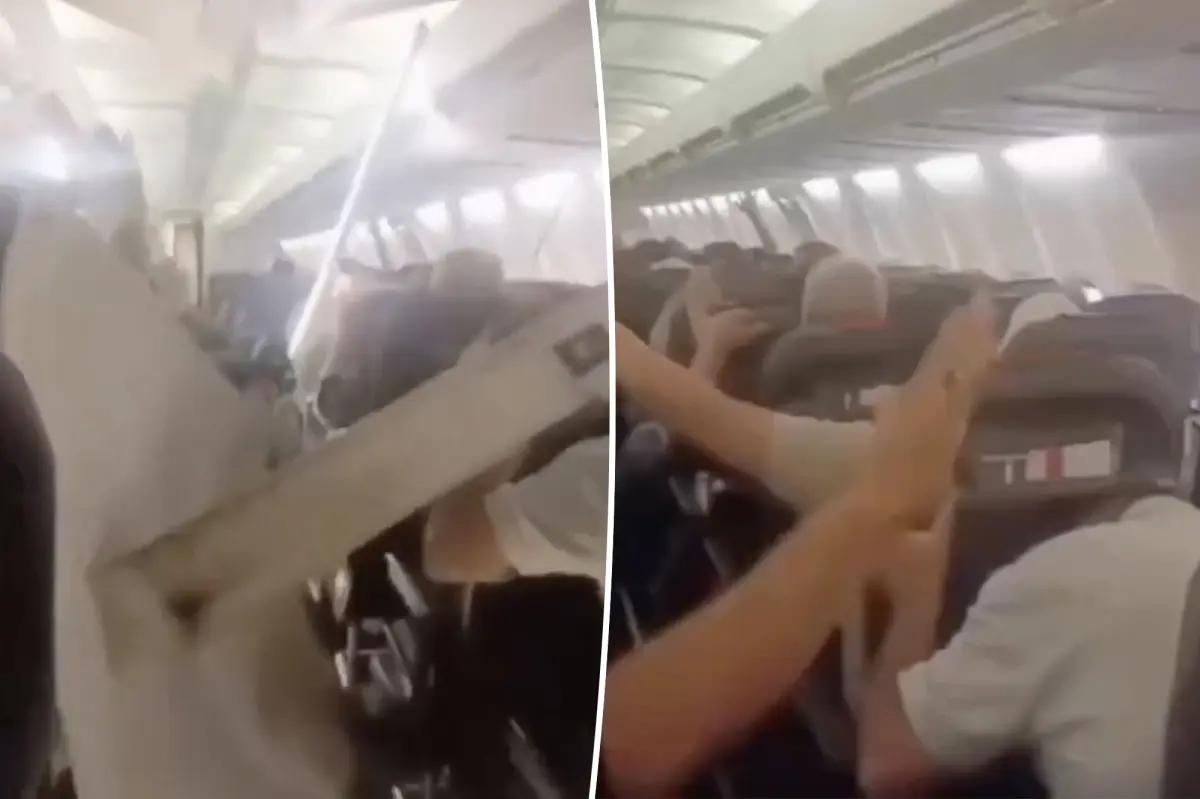
There are moments in air travel when the ordinary hum of an engine suddenly turns into something far more sinister, and for the passengers aboard Sepehran Airlines Flight 6103 on the morning of September 15, that moment arrived without warning. The Boeing 737 had just lifted off from Mashhad International Airport in northeastern Iran, bound for the western city of Kermanshah. The sky was clear, the cabin was calm, and for the 127 people on board, it seemed like just another domestic flight in a country where aviation has long been a lifeline between distant cities. But then the plane began to shake. At first, it might have passed for turbulence—that familiar, unsettling rattle that makes nervous flyers grip their armrests and seasoned travelers barely stir from their newspapers. This was different. The vibration grew deeper, more violent, more desperate, until the aircraft itself seemed to be fighting to stay whole. Within seconds, the reassuring structure of the cabin turned into something nightmarish. Panels from the ceiling began to fall away, dropping into the aisles and onto seats, while oxygen masks and loose fittings flailed overhead. The sound of tearing metal and plastic mixed with the rising chorus of human terror, and a video captured the awful soundtrack: passengers screaming, crying out, calling on God, and clutching one another as the plane rattled around them. It was the kind of scene that no one ever expects to experience, and yet there they were, thousands of feet above the Iranian landscape, trapped inside a machine that seemed to be coming apart piece by piece.
Paragraph 2
For the people in those seats, the flight had become a waking nightmare unfolding in slow motion. Some later reported seeing bits of insulation and plastic showering down from the overhead bins, as if the ceiling itself was crumbling. The jolting was so severe that luggage and personal items were tossed loose, and several flyers were struck by falling debris—though, remarkably, no one would be counted among the injured. That fact borders on miraculous, given the sheer chaos visible in the footage. In the video, you can hear a woman shrieking over and over, her voice trembling with a fear so raw that it cuts through the rattling din. A man nearby can be heard praying aloud, his words tumbling out in a desperate rhythm, while other passengers press their heads against the seats in front of them, bracing for whatever might come next. The scene was one of collective panic, but also of shared humanity: strangers reaching for each other’s hands, someone trying to comfort a sobbing companion even as her own voice faltered. The flight attendants, trained to project calm in emergencies, could do little more than shout reassurances over the chaos. There was no fire, no loss of cabin pressure, no sudden drop—but the sight of the airplane’s own body falling apart around them was enough to shake even the bravest souls. In those terrible minutes, every bump and shudder felt like the beginning of the end, and the passengers could only wait, hope, and pray that the pilots would somehow bring them back down alive.
Paragraph 3
In the cockpit, the crew faced a harrowing decision with barely a moment to think. With the aircraft shaking violently and parts of the cabin structure failing, the only safe course was to abandon the journey and get the plane back on the ground as quickly as possible. The captain calmly announced that they were turning around, and the aircraft banked back toward Mashhad, its systems straining audibly as the pilots wrestled for control. For the passengers, that turn signaled a sliver of hope—a sign that somebody was in charge, that somebody knew what they were doing, that maybe they would live to see the terminal again. The return trip must have felt interminable, every minute stretched out by adrenaline and fear. But the crew held steady. They guided the wounded Boeing back through the sky, descended carefully, and lined up for an emergency landing at the very airport from which they had departed less than an hour earlier. When the wheels touched down—hard enough to jolt everyone again, but safely—a wave of relief swept through the cabin. Passengers burst into applause and tears, hugging the people next to them, praising God, and thanking the pilots whose skill had just saved their lives. Emergency crews were already waiting on the tarmac, and the evacuation was swift. One by one, the 127 passengers were escorted off the plane, some trembling, others weeping openly, many simply staring back at the aircraft in disbelief that they had walked away. They were taken to the terminal, offered water and blankets, and eventually loaded onto another plane to finish their trip to Kermanshah. Most would probably tell you that the last thing they wanted was to board another flight that day—but exhaustion and distance demanded otherwise.
Paragraph 4
The aftermath of the incident was felt beyond the small circle of passengers and crew. Mashhad International Airport, one of Iran’s busiest travel hubs, was thrust into a state of disruption. According to reports, authorities temporarily shut down one of the airport’s two runways to allow for inspection and cleanup, raising questions about delays for other flights. What exactly had happened? Initial accounts suggested that a tyre had burst during the flight, a theory that would explain the violent shaking and the rattling of the cabin structure. Yet confirmation remained elusive in the hours immediately following the scare. Iranian aviation officials announced that an investigation had been launched, but they offered few details to an anxious public. That lack of clarity is unsettling in itself. For the passengers who lived through the ordeal, the exact cause matters less than the simple fact that a modern jet airliner had fallen apart around them at cruising altitude. The image of ceiling panels raining down is not easily forgotten, and many of those travelers will likely carry a lingering fear of flying for years to come. For the airline, damage to its reputation was unavoidable. Sepehran Airlines is not a major global carrier; it is a small Iranian operator serving domestic routes, and incidents like this can define a company’s entire image. Aviation safety experts would later note that a mechanical failure of this nature, while terrifying, is rarely fatal when handled properly—but such reassurances ring hollow for people who saw their airplane disintegrate mid-flight.
Paragraph 5
The question of blame and cause remains the thorniest part of the story. While an initial theory pointed to a burst tyre, that explanation had not been definitively confirmed in early reporting. Some observers speculated that the violent vibrations might have been caused by a structural failure elsewhere, perhaps connected to the landing gear or the hydraulic systems that control it. Iranian authorities opened a formal investigation, but in a country where aviation has long been complicated by international sanctions and maintenance challenges, transparency is not always guaranteed. The Boeing 737 itself is a workhorse of global aviation, with a generally solid safety record, but every aircraft ages, and every operator faces difficult choices about maintenance schedules, parts sourcing, and crew training. The incident raises uncomfortable questions not just about Sepehran Airlines specifically, but about the broader safety culture in regions where airlines operate under financial and political pressure. Passengers trust that the plane they board has been maintained according to rigorous standards, that every bolt and panel has been checked, and that the pilots have the training and resources to handle the unexpected. When that trust is broken, it is not easily rebuilt. For the 127 people aboard that flight, the faith was shattered in the most visceral way possible—by watching the airplane fall apart around them. An investigation can identify mechanical faults and assign responsibility, but it cannot erase the memory of that screaming, praying, trembling cabin.
Paragraph 6
Strikingly, this was not the first time a Sepehran Airlines Boeing 737 had made headlines for a structural mishap. Just one month earlier, in August, another flight from Tehran to Mashhad had veered off the tarmac after touchdown, and its nose landing gear collapsed, leaving the aircraft disabled on the ground. That incident, too, ended without injuries, but together the two events paint a troubling picture. An airline that experiences two serious landing-related failures in a matter of weeks is bound to face scrutiny, and passengers are right to wonder whether cost-cutting, aging fleets, or lax oversight are putting lives at risk. The aviation industry is built on redundancy and safety margins, but those systems only work if they are properly funded and maintained. For Sepehran Airlines, the stakes are now existential. It must convince regulators, the public, and its own crew that it can operate safely, even as investigators pull apart the wreckage and the wrecked trust of its customers. For the passengers who lived through the nightmare, the story does not end with a safe landing. It continues in sleepless nights, in flinching at every unusual sound on future flights, in the difficult conversations with family members who beg them never to fly again. The footage from that cabin is not just a viral clip; it is a window into the fragile contract between human beings and the machines that carry them through the sky. And it serves as a stark reminder that aviation, for all its wonders, remains a deeply human endeavor—fallible, imperfect, and occasionally terrifying.