


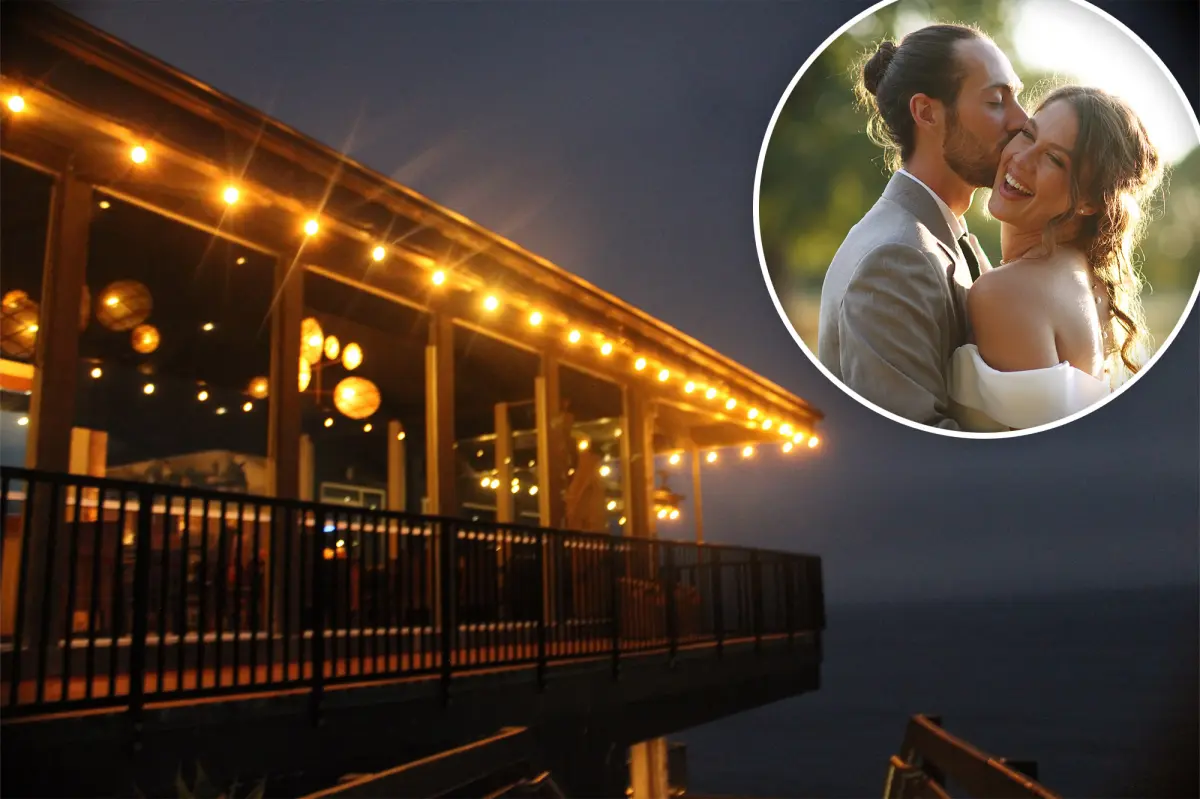
There is a certain kind of magic that clings to the edge of a California cliff, where the land meets the endless blue of the Pacific. For nearly a decade and a half, Ventana Grill in Pismo Beach perched on that edge, offering couples and families a panoramic vista that felt almost sacred. It was a place where engagements became weddings, where anniversary dinners were toasted against sunsets that bled into the horizon, and where tourists and locals alike felt the strange, humbling thrill of standing above the ocean, watching waves churn far below. The building itself had a longer history as Pelican Point, but since April 2010 it had been Ventana Grill, a beloved venue where love stories unfolded against one of California’s most breathtaking backdrops. Now that story is coming to an abrupt and painful end. The restaurant confirmed last week that it will close on September 12, with final reservations ending at 8 p.m. that night. The announcement arrived with the weight of an unwelcome surprise, leaving brides, grooms, staff, and regulars in a state of shock. The reason is as unsettling as it is simple: a bitter court battle between the property owners and the venue’s operators has revealed serious concerns that the picturesque property may eventually slide into the ocean. It is a terrifying thought—not just for a restaurant, but for everyone who has ever stood on that balcony, camera in hand, believing they were standing on solid ground. The beauty had always been inseparable from the danger, but now the danger had become the headline, and the beloved venue was hanging on by a thread.
Behind the scenes, a legal war had been brewing for months, and the fallout has now shattered the peace of a coastal dream. Court documents from San Luis Obispo County Superior Court show that on August 27, Judge Craig van Rooyen issued an order banning the restaurant from “operating, using or otherwise occupying for any purpose the cliffside building.” The company that runs Ventana Grill is The Old Custom House Inc., which also operates several other popular San Luis Obispo County businesses, including The Custom House and Mr. Rick’s in Avila Beach, and Wooly’s and Oyster Loft in Pismo Beach. The property itself is owned by an entity listed in court documents as CCC, which purchased the cliffside property in 2023. The owners of the property insist the venue is unsafe, and they point to geotechnical experts who have identified significant stability issues with the cliffside land beneath the building. But The Old Custom House sees things very differently. In an August 2025 complaint, the company argues that CCC breached the lease agreement between the two parties by insisting they leave the property. The restaurant’s owners go further, alleging that the property owners “contrived a false concern in an attempt to justify the termination of the agreement and destroy plaintiff’s business.” It is a stark and disturbing accusation—that one side is using the terrifying prospect of a landslide as a legal weapon rather than a genuine warning. The property owners fired back in a September 2025 filing, accusing The Old Custom House of a “bad-faith attempt to distract from its flagrant disregard of the safety and lives of patrons and staff.” Somewhere between these dueling accusations lies a building on the edge of a cliff, and the people who loved it are caught in the middle.
The human cost is most visible in the eyes of the couples whose weddings were scheduled in the coming weeks and months. One wedding photographer, posting on Nextdoor, described the scene as chaotic and heartbreaking. “They are definitely closing. I’m a wedding photographer, and their coordinators are frantically trying to help brides who have upcoming dates find new venues,” the poster wrote. “I guess it’s super unexpected, but it’s happening.” Imagine the shock of receiving that phone call—not just the cancellation of a dinner reservation, but the collapse of a meticulously planned dream. Couples had chosen Ventana Grill because it promised something rare: vows exchanged with the Pacific Ocean as witness, the wind carrying promises out to sea. They had paid for photographers, ordered flowers, invited grandparents, and perhaps even written vows they planned to read as the sky turned pink and gold. Now those couples are scrambling, trying to rebook in a market where every weekend venue is already booked months in advance. The restaurant itself is reportedly working with those who were set to marry there, attempting to help them find alternative locations for their nuptials. But no coordinator can simply wave a wand and replace the exact feeling of standing on that cliffside terrace. It is not just a date on a calendar; it is the imagined memory of a lifetime. And for those who had chosen Ventana Grill specifically because of its sweeping Pacific views, the loss is not just logistical—it is deeply emotional-metal ribbon, replaced by uncertainty and a frantic search for another place that might never feel quite as special.
The legal filing reveals a nasty split between business partners who once depended on each other. In May, CCC filed a formal motion for preliminary injunction, asking the court to shut down the restaurant. That motion was granted in late August, and the injunction is set to take effect on September 18. A hearing for the broader court case is scheduled for October 22. But for Ventana Grill, September 12 will be the last night the doors are open, long before the judge hears the full argument. The Old Custom House, which owns the restaurant, believes the entire safety argument is a sham. In court filings, the company calls it a “contrived false concern” and accuses the property owners of trying to destroy its business and reclaim the valuable cliffside land. The property owners, in turn, accuse the restaurant operators of bad faith, claiming The Old Custom House is trying to distract from what geotechnical experts have found: that the cliff is unstable, and that continuing to host crowds of patrons and staff would be a reckless gamble with human lives. The language in the competing filings is angry and unforgiving, full of accusations and counteraccusations. But beneath the legal jargon is a painful reality: a community staple is dying, and the blame game has left employees uncertain, couples abandoned, and regulars heartbroken. The restaurant has become a pawn in a dispute over property and liability, with both sides insisting they are the wronged party. Meanwhile, the cliff itself does not care about lease agreements or legal motions. The ocean keeps moving. The land keeps shifting. And the building that once felt like a crow’s nest above the sea now appears to many as a precarious perch waiting to crumble.
When Ventana Grill first opened in 2010, replacing the old Pelican Point restaurant, it was seen as a fresh start for a beloved location. The venue quickly became known for its panoramic views of the Pacific Ocean—a place where out-of-town visitors and locals alike could sit with a glass of wine and watch whales breach in the distance. But the same dramatic setting that made Ventana Grill magical is also what makes it vulnerable. California’s coastline is constantly eroding, and cliffs along San Luis Obispo County have been crumbling for decades. The property owners’ legal filings suggest that geotechnical experts have identified significant stability issues, raising alarms about the structural integrity of the cliffside building. The restaurant’s operators, however, question the timing and motive behind those concerns. They argue that the property’s newest owners, who purchased the land in 2023, have been looking for a reason to break the lease and force them out. The venue’s owners say the safety fears are “contrived,” a convenient excuse manufactured to destroy their business. In a way, this is the oldest story in California: a beautiful piece of coastline, a commercial dream, and the unforgiving earth beneath it. The cliffs that make Pismo Beach so stunning have always been in motion, slowly eroding, occasionally collapsing. Humans have built estates, restaurants, and railways along these edges, always pretending the land will hold long enough. Sometimes it does. But sometimes the ground shifts, and the fight between landlords and tenants begins to look like a dispute over deck chairs on a slowly sinking ship. The court will decide who was right, but the ocean will have the final say, sooner or later.
What makes this closure especially wrenching is the way it combines two kinds of loss—one legal, one natural. Pismo Beach is no stranger to coastal erosion; all along California’s Central Coast, cliffs are slowly giving way, and beloved buildings have been lost to the sea for decades. There is a haunting irony in watching people argue about a building that nature is already reclaiming. The restaurant’s owners call the property owners’ claims a “contrived” excuse to evict them; the property owners say they are trying to protect lives. But while the lawyers fight in courtrooms, the ocean waits, patient and indifferent, with its waves gnawing at the base of the cliff. Geotechnical experts, according to court filings, have flagged significant stability issues. The property owners’ September filing states that the restaurant operators are showing a “flagrant disregard of the safety and lives of patrons and staff.” That is a devastating charge for a business that hosted wedding parties, anniversary dinners, and family gatherings for fifteen years. And yet, for the couples who booked their weddings months in advance, the science of slope stability matters less than the simple heartbreak of losing their chosen spot. They did not plan to hold their vows on a disaster site; they planned to hold them in paradise. The reality that paradise may be slipping away is a reminder that California’s coastline is never permanent, that the edge of the continent is always eroding, always falling, always changing—and that the places we love are sometimes more fragile than we imagine.
This is not the first time a coastal landmark has found itself at odds with the restless land it stands on. The California coast is a study in slow-motion catastrophe, where every rainy season nibbles at the bluffs and every storm takes another piece of the shore. Homes, roads, and beloved businesses have been lost to the sea before, and Pismo Beach residents know the story all too well. The cliffside setting that made Ventana Grill so breathtaking is exactly what now makes it so vulnerable. Geotechnical experts brought into the case have reportedly flagged significant stability issues, and if their findings are correct, the building may one day decide to make its own journey into the ocean. This is the cruel irony of building on the edge of the sublime: you get to drink in the most magnificent view in the world, but you are also living on borrowed time. The cliff might not fall tomorrow, or next year, or in a decade. But the sensation of standing at the edge, feeling the wind and hearing the boom of surf below, has always been tinged with a shiver of mortality. Now that shiver has become a legal document, and the beauty that drew generations of diners has become a liability. It is a story that repeats itself along California’s coast, where climate change and rising seas are swallowing the very edges we love to admire unconditionally.
Perhaps what makes the closure so hard to accept is that it did not come from a storm or an earthquake or any visible act of nature. It came from a courtroom. The dispute between CCC and The Old Custom House has been played out in filings, injunctions, and hearings, and the final blow to Ventana Grill arrived not as a crumbling cliff but as a judge’s order. It feels arbitrary and bureaucratic, even as the underlying worry is terrifyingly real. The restaurant’s owners believe they could have continued operating safely, and they accuse the property owners of using unproven fears as a legal weapon. The property owners insist they are simply trying to prevent disaster. Yet no one is celebrating. The staff at Ventana Grill—the servers who knew regulars’ orders, the chefs who worked the line during Friday night rushes, the wedding coordinators who, until a few days ago, were promising couples the most beautiful day of their lives—are now facing the sudden end of their livelihoods. Some of them have worked there for years. Many of them are part of the fabric of this small coastal community)Skip. The restaurant may be a building on a cliffside, but it is also a living thing, powered by the people who filled its dining room with laughter and tears. When the doors close at 8 p.m. on September 12, they will not just be losing a job; they will be losing a place that felt like a second homephotographed sunsets, anniversary dinners, first dates, and final toasts. The court will continue to sort out the arguments in October, but for the humans who worked therecars, the ending is already written. They are clearing out their stations, saying goodbye to coworkers, and wondering what comes next. The future of the building is uncertain. It may be condemned, it may be demolished, or it may stand empty for years, a silent monument to a legal battle and a landscape in flux Mend. What remains certain is that something irreplaceable is disappearing: a place where people gathered to celebrate love, to mark milestones, and to feel small and huge at the same time, suspended between a goldening sky and the endless Pacific.
As the clock ticks toward the final reservation, there is a melancholic beauty in the way a community says goodbye. Diners will show up one last time, maybe ordering the same dishes they have ordered for years, trying to memorize the view from the windows. Photographers will take extra shots of the terrace, knowing they may never stand there again. Couples who got engaged at Ventana Grill will revisit the spot, their rings glinting in the same light where dreams were proposed. The staff will hug, wipe away tears, and pour one last glass of wine overlooking the sea. And on September 12, after the final plates are cleared and the last guests leave, the restaurant will fall silent, leaving only the sound of the waves far below and the wind over an empty cliffside. It is a sad ending to a story that began with hope and celebration. Whether the building will ever reopen depends on the courts, on the property owners, and on the cliff itself. But for now, the only certainty is loss. The couples who wanted to marry there, the families who gathered there to honor milestones, and the employees who made it all possible are left with nothing but memories and photographs. In the end, that is what such places become: memories of golden sunsets and clinking glasses, held in the hearts of those lucky enough to have been there before the ground beneath the dream began to shift.