


Here is a humanized and comprehensive summary of the wildfire situation in Big Sur, written as a six-part narrative essay.
—
### The Beast Awakens: From Ember to Inferno
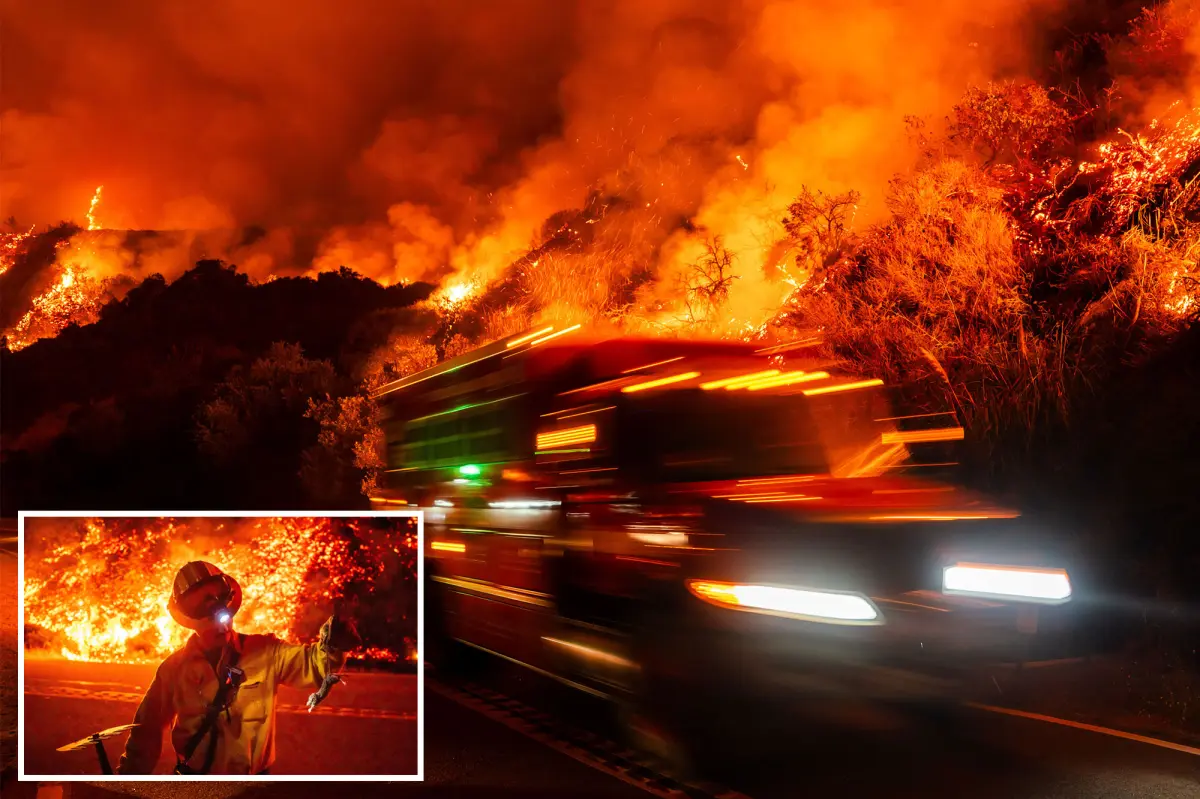
The rugged, breathtaking coastline of Big Sur, a place often romanticized for its misty cliffs, ancient redwoods, and the endless crashing of the Pacific, has found itself transformed overnight into the front line of a furious war. What began as a whisper of smoke near Forest Road 23S on a quiet Wednesday has erupted, in less than a single week, into an untamed beast scorching nearly 27,000 acres of pristine wilderness. The latest official reports show that the Plaskett Fire, as it has been named, has exploded from a modest 50-acre start to a staggering 26,734-acre conflagration. To put this into perspective, the fire has more than doubled in size since Monday morning, when it was measured at 15,479 acres. Yet, despite the sheer scale of the devastation, containment stands at a perilously low one percent. This fragile number is a stark reminder of how completely the fire is still dictating the terms of engagement, leaping across ridges and racing through dry brush with an intensity that leaves even the most seasoned firefighters humbled and grasping for a toehold.
What is perhaps most alarming is the context of this particular blaze. While the Plaskett Fire dominates the headlines, it has now officially overtaken its neighboring conflagration, the Timber Fire, which has burned 25,190 acres and is 22 percent contained. The fact that two massive, uncontrollable wildfires are burning simultaneously in such proximity is an unprecedented stress test on California’s emergency infrastructure. The Plaskett Fire’s low containment is not a sign of inefficiency but rather a testament to the malevolent conditions it is facing. The fire is not just burning; it is breathing, expanding, and feeding on a landscape that has been starved of natural combustion for decades. The initial reports of 50 acres gave way to terrifying exponential growth, illustrating how quickly a spark can become a crown fire in the tinder-dry coastal chaparral. For the residents looking out from their precarious cliffside homes, the horizon is no longer blue but a haunting, billowing orange, a visual representation of their uncertainty.
—
### A Tinderbox of History and Terrain
To understand why the Plaskett Fire has become so voracious, one must look at the ecological history of this storied region. The rugged slopes of the Santa Lucia Mountains are not merely scenic backdrops; they are a complex labyrinth of steep canyons, sheer drop-offs, and dense, unmanaged vegetation. Fire officials note that this specific area has not experienced a major wildfire in over fifty years. This prolonged absence of flame has allowed for an immense, uninterrupted accumulation of dead wood, thick underbrush, and dried grasses—what experts call “fuel loading.” This thick carpet of potential energy acts as the perfect kindling for what has now become a terrain-driven fire. The fire is not primarily being carried by the wind alone; it is being propelled by the topography, rolling up slopes with terrifying speed, preheating the vegetation above it and creating a self-sustaining cycle of explosive growth. The steepness of the terrain makes it nearly impossible for ground crews to access the head of the fire directly.
This extreme topography is the firefighter’s greatest enemy. Much of the land is inaccessible even to four-wheel-drive vehicles, forcing crews to hike miles into the wilderness with heavy equipment, only to find themselves trapped in narrow canyons where the fire can easily spot over their heads. The sheer physical exhaustion of working in such conditions cannot be overstated. Every inch of progress is won not by mechanical superiority but by sweat, grit, and sheer human will. The fire is carving its own path through the ancient redwood groves and oak woodlands, leaving behind a moonscape of ash and smoldering trunks. As the climate continues to dry and warm, these slow-burning environments are becoming increasingly rare, replaced by high-intensity infernos that sterilize the soil, ensuring that the next fifty years will not be spent regrowing a healthy forest, but battling invasive, fire-prone weeds. The history of this land has been rewritten in a matter of days.
—
### The Battle: A Shifting Front of Steel and Water
Against this backdrop of raw, untamed nature, a small army of over 1,000 firefighters has been mobilized, representing a herculean logistical effort. They are not just facing a singular wall of flame; they are facing multiple fronts, shifting winds, and the constant threat of spot fires breaking out miles ahead of the main blaze. The tactical response has been a dizzying orchestration of air and ground assets. The skies above the Pacific are filled with the deafening roar of Super Scooper aircraft, which skim the ocean surface to scoop up thousands of gallons of saltwater and then dump it with pinpoint precision along the eastern edge of the fire, where it is pushing hardest into unburned timber. These aerial assaults are supported by a fleet of 12 helicopters, which serve as both water bombers and reconnaissance platforms, mapping the fire’s erratic movements in real time.
On the ground, the 41 fire engines and six heavy bulldozers are working to forge contingency lines along the few ridgelines that are accessible. They are finding that the dirt is rocky, the roads are narrow, and the fire is outrunning them. In a desperate strategy to secure their lines, they are deploying 26 hand crews, who are using chainsaws and pulaskis to cut and scrape away vegetation down to the mineral soil. These brave men and women are engaging in the ancient art of counter-fire, setting deliberate, controlled burns to consume the fuel ahead of the main fire, hoping to steal the fire’s momentum. However, despite these immense efforts, the simple, harrowing truth remains: the fire is only 1% contained. For every foot that the crews secure, the fire leaps another hundred. The hope is that they can hold the eastern edge long enough to keep the fire from spilling over into the more densely populated valleys, but as night falls, the glow on the horizon is a grim indicator that the Plaskett Fire is still writing the rules of combat.
—
### The Human Cost: Tears in the Smoke
While the numbers of acres burned are staggering, the true devastation of the Plaskett Fire is measured in the hollow eyes and trembling hands of the people being forced to flee. The mandatory evacuation orders have been issued for seven distinct zones in Monterey County, with an additional four warnings teetering on the edge of necessity. Families who have lived in Big Sur for generations have been given precious minutes to gather their belongings. They are leaving behind not just houses, but heirlooms, photo albums, and the memories imprinted in the walls of cabins that have weathered a century of coastal storms. The irony is not lost on many that they spend their lives protecting their homes from ocean erosion, only to be forced out by an inland menace they cannot bargain with. The evacuation orders have turned the iconic Pacific Coast Highway into a one-way river of headlights, a slow, solemn procession moving north, away from the inferno.
For those who cannot leave or have nowhere to go, refuge has been established in the familiar, sterile comfort of community structures. The Carmel Mission Inn and the Veterans Memorial Building in Cambria have been transformed into cradles of anxiety. The air inside these shelters is thick with the scent of stress, sweat, and the faint, acrid smell of smoke embedded in the clothing of the evacuees. Children try to sleep on cots as their parents huddle around radios, parsing every update from incident command. The emotional whiplash is severe—hope and despair cycle with every shift in the wind. People comfort each other with whispered stories of past fires that were beaten back, but the low moan of the wind outside reminds them that this fire is different. It is a terrifying act of nature that treats human history with utter indifference, and the psychological scars left behind by the uncertainty of not knowing if your home is still standing is a trauma that will long outlive the smoke that darkens the sky.
—
### The Economic and Infrastructural Siege
Beyond the immediate danger to life and property, the Plaskett Fire has thrown the local economy into a desperate tailspin. The closure of 56 miles of the iconic Highway 1, stretching from just south of the Little Sur River to the north of San Luis Obispo County line, has effectively severed the lifeblood of the region. Big Sur is a community that survives on tourism; the cafes, the adventure outfitters, the small galleries and the luxury lodges all depend on a constant stream of travelers. With the road closed, the shops are empty, and the restaurants are facing the grim reality of massive food spoilage and layoffs. The firefighters on the lines are now the only “customers” in town, and their presence is a bittersweet irony. The closure is not just a physical barrier; it is an economic blockade that will take months, if not years, to recover from, even after the fire is extinguished. In a community where the nearest hospital is an hour away under the best circumstances, this isolation is also a public health crisis.
Infrastructure is crumbling under the stress of the sustained assault. Power lines that once traced the coast have been de-energized to prevent new ignitions, plunging thousands into a darkness that is only punctuated by the glow of the fire. Water supplies, which rely on electric pumps, are failing, leaving residents who remained behind to defend their homes without the most critical resource needed to fight spot fires. The logistics of supplying the fire crews is a herculean task; fuel, water, and food for over one thousand people must be transported through narrow, winding mountain roads that are themselves threatened by rockfalls and flame. The closure of the highway also complicates the escape routes for the “last stand” homeowners who have refused to leave, trapping them in a deadly game of chance. The economic ripple effects will be felt far beyond the fire perimeter, as insurance companies brace for massive claims and the state prepares for the long, expensive recovery process.
—
### A Holding Breath: The Uncertain Dawn
With the cause of the Plaskett Fire still under investigation, the community is left with unanswered questions that gnaw at the edges of their consciousness—was this a lightning strike from a dry thunderstorm, a fallen powerline blown by howling winds, or the tragic consequence of human negligence? For now, the investigation is a secondary concern; the primary focus remains on survival. As dawn breaks over the Pacific on the coming days, the firefighters will look to the sky with ancient, desperate prayers for mild winds and perhaps a rare marine layer that will add moisture to the air. The fire’s behavior remains erratic, driven by the “complicated” weather patterns that are making prediction nearly impossible. The hope is to extend the containment lines along the northwestern flank, pushing the fire toward the scar of the previous Timber Fire, where it will run out of fuel to burn.
The residents of Big Sur are resilient, steeped in the lore of a land that has always demanded a toll from its inhabitants. But this is a stark wake-up call that the rules of engagement have changed. As the fire continues to rage, the world watches the reports of the nearly 1,000 personnel battling this beast, their eyes gritty from smoke and hollow from exhaustion. They are fighting not just to save a forest, but to save a way of life. The outcome of this battle will not be decided tomorrow or the day after. It will be a slow grind against the elements, a test of endurance against a fire that has yet to show its final form. The immediate tragedy is measurable in acres and containment percentages, but the lasting legacy of this week will be the permanence of the scars on the land and in the hearts of those who call this transcendent, unforgiving coastline home.