


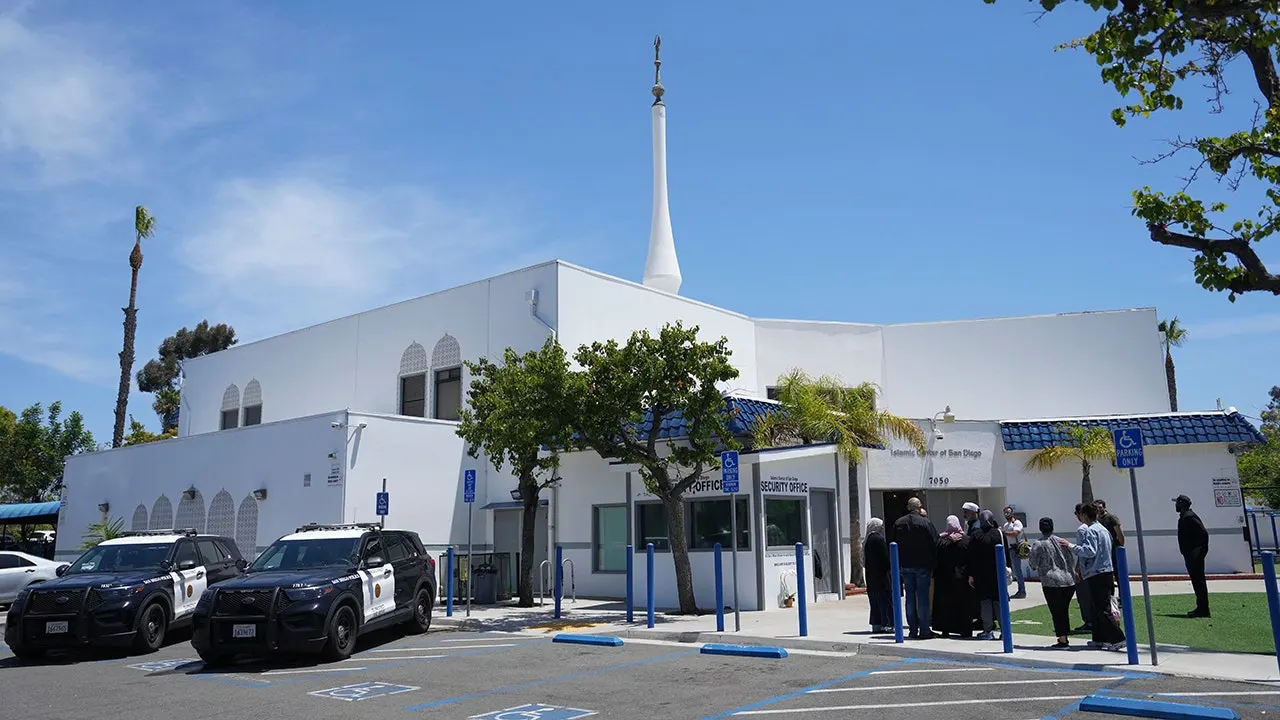
On a clear May morning, the Islamic Center of San Diego was supposed to be a place of prayer, community, and peace. Instead, it became the scene of a hate-fueled massacre that would echo far beyond the walls of the mosque—eventually reaching across the country to a courthouse in Forsyth County, North Carolina, where a teenage girl now faces murder charges for her alleged role in the violence. The case is a startling reminder that in an age of livestreams and encrypted messages, someone sitting thousands of miles away can become part of a tragedy. Sarah L. Santiago, 17, was indicted by a Forsyth County grand jury on three counts of murder and one count of conspiracy, according to District Attorney Jim O’Neill. The charges stem not from pulling a trigger, but from allegedly helping the gunmen broadcast their attack to the world and publishing their manifesto. It is a rare and significant legal move: a 17-year-old girl who was not physically present at the shooting is being held responsible—in North Carolina, not California—for the deaths of three men she may never have met. As prosecutors tell it, Santiago was not merely a bystander who watched from afar; she was part of the plan. This case challenges the comfortable assumption that online radicalization and digital amplification are not violent acts in themselves. They can be, especially when they are woven into the fabric of an actual attack. The indictment also forces a conversation about how easy it is for young people to become connected to extremist ideology, and about the responsibilities that come with witnessing disturbing behavior before it turns deadly.
Authorities say the attack was carried out by two young men: Caleb Vazquez, 18, and Cain Clark, 17. Armed and seemingly bent on murder, they entered the Islamic Center and opened fire. It was supposed to be a day of worship, but it quickly became a nightmare. The rampage was stopped before it could become even deadlier because three men—Amin Abdullah, Nadir Awad and Mansour Kaziha—stepped in to confront them. These three men faced armed gunmen with no concern for their own safety. Their actions gave other worshippers precious time to escape or take cover, and they paid for that courage with their lives. Police later found Vazquez and Clark dead by suicide in a vehicle near the mosque. The attackers would never stand trial, and the full extent of their intentions would only emerge over the following days. According to District Attorney Jim O’Neill, the plot was far broader than a single congregation. “Their plan that day was to commit mass murders not only at the mosque, but to follow up at a local Jewish temple. And finally, at a predominantly African-American high school there in town,” O’Neill said. The chilling scope of the plan means that the three victims were not only protecting the people inside their own mosque; they were potentially saving the lives of Jewish worshippers and Black students across San Diego. That context transforms their deaths into an act of unimaginable heroism and turns this case into something larger than one attack on one community. It was an assault on pluralism itself, and the men who died that day stood in its way.
The North Carolina teenager at the center of this case is not accused of being at the scene, and she is not accused of firing a weapon. Instead, the indictment alleges that Sarah Santiago agreed before the attack to record and distribute the gunmen’s livestream and publish their manifesto. District Attorney Jim O’Neill put it bluntly: “She disseminated that information. And she published their manifesto.” The Associated Press also reported that Santiago is accused of buying a patch bearing a white-supremacist symbol for one of the attackers to wear during the shooting. If the allegations are true, her role was anything but passive. She was allegedly a participant in a plan that was carefully built around digital propaganda as much as around guns. The shooters wanted an audience. They wanted their messages to survive them. Santiago allegedly made sure that would happen. She may have been physically in North Carolina, separated from the Islamic Center by more than two thousand miles, but in the eyes of the law, her actions were intertwined with the crime itself. “She didn’t have to be in California, she’s in our jurisdiction,” O’Neill said. “And today, a grand jury indicted her and held her responsible for her actions leading up to that disastrous day in May.” The indictment represents a significant milestone in a growing area of criminal law: the prosecution of individuals who facilitate violence in cyberspace. It raises difficult questions. What does it mean to “aid and abet” a murder with a keyboard? Where is the line between sharing information and being part of a conspiracy? At what point does a follower become a collaborator? For prosecutors, the answer in this case is clear: when you know about the plan, when you help the people carrying it out, and when you take deliberate steps to amplify their crimes, you are no longer outside the circle of responsibility.
The legal theory behind the charges is both straightforward and, in its application, relatively novel. In North Carolina, as in most states, a person can be charged with aiding and abetting murder if they actively encouraged, assisted or participated in a crime, even if they did not physically commit it. The conspiracy charge adds another layer: by allegedly agreeing with the shooters before the attack to record and publish their livestream, Santiago may have entered into an unlawful agreement to commit crimes. The fact that she is 17 makes the case more complex, but North Carolina law specifically allows a 17-year-old accused of such conduct to be treated as an adult in court. That decision reflects the severity of the allegations and the seriousness with which law enforcement is treating her alleged involvement. It also means that if convicted, Santiago could face a sentence far more severe than anything available in juvenile court. The case is part of a broader reckoning with the role that social media and digital platforms play in modern extremism. Shooters have long used manifestos and livestreams to seek infamy, and the people who help distribute that content are increasingly being held accountable. For prosecutors in Forsyth County, the message is clear: if you aid a violent act from anywhere in the world, you cannot hide behind a screen. The law, at least in this case, is willing to follow you across state lines. That is a bold statement, but it is also a necessary one. In a society where radicalization often begins online, and where the worst acts of violence are planned in digital spaces, prosecutors cannot afford to limit their jurisdiction to physical borders. The digital trail is a crime scene, and those who leave footprints on it may be called to answer.
The investigation that led to Santiago’s indictment was massive, painstaking, and collaborative. According to authorities, it involved more than 100 interviews, over 30 search warrants and a review of more than 4 million messages. The sheer scale of the investigation underscores how seriously federal and state investigators took the threat, and how deeply they dug to uncover every connection, every role and every moment of decision. FBI Charlotte Special Agent in Charge Reid Davis delivered a pointed warning about the case: “Our investigation shows that the individual had multiple opportunities to come forward to law enforcement and alert us of these deliberate actions, and the failure to do so must have consequences.” Those words are powerful. They suggest that the case is not only about punishment, but also about prevention. If someone sees or hears of a planned attack and says nothing, they may now be held responsible. This is a moral and legal shift, one that places a heavy burden on friends, family, online associates and even strangers who witness warning signs. It also highlights the role of ordinary people in stopping violence before it happens. Very often, those who plan these attacks leave clues—through changes in behavior, disturbing messages, or declarations of intent. The FBI’s statement implies that Santiago had chances to sound the alarm and did not. While the defense may argue that she never freely chose to be part of the attack, the government is prepared to tell a very different story: one in which she knew what was coming, helped prepare for it, and provided the digital megaphone that the shooters desperately wanted. The coordination between San Diego authorities and law enforcement in North Carolina also suggests that this case will not be the last of its kind. As extremism becomes more internet-driven, investigators are learning to follow the connections, no matter where they lead.
At the heart of this tragedy are three men who will never come home: Amin Abdullah, Nadir Awad and Mansour Kaziha. They are remembered not only as victims, but as heroes who confronted evil in a moment of unimaginable danger. Their actions likely saved many lives, and their loss has left a deep wound in their families and in the San Diego Muslim community. In the weeks and months since the attack, that community has had to balance grief with resilience, mourning with resolve. No court decision can undo the pain, and no verdict can fill the empty seats at their tables. But the case against Sarah Santiago matters because it demands accountability for a crime that extended beyond the shooting itself. It says that those who assist in such violence, even from afar, will face consequences. It also invites us to reflect on our own collective responsibility: to take warning signs seriously, to reach out to those in crisis, and to create a culture where violence is not celebrated but prevented. The spreading of hate, whether through a patch, a livestream, or a manifesto, is not harmless speech when it is tied to a concrete plan to kill. If you or someone you know is having thoughts of suicide or experiencing a mental health crisis, call or text the 988 Suicide & Crisis Lifeline at 988. Justice cannot undo this tragedy, but accountability and compassion can help ensure that no other community has to endure the same pain. The memory of Amin Abdullah, Nadir Awad and Mansour Kaziha deserves that much—a future made safer by the lessons of a horrific day, and a legal system willing to see the whole picture of how violence happens in the digital age.