


On paper, Lucca Van der Woude seemed to have the world at his feet. The son of Hollywood director Thomas van der Woude, whose credits include Battleship, Star Trek: Nemesis, and HBO’s Westworld, he was also a talented water polo player whose early promise carried him onto the U.S. national youth team. But that promise has been overshadowed by a very different reality. Van der Woude has been banned from U.S. Olympic-sanctioned competitions for three years after admitting to sexually assaulting a minor—specifically, to digital penetration—and to using the N-word to racially berate a teammate. The case has sent shockwaves through elite youth sports and private education, not only because of the seriousness of the misconduct, but because of the questions it raises about how wealth, prestige, and institutional self-protection can allow harm to continue. For those who knew him early, the image of a rising star is hard to square with the record described in court and SafeSport documents. Yet the record exists. He admitted the assault in a California juvenile court. He admitted the racial harassment under oath. And an investigation by the U.S. Center for SafeSport ultimately found him responsible, confirming a three-year ban after an initial permanent suspension was reduced on appeal. This is not a story about a single catastrophic mistake made in a moment of poor judgment. It is a story about multiple allegations, multiple institutions, and a pattern of conduct that went on for years before formal consequences arrived. The victims, according to lawsuits and records, were teammates. They were children, like him, navigating the competitive world of school and club water polo, where power dynamics, silence, and deference to a star athlete can create dangerous space. This case demands attention because it exposes how easily the systems designed to protect young athletes can fail them—and how, even when a consequence finally arrives, it can be almost impossible for families to discover.
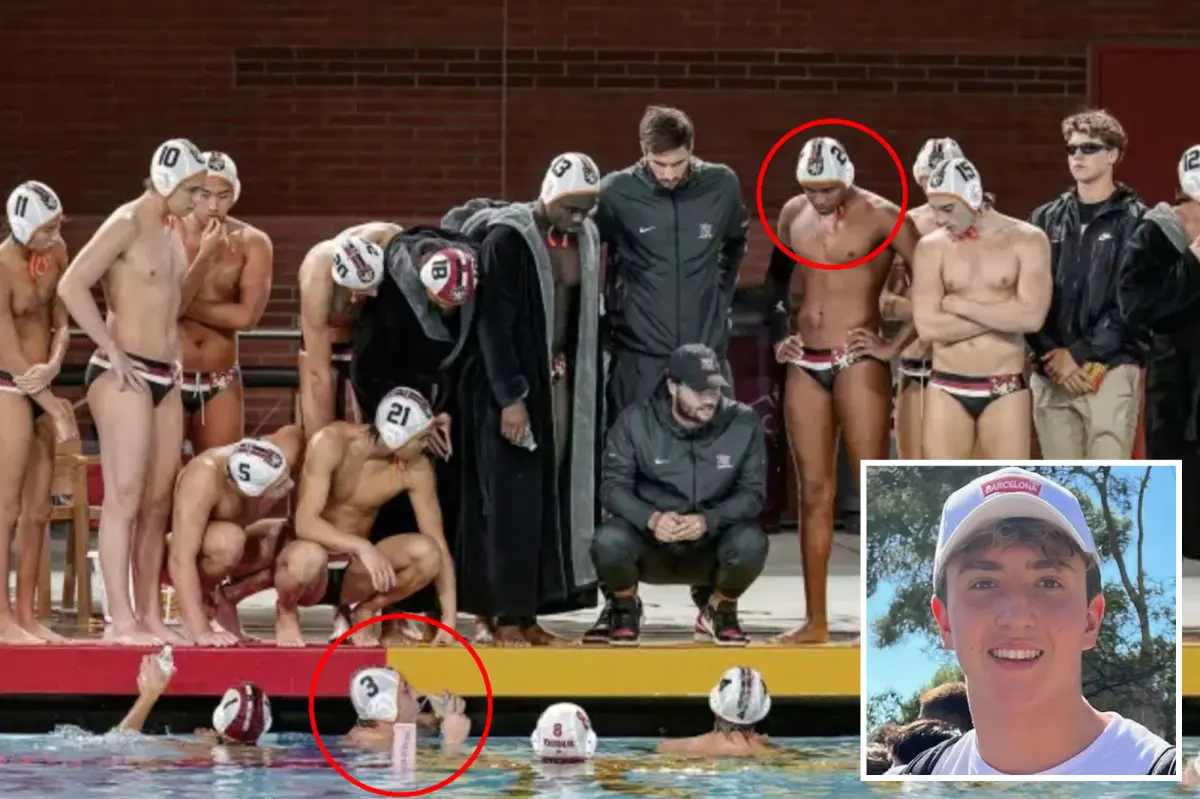
Van der Woude attended Harvard-Westlake School, a prestigious private school in Los Angeles where tuition is $54,900 a year, and he played for the L.A. Premier club. According to SafeSport documents, complaints were filed alleging he sexually assaulted two teammates on multiple occasions. More than two years later, on Nov. 7, 2024, he admitted in Los Angeles County Juvenile Division Court to sexual penetration with a foreign object against a minor. The phrase “foreign object” sounds clinical, but in this context it means he digitally penetrated a younger victim—an act that is both intimate and violent, and that leaves lasting trauma. He also acknowledged under oath that he repeatedly directed the N-word at a teammate in school and water polo settings. The combination of sexual abuse and racial harassment paints a picture not of one aberrant incident but of a young person who abused his power over time. SafeSport initially imposed a permanent suspension in March 2025, after temporarily suspending him in January while investigating. Van der Woude appealed. An arbitator upheld a three-year suspension on Aug. 26, 2025, and added three years of probation and a no-contact directive. Because of credit for time already served, he will be eligible to participate in U.S. Olympic and Paralympic Committee-sanctioned events again in March 2028. For some, the reduction from permanent to three years may seem inexplicable. For those who accused him, it may feel like a door reopened to a person who harmed them. But the decision at least puts on record that SafeSport found him responsible for sexual misconduct, emotional misconduct, physical misconduct, and a criminal disposition. It also places conditions on him if he wants to re-enter the Olympic sports ecosystem. Yet the record is not easy to find. Because he was a minor at the time of the violations, his name does not appear in SafeSport’s public disciplinary database—the very tool created to alert athletes and parents to people disciplined for abuse. SafeSport says its confidentiality policies largely mirror juvenile justice and other youth-serving organizations, but the practical result is that a coach, teammate, or parent who searches the database will not find this history.
Perhaps no institution has been more caught up in this case than Harvard-Westlake. The school has long been known as a launching pad for the children of celebrities, executives, and artists, and its tuition is among the highest in the country. Yet a lawsuit filed in Los Angeles Superior Court in March by attorneys for former student and water polo player Aidan Romain paints a disturbing picture. The lawsuit alleges that Harvard-Westlake officials failed to contact law enforcement or child protective services after Romain and another student reported that Van der Woude had digitally penetrated them. It names Van der Woude, water polo coach Jack Grover, and school president Richard B. Commons. It describes a pattern of repeated sexual assault on campus and accuses the school of failing to act when confronted with reports that a student was being sexually assaulted. It also alleges that Van der Woude directed racial slurs at Romain. The school has responded by disputing the allegations, saying it “unequivocally disputes many of these allegations that mischaracterize facts and the school’s actions.” But lawyers for Romain say the independent SafeSport finding should force a reckoning. Daniel Watkins, Romain’s attorney, noted that the LAPD believed Aidan, a deputy district attorney believed him, a judge believed him, and now SafeSport has found him responsible. “Harvard-Westlake should listen now,” Watkins said. He also pointed to the school’s own behavior: after Van der Woude’s arrest in February 2024, the school barred him from campus and from its water polo program. If school leaders believed there was enough reason to remove him, Romain’s attorneys argue, they cannot now claim they did not know what had happened. In a deposition, Van der Woude himself admitted that he transferred from Harvard-Westlake only after the school banned him—meaning his exit was not a normal move to another school, but a response to a crisis. “At some point, denial is not skepticism,” Watkins said. “It is a choice.” The lawsuit is still pending, and the school continues to defend itself. But the combination of a juvenile court admission and a SafeSport finding makes the school’s insistence that it did nothing wrong increasingly difficult to accept.
Beyond one school, one athlete, and one family, this case raises a troubling question about transparency. The U.S. Center for SafeSport was created in part to maintain a public disciplinary database so that athletes, parents, and coaches can check whether someone has been disciplined for abuse or misconduct. But because Van der Woude’s violations occurred when he was a minor, his name is not listed there. That means prospective teammates, athletes he might someday coach, and their families could search the database and find nothing. SafeSport explained that its confidentiality policies around minors largely mirror the juvenile justice system and other youth-serving organizations. That rationale makes sense in theory: minors have privacy interests, and juvenile records are often sealed to help them move past youthful mistakes. But this was not a minor parking violation. It was a sexual assault against another minor, with an admission in court. The practical effect of the confidentiality policy is that someone with a documented history of abuse can remain invisible to the community most at risk. John Manly, an attorney who has represented many survivors of former Olympic gymnastics doctor Larry Nassar, commented on this broader issue. “There are some individuals who present a clear and present danger,” Manly said, while speaking about SafeSport’s policies around minors rather than this specific case. His point is powerful: judges and investigators are able to hear the evidence, but families are not entrusted with it. In an era when institutions have promised to put athlete safety first, a system that hides the names of minors found responsible for sexual abuse is not necessarily putting survivors first. It is one thing to protect a child’s privacy; it is another to create a loophole that lets a dangerous person pass through the front door of any future team. The tension is real, and there are no easy answers. But the burden should be on institutions to find ways to keep communities informed while still honoring legal and developmental rights. In this case, the need for that balance is urgent: Van der Woude remains eligible to compete in California junior college athletics, and he has already been in water polo environments where younger athletes and parents have no official notice of the conduct for which he has been disciplined.
Van der Woude’s post-scandal athletic career shows how fragmented oversight can be. After leaving Harvard-Westlake, he transferred to Newport Harbor High School in Orange County, where he helped the water polo team win a CIF Southern Section title. For a moment, it looked like the athletic narrative might be restored. UCLA had offered him a provisional spot on its team, but after the Orange County Register published a detailed report in March 2025 about his arrest and the allegations, UCLA rescinded the offer. He then played for Golden West College, a community college in Huntington Beach. The fact that he competed there at all, even after SafeSport’s initial permanent ban in March 2025, illustrates how easily a person suspended in one system can resurface in another. The 3C2A, the body that governs California junior college athletics, has no policy automatically barring athletes simply because SafeSport has suspended them. So a person banned from Olympic-sanctioned events could still be in a pool, playing alongside or near other young people, with no one required to know why the Olympic ban exists. Manly was blunt: “The fact that Golden West let him play just shows that it’s still all about wins, money and medals and it doesn’t seem that these schools have learned anything from the Larry Nassar case.” It is a searing accusation, but it reflects a pattern familiar to anyone who has watched youth sports. Star athletes generate revenue, prestige, and alumni goodwill; schools and clubs often look the other way when troubling details emerge. In Van der Woude’s case, the consequences have been real but partial. A juvenile court admission, a SafeSport suspension, a rescinded UCLA offer, a barred campus—and yet he still found another pool, another team, another season. His eligibility in junior college is not illegal; the governing body has no rule against it. But the lack of a rule is itself a statement about priorities. When institutions compete for championships, the impulse to rely on talent can overpower the impulse to protect the vulnerable. SafeSport’s jurisdiction is limited to Olympic-sanctioned events. The parallel world of school and community college sports operates under separate rules, with separate incentives, and often with far less transparency. Without coordinated policies linking SafeSport findings to other athletic bodies, a person suspended in one system can simply move to another. That is exactly what happened here.
At the center of this story are young people whose lives were altered by what happened to them, and a young man whose own life is now defined by what he did. It would be easy to reduce Lucca Van der Woude to a monster; it would also be incomplete. He was a teenager, an athlete, a son. But he also admitted to violating another child’s body, and he used racial violence of language to demean a teammate. Those are not accidents. They are choices. The grown-ups around him now argue about process, policies, and reputations. Harvard-Westlake denies liability; SafeSport has confidentiality rules; the junior college association has no rule; and the arbitator found three years appropriate. All of these are adult responses to a situation that should never have been allowed to develop. The bigger lesson is about how communities protect children. Too often, a talented athlete is given the benefit of the doubt, and survivors are met with skepticism or silence. Too often, institutions worry about lawsuits and public image before they worry about the child in front of them. The Nassar case exposed this pathology on a national scale. The Van der Woude case shows that it has not disappeared. It has simply found new settings: a wealthy Los Angeles prep school, a competitive youth polo club, a community college pool. For every survivor who is finally heard, there may be others who never speak. For every abuser who is finally disciplined, there may be others who never face a single consequence. The facts of this case are grim, but they are also a warning. Schools, clubs, and governing bodies can choose to be places where children are safe, or they can choose to be places where winning matters more than humanity. They cannot claim both. If there is any hope to be found, it is that the legal and disciplinary systems did eventually act—a juvenile court accepted his admission, SafeSport investigated and found responsibility, and a survivor found lawyers who believed him. Those are small signs of accountability. But they should not have required a lawsuit, an investigation, and years of denial. The rest of us—parents, coaches, administrators, teammates—have a responsibility to look honestly at the systems we allow to run youth sports. We must ask hard questions. Who knew? When did they know? And what did they do? In this case, the answers are not reassuring. The final word belongs not to the lawyers and officials who argue over documents, but to the children who trusted the adults around them and were harmed. They deserved better. And the only meaningful way to honor that pain is to make sure that the next time an athlete harms a teammate, he is not allowed to simply transfer to the next school, the next team, the next pool, as if nothing happened.