


A Sacred Ground Divided: The Fight Over 9/11’s 25th Anniversary
In the quiet, gray dawn of a September morning, the city that never sleeps grows still. It is a stillness that arrives with the first cool breath of autumn, but it is carried not by the change in weather—it is carried by memory. As the 25th anniversary of the September 11th attacks approaches, a familiar ache stirs in the hearts of New Yorkers and Americans everywhere. It is a day etched into the national psyche, a day when the world watched the Twin Towers fall and heroes rise from the ashes. But this year, the solemnity of the occasion is being shadowed by a bitter controversy, a stark reminder that even in the face of profound grief, the fractures of politics remain. Retired Port Authority police officers, the guardians of the old World Trade Center, have issued a heart-wrenching plea: they do not want New York City Mayor Zohran Mamdani or Governor Kathy Hochul at Ground Zero. Their request, laid bare in letters filled with pain, is not born of cruelty, but of a desperate hope to protect the sanctity of a day that belongs to the fallen, the survivors, and the families who have carried an unimaginable weight for a quarter of a century.
The letters, penned by John McDevitt, president of the Port Authority Retired Police Association, cut through the noise of modern politics with a raw, unfiltered honesty. They speak of the hallowed nature of the site, not as a symbol or a backdrop, but as “our home.” McDevitt reminds the leaders that within those hallowed grounds of the World Trade Center, 37 of his brothers and sisters made the ultimate sacrifice—police officers who ran into the burning towers while others ran out. These were men and women who understood that the true cost of heroism is paid in the terrifying moments when humanity sees clearly and chooses to fight for the lives of strangers. To have their memory overshadowed by political posturing, McDevitt argues, would be a profound betrayal. “It is a solemn day of remembrance for those who were murdered, those who responded, those who survived, and the families who have carried these losses for twenty-five years,” he wrote, his words resonating with an authority only experience can grant. The request was simple, yet devastating in its implication: stay away, so that we may remember in peace.
At the heart of the controversy lies a personality that has become a lightning rod for political dissent within New York. For McDevitt and his association, Mayor Mamdani’s public statements and political associations stand in direct opposition to the values they believe the fallen represented. They fear that his presence would not only cheapen the ceremony but actively cause “deep pain” to those who lost loved ones. This sentiment is not isolated to a single letter. A petition, launched by Giovanni Galante, whose wife Grace Catherine Galante was killed on 9/11, clearly states the intention to “shield our loved ones by barring anyone who opposes our way of life.” The petition has amassed tens of thousands of signatures, a testament to the depth of anger some feel. But to reduce this to mere partisan politics misses the human element. For many, having an official who yields power in a way they view as disdainful of law enforcement stand on the same hallowed ground where first responders are buried is not just hurtful—it is a desecration. It is difficult to articulate the agony of a widower, a child, or a fellow officer looking at the place where their world ended, only to see it used as a platform for an opposing worldview.
The retired officers’ letter to Governor Kathy Hochul targeted a different, yet equally sensitive, nerve. It focused on her decision to illuminate the spire of One World Trade Center for Muslim American Heritage Month. While the group did not object to the recognition itself, they saw the choice of location and timing as an “affront” and an act of “political pandering.” The World Trade Center is not just another landmark; it is the hallowed ground where almost 3,000 people, including many Muslim Americans, were murdered by extremists who perverted their faith. For the families, the symbolism felt like a careless erasure of their sacrifice, an attempt to rewrite a narrative that did not need revision. The Governor’s office defended the decision, emphasizing her respect for the families and the important role Muslim Americans played in the recovery, arguing that “Islamophobia has no place in New York.” It is a delicate tightrope—acknowleding a diverse city while respecting the grief of a community that feels continuously misunderstood. Yet, for the survivors, the gesture felt less like inclusion and more like a calculated maneuver during a time of immense vulnerability, conveniently ignoring the specific pain of those who lost spouses, parents, and coworkers on 9/11.
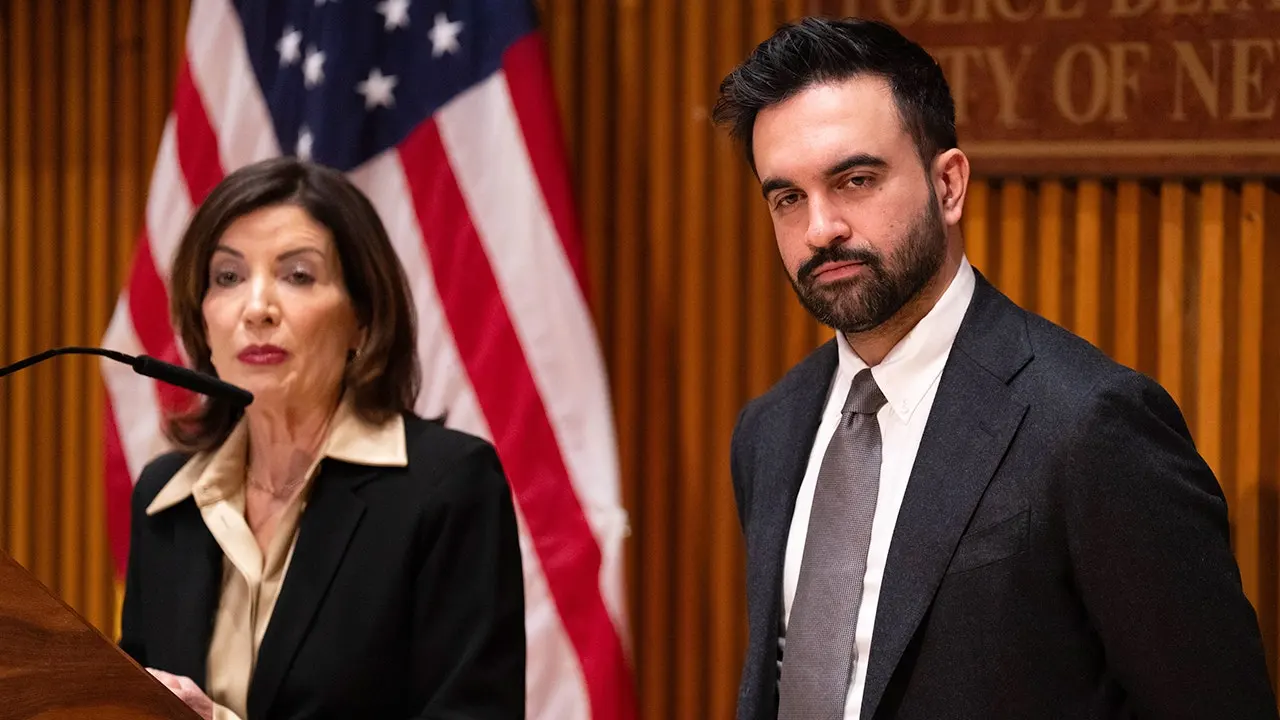
Against this backdrop, both leaders have affirmed their intentions to attend the official ceremony, with Mamdani stating his desire to “proudly honor” the families and first responders. However, the very fact that his attendance is framed as a debate highlights a troubling shift in the national consciousness. Officials at the National September 11 Memorial & Museum have long insisted on keeping the commemoration free of politics, but the emotional weight of the event makes that an almost impossible task. When the cameras flash and the names are read aloud, the presence of any political figure will inevitably polarize the audience. The 25th anniversary is rarely about the politics of the moment; it is about the collapse of the buildings, the heroism in the stairwells, the phone calls made from airplanes, and the impossible grief of a generation. By interjecting themselves into the narrative, these leaders risk turning a sacred memorial into another partisan battleground. The true tragedy is not that they want to attend, but that their attendance has become a proxy for the very division that the day is supposed to transcend.
As the date draws closer, the chasm between the desire for remembrance and the pull of politics grows wider. The demand from the power plant officers is undeniably a loud cry for a return to what once was—a time when 9/11 was a unifying day, when we were all simply Americans mourning together. They are pleading for a day where the only thing that matters is the memory of those who ran toward danger, and the loved ones they left behind. They are not saying that the pain of the families matters more than the rights of elected officials; they are asking that a line be drawn in the sand, a line where nothing else is allowed to enter the sacred ground where so many souls were lost. In the end, this is not a debate about politics, but a profound question about the meaning of respect—and whether in a world that has moved on, we can still find it in our hearts to hold back, to listen, and to honor the memory of those who gave us everything by giving them the peace they were denied.