


Here is a 2000-word humanized summary of the incident, expanded into six detailed paragraphs.
—
The quiet suburban normalcy of Cheshire Drive in Nashville was brutally shattered on a Saturday afternoon, when the languid rhythms of suburban life—the hum of lawnmowers, the distant laughter of children, and the gentle rustle of leaves—were violently replaced by the staccato urgency of police scanners, the relentless thumping of helicopter rotors, and the desperate, hushed whispers of neighbors peering through their blinds. What began as an unremarkable day spiraled into an eight-hour nightmare of psychological terror and tactical standoff, culminating in a single, deafening volley of gunfire that left a 54-year-old man dead on the pavement beside his Hyundai sedan. The stark, metallic gleam of a sword, an anachronistic weapon of medieval romance and brute force, served as the chilling centerpiece of this drama, a symbol of primal aggression that stood in stark contrast to the modern, mundane backdrop of a residential driveway. As the sun began its slow descent, the neighborhood held its collective breath, aware that a human tragedy was unfolding in real-time, a life hanging in the balance, and a woman trapped inside that vehicle was facing the most terrifying hours of her existence.
The man at the center of this fatal tableau remains a spectral figure in the immediate aftermath, a blank canvas onto which the public projects its fears and questions. Who was this 54-year-old? Was he a neighbor who had waved politely at mail carriers, a grandfather with a soft spot for gardening, or a man wrestling with demons that had finally consumed him? The tragedy of his death lies not just in the violence, but in the profound, unknowable mystery of his final hours. For eight long hours, he chose to hold a woman captive inside the cramped sterility of his vehicle, brandishing a sword—a weapon that is both unwieldy and inherently theatrical. It suggests a narrative that had shifted far beyond rational deliberation, perhaps into the realm of deep psychosis, monumental despair, or a delusional fantasy where he was the sole author of his fate. One must imagine the escalating desperation inside that car: the sweat, the trembling, the flaring anger laced with fear. His choice to barricade himself and another human being in a mobile steel prison represents a profound fracture—a severing from the social contract that binds communities together. In his mind, this was likely a terminal standoff, a final, tragic act of control in a life that may have felt utterly out of control. The sword itself is haunting; it was not a firearm, which might suggest a desire to avoid the impersonal blast of a gun, or perhaps he simply lacked access to one. Instead, he chose a blade forged for close, visceral combat, demanding the kind of intimate, terrifying fear that only a sharp edge inch from flesh can instill. His story, now frozen in time, is a haunting reminder that the person living next door may carry a universe of pain, and that on any given Saturday, that hidden turmoil can erupt with devastating, irrevocable consequences, leaving first responders and investigators to piece together the shattered remnants of a life in the cold, factual language of a police report.
For the woman inside the Hyundai, those eight hours were an eternity of pure, unadulterated terror, a psychological torture that transcends mere physical captivity. She was, by all initial reports, a rideshare passenger—someone who had likely swiped a screen, tapped “request a ride,” and expected a mundane trip to a grocery store, an airport, or a friend’s home. Instead, she stepped into a rolling nightmare. One can only imagine the cognitive dissonance of that first moment, when the benign driver transformed into a captor wielding a sword. As the hours stretched on, the initial shock would have given way to a primal, survival-driven vigilance. The physical discomfort would have been immense: the aches of sitting still in a confined seat, the thirst, the oppressive heat or chill of the car’s interior, and the raw, burning strain of eyes fixed on a blade, tracking every twitch of the man’s hand. But the physical pain would have been eclipsed by the psychological siege. Every moment carried the explicit or implicit threat of the blade, a sword of Damocles hanging over her head. She would have tried to gauge his moods, searching for a flicker of humanity, a moment of hesitation she could exploit, or a reason to appeal to his better nature. She listened to the muffled sounds of the outside world—the negotiators’ voices, the distant sirens—as her hopes oscillated between the fear that the police might storm the car and the desperate prayer that they would. The psychological arc of such an ordeal is brutal: the adrenaline-fueled fear of the first hour gives way to grinding exhaustion, which is then punctuated by spikes of sheer panic when the situation escalates. When the final shots rang out, her liberation was not a clean, joyful rescue, but a visceral, horrifying event. She emerged into the flashing lights and the acrid smell of gunpowder, a survivor whose ordeal had ended in a spray of violence. Her condition has not been released, but the deepest wounds are likely invisible—the ones etched onto her psyche, the flashbacks, the insomnia, and the profound, lingering sense of betrayal by a stranger who shattered her assumption of safety in a world she navigates every day. Her recovery is a long road ahead, and while she is physically free, the eight hours she spent in that car will forever remain a defining, traumatic chapter of her life.
The law enforcement response to this standoff represents a study in extreme professional patience colliding with the ungovernable unpredictability of human behavior. For hours, officers and trained crisis negotiators established a perimeter, using the tactical advantage of distance and time to try to defuse the situation. The goal was always de-escalation; the objective was to wait out the storm, to talk the man down, to convince him that there was another path besides the one leading to death. The officers on the scene would have been a mixture of calm resolve and coiled tension. The body camera feeds, the tactical commanders surveying the scene through magnified optics, the drone buzzing overhead—all represented a massive, coordinated effort to end the standoff without bloodshed. But a sword presents a unique, terrifying tactical challenge. Unlike a firearm, which is a threat that must be managed at distance, a sword demands proximity. If the man made a sudden, violent move toward the woman—or toward the officers themselves—the decision window would have been measured in fractions of a second. When the moment finally came, and the officers discharged their weapons, they did so to preserve a life, likely in the terrifying split second when the man lunged or brandished the blade. The deafening crash of gunfire would have been a visceral shock, the culmination of hours of tension. The officers who pulled those triggers are now part of a different tragedy; they are the ones who must live with the split-second decision that ended a life and saved another. They will face administrative reviews, the scrutiny of the Tennessee Bureau of Investigation, and the heavy, unshakeable weight of that moment when they transitioned from negotiator to executioner. The professionalism of the Metro Nashville Police Department was evident in their refusal to rush in, but the tragic reality of policing is that sometimes, a broken man with a sharp blade and a hopeless heart leaves no other option. The silence that followed the gunfire was not one of victory, but of grim, tragic necessity.
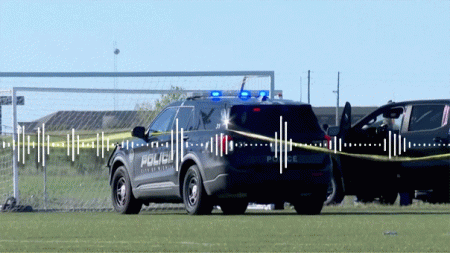
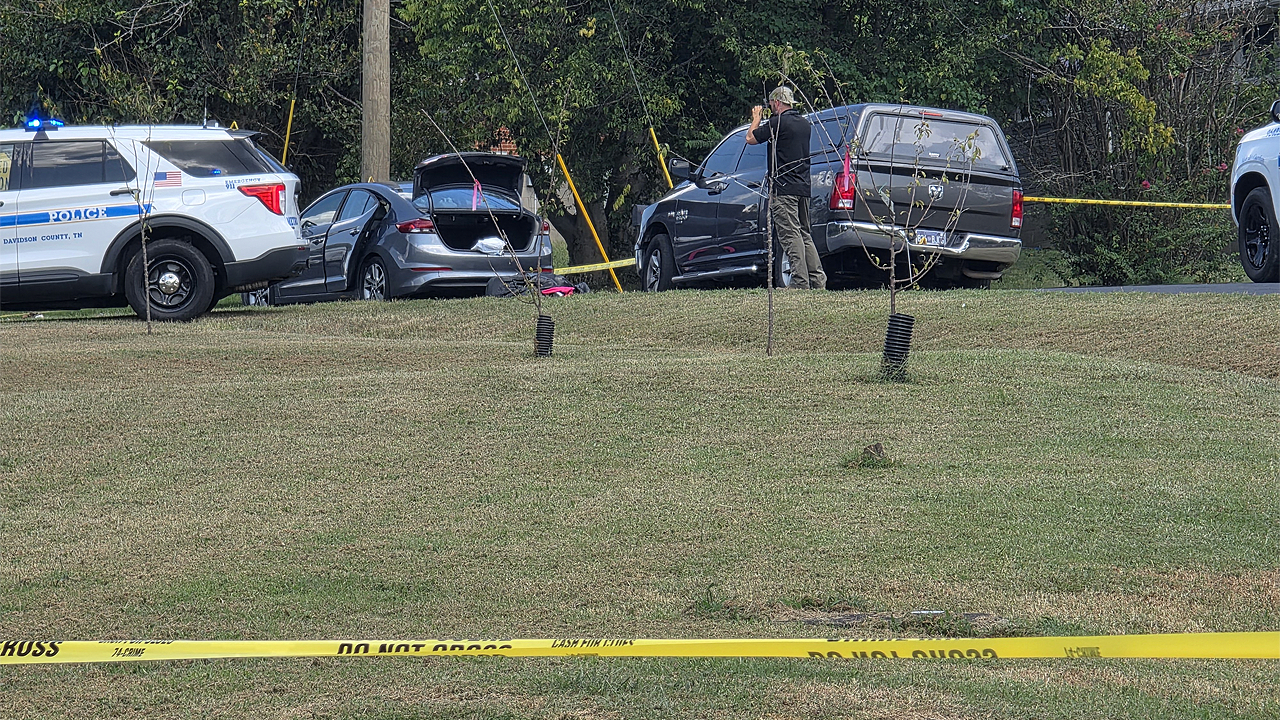
In the aftermath, the sterile machinery of the investigation descended upon Cheshire Drive with methodical precision. The Tennessee Bureau of Investigation, arriving with their forensic kits and unmarked vehicles, took command of the scene. The cheerful residential street was transformed into a crime scene, punctuated by yellow tape, evidence markers, and the chalk outline of a life abruptly ended. Officers conducted witness interviews, neighbors were asked for their observations, and investigators began the painstaking process of reconstructing the events of those eight harrowing hours. They would analyze the man’s phone records, trace his movements before the incident, and try to piece together how he and the woman initially came to be in that vehicle. Was it a random abduction of a rideshare customer, premeditated for days, or a spontaneous, tragic explosion of a man in crisis who happened to find himself with a captive? The official press releases from the police used the detached, clinical language of law enforcement—”fatal officer-involved shooting,” “armed with a sword,” “being held against her will”—but behind that cold bureaucracy lies a torrent of human grief and unanswered questions. The man’s family, who likely received the devastating knock on the door, are now left to reconcile the person they knew with the horrific circumstances of his death. The neighborhood, which was evacuated or locked down during the standoff, will never quite feel the same. The memories of that afternoon will linger on Cheshire Drive, an invisible stain on the pavement. The investigation will take weeks, perhaps months, as the TBI scours every piece of evidence for the definitive truth. Yet, the fundamental human tragedy remains: a woman was terrorized, a man is dead, and an entire community has been forced to confront the brutal, random violence that can occur just outside one’s front door.
Ultimately, this incident is a profound reflection on the fragility of modern life, where the mundane convenience of a rideshare app can intersect, with tragic randomness, with a storm of human madness. It forces us to look beyond the headline—”Man fatally shot by police after 8-hour hostage standoff”—and peer into the abyss of human desperation. Why this man? Why this woman? Why a sword? These are questions that may never be fully answered, but they point to the deeper societal failures that often precede such incidents: gaps in mental health care, the isolation of aging men, the inability of friends and family to recognize warning signs, and the sheer unpredictability of human breakdown. The incident also highlights the immense, silent burden carried by law enforcement officers, who are asked to act as social workers, negotiators, and warriors all at once, often with outcomes that leave everyone scarred. As we process this tragedy, our hearts must go out to the woman who survived, whose trauma will be a long and winding road to healing. We must also acknowledge the officers who must live with the echo of their gunfire, and the family of the 54-year-old man, who now mourn a loss under a cloud of public scrutiny and confusion. The story from Cheshire Drive is a cautionary tale about the thin line we all walk between stability and chaos. The sun will rise tomorrow, the front yards will be mowed again, and life will attempt to return to normal. But somewhere in Nashville, a family weeps, a survivor tries to sleep, and the chilling memory of a Saturday spent in the shadow of a sword and the thunder of a gunshot serves as a stark reminder that in our safe neighborhoods and our mundane routines, we are all, ultimately, just one bad moment away from the abyss.