


Paragraph 1: The Rise of the Coolcation and Why the Baltics Are Having a Moment
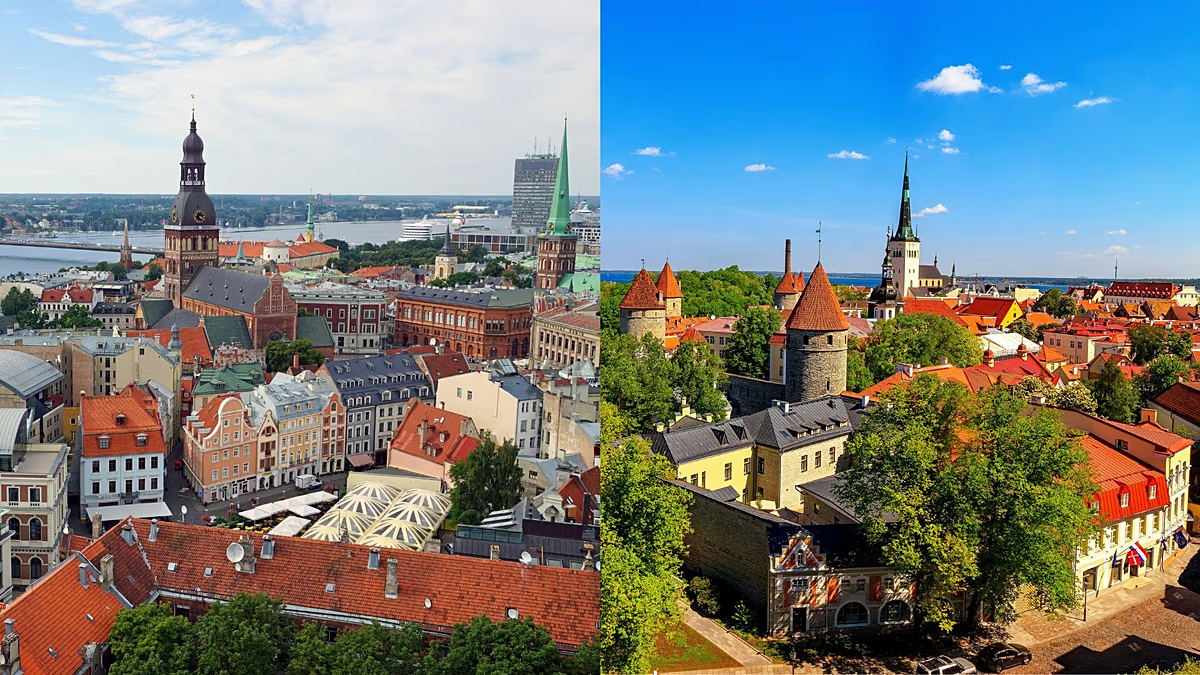
You’ve probably heard the term “coolcation” thrown around a lot lately—and no, it’s not just a buzzword. With summer heatwaves turning much of southern Europe into a sweltering sauna, travelers are increasingly looking north for their escapes. For years, Scandinavia hogged the limelight with its fjords, hygge, and midnight sun. But let me tell you, there’s a new cool kid on the block: the Baltics. These three small countries—Estonia, Latvia, and Lithuania—have been quietly upping their game, offering all the charm and culture of their pricier northern neighbors, but at a fraction of the cost. And while many tourists love to “do” all three capitals in one whirlwind trip, I think that’s a bit like trying to eat a five-course meal in five bites. You miss the nuances. So, I decided to focus on two cities that are often pitted against each other: Riga, the vibrant and sprawling Latvian capital, and Tallinn, the pint-sized Estonian darling. After spending part of the summer of 2025 in both, I can tell you this: while they share a similar post-Soviet, Hanseatic-history vibe, they feel completely different to your senses. From the moment I landed, I noticed it. Riga felt like an undiscovered treasure, a bit rough around the edges but full of heart. Tallinn, on the other hand, felt like walking into a real-life fairy tale, albeit one with a tourist toll. But before we get into the nitty-gritty, let me explain what makes these places tick, because honestly, the differences are what make them so fascinating to compare.
Paragraph 2: Riga – A Love Letter to Architecture and History
If you’re an architecture nerd like me, Riga is basically a giant, open-air museum—but in the best way possible. You can’t throw a cobblestone without hitting a medieval masterpiece or a jaw-dropping Art Nouveau building. The city’s soul is best understood in layers. Start with the Old Town, where the Three Brothers stand proudly—a trio of houses dating back to the 15th and 17th centuries. They’re now home to the Latvian Museum of Architecture, but even just standing outside and looking at them makes you feel like you’ve stepped back in time. Then, suddenly, you round a corner and you’re faced with something wildly different: about a third of Riga’s center is covered in Art Nouveau, or Jugendstil, architecture. We’re talking dramatic, ornate, and unapologetically extra facades that wouldn’t look out of place in a Wes Anderson film. You’ll also spot the National Romantic style, which is unique to the Baltics and blends fairy tale motifs with local folklore. Head to Alberta Īela (Alberts Street) to see the best of it, and don’t forget to pop into the Art Nouveau Museum to see how the other half lived. But here’s the kicker: Riga isn’t stuck in the past. The National Library of Latvia, affectionately called the “Castle of Light,” is a modern-day marvel. Designed by the legendary Gunārs Birkerts, it’s a stunning mountain of glass and concrete—and the acoustics are apparently amazing (I wouldn’t know, but the architecture tour is a must). The way the city marries ancient and modern is honestly a work of art in itself.
Paragraph 3: Riga’s Quirky Charms, From Spires to Street Food
Now, no trip to Riga is complete without looking up. The skyline is dotted with church spires, but the crown jewel (pun intended) is St. Peter’s Church. Climb to the top for a bird’s-eye view of the city, and you’ll notice a rooster on top. This isn’t just any old weather vane—it’s a symbol of Riga, and they’ve had one up there since 1491 (the current one was installed in 2009, so don’t get too excited about its age). You’ll see roosters everywhere, from fridge magnets to pastries. Yes, you, sugar rooster, are a delicious treat! But the real foodie heaven has to be the Riga Central Market. Housed in five former Zeppelin hangars (yes, really), it’s one of the largest markets in Europe, and it’s a feast for all your senses. You’ll find pile upon pile of fresh berries, smoked fish, pickles, and sourdough bread that’s still warm. The trick is to go hungry and just graze your way through the stalls. If you want a more local experience, head to Āgenskalns Market. It was a beautiful, slightly gritty market hall when it first opened in 1898, but after a major renovation in 2022, it’s now a polished foodie paradise with a bustling food court upstairs. Oh, and for the love of all things hoppy, don’t miss the craft beer. Latvia has one brewery for every 25,000 people—you don’t need to ask me twice to try them all. My favorites were Nurme and Labietis, but honestly, you can’t go wrong. And when you’re ready for a break, hop on a cute little boat that cruises the Riga Canal and the Daugava River. It’s the perfect way to see the city without wearing out your walking shoes.
Paragraph 4: Tallinn – A Fairytale That Got a Bit Too Famous
Now, let’s hop on a ferry or train and head north to Tallinn. If Riga feels like the cool, understated artist, Tallinn is the popular kid who posts on Instagram every five minutes. Don’t get me wrong—it’s absolutely enchanting. The UNESCO-listed Old Town is straight out of a storybook, all cobbled lanes, pastel-colored townhouses, and 15th-century architecture. You can easily spend a full day just getting lost in its meandering alleyways. Toompea Castle is a must-see (just remember to book your free tour in advance on weekdays), and the views from Kohtuotsa and Patkuli viewing platforms are postcard-perfect. My advice? Go at sunrise, before the hordes of cruise ship tourists descend from the port. Honestly, the moment those day trippers roll in, the charm can wear a little thin. It’s not that it’s inauthentic—it’s just that everything costs more and feels slightly more staged. The city’s modern side is still there, hidden behind the medieval masks. For example, the Tallinn Town Hall is a great spot to learn about the city’s history, and if you’re feeling energetic, climb the 64-meter tower for a workout and a view that can’t be beaten.
Paragraph 5: Tallinn’s Soul in Its People, Parks, and Song
But to truly see Tallinn, you have to venture beyond the walls. Literally. Head towards the sea and you’ll find Kalamaja, a once-industrial district that’s now the trendiest place to eat, drink, and browse vintage shops. The old wooden houses are like leftover gingerbread houses from a fairytale, and the Estonian Maritime Museum is unexpectedly fascinating—even for a landlocked person like me. I got unbelievably lucky during my visit because I happened to be in town for the Song and Dance Celebration. It’s a massive event held every five years, and boy, did it leave an impression. The Estonians love to sing. It’s a cliché, but it’s true. That’s how they got their independence—by singing together in the streets, known as the Singing Revolution. You can still feel that deep-rooted pride at places like the Vabamu Museum of Occupations and Freedom. It’s not always a cheerful visit, but it’s a critically important one to understand the country’s strength and resilience. It’s a heavy history, but you can feel the weight of it in a way that’s both humbling and inspiring. Then you find out they have a 70% forest cover and have probably the best super-government apps in the world, and you realize these are a special bunch.
Paragraph 6: The Verdict – Why You Need to See Them Both
So, who wins the battle of the Baltics? To be honest, that’s like asking a mother to choose her favorite child. Riga is grander and more historically complex, with a vibrant, gritty energy that hits you in the chest and leaves you wanting more. The slightly lower prices don’t hurt either. Meanwhile, Tallinn is more charming on the surface but requires a little digging to find its true soul beyond the souvenir shops. It’s also strikingly modern and tech-savvy (everyone talks about e-Estonia) and has a deep connection to Finland, which is literally a two-hour ferry ride away—making a day trip to Helsinki ridiculously easy if you have the time. In my mind, they’re the perfect pair: a coolcation dynamic duo. If you’re planning a trip, don’t choose between them. Do them as a duo, just maybe take the high-speed train between the two—it’s so much easier than flying—and give yourself enough time to let both of them get under your skin. Because once you’ve tasted their smoked fish, stared up at their steeples, and taken a deep breath of that crisp northern air, you’ll understand why a “coolcation” is less of a trend and more of a love story. You’ll leave with a full heart, a happy stomach, and a whole camera roll of gorgeous brick. Trust me, you won’t regret it.