


The Delivery Revolution and the Fight Over New York’s Last Mile
For millions of New Yorkers, the hum of delivery trucks has become as integral to city life as the subway’s rumble. We order everything from groceries to electronics, expecting packages to arrive at lightning speed, often within hours of clicking “buy.” Behind that seamless experience lies a complex, often invisible network known as “last mile” delivery—the final stretch of the shipping journey where packages leave a local warehouse and land on our doorsteps. It is the most expensive, logistically challenging, and increasingly controversial part of the entire supply chain. Major corporations like Amazon, FedEx, and Walmart have built their reputations on mastering this final hop, but the way they’ve structured it has sparked a growing debate about labor rights, corporate responsibility, and the very nature of the modern workforce. Now, a new legislative proposal in New York City is threatening to dismantle the current model, forcing companies to fundamentally rethink how they operate in the five boroughs—and the outcome could reshape the entire nation’s e-commerce ecosystem.
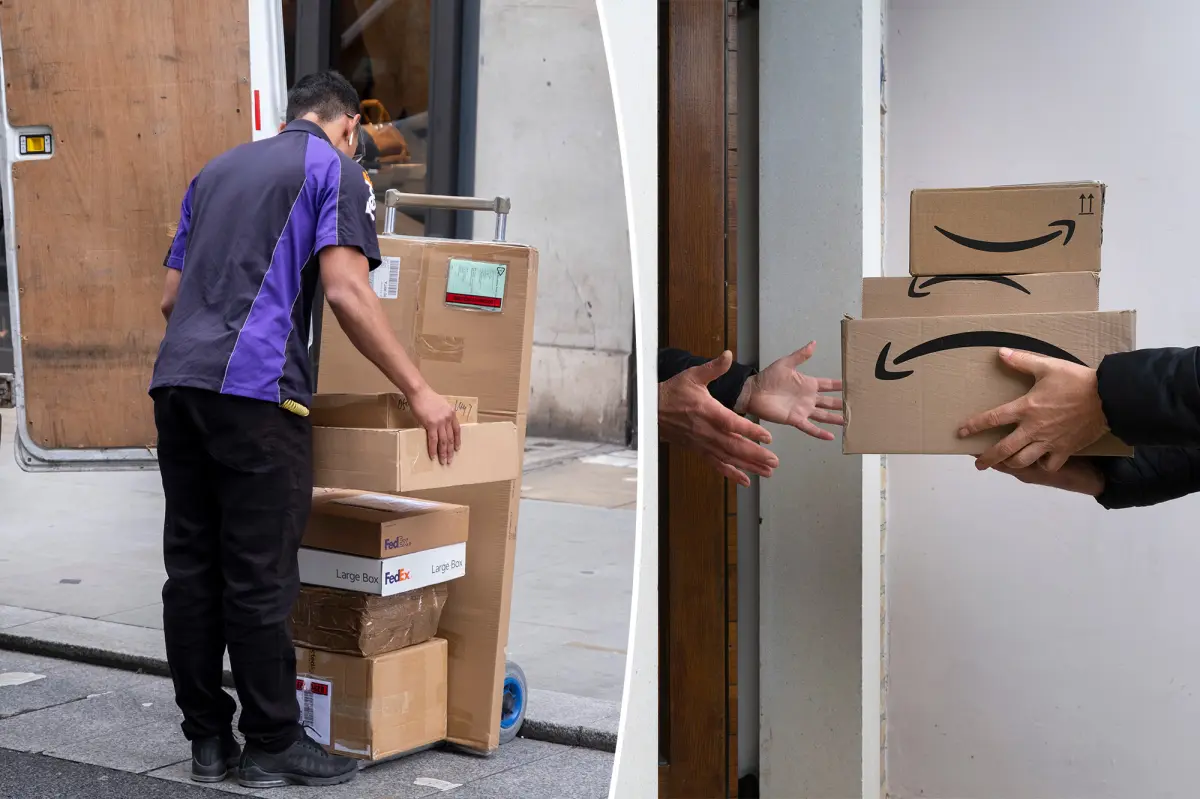
The current system, which the bill seeks to overturn, relies heavily on a layer of subcontracting that keeps the world’s largest companies at arm’s length from their own drivers. Instead of being direct employees of Amazon or FedEx, many delivery workers are employed by third-party entities known as Delivery Service Partners (DSPs). These DSPs are independent businesses that contract with the e-commerce giants to manage fleets of trucks and teams of drivers. When a driver in an Amazon-branded van, wearing an Amazon uniform, drops off a package on your block, they likely don’t actually work for Amazon at all. They work for a smaller company that has won a contract to serve a specific warehouse or delivery region. This arrangement is brilliantly efficient for the corporate giants: it allows them to scale delivery operations up and down rapidly, avoid the cumbersome costs of full-time employment—healthcare, overtime, workers’ compensation—and shield themselves from direct legal liability for workplace incidents. For the drivers, however, it often means a precarious existence, characterized by grueling quotas, unpredictable schedules, and a constant pressure to perform that is disconnected from the security of a traditional job.
Enter the Delivery Protection Act, a piece of legislation currently sitting with New York City’s Committee on Consumer and Worker Protection. If passed, this bill would slash through the layers of subcontracting and compel delivery companies to hire their drivers as direct employees. The implications are profound and would fundamentally alter the economics of urban delivery. First, companies would be responsible for paying standard employment benefits, full wages, and overtime—a massive cost increase compared to the current contract model. Second, the bill mandates that warehouses holding “last mile” packages must obtain specific licenses from the city, which would allow for greater oversight and regulation of these facilities. Third, it establishes clear safety standards and working condition requirements, offering drivers protections they currently lack. For advocates and labor unions, this bill is a long-overdue correction to a system that has allowed highly profitable corporations to externalize their workforce costs onto the shoulders of everyday workers, many of whom are immigrants and people of color who risk their safety daily on New York’s congested streets.
The human dimension of this debate is compelling. For years, drivers have described a grueling work environment that pushes the boundaries of physical endurance. They speak of 90-hour weeks during peak holiday seasons, of rushing through lunch to meet impossible delivery quotas, and of a relentless algorithmic surveillance system that tracks their every stop, turn, and idle moment. Injuries are common—from repetitive strain to the constant dangers of navigating through traffic along crowded sidewalks and bike lanes. Under the current DSP model, when a driver is injured, they face a confusing legal labyrinth, often uncertain whether their employer is the DSP or the corporate giant whose logo they wear. The new bill aims to clarify this ambiguity, establishing a direct line of accountability. Council Member Mamdani, the bill’s sponsor, frames it as an issue of basic fairness and public safety. By “reining in corporate giants,” the bill asserts, the city can ensure that those who deliver our goods are treated with dignity, which in turn leads to safer driving practices, better-maintained vehicles, and a more reliable delivery ecosystem for everyone.
Unsurprisingly, the corporate response has been one of fierce opposition, with Amazon leading the charge. In public statements, the company has warned that the legislation would be disastrous for consumers and workers alike. Amazon argues that the DSP model is not an exploitative loophole but rather a feature of modern business that allows for entrepreneurship and flexibility. By forcing the company to absorb all drivers as direct employees, the bill would inflate operational costs astronomically, costs that would inevitably be passed down to consumers through higher shipping fees and product prices. The company has gone further, issuing stark warnings that this regulatory burden could compel it to “consider relocating” its delivery operations out of New York City entirely. Such a move, they argue, would decimate the local job market, reduce delivery speed, and “deteriorate the experience for millions of customers.” This threat of withdrawal is a powerful negotiation tool, echoing a pattern seen across the country when progressive cities attempt to regulate the gig economy—a tension between worker protections and corporate investment that shows no sign of abating.
As the bill sits in its early legislative stages, its future remains uncertain. The Committee on Consumer and Worker Protection has yet to schedule a full hearing, and the path to law is fraught with lobbying efforts, political compromises, and potential legal challenges. What is clear is that this fight represents a broader reckoning with the nature of work in the 21st century. The rise of e-commerce has created an economic miracle of convenience, but it has also exposed a dark underbelly of labor exploitation and systemic inequality. New York City, often a bellwether for progressive policy, is now at the forefront of this battle. The outcome of the Delivery Protection Act will be watched closely by cities across America, from Los Angeles to Chicago, as they grapple with the same questions. Whose responsibility is it to protect the workers who fuel our modern economy? Is the flexible, subcontracting model an innovation, or is it a convenient fiction designed to evade accountability? And perhaps most importantly, will the convenience of same-day delivery be worth it if it comes at the cost of workers’ rights, safety, and dignity? The answer to these questions will not only determine the fate of deliveries in New York; it will define the future of the entire logistics industry for the next generation.