


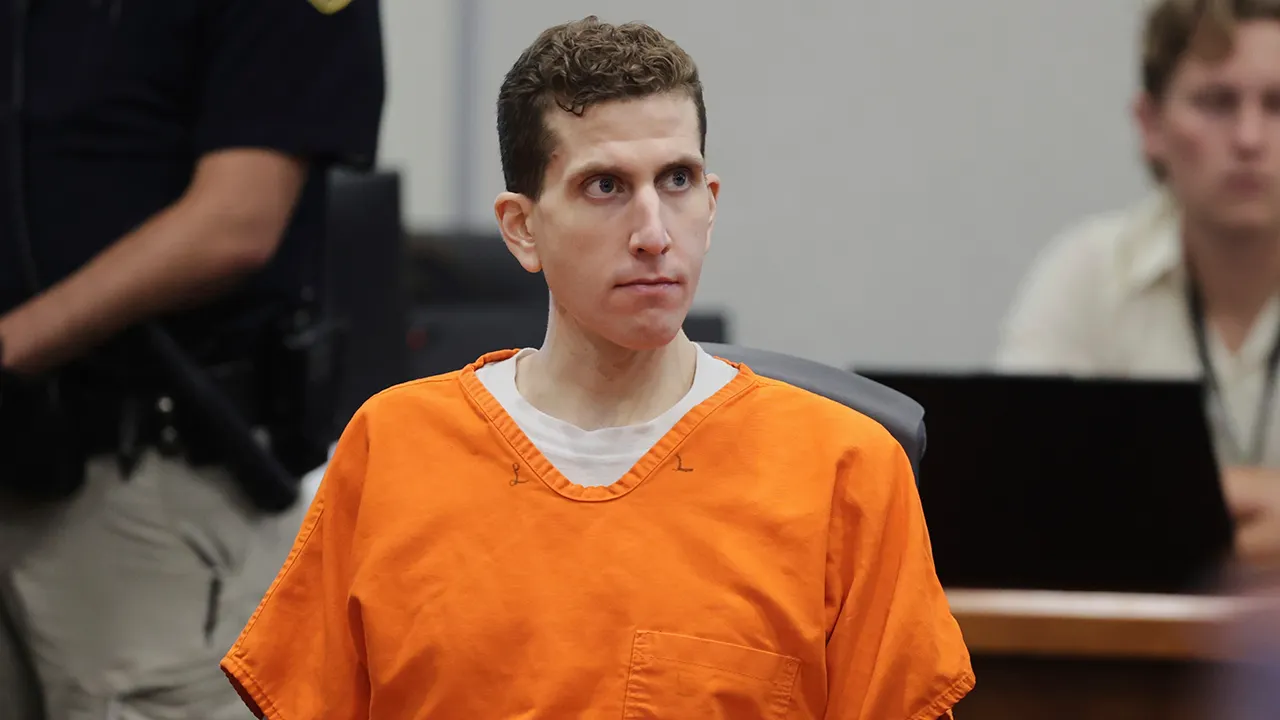
In a stunning legal turn that has added another layer of grief and confusion to a case already saturated with both, Bryan Kohberger — the man convicted of the brutal murders of four University of Idaho students — has asked the courts to reset the stage. With a new court-appointed attorney, Gregory Rauch, at his side, Kohberger filed motions on Thursday asking that the judge who oversaw his criminal case be disqualified from any post-conviction proceedings, and that those proceedings be moved out of Ada County. The filings arrive after Kohberger pleaded guilty, was convicted, and then began insisting that he is innocent. He now says his own defense team pushed him into a false confession, a claim that clashes with the verdicts and with the families’ insistence that justice was finally done. For those who have followed the case since the autumn of 2022, the latest maneuver is not just legal procedure; it feels like a reopening of wounds. The parents of Madison Mogen, Kaylee Goncalves, Xana Kernodle, and Ethan Chapin have spent years seeking a measure of closure, and every new motion threatens to push that closure further away. But Kohberger, who has not been heard much since his sentencing, is clearly unwilling to fade quietly into the machinery of the justice system. His request is built on a claim that the system itself — from the judge to the lawyers to the location of the courtroom — was never truly fair to him. Whether those claims have merit is now a question for a different kind of legal battle, one that unfolds after a conviction, in the strange and often overlooked world of post-conviction relief.
The motion to disqualify Judge Steven Hippler is not a casual complaint. The document acknowledges that a judge might make hard rulings or harsh statements during a long and emotional trial, but it argues that this case is different. “This motion does not rest upon one adverse ruling, one harsh statement, or the mere fact that the judge who presided over Bryan Kohberger’s criminal case has been assigned to his post-conviction proceeding,” the motion states. “It rests upon the extraordinary convergence of all of them.” In human terms, the defense is saying that Judge Hippler has crossed a line from arbiter to adversary, and that Kohberger cannot receive a fair hearing from someone who has already made up his mind about him as a person. The judge oversaw the trial after the venue was moved from Latah County to Ada County in 2024, a change intended to ensure an impartial jury and provide adequate resources for one of the most complex capital cases in Idaho history. But with the post-conviction phase, there will be no jury. It will be a bench proceeding, decided solely by a judge. Kohberger’s lawyers argue that the reasons for moving the original trial no longer apply when there are no jurors to protect from pretrial publicity or community pressure. Instead, they say, the only “audience” is the judge, and if that judge is biased, changing venues cannot fix it. The disqualification motion is therefore central to everything that follows. If it succeeds, a different judge would inherit a case that has already produced a conviction, a possible death sentence, and now a messy claim of innocence. If it fails, Kohberger’s post-conviction case will be heard by a man whose own words during sentencing may shadow every future hearing.
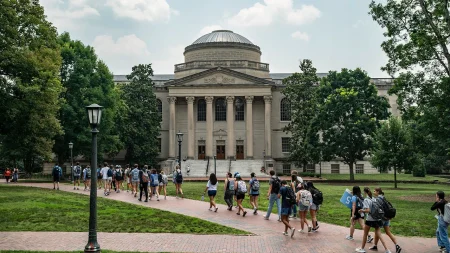
The underlying facts are as awful and as vivid as ever. In November 2022, four young people were found dead in a rental home near the University of Idaho campus in Moscow. Madison Mogen, 21, and Kaylee Goncalves, 21, were close friends who had been out together that night; Xana Kernodle, 20, had been in a relationship with Ethan Chapin, 20. Chapin, a triplet, was the kind of student people remembered. The murders shook the small college town and then the entire country. For months, the community waited for answers. Then Kohberger, a thirty-one-year-old criminology Ph.D. student, was arrested in Pennsylvania and brought back to Idaho. Last year, he pleaded guilty to four counts of first-degree murder and one count of felony burglary for the stabbing deaths. On the surface, that plea was an admission of responsibility, a moment when the families believed they could begin to heal. But Kohberger now says the plea was not true. He says he was manipulated or pressured by his attorneys into making a false confession, and he wants the chance to go to trial, even though that trial could end with the death penalty. For any criminal defendant, taking back a guilty plea is an extraordinary step. It requires showing that something went fundamentally wrong with the process — not necessarily that the person is innocent, but that the legal system failed to protect his rights. Kohberger’s team is suggesting both: that he is innocent and that his lawyers failed him. That combination is loaded with pain for the victims’ families. They have heard him plead guilty with their own ears. Now he says that admission was a lie performed under pressure. The emotional whiplash is hard to overstate.
The heart of the motion to remove Judge Hippler is not just about the judge’s words. It is also about the quality of the legal defense Kohberger received before he entered that plea. His new lawyer, Gregory Rauch, argues that the capital trial schedule was simply impossible. The volume of evidence in the case was enormous — digital records, surveillance footage, DNA analysis, cellphone data, and more, the kind of sprawling prosecution file that can take hundreds, if not thousands, of hours to meaningfully review. The defense team at the time raised these concerns to the court, warning that being forced to proceed under such conditions would violate Kohberger’s constitutional right to effective representation, especially in a case where the prosecution was seeking the death penalty. The response from Judge Hippler was blunt. He rejected the claim that the defense was unprepared, saying that the talk about the enormous amount of discovery was more about delay than about genuine legal necessity. That exchange now sits at the center of Kohberger’s argument that the judge cannot be impartial. In the defense’s telling, the judge was unsympathetic to the impossible burden facing the lawyers, and that lack of sympathy shaped everything that happened afterward, including Kohberger’s decision to plead guilty. By asking the court to disqualify Hippler, Rauch is effectively asking a new judge to look at the case with fresh eyes and decide whether the previous process was fair. This is not a question of whether four students were killed — that is not in dispute. It is a question of whether the man who admitted to those killings did so freely, knowingly, and with the help of a defense team that had enough time to actually defend him. It is, in the end, a human question as much as a legal one: Did the system give Bryan Kohberger a real chance, or did it simply move him along toward an inevitable end?
The motion also seizes on words spoken by Judge Hippler at sentencing, and those words are difficult to forget even for seasoned court watchers. “Do we really believe, after all of this, he is capable of speaking the truth?” the judge said, according to the motion. He called Kohberger a “faceless coward” and “the worst of the worst.” Those phrases are powerful. They are also perhaps understandable from a judge who had just presided over the trial of a man who killed four students and then stood before the court and offered a confession that now appears to have been, according to Kohberger, a lie. But the defense argues that these statements are not merely expressions of moral outrage. They go deeper. “Those statements are fundamentally different from believing Kohberger committed terrible crimes or deserved severe punishment,” the motion reads. “They are forward-looking judgments about his credibility. And credibility may now be at the center of this proceeding.” In other words, if a judge has already said in open court that Kohberger is incapable of telling the truth, how can that same judge fairly assess Kohberger’s new claims about being pressured into a confession? How can he weigh the testimony of a man he has already branded as a forever liar? This is a subtle but important point. A judge can believe a defendant is guilty and still be impartial in a later proceeding. But a judge who has made a public pronouncement about the defendant’s future capacity for honesty has, in a sense, prejudged the most important issue in a post-conviction hearing. The families may see this as another act of legal gamesmanship, another attempt by Kohberger to delay the inevitable. But the defense sees it as a necessary protection of a fundamental right. At this point, trust in the process is all that either side truly has.
Alongside the request to remove Judge Hippler, Kohberger’s lawyers have filed a motion to change the venue for the post-conviction proceedings — this time moving them from Ada County, where the original trial was held, back to Latah County, where the murders occurred. It might seem strange to ask for a case to be sent back to the very community that was most directly affected by the killings. But the defense says that the rationale for the original move no longer exists. The fear of an impartial jury was a jury issue; there is no jury in a post-conviction court proceeding. There is only a judge. And under Idaho law, “transfer is warranted in a case like this where ‘the convenience of witnesses and the ends of justice would be promoted by the change,’” the motion states. The convenience of witnesses is a human detail often lost in the legal language. The families, law enforcement officers, forensic experts, and others who may need to testify in any hearing live in and around Latah County. Requiring them to travel to Ada County, which is roughly three hundred miles away, adds another burden to people who have already been through years of trauma. But the real question is whether a judge in Latah County — any judge — could truly be neutral in a community that has not forgotten what happened behind that white brick house on King Road. The defense seems to believe that a move is about fairness, not convenience. The prosecution, no doubt, will see it as another delaying tactic by a convicted killer facing the possibility of a death sentence. In the end, the fate of this strange legal battle will be decided by how the courts answer a simple human question: Can a man who has already been convicted, who has already admitted his guilt, and who has already been sentenced to the harshest penalty the law allows, still get a fair hearing when he says none of it was true? Kohberger’s lawyers are betting that he can. The victims’ families are betting that he already had his chance. The courts will now have to answer, and whatever they say will leave one side feeling betrayed. The only certain thing is that this case, which has already taken so much from so many, is not over yet.