


Paragraph 1: The Dawn of a Legal Earthquake
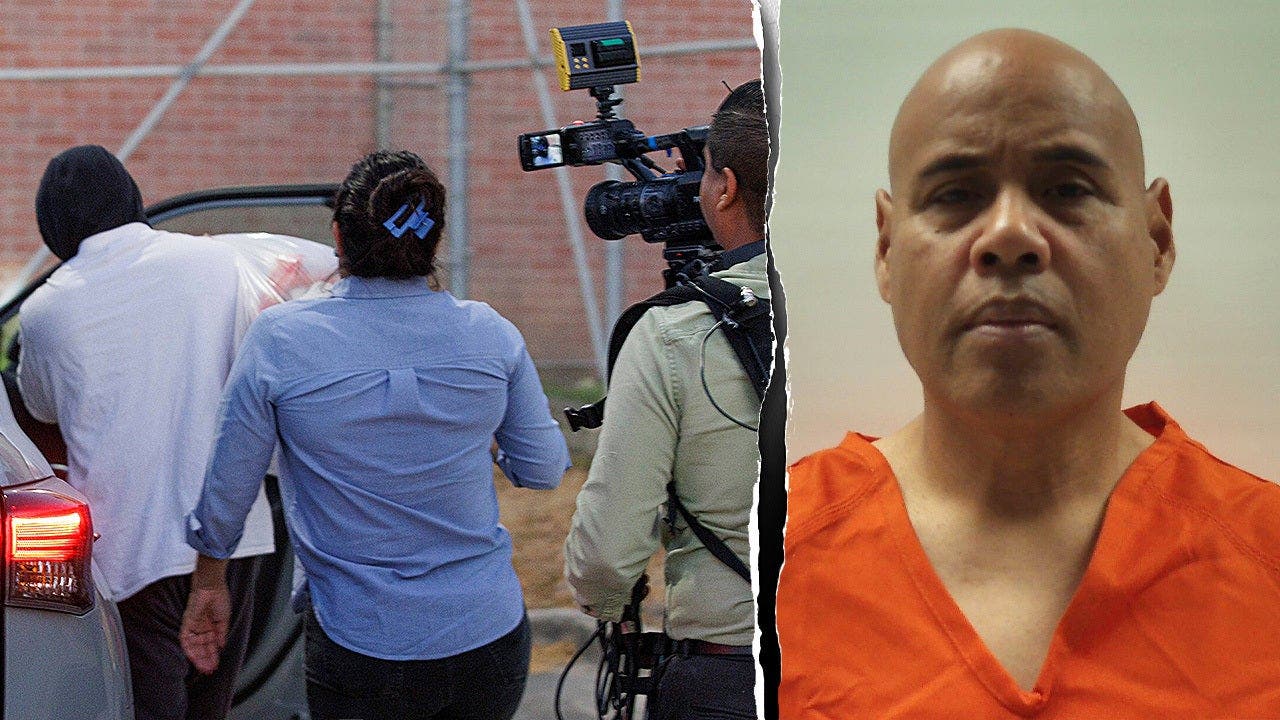
In the quiet, pre-dawn hours of a Texas Thursday, a dramatic chapter in American legal and political history unfolded with the simple turning of a jail cell key. At precisely 6:59 a.m., Christian Castro, a U.S. Immigration and Customs Enforcement (ICE) officer, walked out of a Cameron County detention facility into the thick, humid air of the Lone Star State. His release was not a moment of vindication, but rather the explosive culmination of an extraordinary interstate standoff that had pitted the state of Minnesota against the state of Texas, the office of a progressive county attorney against a combative conservative governor, and the letter of centuries-old law against the volatile reality of modern American politics. Castro, a federal agent, stood accused of a violent crime far from the border, involving a shooting that left a man injured and sent a bullet tearing through a child’s bedroom. Yet, despite a warrant for his arrest issued in Minnesota, and a formal extradition request, Castro found himself free on Texan soil, released not because he was innocent, but because a federal judge had just declined to force Governors Tim Walz and Greg Abbott to resolve their differences in a courtroom circus. The release left a victim wondering if justice would ever come, and left legal scholars grappling with a situation where a state governor openly defied the constitutional framework of interstate cooperation.
Paragraph 2: The Bullet, The Bedroom, and The Accused
At the heart of this maelstrom is a harrowing incident that shattered the peace of a residential neighborhood in Minnesota earlier this year. According to charging documents filed by Hennepin County Attorney Mary Moriarty, Castro engaged in a confrontation—which many have loosely termed “road rage”—that escalated with terrifying speed. Moriarty’s office alleged that Castro, brandishing his service weapon, fired at a man named Julio Sosa-Celis. The bullet struck Sosa-Celis in the leg, a wound that would cause significant physical trauma. However, the most chilling detail of the indictment emerged later: the projectile did not merely stop at the victim. It allegedly continued its trajectory, flying through the air and eventually lodging in the wall of a child’s bedroom. The sheer randomness of the bullet’s path—a missed lethal shot, a graze, a penetration into a space where a minor might have been sleeping—transforms this from a simple assault into a profound violation of domestic sanctuary. Moriarty did not mince words when describing Castro’s state of mind. In her public statements, she emphasized that Castro fired his weapon knowing full well that people had just run inside the home. “He knew people were there,” she argued, asserting that the victims presented “absolutely no harm to him or anyone else.” The charges followed swiftly: four counts of second-degree assault, a serious felony, alongside one count of falsely reporting a crime—an accusation that Castro lied about the circumstances to protect himself. For the victim, Sosa-Celis, the nightmare was twofold: surviving a shooting and then witnessing the suspected shooter, an agent of federal law enforcement, being shielded by another state’s political machinery.
Paragraph 3: The 1793 Framework and A Governor’s Signature
To understand why a man facing such serious charges was allowed to walk free, one must delve into the dusty annals of American constitutional law. The extradition of fugitives between states is governed by the Extradition Clause of the U.S. Constitution (Article IV, Section 2), which explicitly mandates that a state must deliver up a fugitive from justice upon the demand of the executive authority of the state from which they fled. This principle was codified into law by the Extradition Act of 1793, which the National Governors Association eventually formalized into the Uniform Criminal Extradition Act (UCEA). The process is typically a ministerial duty. When Minnesota filed its charges and secured a warrant for Castro’s arrest, they formally requested that Texas Governor Greg Abbott surrender him. This is done via a “rendition warrant”—a document that the governor of the asylum state (Texas) signs to authorize the transfer. This is where the machinery jammed. Minnesota officials alleged that Abbott simply refused to sign the document. As the days ticked by in the summer of 2024, Minnesota grew frantic. On August 18, they made an inquiry regarding the status of the extradition request. Receiving no definitive satisfactory answer, and fearing that Castro might be released on bail or flee—potentially across the border into Mexico, given his ICE background and operational familiarity with the region—Minnesota escalated the matter. They filed an emergency motion in U.S. District Court, seeking a Temporary Restraining Order (TRO). This TRO would essentially force Texas to hold Castro in custody pending the resolution of the extradition dispute. The core of Minnesota’s argument was that Abbott’s inaction was not just bureaucratic sluggishness, but a direct violation of the federal Extradition Act, a dereliction of a constitutional duty, and, in the words of Moriarty, a “political stunt.”
Paragraph 4: The Judge’s Gavel and The Denial
The stage was set for a legal showdown on August 25, when U.S. District Judge Fernando Rodriguez, Jr., took up the matter in a federal courtroom. Minnesota presented a desperate plea: without a TRO, Castro would walk out of jail, and their chance to bring him to Hennepin County for trial might vanish forever. They pointed to the bullet in the child’s bedroom, the victim’s pain, and the clear language of the law. Yet, Judge Rodriguez was unpersuaded by the urgency of the request. In his order, he meticulously laid out the standard for a TRO—which is an extraordinary remedy reserved for situations where the applicant will suffer “immediate and irreparable injury” before the opposition can be heard. The judge concluded that Minnesota “fails to satisfy the requirements for the issuance of a temporary restraining order.” His decision was not a ruling on the merits of the extradition itself, nor a comment on Castro’s guilt or innocence. Rather, it was a procedural hurdle. The judge likely determined that Minnesota had not demonstrated a sufficient imminent threat of harm that could not be addressed through regular channels, or that the legal arguments regarding the Extradition Act, while compelling, did not meet the high threshold for emergency injunctive relief during that specific phase of litigation. Consequently, the legal dam broke. With the TRO denied, the local Texas authorities had no legal basis to continue holding Castro on Minnesota’s behalf, and he was set free. The judge’s order, while dry and technical, had a visceral impact—it effectively nullified Minnesota’s arrest warrant inside Texas borders, at least for the moment, and allowed a suspected shooter to return to civilian life.
Paragraph 5: The Political Volcano Beneath the Legal Surface
To dismiss this case as mere procedure would be to ignore the roaring political volcano beneath the legal surface. Minnesota did not just lose a court motion; they were locked in a bitter ideological war with Texas Governor Greg Abbott. For years, Abbott has waged a “border war” against the federal government and blue states, busing migrants to northern cities and clashing with the Biden administration over immigration enforcement. Conversely, Minnesota Governor Tim Walz represents a staunchly progressive state that has enacted sanctuary policies, limiting local cooperation with federal immigration authorities. When an ICE agent—the very symbol of federal enforcement that Abbott champions—was accused of a crime in Walz’s state, Abbott saw an opportunity. Moriarty directly accused Abbott of engaging in “political theater,” alleging that he was holding Castro as a hostage or refusing extradition to embarrass Minnesota and score points with conservative voters who view ICE agents as heroes. From Abbott’s perspective, this likely appeared as a local progressive prosecutor in a sanctuary city trying to jail a federal officer for doing what they perceive as law enforcement work, or at least, they wanted to scrutinize the charges with a skeptical eye. The release of Castro became a symbolic victory for the “Law and Order” faction—a refusal to let a federal agent be dragged across the country to face what they might view as retaliatory prosecution. The phrase “political stunt” hurled by Minnesota was echoed in headlines, illustrating how a single criminal case can become a proxy war for the fractured soul of American federalism, where a border state governor uses his authority to defy the legal demands of a blue state, effectively placing an accused criminal beyond the reach of that state’s justice system.
Paragraph 6: The Aftermath and The Long Road Ahead
As Christian Castro savored his freedom on Thursday morning, the case was far from closed. The TRO denial is a temporary setback for Minnesota, not a dismissal of the underlying extradition request. The judge explicitly noted that Minnesota can still pursue the extradition through the proper channels, but without the immediate threat of the TRO, the process becomes a bureaucratic long game. The frightening reality for Minnesota prosecutors is that Castro is now free in a border state. The judge’s order itself acknowledged Minnesota’s fear that Castro might flee to Mexico if released—a fear that now hangs over the entire case. If Castro decides to slip across the border, he puts himself outside the reach of U.S. extradition back to Minnesota, effectively becoming an international fugitive. For Julio Sosa-Celis, the victim, the morning of Thursday was a gut punch. While Castro walked out of jail, Sosa-Celis likely remains haunted by the sound of gunfire and the image of that bullet finding a resting place in a child’s wall. The charges are still on the table, but the enforcement of them now relies on the goodwill and legal maneuvering of Texas. The ball is in Abbott’s court—can Minnesota compel him to comply with the 1793 statute? The judge’s denial of the TRO suggests that the courts are not willing to aggressively intervene in what they see as a political impasse between governors. This case has laid bare a dangerous precedent: that state leaders can, through inaction, nullify another state’s criminal warrants. It raises a chilling question for the American justice system—if a governor can refuse to extradite an ICE agent due to politics, what is to stop other states from refusing extradition for other polarizing figures? The bullet may have lodged in a Minnesota wall, but the fracture it exposed in the constitutional bedrock of the Union may echo far longer than the gunshot that fired it.