

In the sterile, fluorescent-lit corridors of Secret Service headquarters, where the constant hum of servers and the crackle of encrypted radios create a relentless backdrop, the news of three officials being placed on administrative leave ripples through the ranks like an unsettling tremor. These three individuals—who did not serve in the visible law-enforcement ranks that shield the president with their bodies, but rather toiled in the quieter, equally vital machinery of logistics, administration, or intelligence support—find themselves in a suspended purgatory. Administrative leave is a peculiar limbo: it is neither a conviction nor a clearance, but a crushing pause where a career hangs by a thread of procedural review. Their names have not been released, and the precise nature of the potential misconduct remains locked inside the confidential files of the Office of Professional Responsibility, which has just begun its forensic dig through emails, schedules, and witness statements. Imagine the cold knot of anxiety tightening in their stomachs as they sit at home, checking their phones obsessively, wondering which decision made weeks or months ago has come back to haunt them. Their spouses will whisper gentle reassurances, but neither will sleep. The neighbors will notice the car parked in the driveway at odd hours, a quiet betrayal of a routine that used to scream “federal employee.” These are not villains or traitors; they are tired, brittle human beings who have spent years absorbing the existential stress of guarding a family that has become a lightning rod for global hatred. Every missed birthday, every canceled vacation, every midnight call to scramble has built up a reservoir of fatigue. Now, the very agency that demanded their perfection is scrutinizing their humanity under a harsh, unforgiving lamp, fully aware that their misfortunes occur against the backdrop of three separate assassination attempts on President Donald Trump within a single year—a gut-wrenching statistical anomaly for an organization that prides itself on perfection.
—
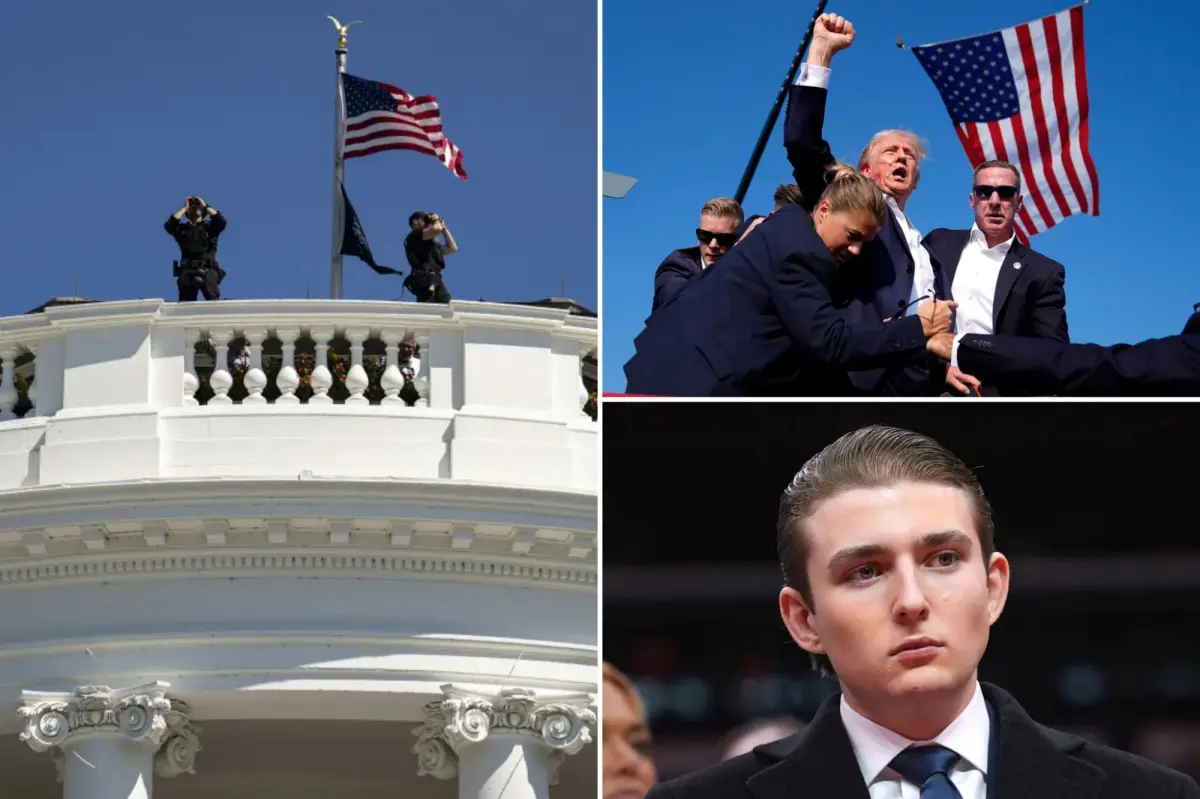
The specter of Butler, Pennsylvania, still hangs over every briefing room, a ghost that refuses to be exorcised. That first assassination attempt in the summer of 2024 tore the veil of invincibility from the Secret Service, exposing the raw fallibility of its human shield. For the agents who were on the ground that day, the memories are visceral: the roar of the crowd, the crack of gunfire that split the air like a thunderclap, the frantic, adrenaline-fueled scramble to cover the president with their own bodies. They felt the hot breath of chaos on their necks, the instinctive, primal need to absorb a bullet meant for another. In the aftermath, as blood stained the bleachers and law enforcement raced to neutralize the threat, those agents were thrust into a national interrogation. Congressional hearings became grueling pilgrimages of blame, where stern-faced lawmakers demanded answers while cameras rolled, and the agents—some still trembling from the trauma—had to relive their supposed failures in excruciating detail. The human cost of that scrutiny is immeasurable: agents who once prided themselves on their unshakable composure found themselves waking up in cold sweats, haunted by the image of a young man with a rifle on a rooftop that was supposedly covered. They carry the psychological shrapnel of that day into every subsequent mission, their hypervigilance now bordering on pathological. The agency has since tightened protocols, reassigned personnel, and rewritten manuals, but the emotional scars remain, bonding the rank-and-file in a shared, unspoken trauma. When the news of the second and third attempts surfaced—each thwarted by sheer luck, split-second reactions, or the intervention of local law enforcement—the weight on every agent’s shoulders grew heavier. Each public appearance of the president is now a choreography of dread, where every window, every rooftop, every vehicle is analyzed for a potential threat. And yet, this internal turmoil is hidden behind the stoic sunglasses and crisp suits, because the mission must continue, even as the invisible pressure cracks the morale of the very people tasked with carrying out that mission.
—
Amid this pressurized atmosphere, the threat landscape has expanded to touch the most personal, vulnerable corner of the Trump family: the president’s youngest son, Barron Trump. In a chilling development, the Secret Service has confirmed its awareness of a video that specifically targets the young man, a college student who has largely remained out of the political fray, attempting to navigate the awkwardness of young adulthood under the glare of a security bubble. The video depicts locations associated with Barron’s whereabouts, meticulously cataloged like a stalker’s scrapbook, and it culminates in a sinister proposition: a $10 million reward for information leading to his exact location. This is not an abstract geopolitical threat; this is a bounty on the head of a son, a teenager in the most literal sense of the word, who simply wanted to attend classes, walk across a campus, and experience the mundane joys of independence. Imagine the terror that grips a parent when they learn that their child’s routine movements—the path to the dormitory, the coffee shop he frequents, the gym where he works out—have been mapped by hostile state media and weaponized into an encrypted call for assassination. For Barron, the eleventh-hour realization that his life is not merely under watch but has a price tag attached must be a profound, chilling violation of his private existence. The psychological impact on a young person is staggering; he must now scrutinize the faces of classmates, wonder if the delivery driver is taking too long, and accept that a simple walk in the park is a complex tactical operation. The Secret Service, typically tight-lipped about protective intelligence, broke its silence to acknowledge the threat, a tacit admission of the gravity of the situation. Nate Herring, the agency’s spokesperson, stated the obvious—that they investigate any potential threat—but the underlying message is one of heightened, personalized fear for the entire First Family, and specifically for that young man whose only crime is sharing the DNA of a controversial leader.
—
The video threatening Barron Trump is not an isolated act of online menace; it is the newest chapter in a long, blood-soaked saga of geopolitical vengeance that traces its roots back to the killing of Iranian General Qasem Soleimani in a 2020 U.S. airstrike. Iran’s state media has publicly and repeatedly vowed to avenge Soleimani’s death, painting the Trump family as primary targets in a narrative of honor and retribution. The assassination of Iran’s Supreme Leader, Ayatollah Ali Khamenei—which occurred amidst the escalating war between Washington and Tehran—has further inflamed that destabilizing grudge. This is not a gangland feud; it is a clash between sovereign states where the leaders of one nation openly discuss the extermination of another nation’s former and current leader, and by extension, their bloodline. For the intelligence officers and agents monitoring Iranian chatter, this threat is a constant, low-level seismic hum. They listen to Iranian broadcasts, decode intercepted communications, and track electronic signatures of nefarious actors, all while knowing that Tehran operates an extensive network of proxies and sleeper cells across the globe. The video offering a $10 million reward for Barron’s location is a propaganda masterpiece designed to incite lone-wolf actors, turning the entire world’s criminal underground into potential assassins. The human dimension here is enormous: every Iranian state media outlet pumping out this hateful content has real reporters, editors, and viewers, many of whom are radicalized by a decades-long history of US intervention in their nation’s affairs. Yet, that understanding does not ease the paralyzing fear of the protectees. For the President, knowing his son is a target, every public appearance becomes a distraction that pulls his attention to the welfare of his family, even as he navigates the catastrophic decisions of international policy. The strained barks of deputies on the ground, the breathless briefings about surface-to-air missile capabilities, and the silent prayers of a security detail that does not cover protection against propaganda-driven fanatics, all contribute to a volatile mix of fear and duty.
—
This volatile mix was made devastatingly clear during a startling incident in July, when President Trump secretly switched planes from Air Force One to a secondary aircraft in Turkey via a catering truck. This was not a standard logistical adjustment; it was an emergency evasive maneuver prompted by a credible Iranian surface-to-air missile threat. The scene is almost cinematic in its raw tension: the presidential motorcade pulling up unexpectedly, the hulking silhouette of a food service vehicle looming like an improbable Trojan horse, and a detailed choreography of bodies moving with practiced urgency. Agents, sweating through their suits, scanned the horizon for incoming fire as the President was hurried through steel doors, his entourage scurrying behind him. The catering truck was a sham—an improvised shield against a threat that had been deemed imminent and deadly. In that moment, the concept of “protective detail” became terrifyingly literal. The human beings inside that truck felt their hearts pound against their ribs, their eyes darting to every flash of light in the sky, their ears straining for the distinct whistle of a launched missile. They were not just escorting a politician; they were evacuating a man who had become the object of a sovereign nation’s assassination contract. The subsequent boarding of the alternate aircraft was not a relief, but merely a shifting of the danger zone, as agents repositioned to cover new sightlines and internalized the grim reality that they might not have survived had the threat been executed, and they might not survive the next one. Moments like these strip away the institutional bravado and reveal the raw, primal fear of the men and women who voluntarily place themselves between death and their protectee. They are fathers and mothers who text their own children goodbye before such maneuvers, not knowing if they will return from a routine stopover in a foreign country. The incident also speaks to the sheer exhaustion of a nation perpetually at odds, where a simple diplomatic flight becomes a test of survival, and where the attention of an intelligence officer can mean the difference between life and death for the most powerful man in the free world.
—
In the end, the story of these three suspended officials, the chilling threat against Barron Trump, and the darting maneuvering of Air Force One in Turkey all converge on a single, undeniable truth: the Secret Service and the Trump family are locked in an unprecedented, high-stakes human drama. The agency, exhausted, demoralized, and stretched thin, is being asked to do the impossible—to guarantee absolute protection against a hydra of threats, from domestic psychopaths to state-sponsored terror networks. And the protectees, the First Family themselves, are not mythical figures but terrified, paranoid, and relentlessly vulnerable human beings who carry the weight of a global power struggle in their daily routines. The three officials on administrative leave are likely collateral damage in this environment, scapegoats for a system that is buckling under the pressure of its own heroic ambitions. The investigation into their conduct, whatever it reveals, will be a somber reflection of the agency’s internal decay, a testament to the fact that even the most disciplined organizations are made of flesh and blood. For Barron, the video with its blood money is a stark reminder that his own youth has been stolen by his father’s legacy, forcing him to grow up in a fortress of paranoia. For the agents on the ground, every sunrise is a new battle against an unseen enemy, and every sunset is a fragile victory. The human spirit endures through a grim determination, a stubborn refusal to yield to fear, and a quiet, unspoken covenant that they would sacrifice their own lives to prevent even a single bullet from finding its target. But beneath the suits and the dark glasses, there are tears, sleepless nights, and the quiet terror of a job that has no retirement from the emotional toll it exacts. As the world watches the political drama unfold, it is easy to forget that behind the headlines of threats, suspensions, and covert plane swaps, there are real people—husbands, wives, sons, and daughters—whose lives are irrevocably altered by the unrelenting machinery of power and protection. And it is in that fragile, human space that the true nature of this conflict resides, a quiet, desperate battle for survival in a world where even the president’s son cannot walk to class without the shadow of a bounty hanging over his head.