



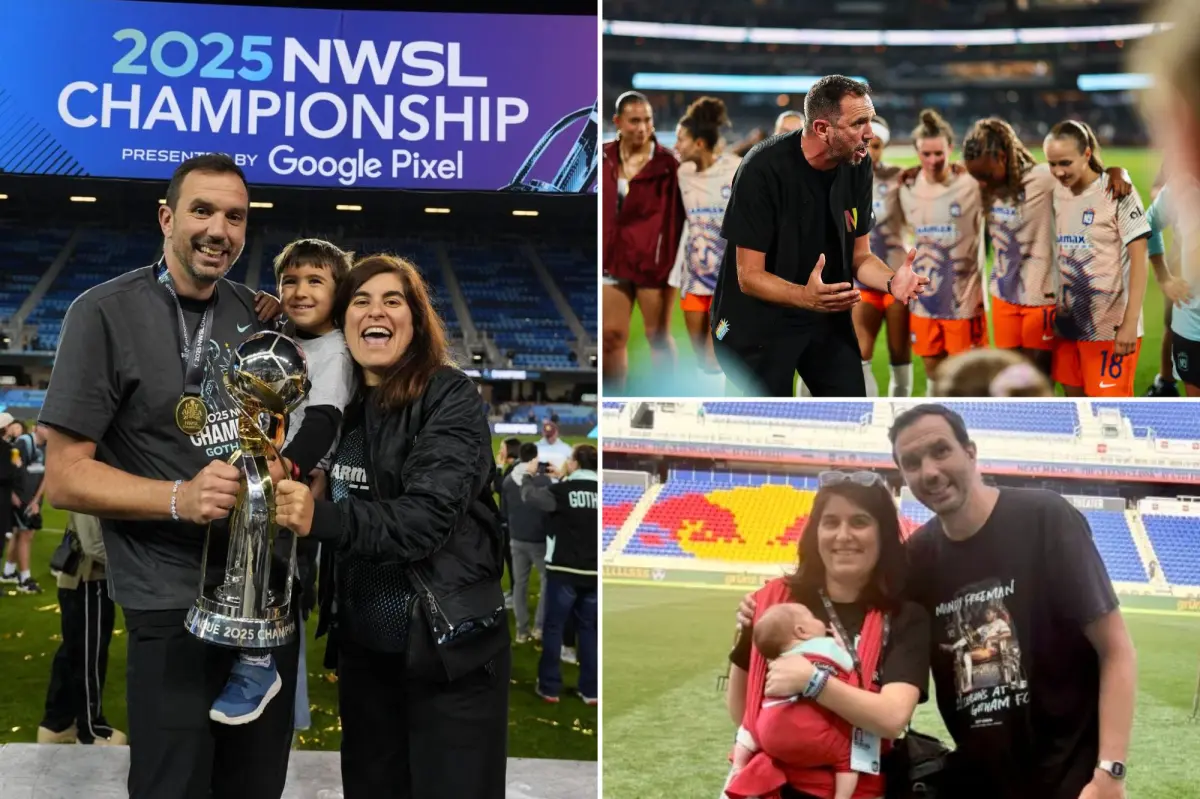
There is never a perfect moment to step away from your team. For a head coach, the calendar is a relentless march of matches, travel, and training sessions—demands that in professional women’s soccer stretch across nearly eleven months of the year. The rhythm of the sport becomes the rhythm of your life, and to step off that treadmill feels like risking everything you’ve worked for. But as I constantly remind my players, we are people first. The lesson of what it truly means to put a job ahead of the people who need you most is something I learned the hard way, and it’s a lesson that has reshaped how I think about fatherhood and leadership. So, when my second child, Laia, was born a few months ago, I made a choice that was both unconventional and deeply personal: I took five weeks of paternity leave from Gotham FC, the top-ranking team in the National Women’s Soccer League and 2025 champions, right in the middle of the season. It was a decision born of painful hindsight, and one I wish I had the courage to make years earlier.
Back in 2021, I was newly appointed as the head coach of Real Betis Féminas in Seville, a team that was languishing at the bottom of the league, fighting desperately to avoid relegation. The pressure was immense, and the stakes felt existential for the club. It was in the midst of this frantic battle for survival that my wife, Laura, told me she was pregnant. While I was trying to orchestrate a sporting miracle, my mind was also on the arrival of our first child. We managed to pull off that miracle on the pitch, finishing 12th and securing our place in the top flight. But the relief was short-lived. The following season, the pressure returned, and it was then that my son, Luka, was born. He arrived on a Thursday. I coached a game the night before while Laura was in the hospital, spent only Friday at home with our new family of three, and was back on the pitch coaching on Saturday afternoon. It was a whirlwind, a blur of adrenaline and exhaustion, but I felt I had no other choice.
In Spain, the law grants both fathers and mothers 16 full weeks of parental leave. However, the thought of taking that time felt like an impossibility. The team was still fragile, and we lacked the resources and support structure to even imagine me stepping away. I looked for small compromises, like flying to away games instead of taking the bus to save precious hours at home, but even those small adjustments proved unworkable. To this day, I carry a deep regret for not being the husband and father my family needed during such a critical and beautiful period of our lives. I was torn, trying to be in two places at once, and in the end, I felt as though I had let my wife and my newborn son down. It was a source of guilt that lingered for years, a quiet pain that I carried with me. I knew then that my priorities had been skewed, but I didn’t have the strength or the circumstances to change them.
Four years and a major life move later, the world looked very different. Our family had relocated from Spain to Houston and then to New York City, a journey that required immense sacrifice from Laura, who constantly put her own career on hold to support mine and raise our son. Professionally, I had found my footing with Gotham FC, having been with the club for three years and building a stable, successful environment with a coaching staff I trusted implicitly. When we learned we were expecting our daughter, I wasn’t initially planning to take a prolonged leave. The plan was to take a few days off here and there, miss an occasional trip, and rely on family flying in to help Laura as she recovered from the birth. Life, however, has a way of disrupting even the most thoughtful plans. By June, our support system was leaving, and the demands of a newborn coincided with Luka’s summer break, creating a new and overwhelming intensity at home.
It was in that moment of exhaustion and realization that I knew I had to do things differently this time. I decided to take the five weeks of paternity leave. It was crucial for me to be present not just for the kids, but for my wife as well. She had endured so much, and she deserved a true partner, not a man who was constantly coming and going, physically present but mentally a million miles away. The difference in our family life has been tangible. When you are constantly rushing out the door or mentally preoccupied with tactical drills, it creates a real distance in the bond with your child. This time, I have been able to truly inhabit the space of being a father and a husband. We have finally settled into life as a family of four, strengthening our bonds and easing the stress that a new baby inevitably brings. I’ve seen my daughter’s first smiles and held my son through his summer boredom, and these are moments I would never, ever trade. Personally, I feel like a healthier, more balanced human being, which ultimately makes me a better coach.
None of this was possible without a profound level of trust and an incredible support system. At Gotham, I have spent years building a foundation with assistant coach Shaun Harris and a technical team who understand every nuance of my philosophy and the players we work with. I had complete faith that they were ready to steer the ship in my absence. I also trusted the ownership, led by Carolyn Tisch, to provide them with the resources and backing they needed. I am incredibly grateful to the players, too. Life happens—illness, loss, family milestones—and I have always strived to create a culture where we support each other through it all. Knowing they had my back during this personal time meant more to me than I can express. I worried about how the announcement would be received, but the opinions of my players and my colleagues matter most, and they have been nothing short of amazing in their support.
What continues to surprise me, and what I want to challenge, is how taking paternity leave still feels like such a difficult decision for so many men in the United States. This is a country that venerates hard work, but it is also a nation where family is a core value, at least in theory. I don’t understand why more men don’t seize the opportunity to be present for their families when it’s available, or why companies don’t do more to make it a viable and normal choice. This is exactly why I wanted to share my story. I want to send a message to other fathers: it is absolutely okay to prioritize your family when they need you, without letting the fear of career consequences hold you back. You can’t get the time back. There are moments in life that, once missed, are lost forever. Your children are only this age once. If my experience can give even one new dad the confidence to take the time he needs to be present, then it will all have been worth it. Because I know, without a shadow of a doubt, that he wouldn’t regret it. I know I don’t.