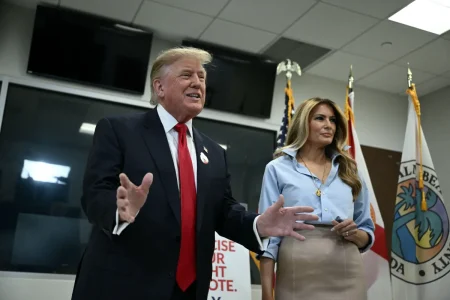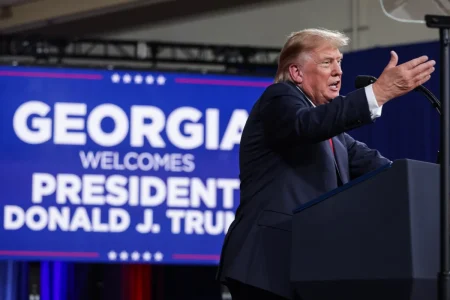



The initial announcement landed like a thunderclap in an already volatile economic storm. On Tuesday, President Donald Trump declared a sudden, temporary halt to the punishing 50% tariffs that were set to slam into Canadian imports. This pause, lasting a fleeting 72 hours, was framed by the White House not as a retreat, but as a strategic intermission—a window of opportunity carved out for a “tentative agreement” that had been hammered out behind closed doors. Yet, as the news rippled through the markets, the atmosphere in boardrooms, border towns, and factory floors was less one of victory and more one of breathless, anxious suspension. The tariffs were poised to devastate over $20 billion worth of cross-border trade, hitting everything from lumber and agricultural goods to critical minerals and machinery. For the countless Canadian workers and American businesses reliant on seamless North American supply chains, this three-day reprieve felt less like a cold peace and more like the terrifying calm before a potential economic tsunami. The pause was not a resolution; it was a ticking clock, and the weight of what might follow hung heavy in the air as diplomats and trade negotiators scrambled to translate truce into treaty.
To understand the visceral fear behind this announcement, one must look at the sheer scale of human impact embedded in that $20 billion figure. The proposed tariffs were not just abstract numbers on a government ledger; they represented the difference between solvency and ruin for countless small enterprises. A steel fabricator in Ohio saw the price of Canadian steel sheets spike overnight, threatening a major municipal contract. A Quebec dairy farmer envisioned a year’s worth of cheese sitting unsold in warehouses. A lumber mill in British Columbia braced for the sudden shutdown of sawmills, while American homebuilders looked at soaring plywood costs that would price young families out of the housing market entirely. The 50% duty was a sledgehammer meant to force Canada to capitulate on issues ranging from border security and fentanyl trafficking to unfair trade imbalances. Yet, the blunt instrument of this economic warfare threatened to shatter not just geopolitical relationships, but the delicate fabric of everyday life. In the border towns of Detroit and Windsor, auto part manufacturers held their breath, knowing that a single afternoon of policy escalation could send entire assembly lines into idle mode, laying off thousands who might not be called back for months. For the next three days, these workers and business owners are trapped in a limbo of conflicting cables and tentative promises, hoping that the political leaders in Ottawa and Washington can finally bridge the chasm separating them.
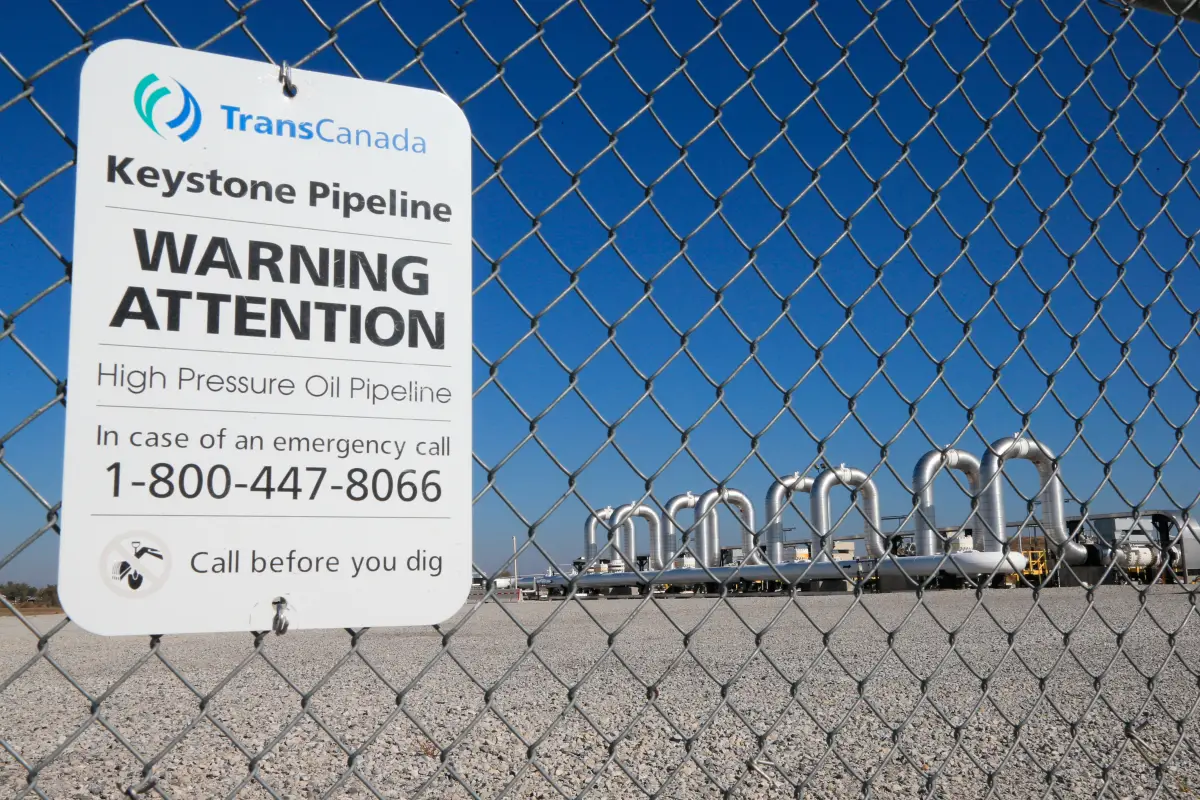
Perhaps the most breathtaking and controversial element of Trump’s announcement was his casual resurrection of a ghost from North America’s energy past—the Keystone XL Pipeline. In his social media post, the President suggested that the tentative agreement might “pave the way” for this massive, 1,200-mile conduit to be “awoken from the grave.” The Keystone XL, proposed back in 2008 by TransCanada (now TC Energy), was designed to carry up to 830,000 barrels of crude oil daily from the tar sands of Hardisty, Alberta, down through Montana and South Dakota, to the crucial refining hub in Steele City, Nebraska. For Trump, bringing this project back to life is more than just an infrastructure play; it is a potent symbol of his broader “American energy dominance” agenda. It harkens back to his 2017 revival of the project, which created thousands of high-paying union construction jobs and was touted as the ultimate guarantor of continental energy security. The revival would be a massive win for the conservative energy lobby and a defiant slap at the environmental movement. Yet for the ranchers in Nebraska and the Indigenous tribes along the route, this “zombie pipeline” represents a terrifying resurrection of a decade-long battle. They remember the spilled ground, the aquifer risks, and the violation of treaty rights. To humanize this, one must picture the aging construction worker who lost his home when the project was killed in 2021, dreaming of a second chance; but also the young mother in Fort Peck, Montana, who worries about the drinking water for her children. The pipeline is not merely steel and oil; it is the sum of opposing hopes, and Trump’s words have just reignited that bitter, deeply personal conflict.
Across the border, Canadian Prime Minister Mark Carney offered a cautious, measured response that sought to balance national pride with economic pragmatism. He acknowledged that “progress” had been made, but he was careful not to declare victory, knowing full well the fragility of such trade negotiations. His social media statement echoed the tense reality: the deal is tentative, the final documentation is still being polished, and nothing is guaranteed. Carney’s political survival is at stake; he must be seen as a resolute defender of Canadian sovereignty who stood up to American bullying, yet he also knows that a complete trade collapse would cripple the Canadian economy to a far greater degree than the American one. On the other side of the aisle, the United States Trade Representative (USTR) released a statement brimming with self-congratulatory optimism, lauding the deal for securing “comprehensive market access for all American goods” and robust “economic security commitments.” This stark divergence in tone highlights the political chess game playing out in public. Trump presents the pause as a triumphant concession wrestled from a weakened neighbor, while Carney frames it as a necessary first step in a long, arduous marathon. The human element here is the sheer exhaustion of ordinary citizens who have been living through a constant onslaught of breaking news, tariff threats, and counter-threats—a psychological warfare that destabilizes investments and strains the deep social kinship between two neighboring nations that have shared a 5,500-mile undefended border for over a century.
To fully appreciate the emotional weight of the Keystone XL reference, one must revisit the tortured history that made it a global flashpoint. The saga began with its 2008 proposal, but it wasn’t until 2011 that the environmental movement turned it into a cause célèbre, leading to the largest civil disobedience protests in recent American history outside the White House. President Barack Obama finally rejected the permit in November 2015, citing stark warnings about its contribution to greenhouse gas emissions and the imminent threat to Nebraska’s fragile Sandhills region and the Ogallala Aquifer—an underground reservoir that provides drinking water for roughly 2 million people and irrigates about 30% of American agriculture. Trump reversed this in 2017, initiating construction which brought a boom of employment to states like Montana and South Dakota. But the pendulum swung violently back in January 2021, when President Joe Biden revoked the permit on his very first day in office, dealing a death blow that forced TC Energy to abandon the project and write off billions in investments. For the workers who had just begun their shifts, the shutdown was a brutal whiplash; they went from securing a family future to packing up and looking for new, lower-paying jobs within weeks. For the Indigenous communities and environmentalists, it was a vindication of their relentless advocacy. Trump’s recent suggestion of reviving this project is therefore not just a policy preference; it is a reopening of a deep psychological wound for many, and a beacon of hope for others who felt abandoned by the green transition.
As the clock ticks down on this 72-hour reprieve, the ultimate question becomes what the “final documentation” will actually contain, and whether the Keystone XL threat is a genuine policy proposal or a wild card for leverage. If the deal collapses, the immediate consequence is a full-blown tariff war that could plunge North America into a recession. But if it holds, we may witness the unprecedented spectacle of a scrapped pipeline being resurrected, requiring entirely new environmental reviews, land acquisition battles, and federal permits—a process that could take years and billions in additional capital. In the quiet moments of the coming days, we will see a spectrum of human emotion: the Canadian Ambassador working through the night, the American auto worker refreshing his news feed between shifts, the climate activist organizing a new protest, and the oil town mayor praying for a second economic miracle. This confrontation is a stark reminder that the grand politics of trade and energy are never truly abstract. They are about dinner tables in Saskatoon and construction sites in Tulsa, about the pollution of ancestral rivers and the roar of heavy machinery promising prosperity. We wait, collectively holding our breath, for the next headline—aware that in this high-stakes poker game, the cards are still being dealt, and the ordinary people caught in the middle are the ones who will pay the ultimate price if the bluff gets called.