


The cost of simply keeping a car on the road in California has become a relentless source of anxiety, and the latest regulatory decision from Sacramento has added a fresh layer of frustration for drivers who feel they are being squeezed from every angle. A new set of rules, passed unanimously by the California Energy Commission, is set to fundamentally change the market for replacement tires, mandating that they meet strict new energy-efficiency standards. While the state’s leadership frames this as a forward-thinking environmental and consumer-friendly policy, a broad coalition of motorists, small business owners, and the tire industry itself is pushing back, warning that the noble intentions behind the regulation will land squarely on the wallets of everyday Californians. The core of the conflict lies not in the goal of efficiency, but in the staggering potential cost, with opponents estimating that the new requirements could wipe out a vast majority of available tire models and inflate the price of a basic necessity by hundreds of dollars. For a state already grappling with the nation’s highest gas prices and a punishing cost of living, this feels less like progress and more like another unavoidable financial burden.
To understand the visceral reaction from the public, one only needs to listen to the voices of the people who are already barely keeping their heads above water. These are not abstract economic arguments; they are the lived realities of individuals like Kenny Cabello, a student from Long Beach who stared at his aging pickup truck and expressed a sentiment of quiet desperation. “I already can’t afford to buy a new set of tires,” he said, his words echoing the financial strain felt by countless commuters. Cabello, who is already researching fuel-efficient options to mitigate the sting of California’s exorbitant gas prices, is skeptical that the promised savings on fuel will ever materialize to offset the higher upfront cost of these mandated tires. He has heard conflicting stories from friends about whether these “efficient” tires actually make a tangible difference in their daily commutes, leaving him with a deep sense of uncertainty about a purchase he can barely afford in the first place. This sentiment of skepticism is pervasive; it is a feeling that the government is mandating a solution to one problem—fuel consumption—by creating a larger, more immediate one at the cash register, forcing people to choose between safety and solvency in a way that feels profoundly unfair.
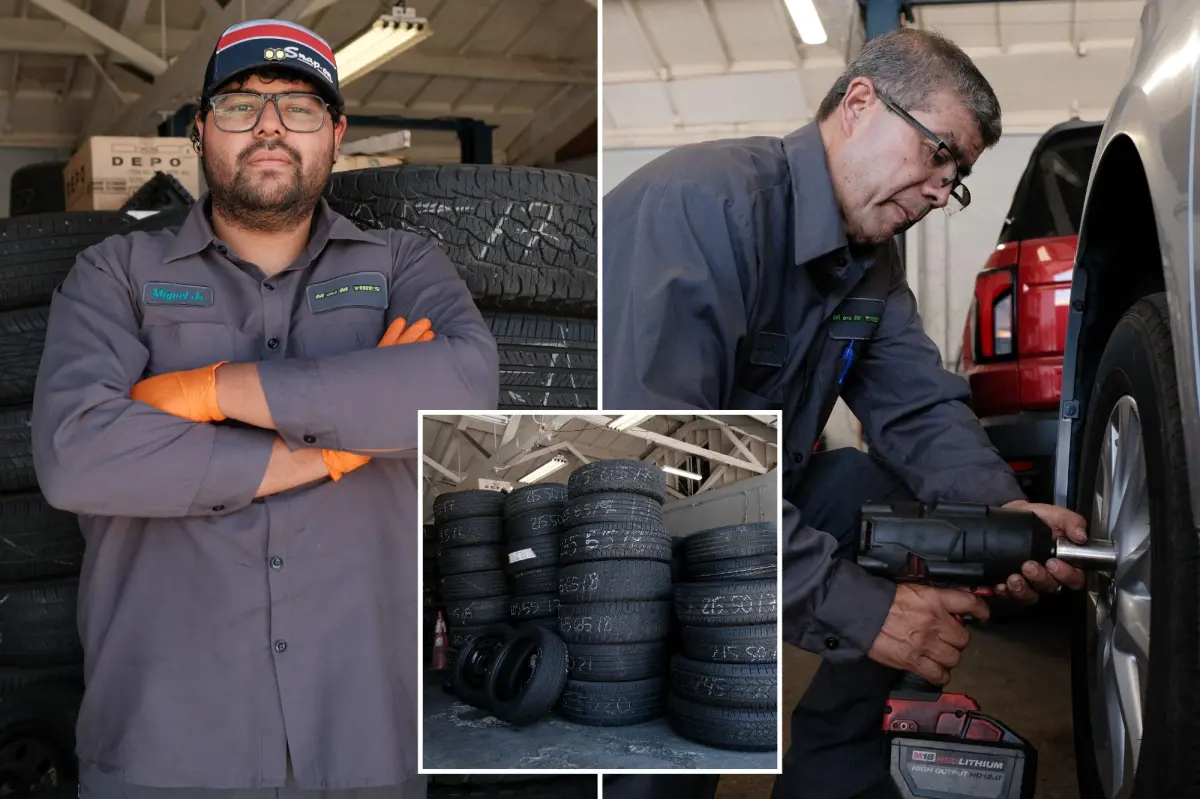
The ripple effects of this policy extend far beyond the individual driver, threatening to destabilize the small, independent businesses that form the backbone of many local communities. Miguel Santana, who has run M and M Tires in Long Beach with his father and sister for fifteen years, represents the face of this struggle. He knows his customer base intimately, and he knows that the vast majority of them are not shopping for premium, high-tech products; they are looking for the cheapest possible way to keep their vehicles safe and legal. “Eighty percent of customers coming in just want the cheapest tires available,” he explained, and he fears that the new price tags will scare them off entirely. Santana predicts a grim future where the higher cost of new, compliant tires will push his customers toward the used-tire market, a workaround that offers immediate relief but carries its own inherent risks and a shorter lifespan. This shift in consumer behavior, he argues, could be a death knell for businesses like his that rely on volume and affordability, creating a void in the market where legitimate, accountable service is replaced by a gray market of used goods, all because the state has priced the new options out of reach for working-class families.
This concern is not just idle speculation from garage owners; it is a formal, documented protest from the highest levels of the tire manufacturing industry. The official objections raise a crucial question about the very basis of the regulation: does the data actually support the promise of consumer savings? Brad Gladfelty of Goodyear articulated this doubt, stating that the industry’s opposition is not a resistance to efficiency itself, but a fundamental challenge to the claim that this rule will be cost-effective for the people it is meant to help. A formal letter sent to the Energy Commission bluntly stated that the record “does not support the conclusion that [the rules] will reduce overall consumer costs.” This perspective is echoed by the U.S. Tire Manufacturers Association, which has pointed out “significant concerns” regarding everything from whether the new tires will even be compatible with existing vehicles to the logistical nightmare of enforcing the standards fairly across the industry. The picture they paint is one of a well-intentioned but potentially flawed policy that has been rushed through without adequate consideration for its real-world consequences, prioritizing a theoretical model over the practical realities of the market and the needs of consumers.
The state, however, remains resolute in its belief that this is a necessary and beneficial step. Governor Gavin Newsom and other proponents have championed the regulations, citing estimates that they will save drivers a staggering $1 billion a year collectively in fuel costs. The logic is simple: tires with lower rolling resistance require less energy to move, thereby improving gas mileage and reducing the frequency of filling up the tank. Under the new phased-in timeline, which begins in 2029 and intensifies in 2033, officials argue that the initial increase in purchase price will be quickly offset by the savings at the pump. Commissioner Nancy Skinner framed the decision as a tool for empowerment, exclaiming that the regulations “can save money for every Californian.” But these rosy projections are met with starkly conflicting data from the industry, which testified that the average price of a single tire could soar from roughly $81 to as much as $157. For a driver needing a full set of four, that represents a potential increase of over $300—a sum that would take years to recoup for a typical commuter, if it is ever recouped at all, particularly for those with older, less fuel-efficient vehicles.
Ultimately, this dispute encapsulates the increasingly difficult trade-offs being forced upon Californians at every turn. The regulation, intended to combat climate change and reduce energy consumption, has become another symbol of the chasm between policy crafted in the state capital and the grim reality of life on the ground. For people like Rance Hamilton, a forklift operator facing the decision, the state’s long-term vision is irrelevant when he is staring at a bill he cannot pay today. He, like many others, has already committed to delaying tire purchases for as long as physically possible and will likely resort to the used market when he can no longer avoid it, a decision born of financial necessity rather than choice. The human cost of this policy is not measured in gallons of gasoline saved, but in the added stress of a car repair that has become a luxury, the fear of a blowout on the freeway from over-worn treads, and the quiet resignation of people like Hamilton who feel that “everything is going to hell.” The new rules may be a policy win for the state’s environmental goals, but on the ground in California, for the drivers and small shop owners who must live with them, it feels like a heavy price to pay for a promise of future savings that may never come, from a government that seems increasingly out of touch with the daily struggles of its constituents.