

For nearly thirty-five years, Matt Hardy has lived and breathed the strange, punishing, intoxicating world of professional wrestling. That kind of longevity is rare in an industry that chews people up, spits them out, and is always looking for the next young body to fill an arena. Hardy knows this in a way that few ever will. He came up in an era before social media, before viral moments could be manufactured, before the backstage geography of professional wrestling included so many federally recognized promotions. He has been a tag team pioneer, a singles star, a broken character, a reinvented icon, and a veteran who somehow remains relevant while others from his generation have long since stepped away. So when a young wrestler asks him for advice, they tend to listen. They listen because Hardy has earned something that no amount of promotional hype can create: credibility. He has felt the bottom and climbed back up. He has been written off, injured, and counted out, and yet he is still here. In a recent interview with Fox News Digital, Hardy shared the core of what he tells young performers who want to make it in the sport. It was not about wrestling moves, social media followings, or getting the right look. It was about something much bigger—a complete and total commitment to the daily grind of the wrestling life. “If you really want to make a career out of wrestling,” he said, “you have to make it a lifestyle.” That sentence, in a nutshell, captures everything that separates the boys from the men and the dreamers from the ones who actually make it.
What does it really mean to make wrestling a lifestyle? It is not a vague mantra. Hardy broke it down in practical, unglamorous terms. You have to exercise a certain way. You have to try to eat a certain way. You have to try to sleep a certain way. You have to get in the habit of working out. You have to get in the habit of knowing everyone and everything that’s going on at every promotion. It sounds almost mundane after the bright lights and screaming crowds, but the truth is that professional wrestling is a job that never stops demanding your attention. The donut you eat after the show, the hour you stay up playing video games instead of resting, the promotion you haven’t taken the time to study, the scout sitting in the back who could be watching you at any moment—all of it matters. Hardy knows that opportunity does not announce itself. It can arrive in a phone call, in a chance encounter, in a random weekend show in a small building where someone important happens to be sitting in the crowd. If you are not prepared, if you are not physically and mentally dialed in, that window closes as quickly as it opened. The modern wrestling landscape is bigger and more complicated than it has ever been. There are huge television companies, independent promotions, emerging territories, and legends of the business popping up in unexpected places. Scouts from WWE, All Elite Wrestling, and TNA are constantly looking for the next person who can carry a brand. But they tend to notice the ones who understand the game off the mat as much as they understand it on the mat. “Timing is everything in pro wrestling,” Hardy explained. You never know when a chance might come from a promotion you are not familiar with, and if you don’t know who they are, if you don’t respect what they do, they might feel disrespected. They might lose interest in you. Being obsessed with the pulse of wrestling, checking the results, learning the names, understanding the backstage politics, is all part of making it a lifestyle.
There is another piece of Hardy’s advice that cuts deeper than schedules and habits. It is the issue of authenticity. In a world where every wrestler is trying to craft a persona, where every performer wants to stand out, it is easy to create a character that is loud, aggressive, and utterly fake. Hardy believes the best characters are the ones that are rooted in something real. “Authenticity is real important, too,” he told Fox News Digital. “If you can find something that you’re doing as a character, as a performer, which seems authentic, which seems something that is relatable to you, you feel comfortable doing, that’ll usually come off the best.” This might seem contradictory in a profession built on scripted rivalries, dramatic promos, and exaggerated personalities. But anyone who has watched wrestling for more than a handful of shows can spot the difference between a wrestler who is playing a role and a wrestler who is revealing a truth about themselves under the bright lights. The crowd may not know exactly why they are reacting, but they feel it. The audience is incredibly sharp when it comes to picking up dishonesty. A wrestler who is pretending to be a monster in the ring, but who is terrified off camera, will eventually be exposed. A wrestler who tries to copy the style of a childhood hero will always be compared to that hero and will always come up short. The only reliable thing a performer can bring to the ring is their own story, their own face, their own inner conflict and hidden strength. Hardy has lived this in his own career. Every version of Matt Hardy that fans have embraced over the years was a version that connected to something genuine in him. The desire to be a hero, the pain of being rejected, the willingness to fight even when the odds are stacked against you—those are not roles. Those are fragments of a real person, and that is why audiences have followed him for three decades. In a business of masks, makeup, and catchy entrance music, authenticity is the most underrated weapon a wrestler can have.
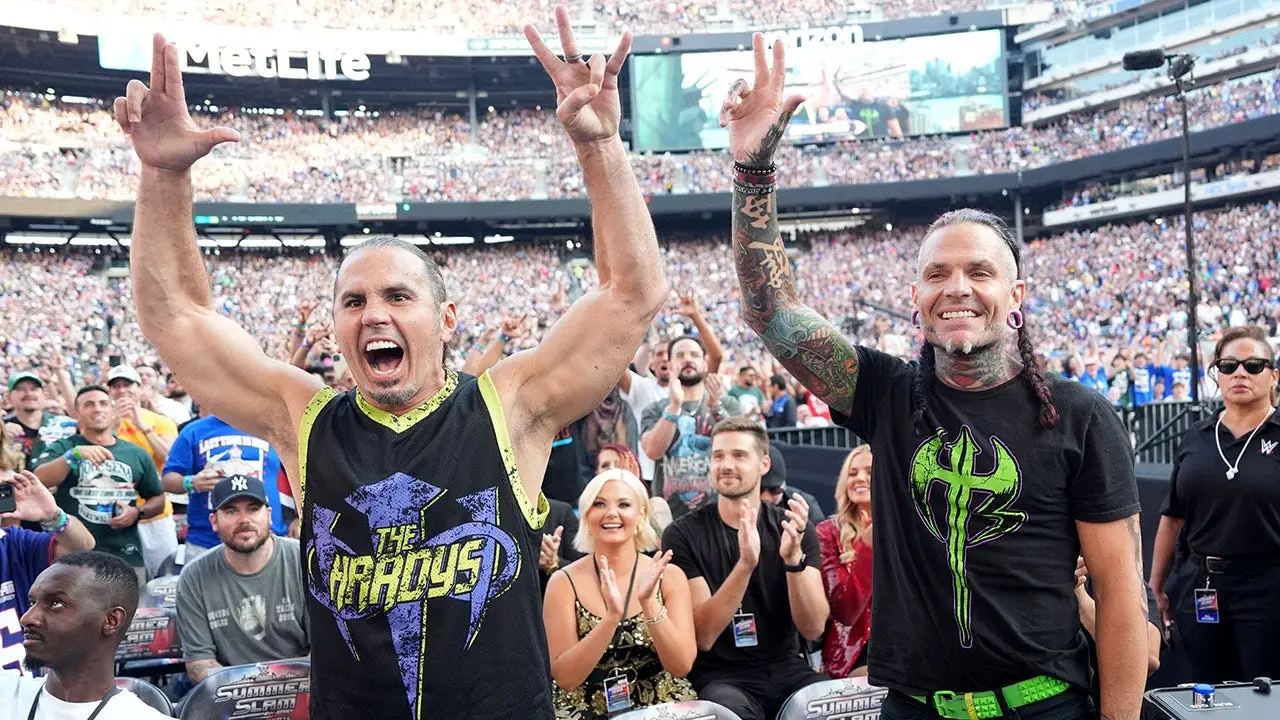
Now, at an age when many athletes are retired and enjoying peaceful lives away from the spotlight, Hardy is still practicing what he preaches. He is not just giving advice to the next generation; he is walking into a steel cage next to his brother and putting his championships on the line. This weekend, Matt and Jeff Hardy will defend the TNA World Tag Team Championship at the Lockdown pay-per-view, facing Nic and Ryan Nemeth. The event will take place at the Credit Union 1 Arena in Chicago, and every match on the card will be contested inside a steel cage. There is something poetic about that image. A steel cage is unforgiving. It makes escape difficult, it amplifies the violence, and it strips away most of the comfortable distances between combatants and spectators. It is a structure that punishes hesitation, and it is exactly where you would expect someone like Matt Hardy to still be willing to compete after all these years. The Hardys have been synonymous with high-risk, high-reward tag team wrestling since the late nineties. They grew up in the industry together, came of age together, and have now returned to prominence together in TNA. Facing them are the Nemeth brothers, with Nic being a familiar face to wrestling fans as a longtime WWE competitor and Ryan bringing his own intensity and skill to the match. This is not just another bout on another pay-per-view. It is a collision of families, of styles, of generations. And for Matt Hardy, it is another opportunity to show that the lifestyle he preaches is not just talk. He still trains, still studies the business, still prepares his body for the punishment of a cage match, because that is what the life demands. There is no pause button. There is no off-season. The belt does not care how old you are, and the cage does not care about your legacy.
There is no denying that Hardy’s advice to young wrestlers contains a lesson that goes far beyond professional wrestling. It is actually a philosophy for anyone chasing any kind of dream. Whether you are trying to be a musician, a writer, an athlete, an entrepreneur, or a plumber with your own business, the same principle applies: you cannot expect to succeed if you treat your passion as an occasional hobby. You have to do something every single day that moves you closer to your goal. You have to develop habits that serve the vision. You have to know the field you are entering, understand the people who have come before you, and be aware of all the different places where opportunity might appear. You have to be willing to sacrifice the easy pleasures that pull you away from your work. And above all, you have to bring a version of yourself that you can actually believe in. Fake words and borrowed confidence might work for a short time, but they rarely survive contact with real pressure. The crowd always knows. The market always knows. The scout always knows. But when you make your craft a lifestyle, when you wake up thinking about it, go to bed thinking about it, and make small decisions throughout the day that support it, something begins to change. The work becomes less of a burden and more of an identity. The struggle becomes less of an obstacle and more of a story. It is not easy to live that way. It is lonely, exhausting, and filled with moments of doubt. But it is the price of admission for anyone who wants to do something remarkable with their life. That is why Hardy’s message is so powerful: the dream only sticks when you decide to live the life, every single day, even when no one is watching.
As the cage comes down in Chicago and the TNA fans lean forward in their seats, Matt Hardy will step into the steel once again, and maybe that is the real final lesson of his advice. This is not a man who is holding on to past glory. This is not someone who is content to tell young wrestlers what to do while hiding behind a desk. Hardy is still out there, still taking the bumps, still sharing a locker room with a new generation, still defending championships and still chasing the thunder of a live crowd. He knows the careers of wrestlers can end in the blink of an eye. He knows that the same body that carries you to greatness can just as easily fail you on a random Tuesday night. But the lifestyle is not about avoiding pain or preserving comfort. It is about honoring the craft, respecting the business, and being prepared for the moment when the door opens. When young wrestlers ask him for the secret, he could easily name a trainer or a school or some piece of inside knowledge that would give them an edge. Instead, he tells them to live it. He tells them to make wrestling their whole world, not because they have to, but because they want to. And he shows them that it can be done, even at an age when most people have already given up the fight. Matt Hardy has been part of professional wrestling for thirty-five years, and he is still relevant not because of luck, but because of choice. Every day, he makes the same choice all over again. He chooses to be a wrestler, not just on Sundays in a pay-per-view cage, but in the quiet hours of the morning, in the gym, in the film room, and in the mind. That is the heart of his advice, and it will outlive any title he ever holds. It is a message that speaks to wrestlers, to dreamers, to anyone who has ever wanted something bad enough to build their whole life around it. In a world full of shortcuts, Matt Hardy still believes in the long road, and he’s still walking it, one day at a time.