

The late afternoon sun hung low over Greenville, South Carolina, casting long, amber shadows across the sprawling suburbs and the quiet thoroughfares where commuters were just beginning their slow crawl home. In a modest apartment complex nestled near the edge of town, life was unfolding in its typical, unremarkable rhythm: children returning from school, parents unloading groceries, and the faint sound of televisions drifting through open windows. But within Unit 204, that rhythm suddenly screeched to a violent halt. A woman in her early fifties, her hair streaked with gray and her hands still gripping a damp dish towel, had crumpled to the floor without a single sound. Her heart, which had faithfully pumped blood for decades, had abruptly stopped, slipping into a chaotic, useless quiver known as ventricular fibrillation. The stillness that followed was punctuated by the shattering cry of a family member who had just entered the room, their world turned upside down in a fraction of a second. Fumbling with panic, they snatched a phone and dialed 911, the universal lifeline in such desperate times. The dispatcher, a vigilant professional working in a cavernous call center miles away, answered on the first ring. She heard the raw, guttural terror in the caller’s voice, the broken sentences, the urgent pleas for help. With practiced precision, she extracted the address—the Greenville apartment complex—and immediately dispatched the nearest emergency units. The tones sounded in the firehouse and EMS station, galvanizing a team of hardened professionals who had no idea what heartbreak and heroism awaited them just minutes into the future. The sirens began to wail, cutting through the evening air, a stark harbinger of the drama unfolding inside those brick walls.
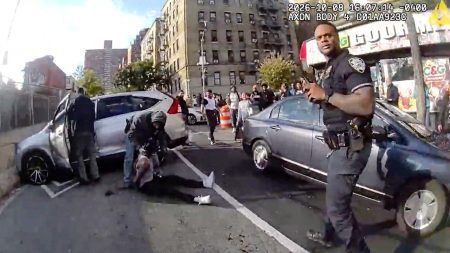
The first responders arrived with the energy of a sudden storm, their emergency lights painting the apartment building in alternating flashes of red and white. A police cruiser pulled up first, its tires screeching against the asphalt, and an officer leaped out, securing the perimeter and guiding the arriving ambulance toward the correct entrance. Paramedics and firefighters, bulky in their gear and heavy with equipment, ascended the narrow stairwell with practiced, urgent strides. The door was ajar, and the frantic family member stood in the doorway, tear-streaked and trembling, pointing toward the living room. There she was, lying motionless on the floor, her skin already taking on a pale, ghostly hue. The lead paramedic, a veteran with twenty years of experience, knelt beside her immediately, checking for a pulse and listening for breath. He found neither. The clock had already started ticking, and the brain, deprived of oxygen, begins to suffer irreversible damage within four to six minutes. There was no time for introductions or reassurance; there was only action. Without a word, the team deployed as a single, synchronized organism. One medic placed a stiff backboard beneath the woman, while another pumped her chest in relentless, rhythmic compressions, pushing down at a rate of one hundred to one hundred twenty per minute, keeping the blood artificially moving through her lifeless heart. The automatic external defibrillator was attached, its voice calmly commanding them to stop compressions while it analyzed the heart’s rhythm. A moment of silence hung in the room, filled only by the beeping of the monitor and the echoing pulse of their own hearts. Then the machine announced, “Shock advised.” The paramedic pressed the button, and the woman’s body jerked involuntarily as a jolt of electricity surged through her chest, desperately trying to reset the electrical chaos within.
The battle against time raged on as the medical team worked with the precision of a finely tuned machine, their movements fluid and silent. The first shock was delivered, but the monitor still showed ventricular fibrillation—the heart still quivering rather than pumping. Compressions resumed immediately, another cycle of chest presses, each one a calculated effort to maintain some semblance of circulation to her vital organs. An intravenous line was established, and a dose of epinephrine was pushed into her veins, a chemical rallying cry designed to constrict blood vessels and direct whatever blood remained toward her brain and heart. A second shock was delivered, and this time, the monitor showed a new rhythm, a weak, irregular pattern that flickered with the potential of life. The lead paramedic held his breath, his hand resting on her carotid artery. He felt it—a faint, thready pulse, a sign of a heart trying to re-engage with the world. “We’ve got a pulse,” he announced, his voice calm but carrying a thread of restrained relief. The frantic chest compressions ceased, replaced by careful monitoring and the administration of oxygen with a bag-valve-mask. The woman, still unconscious, was carefully log-rolled onto a heavy backboard and secured with straps. Every movement was a testament to their training, a blend of brutal force and delicate precision. As they lifted her onto the stretcher, the paramedic noticed the details of her life scattered around the apartment: a pair of reading glasses on the coffee table, a half-finished cup of tea, a framed photograph of a smiling family on holiday. In that moment, she was no longer just a patient, a medical case number in a rush to save a life. She was a mother, a grandmother, a friend—a person whose ordinary afternoon had been violently interrupted. The family member watched with hollow eyes, clutching a coat that hadn’t been worn, as the stretcher was wheeled out the door, down the stairs, and into the back of the waiting ambulance.
Inside the ambulance, the atmosphere was a strange cocktail of controlled urgency and quiet hope. The paramedic continued to monitor the woman’s vital signs, adjusting the oxygen flow and preparing an advanced airway device should she begin to breathe on her own. The sirens blared again as the ambulance tore through the streets of Greenville, past traffic lights and pedestrians who paused to wonder, perhaps, if someone’s life was being forever altered inside those white paneled walls. The paramedic, a man named Marcus, found his mind drifting to the small, mundane moments he had just witnessed in her apartment—the stack of magazines by the sofa, the worn slippers near the door. He had seen death many times, but the fragility of life never ceased to weigh on him. He gently squeezed her hand, not as a medical professional, but as a fellow human being, murmuring, “You’re going to be okay. Hang in there.” There was no response, but the faint pulse in her wrist remained steady. The five-minute ride to the hospital’s emergency department felt like an eternity, each second measured in breaths and heartbeats. Finally, the ambulance pulled into the ambulance bay, its doors thrown open to reveal a waiting team of ER doctors and nurses, ready to take over the next phase of the rescue. The transition was seamless—a flurry of hands, a transfer of report, the handing over of monitors and charts. Marcus handed the chart to the ER physician, his eyes betraying the emotional toll of the call. He lingered for a moment, watching the crash team surround her bed, the universal language of medical expertise swirling around her prostrate form. Then, his shift continued. There were other calls, other patients, other lives teetering on the edge.
But as the hours stretched into the night, the story of that apartment complex in Greenville began to ripple outward. The woman, whose name was eventually relayed as Sarah Jenkins, was stabilized in the ICU, her heart beating on its own once more, though her body remained in a medically induced coma to protect her brain from the after-effects of the arrest. The hospital waiting room filled with her family—a daughter clutching her own children, a husband with gray stubble and tear-stained eyes, a brother who had flown in from out of state. They sat in uncomfortable chairs, trading silent glances, their minds clouded with uncertainty and fear. Meanwhile, Marcus and his partner found a quiet corner in the EMS break room, sipping lukewarm coffee, their faces etched with fatigue. They debriefed quietly, reviewing their actions, questioning if they had done everything right. There was a shared, unspoken understanding that they had done their absolute best, but the outcome was ultimately out of their hands. The local news picked up the brief story—a classic 911, a race against time—but they had no follow-up, unaware of what happened after the trauma bay doors swung shut. In the days that followed, the community whispered about the incident, neighbors sharing hushed words in the hallway of the apartment complex, marveling at the sudden violence of fate and the resilience of those who chase ambulances for a living. The call had been answered, the response had been swift, but the true measure of that afternoon lay in the fragile, beating heart of a woman whose life hung in the balance, a delicate thread between the chaos of the street and the promise of a new dawn.