

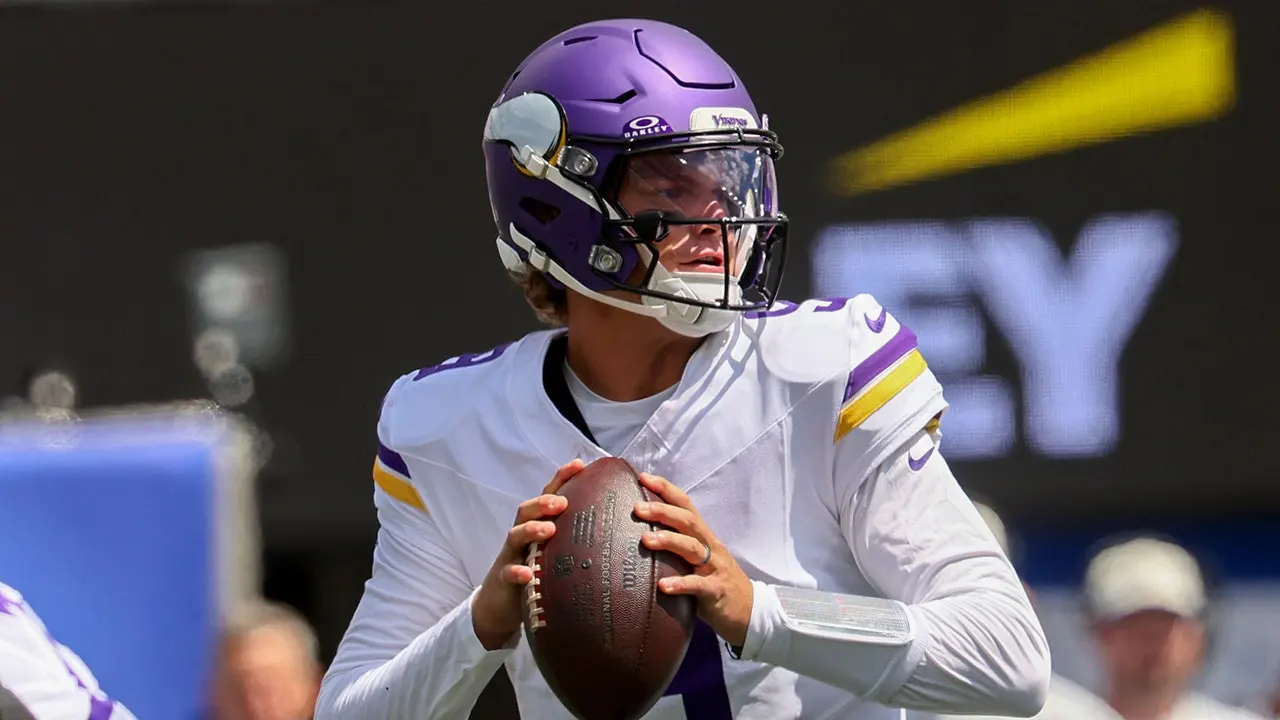
1. The news from Minnesota carried an air of inevitability, yet it still landed with a thud for those who had invested their hopes in a young quarterback’s future. When Kevin O’Connell, the head coach of the Vikings, announced that Kyler Murray would be the starting quarterback for the upcoming season, it felt less like a genuine competition and more like the final chapter of a story that had been written months earlier. J.J. McCarthy, the team’s 2024 first-round draft pick, had been handed the keys to the franchise with all the promise of a national championship pedigree and a top-ten selection. But instead of a steady ascent, his tenure in Minnesota had been a series of fits and starts, marked by a knee injury that wiped out his entire rookie season and a second year that left coaches and front-office executives feeling uneasy. The decision to pivot to Murray, the former No. 1 overall pick of the Arizona Cardinals, was framed as a football move, a matter of performance and trust. Yet, as CBS Sports reported, the calculus went far beyond what happened on the training camp practice field. It was about something deeper, something harder to quantify, something that began to worry people within the organization as early as last summer: a sense that McCarthy was, as one source put it, unpredictable. That word, perhaps more than any statistic, explained the startling speed with which the Vikings made their decision.
2. The uncertainty surrounding McCarthy wasn’t born of a single catastrophic moment. Rather, it was a slow-drip realization that the young quarterback’s daily habits, emotional consistency, and understanding of what the position demands weren’t yet aligned with the expectations of a franchise looking to contend. His rookie season was spent on the sideline, recovering from surgery, watching and learning but unable to translate observation into reps. When he finally took the field in 2025, the rawness was evident. Over ten games, McCarthy completed just 57.6 percent of his passes, throwing for a modest collection of touchdowns against twelve interceptions, a ratio that placed him near the bottom of the league among qualified passers. Minnesota somehow managed a 6-4 record in those games, a testament to a strong running game and a defense that bent but didn’t break, but the quarterback play felt like a ceiling on the team’s potential. Inside the building, doubts grew louder. Some believed that Max Brosmer, an undrafted free agent who had quietly worked his way into the quarterback room, should have been given a chance to start in Week 1. The source’s words to CBS Sports captured the essence of the concern: “A franchise quarterback is supposed to be the stability piece of a franchise, like you know what you’re getting every day. But with J.J., you weren’t sure which version you were going to get. I think he’s just still so young and may not have understood yet what that position fully entails and things like the consistency and day-to-day commitment.” That critique, delivered with an air of sadness rather than malice, painted a picture of a talented but unfinished signal-caller who approached the job with the mindset of a gifted athlete, not yet the obsessive professional the role requires. The Vikings, a proud organization with a passionate fan base, couldn’t afford to wait indefinitely for that maturation to happen. Their decision to enter the quarterback market this past offseason sent a clear signal that the evaluation of McCarthy’s potential had already reached a tipping point.
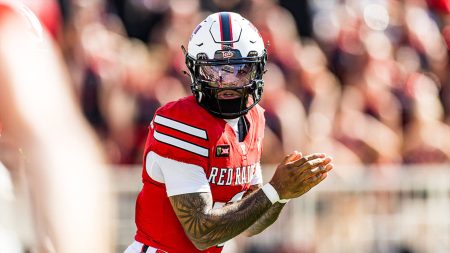
3. The arrival of Kyler Murray changed the dynamics of the entire roster. Murray came to Minnesota with baggage of his own, having left Arizona after a tenure of dazzling highs and frustrating lows, but he also brought a proven resume, dual-threat ability, and the confidence that comes from being a former first overall pick. O’Connell didn’t hesitate. Before the first preseason game against the New York Giants, the Vikings made it official: Murray was their starting quarterback. The preseason opener unfolded as a microcosm of the entire situation. Murray played one series, completed two of three passes, including a clutch third-and-seven strike that kept a scoring drive alive, and looked comfortable running the offense. McCarthy entered later in relief, going four-of-seven for just thirty-four yards before being sacked, a stat line that doesn’t turn heads and rekindled the familiar doubts about whether he can handle the speed of the professional game. Carson Wentz, the veteran backup also competing for a role, outproduced McCarthy in the box score, completing six of eleven passes for fifty-six yards and a touchdown. The numbers alone mattered less than the visual: the quarterback the Vikings had once envisioned as their future was now fighting for meaningful snaps against a former All-Pro and an aging journeyman, while the man who had stolen his job watched approvingly from the sideline. The quarterback room, once promised to be a supportive, competitive environment, instead felt tense. When reporters asked Murray and McCarthy about their dynamic, their responses were wildly different, revealing a strange and awkward coexistence between a confident veteran and a confused young man still trying to find his footing.
4. So what does the future actually hold for J.J. McCarthy? He is only twenty-three years old, still younger than many draft prospects, and capable of learning and growing. But in the unforgiving world of professional football, opportunities are not guaranteed; they must be seized. McCarthy’s career has been defined by scarcity—one national championship at Michigan, a top-ten selection, a lost rookie year, and a ten-game sample size that has left as many questions as answers. There were moments of genuine promise, flashes of arm talent and mobility that made you understand why the Vikings drafted him in the first place. Yet those flashes were too often punctuated by lapses in judgment, missed reads, and throws that made coaches wince. A defensive coach who faced the Vikings this past season told CBS Sports that “he is talented,” but added that McCarthy needs to “learn how to manage a game and not do too much and not do more than what’s required of him.” That is the fundamental challenge for any young quarterback, but it feels magnified in McCarthy’s case because of the stakes. The Vikings now have a new general manager, Nolan Teasley, who was not part of the regime that selected McCarthy. The man who drafted him, Kwesi Adofo-Mensah, was fired in the offseason. In the front office, loyalty is often nonexistent. A new GM inherits a player he didn’t choose, and there is no incentive to keep a backup quarterback at a premium price when the team is built to win now. The injury history further complicates any optimistic projection. McCarthy has simply not played enough football, in college or the pros, to develop the instincts that great quarterbacks rely on. He is running out of time and patience in Minnesota, and in the back of every fan’s mind lingers the possibility that his future lies elsewhere, on a team willing to offer a second chance to a player still searching for his identity.
5. In contrast, Kevin O’Connell has earned the benefit of the doubt. He has a reputation as a quarterback whisperer, a coach who can take a damaged asset and restore its value. The best example, of course, is Sam Darnold. When Darnold arrived in Minnesota in 2024, his career was thought to be all but over, a former first-round pick discarded by the Jets and Panthers. O’Connell, with a brilliant offensive scheme and patient coaching, revived Darnold’s confidence and effectiveness. Darnold played so well that he not only helped the Vikings stay afloat while McCarthy was injured but went on to sign with the Seattle Seahawks and win a Super Bowl this past season. That story arc gives Minnesota fans reason to believe that O’Connell can work the same magic with Murray. Murray has more natural talent than Darnold, and he is still in his prime. If anyone can harness Murray’s unique abilities, refine his decision-making, and create an offense that maximizes his movement and arm strength, it is O’Connell. The hope is not that Murray merely gets back to his old Pro Bowl form, but that he reaches a new level, one that makes the Vikings a legitimate contender. That hope tempered the disappointment of the McCarthy demotion. It allowed the organization to sell the decision not as a surrender, but as an aggressive move to win now. O’Connell knows what works, and he has the credibility to make bold choices without being second-guessed. Still, there is an element of risk. Murray’s temperament has always been a topic of discussion, and if the relationship with the coaching staff or the pressure of a new market becomes overwhelming, the same traits that made him special could make him difficult. But for now, in the glow of a new season, the optimism outweighs the fear.
6. The larger story, though, isn’t about Murray alone; it’s about the unpredictable, often unforgiving nature of a quarterback’s career. J.J. McCarthy sits on the bench, a world of potential locked inside a body that hasn’t yet learned to translate it into consistent professional performance. He must watch, practice, and wait, hoping for an injury, a blowout, or a trade that will give him another chance. He is not the first young quarterback to be humbled by the league, and he won’t be the last. The road to redemption is long and paved with quiet mornings of extra work, subtle changes in footwork, and a deeper understanding of opposing defenses. Perhaps McCarthy will find that version of himself in Minnesota, earning back the trust of his coaches and teammates. Or perhaps his future lies on a different sideline, with a different playbook and a different cast of characters. The Vikings have made clear that their current priority is winning with Kyler Murray, and that is the right decision for a team with Super Bowl aspirations. But football is a sport of second chapters. The same league that discarded Sam Darnold gave him a ring. The same coach who built an offense around Darnold now turns his attention to Murray. And somewhere in the background, a twenty-three-year-old quarterback with a magnetic arm and a heavy heart is still writing his own story. As the season begins, all eyes will be on Murray, the electrifying starter. But the sideline figure in a baseball cap, clipboard in hand, is the one whose future remains most uncertain, and most fascinating, of all.