

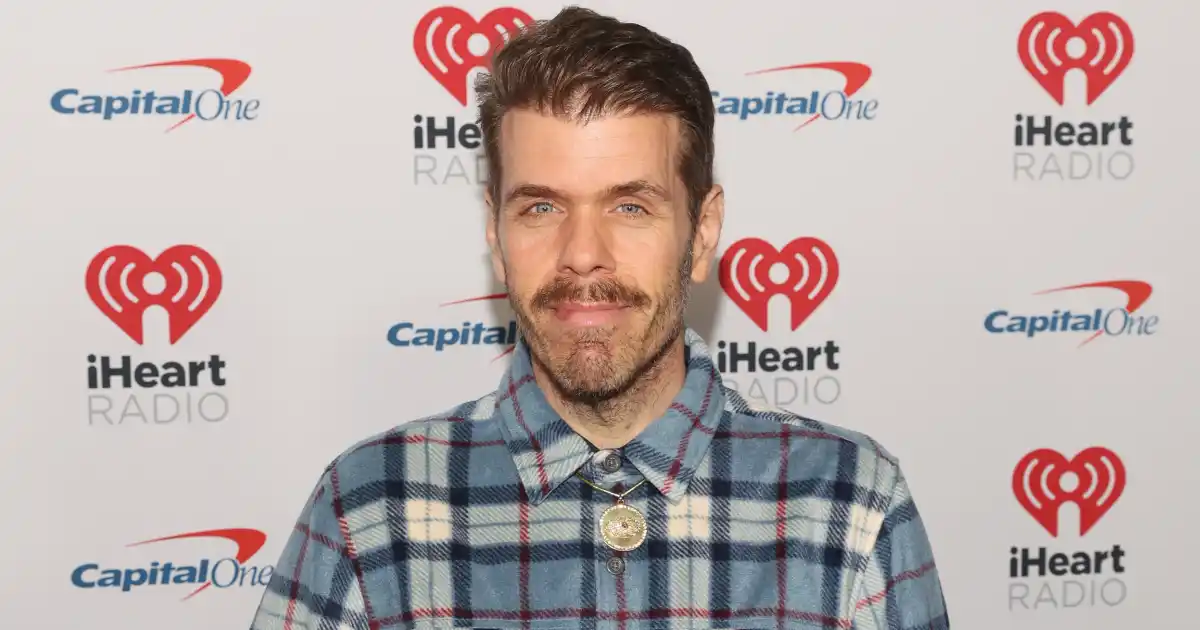
When Barbara Lavandeira picked up the phone to speak with Page Six, she was not preparing to defend a celebrity brand or spin a public relations crisis. She was speaking as a sister, a daughter, an aunt, a woman who had just lived through what she called “one of the darkest days my family and I have ever experienced.” Her brother, Mario Lavandeira—known to the world as Perez Hilton—had been hospitalized after an alarming episode that unfolded live on TikTok, an event that shattered any illusion that his life was just a series of punchlines or provocations. In the aftermath, instead of compassion, Lavandeira watched people flood the internet with mockery, glee, and even the word “karma.” Those comments, she said, were “especially painful.” She did not soften her anger or hide her grief. “I wouldn’t wish what my mother, Mario’s children, or our entire family is experiencing on anyone,” she said. That single sentence cuts through the noise of celebrity gossip and internet outrage to reveal the human cost hiding behind the headlines. There are real people sitting in a hospital waiting room, crying and holding on to hope, while strangers treat their worst moment as entertainment. Barbara’s plea was not for anyone to pretend her brother is blameless or innocent. It was much simpler and much harder: stop punishing the people who love him because of what they think of him.
To understand why the mocking felt so cruel, you have to understand the immensity of Perez Hilton’s cultural footprint. In the early 2000s, he was one of the most visible, feared, and often despised figures in celebrity media. His blog became a phenomenon by taking paparazzi photographs and defacing them with crude doodles, cruel nicknames, and gleefully vicious captions. He built a career out of exposing secrets, mocking appearances, and turning celebrities into punchlines. He was, by his own later admission, someone who caused real harm with his words. For years, he was the internet’s favorite villain, the guy everyone loved to hate, and the rage directed at him was not entirely unfair. But as Barbara pointed out, people are not static. They change. Or at least, they are capable of change. She reminded the public that Hilton had “acknowledged the harm he caused earlier in his career,” a step that requires more honesty than we often see from public figures. He even made a public promise on The Ellen DeGeneres Show in 2010, declaring that he would stop calling people nasty nicknames and stop outing people. It was a moment that could have been dismissed as a retreat, but it was also evidence of an internal reckoning. The man who had once profited from tearing others apart was beginning to see himself in a different light. That doesn’t erase the damage he did, and Barbara was careful not to say it should. But it does make the story more complicated than the simple narrative of “monster finally getting what he deserves.” The internet, though, has a long memory and a merciless appetite. It refused to let him evolve, even when he showed signs of trying.
Barbara’s request was never for total absolution. She made that explicitly clear. “I’m not asking anyone to forget or excuse any of that,” she said. “I also understand that some people will always believe he hasn’t done enough, despite his efforts.” What she asked for was something sharper and harder to grant: a recognition that he had “changed tremendously over the past 20 years and has genuinely tried to become a better person.” In recent years, Hilton told interviewers, including Sean Hannity on his podcast, that he had “tried to” make amends with some of the celebrities he had targeted. One of the names he mentioned was Britney Spears, a woman whose own public breakdowns became a sort of reality television spectacle for a generation of vulturous media consumers. Whether Spears ever accepted his apology, whether any of his apologies were sufficient, is not for the public to decide. But the attempt shows something that many are unwilling to grant: a willingness to confront the wreckage of his own past. Barbara’s argument is not that her brother deserves a trophy for saying sorry. It is that no one should be “reduced forever to the worst things they did in their past,” particularly when they have admitted the harm and genuinely tried to grow. She then pointed to the collateral damage of public hatred. “Whatever anyone thinks about Mario, his children and our mother are innocent,” she said. “They shouldn’t be punished or tormented because of how people feel about him.” It is a profound reminder that every public figure is surrounded by private lives, and those lives are not fair game. His children did not write the blog posts. His mother did not draw the doodles. And yet they are the ones now suffering alongside him, trying to comfort a man whose life was nearly lost, all while watching strangers cheer from the sidelines.
The event that brought all of this into focus was terrifyingly public. Earlier this month, Hilton appeared to engage in self-harm behavior during a TikTok livestream. Viewers saw something deeply disturbing happening in real time, and calls flooded emergency services. Dispatch audio obtained by Page Six painted a bleak picture: first responders were called to his home in Miami for an alleged suicide attempt. The Miami-Dade Sheriff’s Office confirmed that deputies received multiple calls about an individual live-streaming acts of self-harm on social media. They quickly located his residence, spoke with family members at the scene, and confirmed that he was alone inside. The sheriff’s office also described a delicate, humane approach, one that is rarely celebrated in the media: “In many incidents involving a person experiencing a mental health crisis or actively harming themselves, deputies prioritize deescalation by creating time, distance and opportunities for communication.” They eventually tactfully disengaged while continuing to monitor the situation. Imagine that for a moment. A man who spent his career broadcasting others’ secrets was now broadcasting his own destruction, and the only thing authorities could do was try to bring him back gently, with patience and time. Barbara was the one who called for help. She made the decision to turn her brother’s crisis over to strangers, hoping they could save him. And she did it while fully aware that the same internet that had once worshipped his cruelty now had front-row seats to his unraveling. There is no preparation for a moment like that. There is no script for watching a sibling disappear into their own pain in full view of the world.
Now, Hilton remains hospitalized, continuing to receive medical treatment for his injuries. The road ahead, Barbara said, is long. “His physical and mental recovery is going to take a lot of time, but we remain hopeful,” she said. He has no access to a cell phone, no social media, no internet. For someone whose entire identity was once tied to being online, that separation might seem harsh, but in this context, it is a lifeline. It is a way to let the noise recede, to let him exist as Mario rather than Perez, to let him recover in a space where the only voices are those of doctors and family members. Barbara did not offer a timeline. She did not offer embarrassing details or dramatic updates. She simply asked that everyone focus on what matters: helping him recover physically and making sure he receives the mental and emotional care and support he needs. It is a plea for privacy, but also for patience. Mental health crises are not linear. Healing is not a clean line from broken to fixed. It is a slow, messy, frustrating process, often full of setbacks. And it is made infinitely harder when the person suffering is being observed, judged, and ridiculed by millions. Calling a suicide attempt “karma” is not just cruel. It is dangerous. It sends a message that people in crisis are being punished for their pasts, that there is no way back, that nobody will mourn them. That kind of cultural mockery does not just affect one person; it seeps into the consciousness of everyone who is struggling, convincing them that if they break down, the world will only laugh.
Ultimately, this story is bigger than Perez Hilton. It is about a fundamental choice we make as individuals and as a culture: whether we are willing to allow people to change, or whether we insist on trapping them forever in their worst mistakes. Barbara Lavandeira is not asking anyone to crown her brother a saint. She is asking people to remember that human beings are not single moments, not one-line summaries, not the sum of their worst decisions. She is asking the public to consider that the comments they type, the jokes they make, and the satisfaction they feel when a hated figure collapses land on real ears—ears that belong not just to Mario, but to his children, his mother, and everyone who loves him. “I don’t believe someone should be reduced forever to the worst things they did in their past,” she said. That is not a denial of accountability; it is a demand for nuance. It is a belief in the possibility of growth, even when the world refuses to see it. As her brother fights for his life and his sanity in a hospital room, the rest of us are left with a choice. We can continue to throw stones at someone who is already drowning, or we can remember that every person is more than the role they played in some long-ago culture war. If you or someone you know is struggling or in crisis, help is available. Call or text 988 or chat at 988lifeline.org. That is not just a formal sign-off. It is a quiet act of resistance against the cruelty that treats suffering as entertainment and calls it justice. Barbara’s plea is simple: let her brother heal. Let his family grieve. And let the rest of us look inward, wondering why we are so eager to watch someone break instead of asking how we might help them stand back up.