

Every life begins with a heartbeat, and for one tiny Texas newborn, that heartbeat is fragile, determined, and now at the center of a national controversy. Baby Gabriel entered the world on Wednesday, not surrounded by the family his biological parents had originally imagined, but under the bright lights of a neonatal intensive care unit in Dallas, where doctors are weighing how to treat a devastating heart condition. Gabriel was born with hypoplastic left heart syndrome, a congenital defect in which the left side of the heart is severely underdeveloped and unable to pump blood effectively. Without immediate, specialized surgery, the condition is almost certainly fatal. The NICU is a world of monitors, tubes, and hushed voices, where every breath is measured and every moment feels uncertain. But the battle over Gabriel’s fate did not begin in the delivery room. It began around the twentieth week of pregnancy, when an ultrasound revealed the diagnosis and his biological parents reportedly asked the surrogate carrying him, McKenna West, to terminate her pregnancy. West refused. She refused to end the life of a child she had already come to love, and in a bold act of conscience, she left her home and traveled to Texas, where laws and officials are fiercely protective of unborn life. There, West gave birth to Gabriel, placing him in the care of medical professionals while also fighting for his right to receive the same treatment any other infant would get. Now the Trump administration has stepped into the battle, warning two prestigious medical institutions that federal disability civil rights laws do not permit hospitals to withhold treatment from a child simply because he has a serious disability. It is a story about law, medicine, and disability, but at its heart, it is a story about one small human being and the extraordinary lengths some are willing to go to protect him.
The Department of Health and Human Services’ Office for Civil Rights is not staying silent. On Thursday, the agency confirmed it is sending a letter to Children’s Medical Center of Dallas and UT Southwestern Medical Center, outlining their legal obligations under federal disability civil rights laws. In clear and unmistakable terms, the letter explains that hospitals cannot base medical decisions on a person’s disability, including a judgment that a life with a disability has less value or that the individual would impose a burden on others. Those protections apply to life-sustaining treatment, the agency says, meaning doctors cannot make a unilateral decision to withhold or withdraw care because Gabriel’s condition is severe or his prognosis uncertain. Instead, HHS is urging the hospitals to seek review by an infant care committee if doctors are considering withholding or withdrawing medically indicated treatment, and to continue life-sustaining care during the review process. This is not just bureaucratic language. It is a warning that federal law is watching. The letter effectively tells the hospitals that whatever they decide must be based on legitimate medical evidence and the child’s best interests, not on arbitrary judgments about quality of life. It also reminds them that the federal government has both the authority and the will to intervene when the rights of a person with a disability are threatened. For a newborn who cannot advocate for himself, that legal protection can mean the difference between life and death. The federal intervention adds a powerful new layer to a case that already had state officials involved. It also signals that the Trump administration views this as a civil rights issue, not just a medical dispute. The message is simple: a baby with a congenital heart defect is not a lesser life, and institutions receiving federal funds cannot treat him as if he were. While the hospitals have not publicly responded, the letter places them on notice, and the entire country is watching what they do next.
To understand what is at stake, it helps to understand Gabriel’s medical condition. Hypoplastic left heart syndrome is one of the most complex congenital heart defects a newborn can face. The left side of the heart, including the left ventricle, aorta, and mitral valve, fails to form properly, leaving the right side of the heart to try to do the work of both sides. In some cases, the condition is detected during pregnancy, which is exactly what happened with Gabriel. Around twenty weeks into the pregnancy, the diagnosis was made, and that is when things became tragic. According to Texas Attorney General Ken Paxton’s office, the biological parents asked West to have an abortion. She refused. Paxton’s office then acted, notifying UT Southwestern Medical Center and Children’s Medical Center of Dallas that they had legal obligations to provide Gabriel with medically necessary, life-saving care upon birth. Paxton later secured a court order aimed at ensuring the baby received that care. He called the court’s decision “the right decision in immediately acting to protect baby Gabriel’s life and ensure he receives the care he deserves.” His office promised to use every tool available to protect the newborn, adding, “Every child in our state deserves to be cared for and protected.” For Texas officials, Gabriel’s case is not just a medical matter; it is a defense of the state’s commitment to protecting life. But the legal and ethical landscape is not simple. Hospitals must navigate federal requirements, state laws, medical standards, and the preferences of the family. In this case, the intended parents and the surrogate are at odds, and the state has effectively stepped in to represent the child’s interests. What makes the case even more striking is that the federal government is now pushing from the same direction, ensuring that disability is not used as a reason to deny care. For Gabriel, every legal brief and court hearing is a reminder that his life is being decided not just by doctors, but by judges, regulators, and advocates.
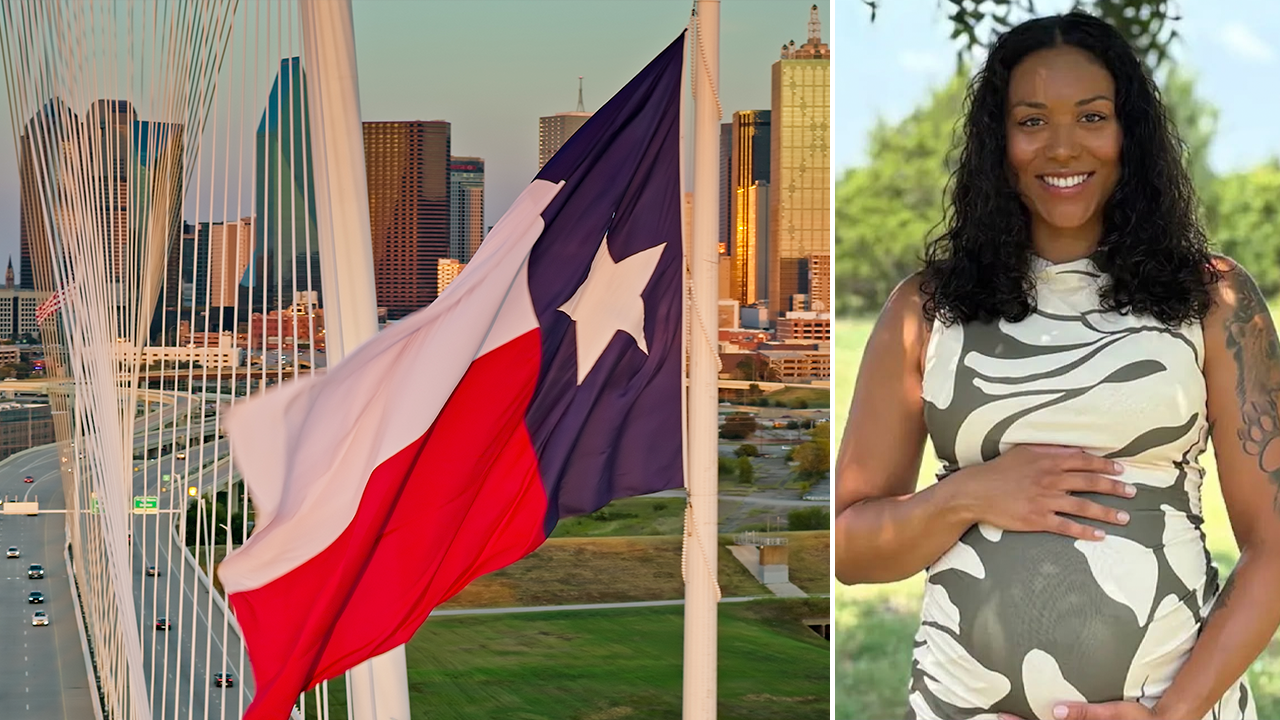
At the center of this case is a surrogate mother whose decision has transformed her from an anonymous woman into what many are calling a hero. McKenna West agreed to carry a child for another family, but when Gabriel was diagnosed with a serious heart defect, she refused to follow their instructions to end the pregnancy. Instead, she sought a place where her child could be born and protected. She traveled to Texas, gave birth, and now, through her attorneys at Alliance Defending Freedom, she is fighting to ensure Gabriel receives the surgery he needs. Andrew Kolvet, a spokesman for Turning Point USA, called West a hero on social media, writing that she “saved this baby’s life” and expressing hope that she will ultimately be able to keep Gabriel. Alliance Defending Freedom celebrated the court order requiring Gabriel to receive surgery, with senior counsel Erik Baptist praising West’s “courageous stand” and saying “every child deserves a chance at life.” Pro-life group Live Action also praised West for resisting pressure to abort Gabriel, but warned that the fight is not over. The group expressed concern that a court order is preventing West from having contact with the newborn, saying Gabriel needs the comfort of the only mother he has ever known. That poignant detail captures the deep human dimension of this case. West carried Gabriel for months, felt his movements, knew his condition, and still chose to give him life. Now she watches from a distance as doctors and lawyers argue over his future. For her, Gabriel is not an abstract symbol in a political debate. He is a real baby, with a heartbeat and a personality, whose needs should be the priority. The outpouring of support from conservative and pro-life advocates reflects a broader belief that every child, no matter how severe their disability, has inherent worth. Whether West will be allowed to keep Gabriel, or whether the biological parents retain parental rights, remains unresolved. But for now, her action has placed her at the heart of a national movement that sees her as a defender of the defenseless.
The federal action is the latest in a series of interventions that have made Gabriel’s case a national flashpoint. The Department of Health and Human Services said it is monitoring the situation and offering technical assistance to the hospitals as they determine Gabriel’s care. The letter explicitly warns that doctors cannot withhold or withdraw medically indicated treatment based on a determination that a disabled child’s life would be too hard, too costly, or too burdensome. It also makes clear that life-sustaining treatment should continue while any review is underway. This matters because parents, doctors, and hospitals sometimes face agonizing decisions involving newborns with severe conditions. But HHS is drawing a line: a disability cannot be the sole justification for letting a child die. The hospitals, for their part, have not issued public statements. Fox News Digital reached out to Children’s Medical Center of Dallas and UT Southwestern Medical Center for comment, but as of the time of reporting, no response was included. Meanwhile, Texas Attorney General Ken Paxton remains adamant. He has said, “Baby Gabriel deserves a chance at life, and I will not allow anyone to unlawfully deny him medically necessary care.” He also emphasized that his office will use every tool available to protect innocent lives and ensure that every child receives the care required under Texas law. That strong language, combined with federal enforcement, sends a clear signal to hospitals that they are being watched. For families of children with disabilities, this case resonates deeply. They know the fear that a medical system might see their child as less worthy of care. They know the pressure to justify a life that looks different from what society expects. Gabriel’s story, in many ways, has become their story. And the legal protections being asserted here are about more than one baby: they are about recognizing that every human life, no matter how medically fragile, has dignity.
As the legal arguments continue and the world watches, one truth remains: baby Gabriel is a tiny, vulnerable human being who deserves a chance. He has already survived a journey that none of us would wish on anyone. He was diagnosed in the womb, fought to be born, and now lies in a hospital bed with a heart that was not formed perfectly. But because of a surrogate mother who refused to give up on him, because of state and federal officials who stepped in, and because of advocates who believe in the value of every life, Gabriel is being given the opportunity to live. The road ahead will be difficult. Hypoplastic left heart syndrome requires complex surgeries, often one shortly after birth, then more procedures as the child grows. There will be hospitalizations, uncertain outcomes, and no guarantee of a long or easy life. But the same is true for many children, and no one would argue that they should be left to die without care. Gabriel’s case forces all of us to examine our own beliefs about disability, medical ethics, and what it means to be human. Do we measure a life by its abilities, its independence, its perceived usefulness to society? Or do we measure it by the simple fact that it exists, that it is loved, and that it has value? For McKenna West, the answer has never been in doubt. She refused to be silenced. She refused to let a diagnosis define a child’s worth. And in doing so, she has sparked a movement of support that spans courts, government agencies, and the hearts of countless strangers. The hospitals caring for Gabriel now have an extraordinary responsibility. They must treat him not as a legal problem or a symbol in a political war, but as a patient with a name, a face, and a future. Federal law is clear, and so is the message from Texas: disability is not a death sentence. As the doctors meet, as the committees deliberate, and as the lawyers prepare for the next round, one hope remains—that Gabriel will receive the care he needs and the love he has already been shown. Every life begins with a heartbeat. This is one beat that the world is determined to protect.