


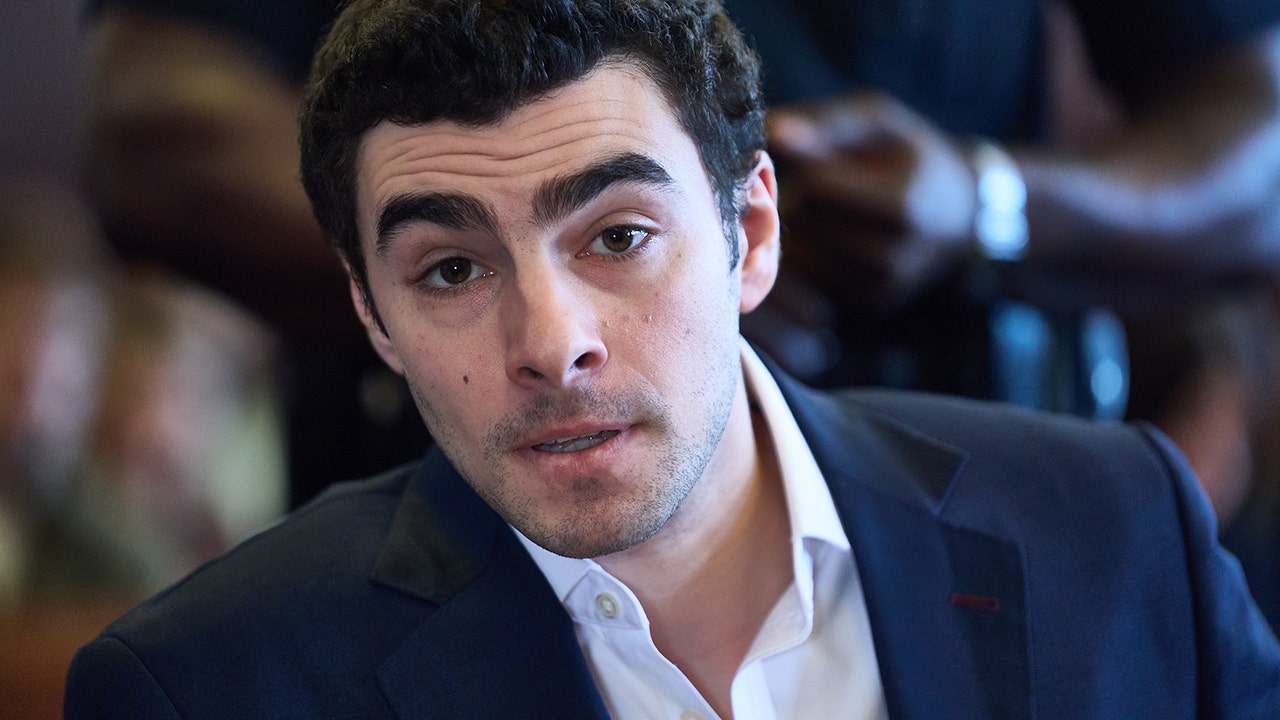
The fluorescent lights of the federal courthouse in Lower Manhattan hum with a nervous, electric energy that Friday morning, a stark contrast to the cold, calculated silence of a December street corner that started it all. The air is thick with unspoken questions as reporters, legal analysts, and a somber public await the arrival of 28-year-old Luigi Mangione. This is not the expected procedural step in a sprawling, multi-jurisdictional legal saga; this is a seismic, breath-catching pivot. According to reports from the New York Post and The New York Times, the accused assassin of UnitedHealthcare CEO Brian Thompson is expected to step before a federal judge and plead guilty to the stalking charges against him—a dramatic reversal from his steadfast “not guilty” pleas across both state and federal courts. The surprise pretrial conference throws the entire legal landscape into disarray, threatening to upend the meticulously planned state-level murder trial slated to begin jury selection on September 8th. For a case that has gripped the nation, splitting public opinion between those who see a cold-blooded killer and those who have bizarrely elevated him to a folk hero, this sudden willingness to accept culpability in the federal arena sends shockwaves through every corner of the American justice system.
To understand the gravity of this moment, one must rewind to the frostbitten morning of December 4, 2024. The iconic Hilton Hotel in Midtown Manhattan was preparing for a major investors’ conference, and Brian Thompson, the 50-year-old father of two and CEO of the nation’s largest health insurer, was walking its familiar sidewalks, a short stroll from his own hotel to the venue. Then, a figure in a hoodie emerged from the shadows, approaching from behind with a deliberate, unwavering gait. Surveillance footage captured the harrowing sequence: the raising of a silenced handgun, the flash, the two shots that found Thompson’s back, and the panicked scramble of onlookers before the gunman fled on a bicycle, disappearing into the vast urban maze of Central Park. For five days, the manhunt consumed the nation. It wasn’t law enforcement’s meticulous detective work that broke the case, but the sharp eye of a McDonald’s employee in Altoona, Pennsylvania, who recognized the suspected killer from released photos. There, police arrested the scion of a prominent Maryland family, a University of Pennsylvania graduate with a master’s degree, carrying a backpack containing a 3D-printed pistol, a silencer, and a spiral notebook filled with anti-corporate, anti-healthcare-industry vitriol. The arrest catapulted a story about a tragic executive’s death into a cultural lightning rod, igniting a divisive debate about corporate greed, healthcare denial, and vigilante justice.
The legal labyrinth that followed has been a masterclass in American jurisprudence, featuring a dizzying dual-track prosecution that pits the sovereignty of New York State against the power of the federal government. In state court, Mangione faced a litany of charges, including first-degree murder in furtherance of terrorism—a charge that carries the ultimate societal condemnation. Simultaneously, federal prosecutors unsealed their own indictment, charging him with stalking, firearms offenses, and a murder-for-hire count, a move that immediately raised the specter of the death penalty. Yet, the defense team has proven to be a formidable chess adversary. They successfully leveraged legal technicalities and constitutional nuances to strip away the most draconian punishments. In a significant victory, the federal judge dismissed the murder-for-hire count, which simultaneously eliminated the threat of capital punishment. Shortly thereafter, the state judge dismissed the terrorism enhancement, ruling that prosecution had failed to prove the requisite intent to coerce or intimidate a civilian population. These rulings were lifelines—removing the existential threat of execution and downgrading the potential for life-without-parole in the state case. The legal reality became starkly bifurcated: he now faced a maximum of life in a federal prison (though likely less) and a maximum of 25 years to life in state prison, where he could theoretically see parole. The strategy seemed to be a slow, grinding war of attrition. But with Friday’s potential guilty plea in the federal stalking case, that strategy has been violently thrown into the trash compactor, replaced by a calculated calculation of risk versus reward.
The reported plea is baffling to many outside observers, but legal experts see a cold, strategic calculus beneath the surface. By pleading guilty to the federal stalking counts, Mangione would accept a certain prison term in the federal system, but what does he gain? For one, a federal plea bypasses the unpredictable volatility of a jury trial in New York City, where the intense media scrutiny and polarized public sentiment could produce a hung jury—or worse, a conviction on all counts with a massive sentence. A plea deal often comes with a specific, agreed-upon sentencing recommendation, or at least the removal of top-end sentencing enhancements. As renowned Chicago criminal defense attorney and Fox News contributor Donna Rotunno points out, “Rarely somebody with no background, who’s educated, gets the maximum sentences.” The system often views defendants with a stable upbringing and educational pedigree with a certain degree of leniency. By taking a plea, Mangione likely secures a “floor” for his punishment, avoiding a theoretical maximum life sentence in a federal facility. Furthermore, pleading guilty federally may create a strategic vector for delaying—or perhaps erasing—the state trial. The constitutional principle against double jeopardy doesn’t strictly apply between different sovereigns (state and federal), but the political and practical realities of a state prosecutor bringing a case against a man who has already accepted responsibility in federal court often lead to negotiations, reductions, or even dismissal. The immediate practical effect, however, is a logistical nightmare for the state court. Jury selection was scheduled to begin in just weeks. A shifting plea in another jurisdiction injects chaos into that timeline, almost certainly guaranteeing a continuance, much to the chagrin of the victims’ families who crave closure.
Humanizing the man behind the headlines requires peering beyond the chilling criminal charges and into the upbringing of a perfect student with a bright future. Luigi Mangione grew up in Towson, Maryland, in a prominent, affluent Italian-American family known for their real estate and media holdings. He was a valedictorian, a Phi Beta Kappa sociology major at Penn, and later earned a master’s in computer and information science from the Ivy League institution. Friends describe a charismatic, athletic, and intellectually curious young man who seemed to have the world at his feet. But a painful series of personal struggles—a severe back condition that required spinal surgery, chronic pain, and a growing sense of alienation from a healthcare system he saw as indifferent to suffering—began to twist his worldview. The spiral notebook found at his arrest painted a portrait of radicalization, detailing a manifesto that justified violence as a “necessary evil” to dismantle corporate oppression. This psychological trajectory has fascinated the public, leading to an unsettling media phenomenon where portions of the internet, bitter over healthcare denials, lionized the alleged killer, raising money for his defense and chanting his name outside the courthouse. For the bereaved family of Brian Thompson—a dedicated husband and father—this public glorification is a secondary wound, compounding their grief with a sense of societal sickening. Mangione, the Ivy League golden boy, now embodies a chilling duality: the brilliant mind who fell into a pit of nihilistic rage, and the cold, calculating defendant who is now using those same intellectual faculties to navigate the treacherous waters of the criminal justice system.
As the Friday hearing approaches, the focus shifts from the suspense of the confession to the shattered timeline of the upcoming state trial. If Mangione accepts the guilty plea in federal court, he will immediately face a sentencing hearing in that court, likely resulting in a multi-year or decades-long federal prison sentence. The state of New York will then be left holding the proverbial bag. Manhattan District Attorney Alvin Bragg’s office will face intense pressure to justify its own massive expenditure of resources on a trial for a man who is already guaranteed incarceration. Would a lengthy federal sentence satisfy the demands of justice for the murder of Thompson, negating the need for a parallel state trial? Or will the families demand that the state case proceed to judgment, ensuring that Mangione faces the specific charge of murder, not just stalking semantics? Legal analysts suggest the likely outcome will be a negotiated settlement between the state and federal authorities—perhaps a plea agreement on the state murder charge in exchange for a concurrent sentence, or a complete dismissal of the state charges contingent upon the federal sentence. Either way, the clock has started on a new phase of legal poker. The surprise plea is not just a confession of guilt; it is a strategic bow, a move designed to control the endgame, to eliminate variables, and to dictate the narrative of his own punishment. For the public watching the spectacle unfold, it represents a farewell to the dramatic courtroom battles, the forensic arguments, and the emotional victim impact statements that a trial would have promised.
Ultimately, this is a story about consequences, viewed through the prisms of two grieving families and a fractured nation. For the family of Brian Thompson, the news of a federal plea brings a mix of bitter relief—an acknowledgment of guilt—and a profound sadness that they may never see a full accounting of the events from a witness stand. They have lived through a year of legal gymnastics, watching the man accused of executing their husband and father use the system to his advantage. For Mangione’s family, there is the anguish of watching a beloved son, once destined for success, accept a lifetime of imprisonment. And for the rest of us, the plea crystallizes the unnerving reality of a modern tragedy. It highlights the terrifying ease with which a disgruntled individual can legally acquire the components of a ghost gun and execute a high-profile CEO in broad daylight, and it exposes the chilling culture of online radicalization that can transform a personal grievance into a public spectacle of violence. As the judge calls the docket number on Friday and Mangione utters the word “guilty,” a chapter will close. Yet, the deeper questions remain unresolved: Will the state trial proceed? What does true justice look like when the lawyers are done, and the cameras turn away? The guilty plea, humanized, is the final, desperate act of a man trying to take control of his fate, even as he surrenders his freedom—leaving the families, and the country, to ponder the hollow echo of that one-word admission.