


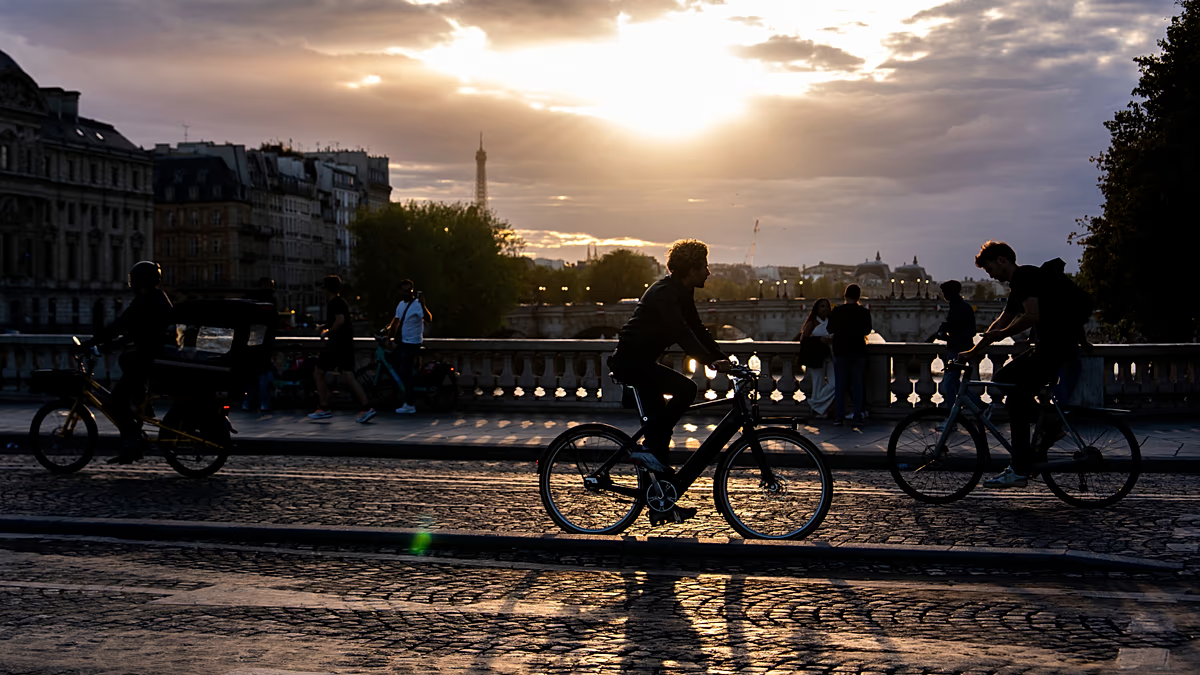
Paris, the City of Light, has undergone a remarkable metamorphosis in recent years, spinning its way into the hearts of travelers as the undisputed world capital of cycling. This two-wheeled revolution has fundamentally altered the tourist experience, offering a fresh, intimate, and exhilarating perspective on the city’s iconic landmarks. No longer are visitors confined to the crowded sidewalks or the stuffy interiors of tour buses; instead, they are invited to take to the dedicated bike lanes that now crisscross the capital, transforming a simple commute into an unforgettable journey through history and beauty. The very rhythm of the city seems to have changed, from the impatient honking of traffic to the gentle, melodic chime of bicycle bells, creating a new soundtrack for exploration that resonates with both first-time visitors and seasoned Parisians alike.
This shift has been dramatic and tangible. Last June alone, the city welcomed around 3.8 million tourists, a 3% increase from the same period the previous year, and with this surge in visitors has come a corresponding surge in the popularity of pedal-powered exploration. The bicycle has emerged as the preferred mode of transport for a growing number of travelers, who find it a liberating and efficient way to navigate the sprawling metropolis. The appeal is multifaceted: it offers the freedom to cover more ground than on foot, the fresh air and engagement with the environment that a bus or metro simply cannot provide, and a sense of adventure that turns sightseeing into an active, participatory experience. As visitor numbers climb, so too does the demand for two-wheeled adventures, with rental shops and guided tour companies proliferating to meet the needs of this new wave of eco-conscious and experience-hungry tourists. The city has truly embraced its new identity, fostering an environment where the bicycle is not just an afterthought, but a central pillar of its tourism strategy.
The charm of exploring Paris by bike lies in the unique sense of freedom and connection it fosters, allowing tourists to truly absorb the atmosphere of the city rather than merely passing through it. The cycling infrastructure is not just about getting from point A to point B; it is about the journey itself, the feeling of the wind in your hair as you glide past the majestic Notre-Dame cathedral, the breeze off the Seine as you pedal towards the Eiffel Tower, and the spontaneous discoveries to be made around every corner. For Jean-Baptiste Blondiaux, a passionate bike guide, this is the most compelling reason to choose two wheels. “In ten minutes by bike, you can see two different monuments. On foot, that’s impossible,” he explains, highlighting the efficiency that allows visitors to maximize their time. “You can see a lot more in Paris, I think. And you can see the city, the people walking and lots of things between stops.” It is this connection to the living, breathing city—the everyday scenes of Parisian life unfolding between the grand monuments—that makes cycling so profoundly interesting and rewarding. It is a way to witness the city’s soul, not just its postcard-perfect facade.
For many visitors, particularly those with limited time, the bicycle is the perfect solution to the overwhelming question of how to see it all. The Buss family, from the United States, found this to be true during their whirlwind 12-day trip across Europe. After a week in Tenerife, they arrived in Paris, eager to soak in as much as possible. With three children aged 22, 18, and 16, they opted for a three-hour guided bike tour, a decision that proved to be a highlight of their entire journey. “It feels good just to be in the moment,” said Jamie Buss, reflecting on the experience. “And you can come back later and look at things a second time and have a bit more time to absorb the history and the culture of it all.” Her husband, Mike, echoed the sentiment, praising the tour for making the vast amount of Parisian history accessible and enjoyable. “It’s an excellent way to discover the city. It’s hard to take everything in. But with JB’s explanations and the fact that we’re outdoors while doing all this, it’s wonderful.” The tour allowed them to feel the pulse of the city while learning its stories, a combination that creates lasting memories.
To meet this expanding demand, a vibrant ecosystem of cycling services has blossomed throughout Paris, offering everything from comprehensive guided excursions to casual bike rentals. These companies, many of which have sprung up in recent years, provide curated experiences that promise to cover the highlights without the exhaustion of walking. For Michaël Tosello, who runs his own guided bike tour business, this surge in popularity is a direct result of the changing mindset that followed the COVID-19 pandemic. “Since Covid, cycling in Paris has really taken off,” he observes. “Many more people want to go on bike tours and hire bikes. It has become a hugely popular way of discovering the city.” The appeal has also expanded beyond the city limits, with the creation of extensive cycle paths that now link Paris to other major destinations like London, Mont-Saint-Michel, and Spain via the Scandibérique route. This has transformed Paris into a major hub for long-distance cycling tourism, attracting a new breed of adventurer looking to explore the wider region on two wheels.
Today, the capital’s dedication to soft mobility is undeniable, with over 1,000 kilometers of cycle lanes making it safer and easier than ever to navigate by bike. Yet the city’s ambition does not stop there; the long-term vision is to expand this network to around 1,500 kilometers, weaving an even more comprehensive web of infrastructure that will make the city more accessible and environmentally friendly. This forward-thinking approach signals a permanent, lasting change in the city’s fabric. Paris has not just dipped its toe into the cycling pool; it has dived in headfirst, committing to a future where the bicycle is not a novelty, but a cornerstone of urban life. This policy has not only benefited tourists but has also improved the quality of life for Parisians, reducing traffic congestion and air pollution while creating greener, more pedestrian-friendly public spaces. The result is a city that is more beautiful, more liveable, and more enchanting to explore, one revolution at a time. As the world looks for more sustainable and meaningful ways to travel, Paris has positioned itself not just as a leader, but as an inspiring global model for the future of urban tourism.