


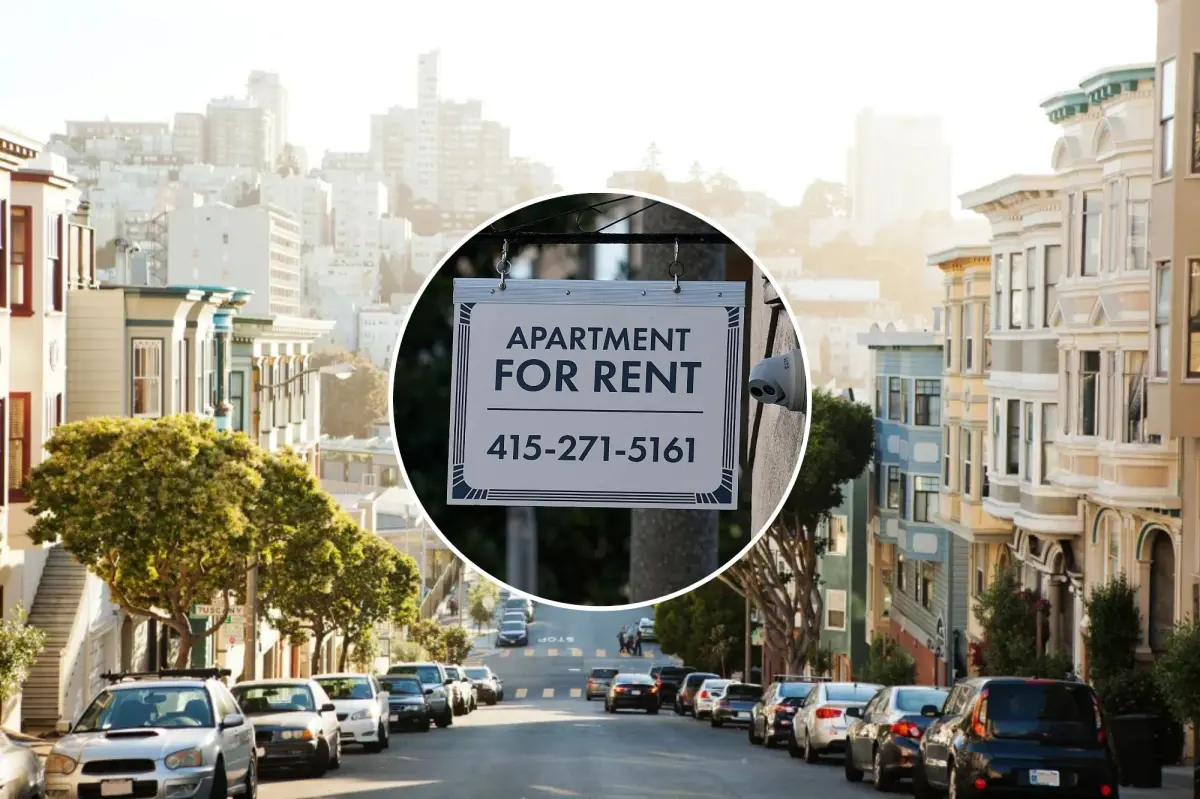
In the current landscape of the American housing market, few cities evoke as much awe and anguish as San Francisco. The city’s rental market has become a stark symbol of the broader affordability crisis, a place where the pursuit of a simple place to live often feels like an exercise in futility. Recently, a glimmer of something that could be loosely interpreted as hope emerged, but it came wrapped in a layer of irony that is hard to ignore. A new analysis from the real estate platform Zumper revealed that rents across the city have catapulted by an eye-watering 22.9% year over year, a surge fueled by a potent cocktail of limited supply, aggressive demand, and the influx of wealth generated by the artificial intelligence boom. For the average person, this translates into a monthly reality that is nothing short of brutal: the median asking price for a one-bedroom apartment in the city now sits at a staggering $4,180. To put that number into perspective, it is nearly double the cost of a similar unit in the sprawling metropolis of Los Angeles, making San Francisco a financial precipice for even the most established professionals.
It is within this environment of financial despair that local media has undertaken the noble—and somewhat masochistic—quest to find a “deal.” The goal was to unearth a one-bedroom dwelling that didn’t require a six-figure salary to maintain, a diamond in the rough that might offer a shred of relief to the beleaguered renter. Combing through residential listings on popular platforms like Zillow and Apartments.com, the search team imposed strict filters to ensure the results were legitimate and habitable. They excluded income-restricted units, shared housing arrangements, and co-living spaces that often sacrifice privacy for affordability. Furthermore, to avoid the murky waters of online scams, they only considered units represented by established management companies or real estate agents with verifiable credentials. After meticulous research, the search culminated in a single winner, a property that, at first glance, seemed to defy the gravity of the San Francisco market. It was a one-bedroom apartment located at 245 Leavenworth St., listed at $2,195 per month. In a city where the median rent for such a space is nearly double that, this figure appeared to be a lifeline, a sign that perhaps, amidst the chaos, sanity could prevail.
Yet, as with most things that seem too good to be true, the devil is in the details, and this particular property comes with a significant asterisk that takes the shine off the bargain. While the listing, managed by J. Wavro Associates, boasts hardwood floors, ample natural light, and the convenience of elevator access, it lacks certain modern amenities that many renters take for granted—namely, in-unit laundry and parking. The terms require a one-year lease, and while pets are permitted, they come with an additional monthly “pet rent” of $75. But the most significant caveat is the location. This beacon of relative affordability is situated in the heart of the Tenderloin neighborhood, a section of the city that consistently ranks dead last in safety metrics. Historically, the Tenderloin has been synonymous with open-air drug use, a significant unhoused population, and elevated crime rates. According to data from Safemap, a crime analytics platform, assault and battery cases account for nearly 20% of all criminal incidents in the area, with drug offenses following closely behind at almost 10%. This reality creates a profound psychological conflict for potential renters: the quiet comfort of an affordable hardwood floor, juxtaposed against the daily unease of navigating one of the city’s most challenging streetscapes.
This juxtaposition between affordability and adversity highlights a deeper, more unsettling truth about the current state of urban living. The Tenderloin apartment, despite its drawbacks, offers a 30% savings compared to the city’s median, a sum that could pay off debts or fund a life in a safer enclave. Yet, the cost is not just financial; it is the price of security and peace of mind, which are becoming increasingly rare commodities in the city’s real estate game. The desperation for shelter has created a market where landlords are experimenting with spaces that push the boundaries of habitability and evoke comparisons to dystopian fiction. The California Post recently highlighted extreme examples of this, including micro-studio apartments described as a “dystopian fever dream.” One such listing in the North Beach neighborhood offered a space for $750 a month, but the “apartment” was nothing more than a tiny box spanning just 64 square feet, with no kitchen, no sink, and a shared bathroom down the hall. Another unit in the same building, at $800 a month, offers a slightly more generous 70 square feet, but the amenities remain equally Spartan. These listings are not just bare-bones; they are existential challenges, testing the very limits of what a human being can accept as a home.
The grim absurdity of the San Francisco market, where a rent-stabilized box in a crime-ridden area is considered a blessing, forces renters to look beyond the City by the Bay for solace. The broader state of California, however, offers a more varied landscape of affordability, though it often requires a significant lifestyle shift. A recent report from the real estate platform Houzeo identified the 10 most affordable places to live in the Golden State, cities that offer a different kind of California dream—one rooted in space, community, and financial feasibility rather than tech-driven glamour. Each city on this list was evaluated based on an affordability score that factored in median home values, median house rents, and the overall cost of living relative to the state average. The results overwhelmingly favored the Central Valley, a region often overlooked in favor of coastal hubs but rich in potential for those seeking to stretch their dollars. Cities like Porterville, Fresno, and Bakersfield claimed the top spots on this list, with median rents in all three falling comfortably below the $2,000 mark. In these communities, the struggle for shelter is less about fighting off competing bids and more about choosing between a comfortable house with a yard and a manageable commute.
Ultimately, the tale of the $2,195 Tenderloin apartment is a microcosm of the far larger, more complex narrative of housing in California. On one hand, it offers a practical, if imperfect, solution for someone who needs access to the city’s job market and is willing to trade safety for savings. On the other, it serves as a damning indictment of a system that has allowed the basic human need for a home to become a luxury item. The search for a “deal” in San Francisco is no longer about finding extra square footage or a better view; it is about finding a place where the window between financial solvency and comfort doesn’t slam shut entirely. While the Central Valley cities offer a beacon of sanity, they are geographically and culturally distant from the economic engines of the coast, requiring individuals to choose between the promise of career advancement and the reality of a livable life. As the AI boom continues to prop up salaries and inflate prices, the gap between haves and have-nots in the state widens, and the hunt for a simple, safe, and affordable home becomes an ever more poignant and soul-crushing quest.