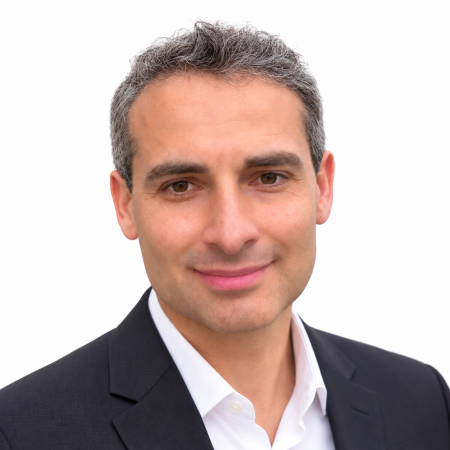


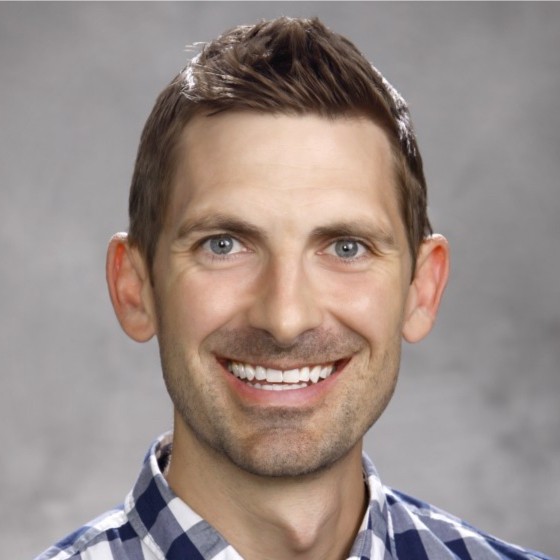
Artificial intelligence is often imagined as something living inside a screen—a chatbot, a search box, a glowing rectangle that talks back in crisp, confident paragraphs. But the next meaningful leap in AI may be far less visible, and far more intuitive. It may be a pair of glasses that notices you’re trying to fix a sink and quietly walks you through the steps before you even think to ask. It may be a wearable device that reads your movements, your voice, your environment, and steps in to help you navigate the physical world in real time. That is the ambitious territory staked out by Noosphere Labs, a Seattle-area startup that has just raised $10.25 million to pursue what it calls “human-centered physical intelligence.” The company is led by Kevin Carlberg, a former research director at Meta who spent more than five years working on physical AI and simulation for wearable computers and virtual and mixed-reality devices. The funding round, disclosed in a securities filing this week, is an early signal that investors are beginning to look beyond language models and image generators toward systems that understand and interact with the physical world around us—not merely describe it.
The financial details were made public in a Form D filed Monday with the U.S. Securities and Exchange Commission. Carlberg, reached by phone by GeekWire on Monday evening, was characteristically guarded, saying he wasn’t yet ready to share details about the startup. That kind of quiet is common in the world of stealth startups, where founders often prefer to let their work speak for itself, but the investor lineup already tells a story. Trilogy Equity Partners, a Bellevue-based venture firm, confirmed that it led the round. Amy McCullough, a managing director at Trilogy, is listed as a director in the filing. Madrona, the well-known Seattle venture capital firm, separately confirmed it had “major participation” in the round. Together, these names signal something more than a small seed bet. They suggest a serious vote of confidence in a founder whose career has quietly prepared him for exactly this kind of challenge. Carlberg’s personal website describes him as the founder and CEO of a “stealth AI startup focused on physical AI and real-world intelligence.” The company’s website is even more understated, featuring the phrase, “Human-centered physical intelligence. Built for the world we inhabit,” beneath a “Coming Soon” banner. There is no product page, no manifesto, no glossy explainer video—just a promise, and a name.
The name itself is worth pausing over. The company styles it Noösphere, with two dots over the second “o,” signaling that it should be pronounced as a separate syllable: NOH-uh-sfeer. The word dates back to the 1920s, when it was used to describe a sphere of human thought wrapped around the planet, much the way the biosphere is wrapped in life. It’s a poetic and philosophical name, one that suggests a layer of collective intelligence and consciousness that emerges from human activity. For an AI startup, the resonance is powerful: Noosphere is not just about building smarter machines, but about connecting human cognition with the physical environment in a way that feels almost natural, almost inevitable. The choice of name also reflects a certain ambition. This is not a company that wants to optimize ad clicks or generate marketing copy. It wants to build the infrastructure of a world where human beings and artificial intelligence share a common space, understanding each other through movement, sound, context, and intention. That is a much harder problem than answering questions or writing emails. It requires AI to understand not just words, but the unspoken grammar of human behavior—the hesitation before a decision, the glance at a tool, the rhythm of a task being performed.
Carlberg’s background helps explain why he would set his sights so high. Before founding Noosphere Labs, he spent more than five years at Meta, where he led a research team that bridged two major divisions: Reality Labs Research and the company’s Fundamental AI Research group. His work there focused on physical AI and simulation for wearable computers and virtual and mixed-reality devices—the kind of technology that needs to understand the user’s body, context, and environment in order to be useful. But his path to that role was anything but conventional. Before Meta, Carlberg spent eight years at Sandia National Laboratories, where he developed methods to make massive physics simulations run in near-real time for national security applications. In other words, he spent most of his career working on systems that need to respond to the physical world with speed and precision, long before the phrase “physical AI” became a buzzword. He holds a doctorate from Stanford University and is an affiliate associate professor of applied mathematics and mechanical engineering at the University of Washington. That combination of academic rigor, national security experience, and big-tech research leadership is rare. It suggests a founder who understands both the theoretical underpinnings of complex systems and the practical demands of building something that works outside a controlled laboratory environment.
The clues to what Noosphere Labs might actually be building can be found in Carlberg’s recent research. In a paper presented at the NeurIPS conference last year, he and his colleagues from Meta constructed a benchmark for “assistive wearable agents”—smart glasses and similar devices that figure out what a person is trying to do from video, audio, and other signals, without being explicitly asked. The concept is deceptively simple: imagine wearing a device that watches your hands as you try to assemble furniture, listens to your muttered frustrations, and offers a hint just before you make a mistake. The challenge, as the researchers found, is immense. They noted how little prior work existed in this area, and they assembled a dataset from 348 participants to test how well current AI models could anticipate a person’s intentions. The results were humbling. The best AI models produced a relevant answer only 55 percent of the time. In other words, nearly half the time, the AI had no idea what the human was trying to do. The researchers concluded that current models “remain far from practical usefulness” at this task. But that gap between where the technology is and where it needs to be is precisely the kind of challenge that motivates researchers on the frontier. It also helps explain why Noosphere Labs is operating under a veil of secrecy. If the company can make meaningful progress on this problem, it could redefine the relationship between humans and machines.
Also listed as a director in the startup’s filing is Tyler Simpson, a Seattle-area software executive with deep roots in the local tech community. Simpson co-founded Luum, a commute-management startup, spent 11 years at Microsoft, and was most recently a director and technical program manager at Meta, where he overlapped with Carlberg. The presence of Simpson suggests that Noosphere Labs is not just a research project, but a company being built with operational discipline and product sensibility. Meanwhile, Carlberg left Meta at the end of 2024, announced on his personal website that he was taking a sabbatical, and incorporated Noosphere Labs early this year. The timeline is telling. He didn’t jump from one job to another. He took time to reflect, to think deeply about what he wanted to do next, and to lay the groundwork for something new. That kind of deliberate pace is unusual in a world where so many AI startups seem to launch overnight with a slide deck and a press release. Noosphere Labs, by contrast, appears to be building quietly, with a long-term vision. The money raised so far is only the beginning. The path ahead is daunting, and the technical problems are formidable. But if the promise of human-centered physical intelligence is ever realized, the world may look back at this early SEC filing as the moment it all began—not with a bang, but with a name, a vision, and a handful of people who believed that the next great AI breakthrough would not happen on a screen, but in the world around us.