



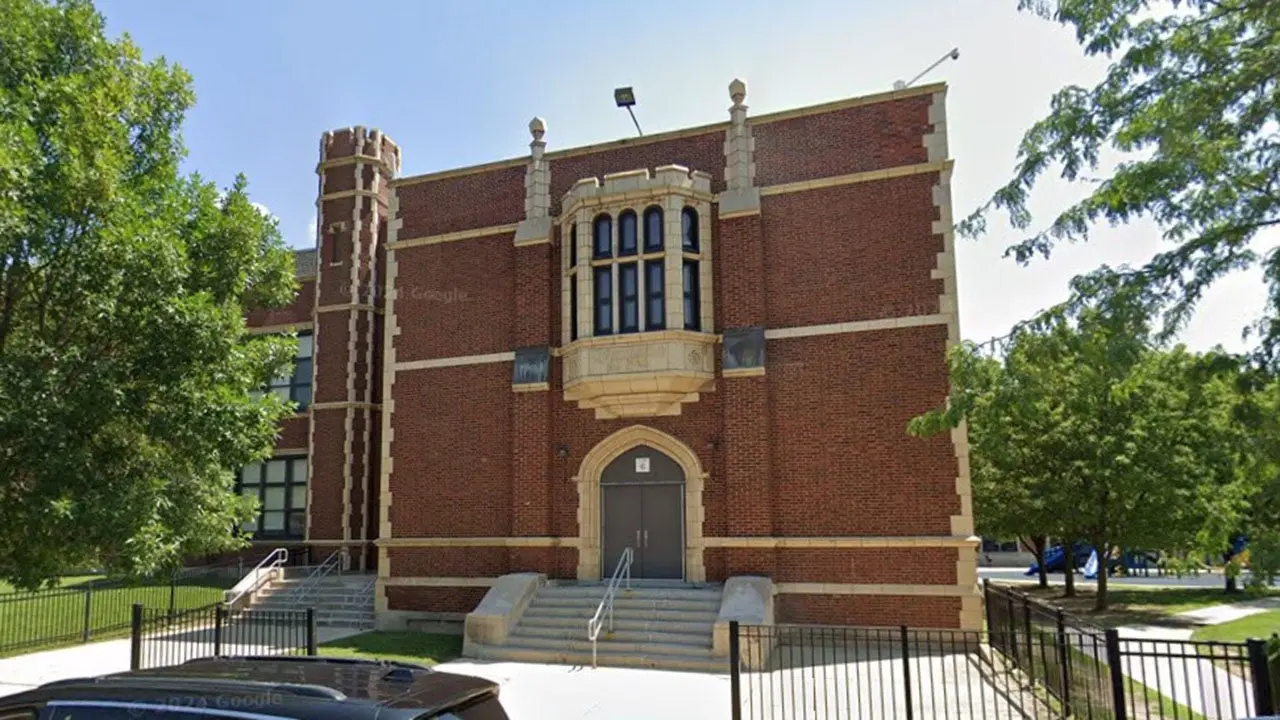
The quiet grace of an elementary school afternoon is a familiar, comforting rhythm, defined by the gentle hum of empty hallways and the lingering scent of floor wax, paper, and chalk. At Mark Twain Elementary School, nestled in the southwest side of Chicago, Monday afternoon began just like any other, as the vibrant, chaotic energy of the school day gradually gave way to the serene stillness of the after-school hours. Students had already gone home, their laughter and footsteps fading into the winter air, leaving the brick building in the hands of those who quietly care for it when the classrooms empty. But on this particular Monday, just after 3:30 p.m., that peaceful sanctuary was shattered by an unthinkable act of violence. In a place designed to foster growth, innocence, and safety, a sudden, dark tragedy unfolded within the quiet corridors, forever altering the lives of the school community and leaving a devastating void where everyday routine once stood. The sound of gunfire, rare and deeply jarring within the walls of an elementary school, broke the silence of the afternoon, signaling a heartbreaking end to two lives and initiating a wave of shock that would reverberate far beyond the school’s physical boundaries. This sudden act of violence transformed a routine weekday into a historical marker of grief for the neighborhood, proving once again how vulnerable our most cherished public spaces can be to the deeply personal struggles of the individuals who inhabit them. The tragedy serves as a somber reminder of the fragile nature of safety, reminding us that even the places we build to protect and educate our children are not immune to the complex, painful realities of the adult world. As the afternoon sun began to dip below the Chicago skyline, the school became an active crime scene, surrounded by flashing blue and red emergency lights that cast an eerie glow on the playground equipment outside, signaling to the entire community that something had gone terribly wrong in their sanctuary.
At the heart of this tragedy are two human beings, a 48-year-old woman and a 63-year-old man, whose lives were abruptly cut short in the very place where they worked to earn an honest living. School custodians are often the unsung heroes of the educational system, the invisible hands that keep the gears turning, arriving before dawn and staying long after dusk to ensure that children have a clean, safe, and welcoming environment in which to learn. They are the ones who wipe away the spills of childhood, repair the broken desks, sweep the gyms after basketball games, and offer warm, reassuring smiles to anxious students in the hallways. Though their names were not immediately released to the public out of respect for their grieving families, their daily presence was a thread woven deeply into the fabric of Mark Twain Elementary. The 48-year-old female custodian was a vital part of this collective effort, a woman with years of life ahead of her, whose sudden absence leaves a catastrophic empty space in the hearts of her family, friends, and coworkers who expected her to return home at the end of her shift. Beside her, the 63-year-old male custodian represented a generation of labor, a man nearing the age of retirement who had spent decades navigating the physical and mental challenges of working-class life. The tragic intersection of their lives on that Monday afternoon serves as a stark, painful reminder of the deeply human stories, struggles, and vulnerabilities that exist behind the uniform of school support staff, whose contributions are too often taken for granted until they are gone, leaving behind a legacy of hard work that was tragically overshadowed by violence. Their lives, though quiet, were significant to those who knew them; to the teachers, they were the helpful hands who always unlocked the doors, and to the administrative staff, they were friendly, reassuring faces in the breakroom. The sudden loss of these two individuals leaves an irreplaceable void, as they were not just employees but an essential part of the school’s daily heartbeat.
The terrible reality of what had transpired began to unfold shortly after 3:30 p.m. when authorities were urgently called to the school. Upon entering the building, first responders and police officers were met with a grim and silent scene: both custodians lay unresponsive inside the school, each suffering from a single, fatal gunshot wound to the head. Emergency medical personnel rushed both victims to local hospitals in a desperate attempt to save their lives, but the gravity of their injuries left no room for hope; both were pronounced dead shortly after arrival, leaving medical staff and police to grapple with the sudden finality of the situation. The discovery of an unspecified firearm near the bodies immediately pointed to a self-contained tragedy rather than an external threat, casting a somber shadow over the investigators who had to piece together the final, desperate moments of these two coworkers. The physical reality of the crime scene, set against the backdrop of elementary school decorations, colorful bulletin boards, and children’s artwork, created a jarring contrast that deeply affected the police officers and emergency workers who responded to the call. It was a stark reminder of how quickly a familiar, safe environment can be transformed into a place of profound sorrow, leaving those who arrived to help struggling with the heavy emotional weight of a life-shattering event that occurred in a space built for hope and the future. The sheer shock of finding two bodies in a place normally filled with the laughter and energy of children added a layer of psychological weight to the investigation, highlighting the profound dissonance of workplace violence occurring within an educational setting. Yellow police tape soon stretched across the school gates, keeping curious onlookers and worried neighbors at a distance while forensic investigators worked meticulously inside, cataloging evidence in the very hallways that, just hours earlier, had been filled with the bustling energy of young students.
As investigators dug deeper into the circumstances surrounding the double shooting, a heartbreaking narrative of despair, anxiety, and a devastating lack of coping mechanisms began to emerge from the shadows of the police reports. According to reports cited by the Chicago Sun-Times, the 63-year-old custodian had recently learned that he was slated to be transferred from Mark Twain Elementary, a decision that apparently triggered a deep, overwhelming, and unmanageable emotional crisis within him. For many workers, particularly those in demanding service roles, a workplace is far more than just a source of income; it is a community, an anchor of stability, and a source of identity built over years of shared daily routines and familiar faces. The prospect of being uprooted from a familiar environment can feel like an existential threat, especially for an older employee facing the twilight of their career and the daunting challenge of starting over in a new school. In this instance, the weight of the impending transfer seemingly pushed the older custodian to a tragic breaking point, where feelings of helplessness and anger manifested as an act of unfathomable violence against his younger colleague before he turned the weapon on himself. This devastating escalation highlights the hidden mental health struggles that can fester beneath the surface of everyday workplace interactions, illustrating how administrative changes, which may seem routine and minor on paper to decision-makers, can sometimes carry monumental emotional weight for the individuals whose lives are directly affected. It underscores the desperate need for empathy and support systems when organizations make changes that disrupt the lives of their long-term employees. The tragedy forces us to confront the reality that professional transitions can sometimes be met with personal despair so profound that it distorts reality, leading to catastrophic choices that destroy lives in an instant.
The ripple effects of this tragic event quickly spread throughout the tight-knit Chicago school community, prompting a wave of grief, confusion, and support. Matthew Moline, the principal of Mark Twain Elementary, took on the painful and challenging task of communicating the news to parents and staff, writing a heartfelt letter that acknowledged the deep concern and sorrow that this news would bring to families. He confirmed that while the shooting occurred inside the school, no students were present at the time, offering a small sliver of relief in an otherwise devastating situation, while emphasizing that members of their school community were deeply impacted. Simultaneously, SEIU Local 73, the labor union representing the Chicago Public Schools custodial staff, issued a statement expressing profound grief over the loss of two of their own. Executive Vice President Trumaine Reeves spoke for many when he noted that the only undeniable facts at the moment were that two families had lost loved ones, urging the community to keep the victims’ families, as well as the students and staff of Mark Twain Elementary, in their prayers. The collective response of the union and the school administration underscored a shared commitment to supporting the living while honoring the dead, recognizing that the trauma of such an event leaves lasting scars on everyone connected to the school. In the days following the event, the community rallied around the families of the deceased, demonstrating the resilience and solidarity that often emerges in the wake of unspeakable tragedy. Counselors and grief support teams were quickly dispatched to the school to help teachers, staff, and eventually students process the emotional shockwaves, establishing a network of care designed to help the community navigate the complex emotions of grief, fear, and anger that naturally follow such an event.
In the wake of this profound tragedy, the conversation inevitably turns toward healing, prevention, and the systemic lessons that must be learned from such a devastating loss. This heartbreaking incident at Mark Twain Elementary School shines a harsh spotlight on the critical importance of mental health support, conflict resolution, and emotional resources for all school employees, not just the instructional staff. As the school community begins the long, difficult process of processing their grief, there is a growing recognition that we must do more to support the well-being of the support staff who keep our institutions running behind the scenes. The tragedy serves as a poignant reminder that behind every job title is a human being with a complex life, personal anxieties, and emotional vulnerabilities that require care, respect, and attention. Moving forward, the memory of the two custodians should inspire a renewed commitment to creating workplaces where employees feel heard, valued, and supported during times of transition and stress. Only by fostering an environment of empathy, open communication, and robust mental health resources can we hope to prevent such desperate acts of violence, ensuring that our schools remain safe havens for everyone who steps inside them, from the youngest students to the dedicated staff who care for them. As the community moves forward, they carry the weight of this loss, but also the hope that from this darkness can come a greater awareness of the human need for connection and support in all areas of life. Ultimately, the true measure of a community is how it cares for its most vulnerable members, and the legacy of this tragedy must be a collective effort to ensure that no worker ever feels so isolated or desperate that violence seems like the only option.