



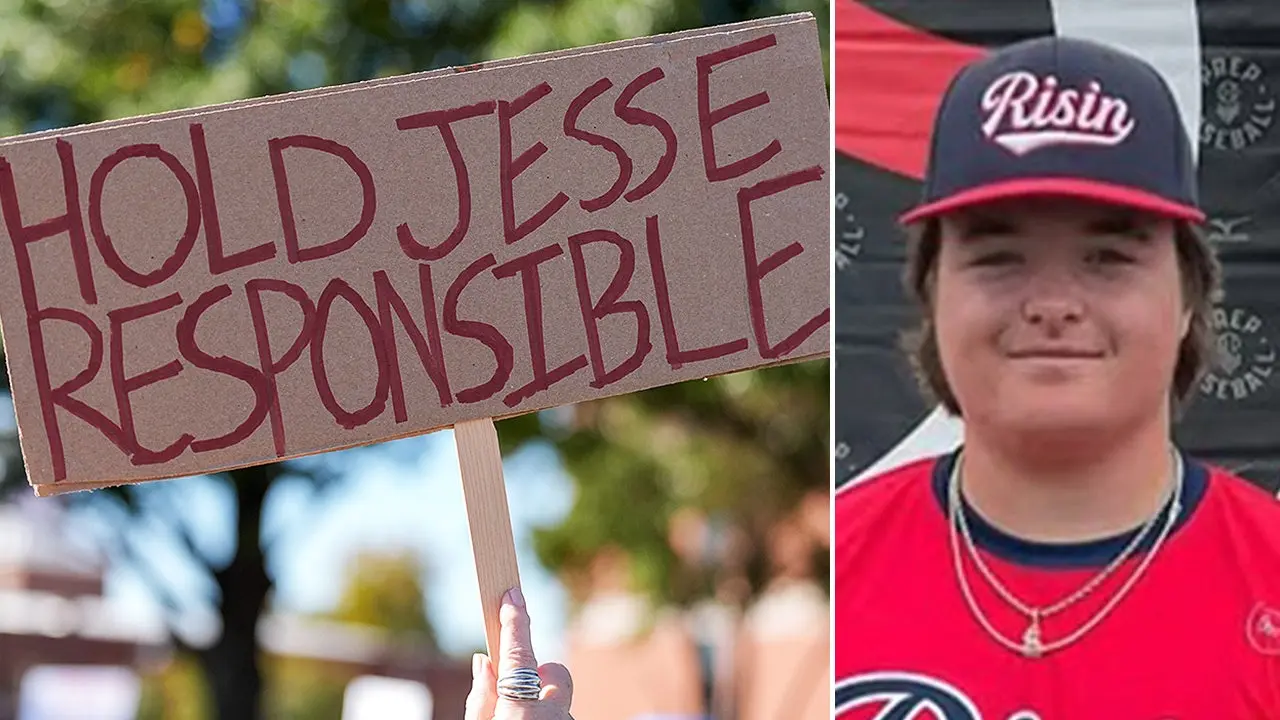
The pursuit of justice is often described as a journey toward healing, a structured path where the truth is unveiled and those who cause profound harm are held accountable. For two teenage girls in Oklahoma, however, that path did not lead to a place of restoration or safety, but rather to an emotional abyss of disillusionment and betrayal. The young women, survivors of a terrifying series of assaults that included attempted first-degree rape, sexual battery, and strangulation, were forced to watch as their alleged abuser, Jesse Mack Butler, walked out of the courtroom completely free, having never spent a single day behind bars. This stunning outcome has sent shockwaves through their local community and ignited a fierce debate about the efficacy of a juvenile justice system that seems to prioritize the rehabilitation of the offender over the safety and dignity of the victim. For the families of these young girls, the reality of Butler walking free is not just a failure of the law; it is a profound psychological blow, a secondary trauma that suggests the agony they endured was inconsequential in the eyes of the state. To experience such severe physical and sexual violence during one’s formative high school years is a trauma that alters the trajectory of a life forever, requiring years of intensive therapy, support, and courage to overcome. To then see the legal system dismantle the charges and allow the perpetrator to resume his life without restriction is a heartbreaking and devastating message of systemic indifference that reverberates through the hearts of survivors everywhere. It tells survivors that their pain, their voices, and their safety are secondary to the legal technicalities that protect the youth who harmed them. Instead of finding closure, these families are left to pick up the pieces of their shattered lives in the shadow of an injustice that feels both cruel and incomprehensible, sparking a public outrage that demands we look closely at the human cost of a broken system.
The legal machinery that allowed Jesse Mack Butler to avoid incarceration is a complex web of statutes and jurisdictional boundaries that, in this instance, functioned as an escape hatch. Originally charged as an adult at the age of 17, Butler faced an astonishing array of 11 severe counts, including attempted first-degree rape, rape by instrumentation, sexual battery, forcible oral sodomy, and domestic assault and battery by strangulation. Had these charges remained in adult court, a conviction would have resulted in decades of prison time, signaling the gravity of his actions. However, the legal trajectory shifted dramatically when Butler was granted “youthful-offender” status, a designation intended to offer troubled minors a pathway to reform rather than permanent ruin. Under this status, Butler entered a plea of no contest to all 11 counts in August 2025, a decision that bypassed a public trial but nevertheless established his legal responsibility for these heinous acts. Instead of being remanded to a state penitentiary, he was placed under the custody and supervision of the Oklahoma Office of Juvenile Affairs, where he was ordered to undergo a specialized rehabilitation program. But this system carries a rigid expiration date. The moment Butler turned 19 at midnight on August 4, the juvenile court’s jurisdiction legally expired. Because he had officially reached the age of majority within the state’s juvenile system, the entire case against him was dismissed by operation of law, wiping his slate clean and releasing him back into society without any ongoing supervision, registration requirements, or criminal record. This mechanical application of the law highlights a devastating loophole where the severity of the crimes committed is completely decoupled from the duration of the punishment, leaving the victims to live with a lifetime sentence of trauma while the perpetrator’s legal consequences simply dissolved with the passage of time.
Adding a layer of deep personal betrayal to this institutional failure was the treatment the victims received from the very individuals entrusted with prosecuting their case. Rachel Bussett, a dedicated attorney representing the family of one of the victims, shed light on a deeply troubling encounter between her young client and the former elected district attorney. Instead of finding an ally, a safe space, or a compassionate advocate, the teenage survivor was subjected to what Bussett described as a “mock cross-examination.” This aggressive interrogation, conducted by the prosecutor who was supposed to be building a formidable case against Butler, left the young girl feeling utterly defenseless, attacked, and re-traumatized. She had entered the office believing she was speaking to a protector, someone who would validate her pain and stand as a shield between her and her abuser; instead, she was treated as an adversary whose credibility had to be dismantled. This experience underscores a pervasive and tragic reality within the justice system: sexual assault survivors are routinely subjected to skepticism, hostility, and systemic gaslighting, not just by defense attorneys, but by the state itself. When the institutions designed to deliver justice behave with such callous insensitivity, they actively discourage survivors from speaking out, reinforcing the terrifying belief that coming forward will only result in further victimization. The psychological scars left by this betrayal are often deeper than those inflicted by the physical assault itself, as they destroy a victim’s trust in society’s moral fabric. It is a sobering reminder that humanizing this story requires us to look beyond the courtroom dockets and recognize the profound emotional vulnerability of the children caught in these legal gears, who are too often treated as mere evidence rather than human beings in desperate need of protection and respect.
The insult to the victims’ dignity was compounded during the final court proceedings, where the rhetoric of the defense reached levels of audacity that left onlookers stunned and deeply offended. According to the newly elected District Attorney for Payne and Logan Counties, Jeremiah Gregory, Butler’s defense counsel, Derek Chance, attempted to rewrite the narrative of the entire case by presenting Butler not as a perpetrator, but as the primary victim of the legal process. The defense suggested that the allegations against Butler were false, that his life had been unfairly disrupted, and that he had suffered far more than the young women he was accused of strangling and violating. This attempt to invert the roles of victim and abuser is a classic defense tactic, yet in a case involving 11 no-contest pleas to violent sexual offenses, it was received as an outrageous affront to basic human decency. District Attorney Gregory did not mince words when expressing his disgust, stating publicly that the defense’s assertions were disingenuous, untruthful, and made his “blood boil” with intense and righteous indignation. The spectacle of a self-confessed offender being painted as a martyr while his victims are cast as malicious liars is a form of psychological violence that echoes far beyond the courtroom walls. It invalidates the immense courage it took for these high school girls to report the assaults and participate in the legal process. Gregory’s public fury highlighted the frustration of a prosecutor who inherited a deeply flawed outcome, bound by constitutional double jeopardy protections that prevent the state of Oklahoma from ever prosecuting Butler again for these specific crimes. This limitation leaves the state powerless to undo the past, leaving a bitter taste in the mouths of all who believe that the law should, above all else, defend the innocent and penalize the guilty.
Confronted with the closed doors of the criminal justice system, the family of one of the survivors has refused to accept total defeat, pivoting instead to a new battleground in their search for accountability. Under the guidance of Rachel Bussett, they are preparing to initiate civil litigation against Jesse Mack Butler, a step that represents both a necessary pursuit of financial restitution and a vital, deeply personal quest for a public, legally binding acknowledgement of the harm he caused. While a civil lawsuit cannot sentence Butler to prison, it offers a venue where the standard of proof is different, and where the family can assert control over a narrative that has hitherto been dominated by bureaucratic compromises and defense-friendly loopholes. For the family, deciding to pursue civil litigation is not a choice made lightly; it means voluntarily remaining inside the exhausting arena of legal conflict, exposing their private pain to public scrutiny once again, and dedicating their limited resources to a prolonged fight. Yet, they see no other alternative if they wish to establish some form of consequence for the actions that forever altered their daughter’s life. Bussett noted that while the family was profoundly saddened and upset by the dismissal of the criminal case, they were not surprised, having anticipated this painful resolution from the very beginning due to the systemic flaws they observed at every turn. Their willingness to fight on, despite their exhaustion and disillusionment, is a testament to the fierce love of parents refusing to let their child’s suffering be erased by a court clerk’s signature. It is a powerful reminder that when the state fails to provide justice, the burden of seeking it falls squarely back onto the shoulders of the survivors and their loved ones, who must find the strength to demand accountability through whatever legal avenues remain open to them.
As the civil battle begins to take shape, there remains a narrow, glimmering hope for federal intervention that could finally hold Jesse Mack Butler criminally accountable for his actions. Rachel Bussett revealed that the family is actively hoping federal authorities will conduct a thorough review of the case, specifically focusing on digital evidence allegedly recovered from Butler’s mobile phone during the initial investigation. There are strong indications that this device may have contained child sexual abuse material (CSAM), and the family is pushing for federal prosecutors to investigate whether such material was distributed, a charge that falls under federal jurisdiction and would not be barred by the state’s double jeopardy limitations. While Bussett candidly acknowledged that securing federal prosecution is a “long shot,” the family remains resolutely and bravely confident in the possibility, refusing to abandon the hope that some agency of the law will eventually recognize the gravity of the danger Butler posed. Newly elected District Attorney Jeremiah Gregory has also taken the proactive step of contacting the appropriate federal agency to request a formal review, lending his official weight to the family’s desperate plea for federal intervention. This collaborative effort between the victim’s civil representation and a reform-minded prosecutor represents a united front against an unacceptable status quo, proving that even when the system fails, individuals within and outside of it can unite to fight for what is right. Ultimately, the story of these two high school girls is a poignant, cautionary tale about the limitations of state laws that allow violent offenders to slip through the cracks of juvenile rehabilitation programs. It stands as a rallying cry for legislative reform, ensuring that future survivors are met with compassion rather than skepticism, and that the legal system is restructured to guarantee that those who commit acts of extreme violence are held accountable, regardless of their age.