



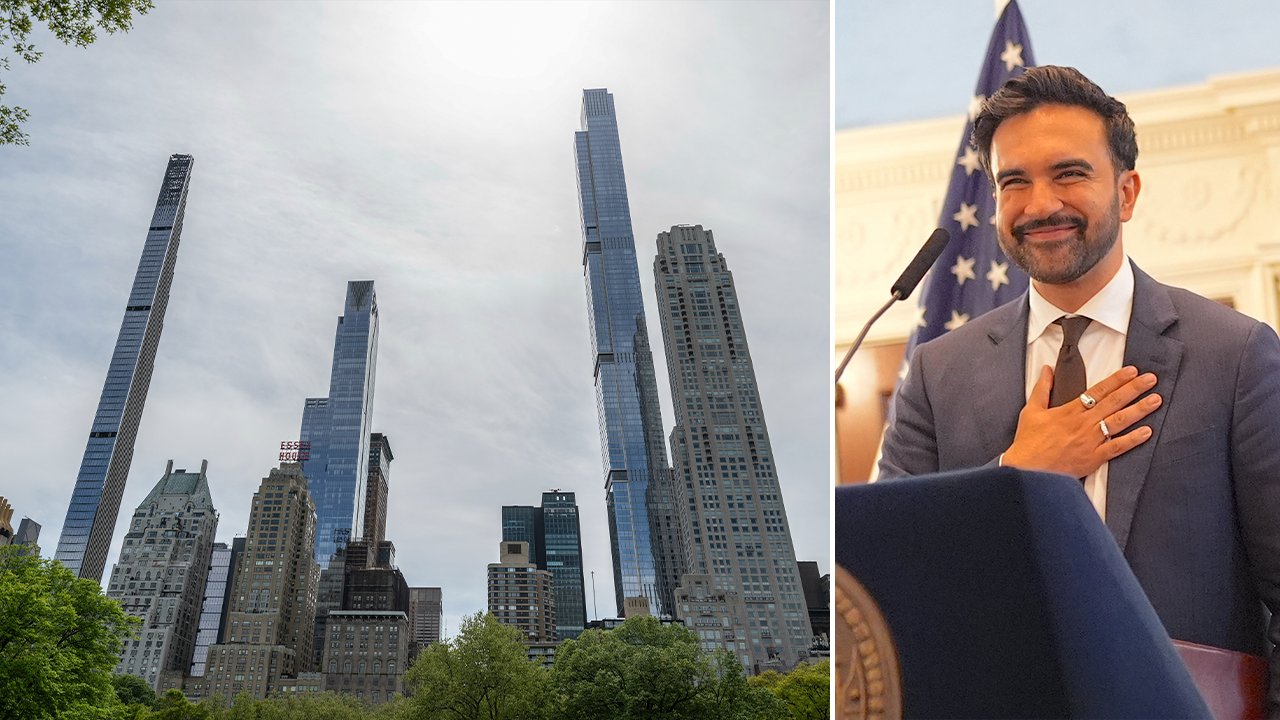
In a dramatic courtroom confrontation that has sent shockwaves through the five boroughs, a New York State Supreme Court judge decisively halted the rollout of Mayor Zohran Mamdani’s controversial “pied-à-terre” tax, bringing a sudden stop to an initiative that had quickly escalated into a logistical nightmare for hundreds of thousands of local property owners. For weeks, everyday New Yorkers found themselves caught in a state of high anxiety, swept up in what critics have characterized as an aggressive, poorly targeted dragnet aimed at extracting luxury taxes from second-home owners. The breaking point arrived on Monday when Justice Wayne Ozzi issued a temporary restraining order, pulling the emergency brake on the Mamdani administration’s aggressive schedule. The judge ordered City Hall to immediately dismantle and take down a highly public, online database—referred to by opponents as a “doxxing list”—that exposed the names, home addresses, and estimated property valuations of more than 900,000 local homeowners. By freezing the implementation of the new surcharge, the court provided a vital, albeit temporary, sigh of relief to a community of residents who felt their own government had unfairly targeted them, transforming what was billed as a progressive revenue-generating tool into an invasive administrative overreach that threatened their peace of mind and financial security.
The core of the legal battle lies not in the philosophical debate over whether ultra-wealthy individuals should pay their fair share, but rather in the chaotic and allegedly lazy administrative execution of the policy. Led by high-profile defense attorney Randy Mastro, the legal challenge accused the Mamdani administration of bypassing the fundamental, statutory requirements of state tax law in a rushed attempt to fill city coffers. According to Mastro, the city was legally obligated to perform individualized, diligent research to determine whether a property actually functioned as a non-primary luxury residence before subjecting the owner to the stressful tax assessment process. Instead, the administration took a massive shortcut, publishing a sweeping supplemental property roll that captured a staggering number of ordinary, primary residences valued far below the luxury threshold. This administrative shortcut effectively flipped the American standard of due process on its head; rather than the city proving that a homeowner owed the tax, the burden of proof was forcefully shifted onto the citizens themselves, who were suddenly left scrambling to compile tax returns, utility bills, and personal records to prove they actually lived in their own homes. Mastro did not mince words in the courtroom, declaring that “the city screwed this up,” and accusing officials of failing to do their basic homework, which in turn unleashed widespread panic, confusion, and public anger across the metropolitan area.
To understand the human toll of this bureaucratic misstep, one needs to look no further than the individual homeowners who felt compelled to stand up against City Hall. The lawsuit was filed by three New York City residents who represent the quiet frustration of thousands of others who found themselves unexpectedly caught in the city’s crosshairs. Among them was Simon Hedley, a homeowner who eventually succeeded in securing an exemption, but only after enduring the stressful, bureaucratic gauntlet of submitting sensitive personal tax documents to clear his name. Mastro pointed to Hedley’s frustrating experience as a glaring example of how easily the city could have resolved these status determinations on its own using existing municipal databases, rather than forcing citizens to defend themselves against erroneous tax threats. For these plaintiffs, the lawsuit was never about protecting the untaxed estates of billionaires; it was about defending the basic dignity of primary residents who felt bullied by a system that seemed to prioritize ideological messaging over administrative competence. The publication of their private details in a massive, searchable online directory felt less like a transparent administrative process and more like a punitive public shaming campaign, leaving families feeling exposed, vulnerable, and deeply betrayed by their local government.
The courtroom hearing itself was a masterclass in high-stakes legal theater, characterized by sharp personal exchanges and deep philosophical divides between the opposing legal teams. Representing the city, attorney Steven Banks vigorously defended the administration’s rollout, arguing that halting the process mid-stream would actually harm taxpayers by disrupting deadlines and creating even more confusion for those currently seeking exemptions. The tension in the room boiled over when Mastro attempted to interrupt Banks, prompting a sharp, verbal slap-back: “Say nothing while I’m speaking.” The debate grew particularly sensitive when the two lawyers clashed over Mastro’s characterization of the city’s tax notices as “terrorizing” to local homeowners. Banks took strong offense to the term, suggesting it was an inappropriate and culturally insensitive word to use against an administration led by Mayor Mamdani, who is the city’s first Muslim mayor, asserting that the city was merely acting in accordance with the law. Mastro quickly clarified his remarks, explaining that his language was not a personal or religious attack on the mayor, but rather a direct reflection of the genuine fear and distress experienced by everyday residents who opened their mail to find aggressive, official demands implying they were in legal jeopardy of losing their hard-earned assets if they did not immediately comply with complex administrative demands.
Ultimately, Justice Ozzi sided with the terrified homeowners, delivering a scathing critique of the city’s rushed methodology and finding that the administration had clearly failed to exercise proper due diligence. In granting the temporary restraining order, the judge noted that while he could not “unring the bell” for the thousands of confusing letters that had already landed in mailboxes, he could step in to prevent further damage and halt the city from enforcing impending, punitive deadlines. Ozzi ruled that the plaintiffs had demonstrated a strong likelihood of success on the merits of their case, highlighting that the irreparable harm caused by the premature and public disclosure of personal data outweighed any immediate administrative benefit to the city. The ruling effectively prohibits City Hall from assessing, imposing, or collecting the luxury second-home surcharge from any of the individuals listed on the disputed supplemental roll until a thorough, legally compliant, and individualized determination is made for each property. This judicial intervention serves as a powerful reminder that even the most progressive legislative goals must be executed within the boundaries of constitutional fairness, administrative transparency, and respect for the privacy of the citizenry.
Despite the significant courtroom setback, Mayor Mamdani and his progressive administration remain highly defiant, pledging to immediately appeal the judge’s ruling and continue their aggressive push to implement the luxury tax. Spokesperson Matt Rauschenbach defended the policy, reiterating the core belief that owners of second homes worth $5 million or more must contribute their “fair share” to help fund critical civic services like public education, safer streets, and affordable housing. Mayor Mamdani himself struck a characteristically bold tone, jokingly downplaying the lawsuit by stating that “there are few things more certain in New York City than death, taxes, and Randy Mastro filing a lawsuit.” While Mamdani sought to reassure the public by noting that the tax would ultimately impact only about 17,000 high-end properties out of a city of 8.5 million people, the political damage from the botched rollout may prove harder to repair. As both sides prepare for the upcoming oral arguments on August 31, this legal battle has evolved into a broader national symbol of the ongoing tension between ambitious progressive tax policies and the essential requirement for competent, fair-minded governance that protects all citizens from the heavy hand of municipal overreach.