


The political landscape of New York City has been rocked by a decisive and highly symbolic move from Mayor Zohran Mamdani, signaling a dramatic shift in how the city interacts with its wealthiest patrons. In an unprecedented decision that has sent shockwaves through the city’s elite financial, real estate, and corporate circles, the mayor completely disbanded the advisory board of the Mayor’s Fund to Advance New York City. Through a formal, yet pointedly cold dismissal letter obtained by Bloomberg News, Hizzoner thanked the long-serving board members for their years of dedication, effectively showing some of the city’s most powerful corporate figures the exit. This sudden purge marks the first time in at least three successive mayoral administrations that the entire advisory body has been wiped clean in a single, sweeping stroke. Historically, the Mayor’s Fund has operated as a vital, glittering bridge between City Hall and the private sector, leveraging the immense wealth of Wall Street and real estate moguls to bankroll major public initiatives. By severing these lucrative relationships so abruptly, Mamdani has signaled a aggressive departure from the traditional, developer-friendly governance styles of his predecessors, charting an uncharted course for the city’s civic partnership model. It is a calculated, highly public declaration of independence from the corporate donor class that has long held sway over municipal policy, transforming a quiet administrative transition into a loud, ideological statement. For a city accustomed to mayors who actively courted billionaire philanthropists at exclusive charity galas, this clean sweep represents a fundamental realignment of power and a deliberate challenge to the established order of civic charity.
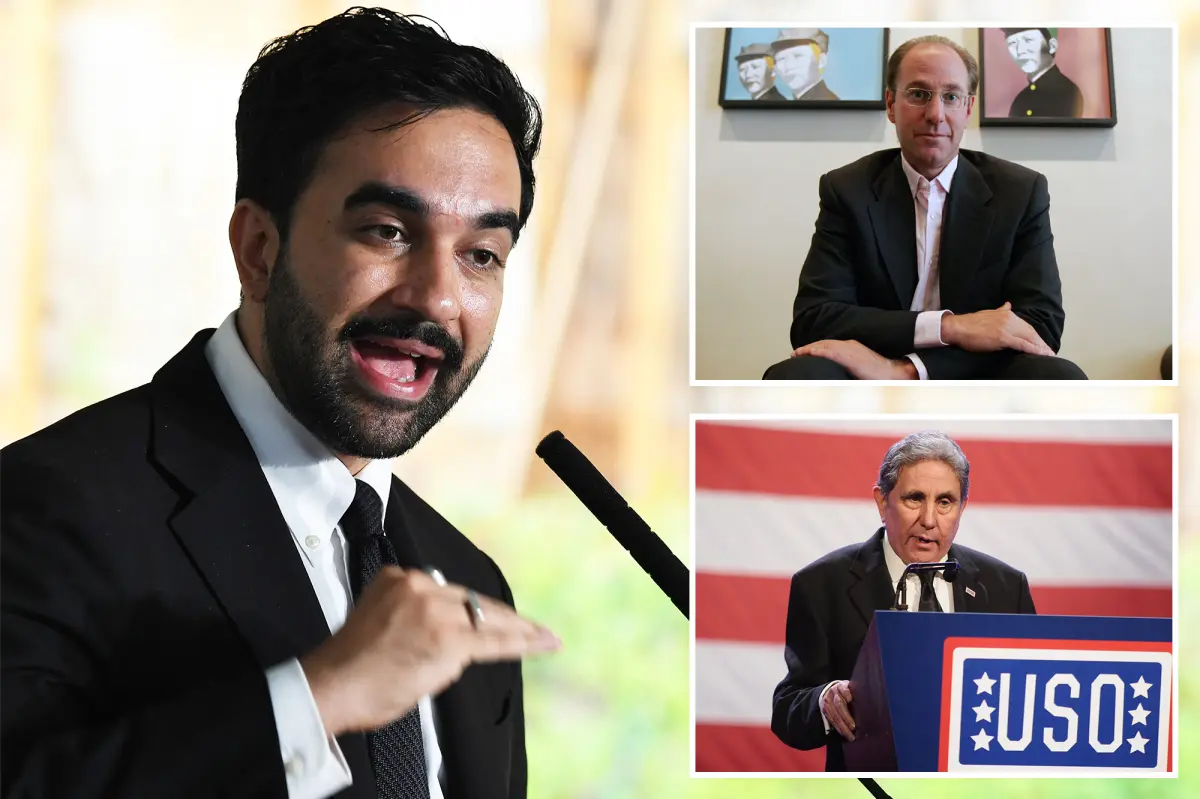
To fully grasp the gravity of Mamdani’s decision, one must look at the names of the individuals who received their walking papers, as they represent the literal architecture of modern New York’s economic empire. Among the ousted civic heavyweights are Richard Born, the influential hotelier behind BD Hotels; Jeffrey Gural, the prominent chairman of GFP Real Estate; Alex Katz, a senior managing director at the global private equity giant Blackstone Inc.; Edward Skyler, Citigroup’s head of enterprise services and public affairs and a veteran of the Bloomberg administration; and James Whelan, the president of the Real Estate Board of New York (REBNY), which is widely considered the most powerful real estate lobbying force in the state. These individuals are not merely wealthy donors; they are the gatekeepers of New York’s capital, representing the massive real estate portfolios, investment funds, and banking institutions that have shaped the physical skyline and economic destiny of the five boroughs for decades. For years, the advisory board functioned as an exclusive club where the city’s corporate elite could rub shoulders with municipal leaders, translating private wealth into direct civic influence under the banner of public-spirited generosity. By dismissing them, the Mamdani administration has targeted the very institutions—real estate, private equity, and multinational banking—that have historically driven the city’s economic agenda from behind closed doors. The purge is a direct, uncompromising message to these industries that their financial muscle will no longer buy them a seat at the table of municipal governance, nor will it grant them back-channel access to the levers of executive power.
The Mayor’s Fund to Advance New York City is no minor bureaucratic entity; it is a powerful philanthropic vehicle with a storied legacy of mobilizing private capital for the public good during times of acute crisis. Established in 1995 under Mayor Rudolph Giuliani, the non-profit has raised hundreds of millions of dollars over its nearly three-decade history, stepping in to fill critical fiscal gaps when municipal budgets fell short. In the devastating aftermath of the September 11, 2001 terrorist attacks, the fund galvanized an extraordinary $107 million to support the grieving families of fallen rescue workers, showing the immense power of corporate mobilization. More recently, during the dark and uncertain early days of the COVID-19 pandemic, the fund mobilized $54.5 million to establish an emergency relief fund that provided essential meals and personal protective equipment to exhausted frontline healthcare workers. According to its 2025 tax filings, the fund remains highly solvent, boasting $16.4 million in cash on hand, proving its financial health. However, the fundamental question that Mamdani’s administration is raising is not about the fund’s historical efficacy, but about its underlying democratic legitimacy. For too long, critics argue, such public-private partnerships have allowed wealthy individuals and corporations to dictate civic priorities, effectively bypassing democratic processes and substituting private charity for robust public funding. By dismantling this structure, the administration seeks to challenge the notion that New York City must rely on the noblesse oblige of billionaires to care for its most vulnerable residents, proposing instead a model where public goods are funded and managed through democratic accountability rather than corporate whim.
In place of real estate tycoons and private equity executives, the Mamdani administration is ushering in a radically different class of civic leaders to steer the city’s philanthropic future. This ideological shift began shortly after the mayor took office, when he appointed a former dockworker and a high school teacher to the fund’s governing board of directors, signaling a new era of populist representation. Dora Pekec, a senior advisor to the mayor, articulated this new vision by framing it as a necessary step toward aligning the city’s government with the actual communities it serves on a daily basis. Pekec noted that the administration is actively working to reimagine how philanthropy can augment, rather than replace, public dollars and public goods, with a new advisory board slated to be announced later this year. This “new era” for the Mayor’s Fund is built on the democratic ethos of ensuring that those who are directly impacted by municipal decisions are the ones actually sitting in the rooms where those decisions are made. By replacing corporate elites with working-class New Yorkers, the administration is attempting to democratize a philanthropic apparatus that has historically been the exclusive playground of the wealthy. A high school teacher and a dockworker bring lived experiences of the city’s public systems—its struggling schools, transit networks, and labor markets—that are fundamentally different from the perspectives of luxury hotel developers or Wall Street managing directors. This pivot represents a profound bet on the wisdom of everyday citizens over the expertise of financial managers, suggesting that empathy and lived experience are more valuable assets for civic stewardship than capital accumulation.
This hostile posture toward the business elite is not an isolated incident, but rather the cornerstone of a broader, highly intentional ideological campaign that defines the Mamdani administration. Since his inauguration, Mayor Mamdani has consistently positioned himself as an adversary to big business and the real estate lobby, running on a platform deeply rooted in democratic socialism and working-class empowerment. For decades, New York City politics have been dominated by a consensus that a thriving business sector is the prerequisite for a healthy city, a belief that often translated into tax breaks, rezonings, and policy concessions for major developers and corporations. Mamdani’s administration has aggressively rejected this premise, arguing instead that the city’s extreme inequality is a direct consequence of prioritizing corporate profits over the welfare of working-class families. This latest purge of the Mayor’s Fund advisory board is a tangible manifestation of this worldview, proving that the mayor is willing to sacrifice lucrative corporate relationships in order to maintain his ideological purity and fulfill his promises to his progressive base. To his supporters, this is a courageous and long-overdue reclamation of public space from privatized interests, proving that City Hall cannot be bought. To his detractors in the business community, however, it is viewed as a reckless and self-defeating act of political theater that risks alienating the very job creators and philanthropists who keep the city’s economy afloat. The battle lines are now clearly drawn, setting the stage for a prolonged conflict between a populist City Hall and the entrenched financial power of Wall Street and real estate.
As the Mamdani administration prepares to unveil its new advisory board later this year, the future of the Mayor’s Fund remains an open, highly contested, and risky question. The primary risk of this radical reorganization is financial; without the deep pockets and fundraising networks of corporate leaders like Citigroup, Blackstone, and REBNY, the fund may find it increasingly difficult to raise the millions of dollars it has historically generated during times of crisis. If the city faces another major natural disaster, public health emergency, or economic downturn, the absence of these corporate lifelines could leave public services vulnerable and underfunded. Yet, the reward of this gamble could be a more equitable, transparent, and community-driven model of civic engagement that serves as a blueprint for progressive governance nationwide. By attempting to decouple civic progress from corporate patronage, Mamdani is testing whether a modern metropolis can truly sustain itself on the collective power of its people rather than the charity of its wealthiest residents. This experiment will be watched closely by urban policymakers across the country, as it strikes at the very heart of how modern cities are run, funded, and defined. Ultimately, the success or failure of this bold endeavor will not be measured by the praise of activists or the anger of business leaders, but by the tangible impact on the lives of everyday New Yorkers who rely on the city’s services, public spaces, and social safety nets to survive and thrive.